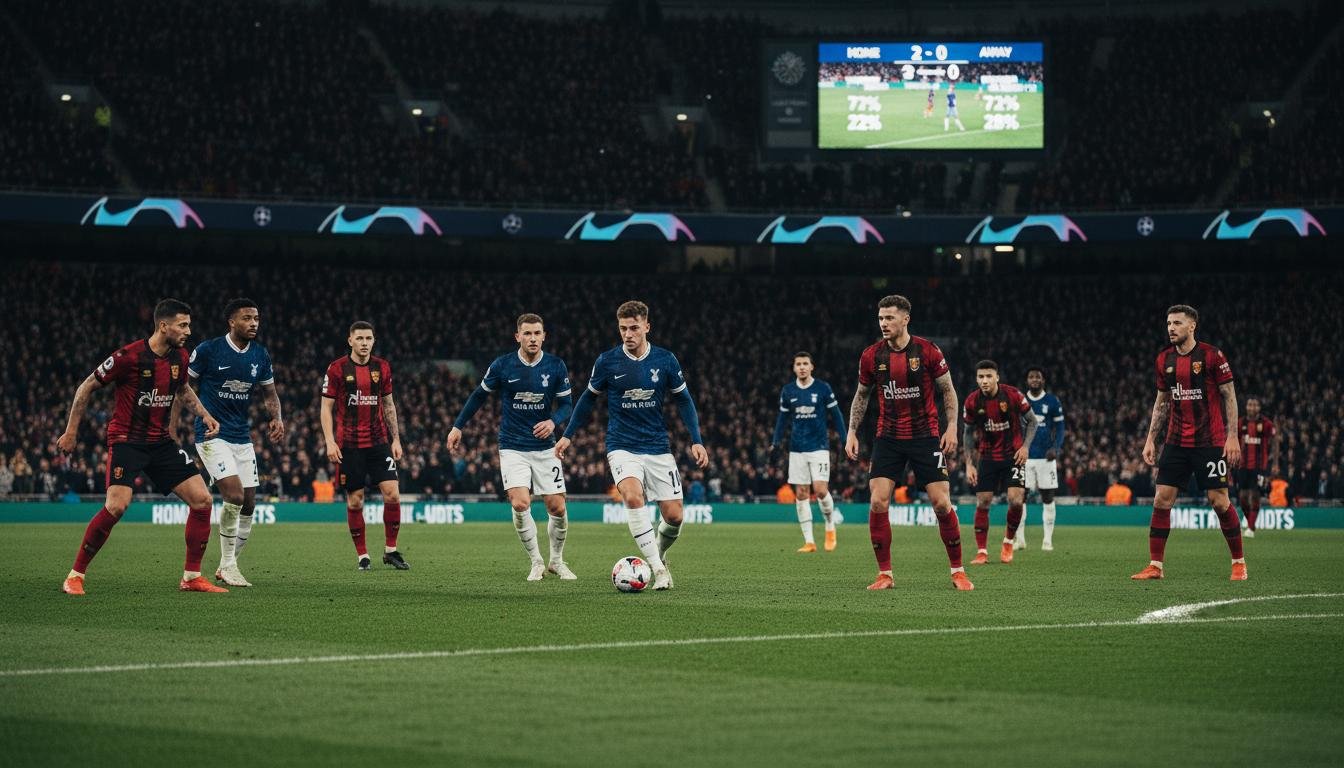
Ball possession has become one of the most visible statistics on a broadcast screen, and bookmakers have noticed. Betting markets tied to possession—total percentage, over/under lines, head-to-head possession—are common, and they can be profitable when approached with a clear framework. This article explains when possession bets make sense, what to watch for, and how to turn match data into a disciplined staking strategy.
What a possession market actually measures
At its core, a possession market asks which team will hold the ball more, or whether a team will exceed a certain percentage. That sounds simple, but possession is a surface metric: it measures time with the ball, not the quality of that time. A team can dominate possession in its own half without ever threatening the goal.
Modern data providers calculate possession slightly differently, but most use sequences of play defined by control of the ball between turnovers, stoppages, and set pieces. Bookmakers set lines based on historical team averages, recent form, and market demand rather than on in-depth tactical nuance. That gap is where an informed bettor can find value.
Why possession alone often lies
Possession and dominance are correlated but not synonymous. Some successful teams prioritize low-possession, high-intensity counterattacking football and deliberately cede the ball. Others build patient overloads to create space. When you bet only on possession numbers, you ignore these tactical choices.
Expected goals (xG), shot quality, and non-possession metrics like PPDA (passes per defensive action) frequently explain whether possession converts into real advantage. A team with 65% possession and an xG of 0.3 after 70 minutes probably isn’t controlling the game in a meaningful way.
When possession bets make sense
There are clear scenarios where possession markets are predictable and bookmakers underestimate nuance. The clearest is a stylistic mismatch: one side insists on controlled buildup while the other presses high and concedes the ball. If the buildup team has consistently strong possession numbers and no recent lineup disruptions, lines for over a possession threshold can be attractive.
Another favorable scenario is imbalance caused by context: a top team resting key attackers in a cup match may still dictate play through midfield rotation. Likewise, when a relegation-threatened side needs a win and will push forward, they often increase their possession share. Recognizing the intent behind a lineup is crucial.
Practical indicators to watch
Successful possession betting boils down to a checklist. Here are indicators I use when sizing a stake:
- Team style consistency: historical possession averages and formation stability.
- Opponent tactical profile: high-press teams often concede possession to regroup.
- Lineups and injuries: absence of a defensive midfielder or key creator shifts possession expectations.
- Match context: must-win games, cup rotations, and travel fatigue change intent.
- Weather and pitch surface: wind, rain, or poor turf can reduce passing accuracy and affect possession totals.
Each indicator changes probability in different ways. I rarely bet on possession without at least three indicators pointing the same direction.
The value of small models
Turn qualitative indicators into a quick quantitative check. Assign simple weights—team season possession average (40%), recent five-game trend (25%), lineup impact (20%), and matchup-specific factors like away/ home splits (15%). Combine them into a single expected percentage and compare that to the bookmaker line.
| Input | Why it matters | Typical weight |
|---|---|---|
| Season possession average | Baseline stylistic tendency | 40% |
| Recent trend (5 games) | Current form and tactical tweaks | 25% |
| Lineup changes | Missing creators or anchors shift volume | 20% |
| Match context | Intent (rotate, must-win) affects approach | 15% |
This table is intentionally simple; the goal is a quick sanity check rather than a full predictive model. If your expected possession beats the bookmaker’s implied number by a margin you consider sufficient, the bet may be worthwhile.
Live betting: when in-play edges appear
Possession markets often offer the best opportunities in-play because momentum shifts become visible before prices adjust. If a team starts aggressively and forces early errors, the in-play line will move slowly to reflect sustained pressure, especially in lower-liquidity markets. Spotting those moments requires patience and fast decision-making.
However, live betting on possession carries pitfalls. Bookmakers react quickly to obvious shifts and juice is often higher. Use live markets when you can watch the match or when data feeds provide real-time possession percentages, and keep stakes smaller to account for volatility.
Market quirks and bookmaker behavior
Bookmakers set possession lines using public-facing stats and their own models, but they also balance books based on bettor behavior. Popular teams often have skewed lines because the public overbets their possession, creating value on the underdog’s possession in some matches. Recognizing public bias is another edge.
Also be aware of differing definitions: some live trackers freeze possession during stoppages, others continue until a clear event. Small differences in how trackers handle sequences can change a percentage by a couple of points—enough to flip a marginal bet.
Risk management and staking
Treat possession bets like any other market: define your edge, limit exposure, and avoid chasing lines. Because possession lines are correlated with other events (corners, passes, shots), a losing possession wager can be part of a larger correlated risk if you’re also betting goals or cards in the same game.
Use unit sizing that reflects the volatility of possession markets. I typically stake 0.5–1% of bankroll on pre-match possession bets where I find a modest edge, and reduce to 0.25–0.5% for live bets unless I can see a clear sustained trend on the pitch.
Common mistakes bettors make
The two biggest errors are overvaluing possession as a proxy for control and ignoring match context. Bettors often assume more possession = safer outcome, but games with lopsided possession can still produce upsets through efficient finishing or set-piece dominance.
Another frequent mistake is failing to compare data sources. If you’re using a tracker that systematically reports higher possession for home teams, you’ll misprice edges. Cross-checking with reliable providers avoids this trap.
Personal notes and a real-world example
I learned the hard way that possession is fragile as a standalone signal. Early in my betting experience I placed several high-stake over-possession bets on teams that historically dominated possession, only to lose when those teams rotated their starters or faced disciplined low-block opponents.
More recently I profited by waiting for a clear line-up announcement: a team that normally averages 60% possession had its primary deep-lying playmaker out injured, and the bookmaker barely adjusted the possession line. That combination of public inertia and tactical change created a narrow but real edge.
Practical checklist before you bet
Before placing a possession bet run this quick checklist: confirm starting lineups, check recent tactical shifts, review head-to-head tendencies, compare multiple data trackers, and evaluate how the market has moved since line release. If three or more items favor your position and the implied odds exceed your model, place a small, disciplined stake.
In many matches the house edge is small, and possession betting is best treated as a supplemental strategy—an additional angle rather than a primary system.