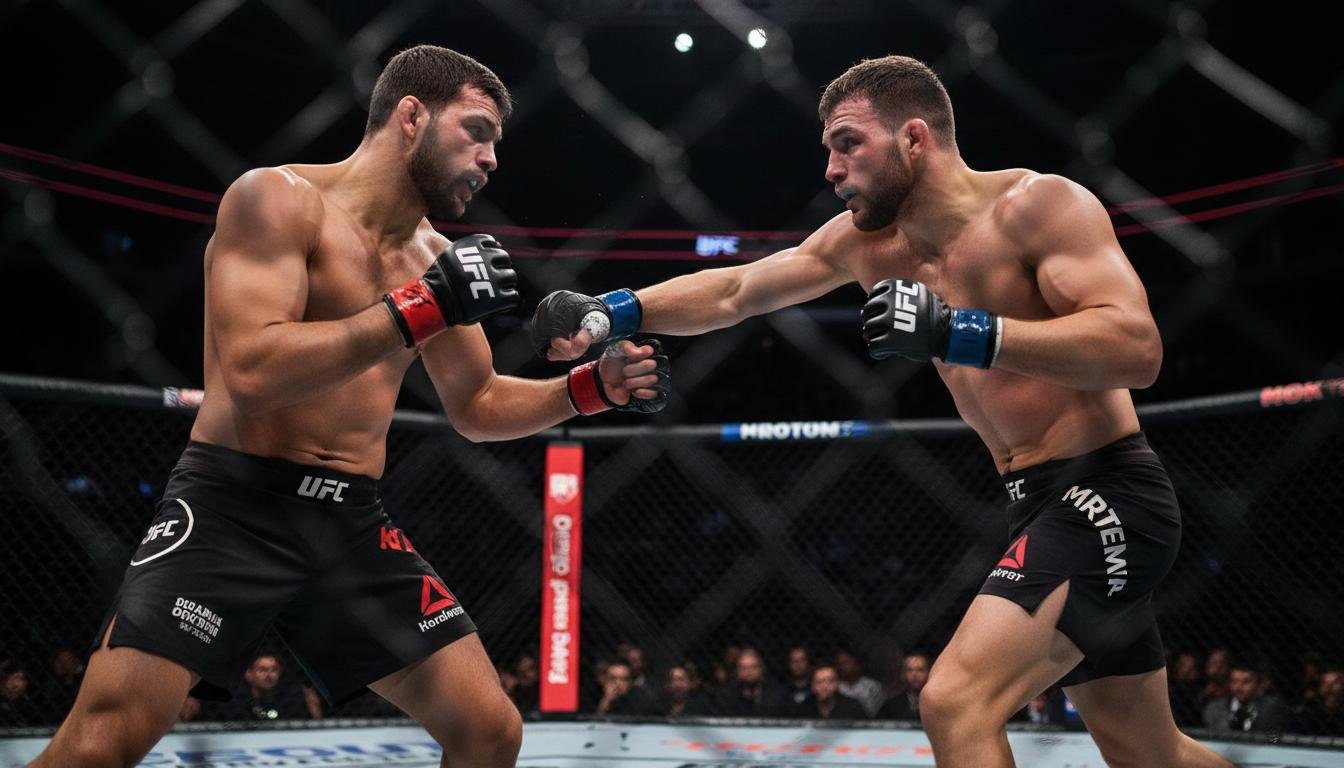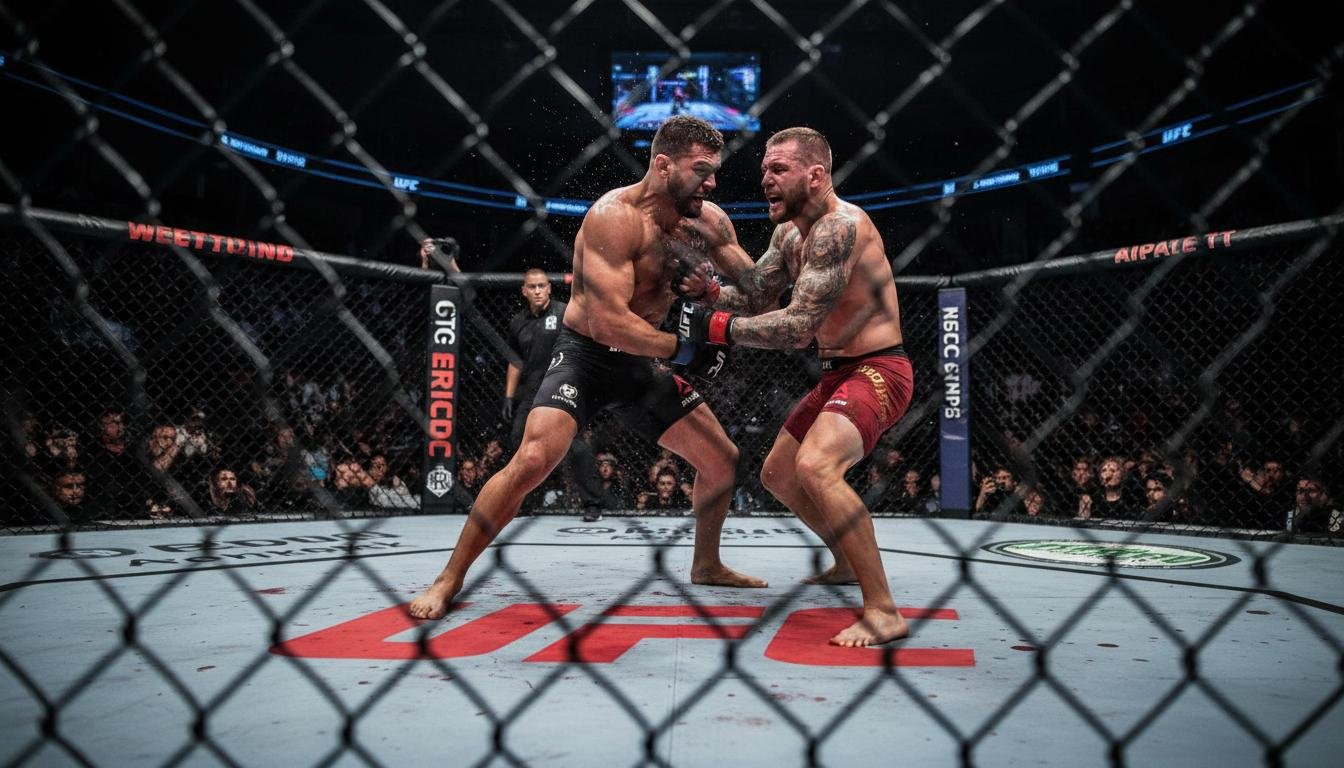
Live betting in the UFC is part craft, part pattern recognition, and part calm reaction under pressure. When a fight’s tempo shifts—fast to slow, slow to frenzied, or a sudden clinch-heavy stretch—odds move faster than a spinning backfist, and the bettor who understands why that change matters will find edges other players miss. This article breaks down how to read those changes, which live markets react most favorably, and how to manage bankroll and timing so you aren’t chasing volatility but using it to your advantage.
Why pace matters more than you think
Pace is the framework that tells you how a fight will unfold. Early blitzes favor short-range strikers, methodical accumulation suits wrestlers and grinders, and erratic tempo swings often hide cardio questions or tactical resets. Oddsmakers price fighters based on pre-fight expectations—style, record, and projected pace—so when actual flow deviates, the market must adjust.
That adjustment is where opportunity lies. Sharp bettors and bookmakers react quickly, but retail bettors often delay, reacting emotionally to visible damage or crowd noise. If you can remain objective—measuring strikes landed per minute, takedown attempts, and control time—you can exploit lagging market moves.
Pace shifts also reveal underlying attributes: conditioning, corner coaching, and willingness to change game plans. Reading those tells in real time separates lucky guesses from informed wagers.
Key live indicators to watch
Not all indicators are equally valuable during a live betting swing. Focus on metrics you can reliably observe: significant strikes landed per minute, clinch time, number and success rate of takedown attempts, guard recoveries, and visible breathing and posture. These are real, repeatable signals that often precede a sustained change in momentum.
Video and feed latency complicate observation. Use a trusted, low-latency stream and cross-check with live stats where possible. UFCStats provides round-by-round breakdowns that might update slower than the broadcast, but they help confirm what you’re seeing.
Also track referee behavior and ring (cage) geography. A referee who favors breaking clinches quickly changes the value of takedown-heavy strategies, and one who allows dominance positions to play out increases the importance of control time when live odds swing.
How to translate indicators into betting choices
Translate signals into specific markets: match-winner odds, round betting, method (KO/submission/decision) markets, and props like next significant strike or takedown. When pace increases dramatically in favor of one fighter, the match-winner and next-round markets will typically reflect that first; method markets react next.
For example, if an underdog lands a series of unanswered strikes in Round 1 and the favorite’s output drops, a live bet on the underdog to win by KO/TKO in the same or next round can carry value before the bookmakers shorten that line. Conversely, if a heavy hitter shows early fatigue and the fight turns grappling-heavy, a live bet on the heavier-handed fighter to fade in later rounds is often profitable if odds still overvalue earlier threat.
Props can be a low-variance way to profit from tempo shifts. If you spot a fighter who has suddenly started seeking takedowns, consider the “next takedown” prop or round-specific takedown totals. These markets are narrower and often slower to move than outright lines, so they can offer clean entry points.
Round betting: timing is everything
Round betting requires precise timing. If a fight’s pace slows into tactical clinch work around the cage, early-round bets become riskier while later-round bets—if you trust a fighter’s cardio—become more attractive. Watch for energy-sapping exchanges: heavy leg kicks, prolonged scrambles, and consistent grappling battles.
Consider buying the round only when you can justify the projection: a fighter showing dominance but not yet finishing has higher odds in the immediate round market than in the eventual match-winner market. That temporary mismatch is the trader’s edge.
Method markets: identifying finishing windows
Method markets spike when a finishing window opens. A fighter who plants heavy shots behind the jab and starts landing to the body is more likely to force a TKO via accumulation; swift submissions follow when a ground specialist secures top control and isolates an arm or neck. Map technique trends to likely outcomes and pick the market that tightest matches the observed sequence.
Avoid overcommitting to method markets if the fight’s pace is chaotic but balanced. In those cases, the safest live play is often the next-round or next-event prop (next takedown, next significant strike) because they capture short bursts of tempo without predicting a long-term finish.
Bankroll and stake sizing during tempo swings
Live action is exhilarating; stakes can escalate dangerously fast if you chase every momentum move. Set strict fractional staking rules before you bet. I use a tiered approach: small, fixed stakes for quick-prop plays and larger, proportionate stakes for trades where I’ve identified a multi-round edge backed by observable metrics.
Maintain a “reaction buffer” in your bankroll—funds reserved only for corrective hedges or opportunistic trades when a market misprices a tempo shift. This prevents emotional over-betting and allows you to scale into a position as confidence grows.
Finally, pre-define maximum drawdown limits per fight. When a fight goes against you and swings beyond your comfort threshold, respect the limit. Live bettors who double down into every swing rarely recover their long-term bankroll.
Tools and technology to improve decisions
Latency, clean visuals, and reliable live stats are your non-negotiables. Use a reputable streaming service with the lowest delay you can get and pair it with a live-stats feed like UFCStats. Some professional bettors run the stream and stats on dual monitors; some also use a tablet for prop markets to reduce the chance of misclicks.
Odds-tracking tools and line history are essential for recognizing when a market overreacts. If a favorite shortens significantly after a single exchange but no clear finishing sequence follows, that market often reverts and creates a small window to back the other fighter at inflated odds.
If you trade frequently, consider simple automation for alerts—e.g., a notification when the moneyline changes a certain percentage—which helps you act before the entire market adjusts.
Context matters: weight class, styles, and referees
Not all pace changes carry the same weight across divisions. Heavyweights can go from measured to explosive in a heartbeat; a single knockdown often ends the fight. In lighter divisions, pace changes are more likely to reflect stamina and technique adjustments over time.
Style matchups also shape live value. A pressure wrestler who suddenly amps pace to clinch and control will hurt a striker more in a 170–185 lb fight than in heavyweight where single strikes can be decisive. Always contextualize pace within weight class and style trends to avoid one-size-fits-all reactions.
Read referee tendencies before the fight. Some refs separate fighters quickly—which reduces control time value—while others allow more wrestling. A pace change toward grappling is less valuable if the ref consistently stands fighters up early.
Real-life example: a fight that swung markets
I remember a mid-card fight where Fighter A, a perceived striker, started the first round slow and then opened up with a burst of leg kicks late in Round 1. The apparent acceleration caused retail bettors to overvalue Fighter A’s chances for an early finish, and moneyline odds shortened sharply. I waited for Round 2 to start and watched for sustained follow-through. The opponent adjusted by cutting distance and forced low-percentage takedowns, turning the pace into a grappling grind.
Because the bookmakers had tightened the favorite’s moneyline based on that brief burst, the underdog’s live odds in Round 3 were inflated. I took an underdog round-betting position for Round 3 with a controlled stake, and the match eventually swung to the grappler’s favor as cardio and cage control came to the fore. That single measured trade capitalized on a market that had misread a short-lived tempo spike as a lasting advantage.
Moments like this demonstrate the difference between reacting to noise and trading on signal. If you can identify which tempo changes are transient and which indicate a structural shift, your live edge widens.
Practical checklist for in-play pace trading
Use a short, repeatable checklist before pulling the trigger on any live bet. That discipline keeps emotion in check and ensures every stake has a rationale. Below is a compact checklist you can print or keep on-screen during fights.
- Confirm low-latency stream and live stats are synced.
- Identify observable shift (strikes per minute, clinch time, takedown frequency).
- Assess referee behavior and weight class finish dynamics.
- Match shift to market (round, method, prop) and check odds history for mispricing.
- Apply predetermined stake size and stop-loss rules.
Common mistakes and how to avoid them
Chasing yesterday’s highlight is the most common live-betting error. A highlight-reel strike can look like a match-winning event in isolation, but if it’s not followed by sustained pressure or control, it’s often noise. Avoid betting purely on impressive visuals without supporting metrics.
Another mistake is overestimating momentum permanence. Momentum in MMA can reverse with a single well-timed takedown, leg kick, or clinch. Only commit larger stakes when you can trace momentum back to a reproducible strategy—cardio breakdowns, repeated leg-targeting, or exposed defensive holes.
Finally, ignore the temptation to hedge for the sake of minimizing visible losses. Hedging can be disciplined, but used reflexively it erodes EV. Treat hedges as strategic tools, not emotional band-aids.
Next steps to sharpen your live game
Start small and build a post-fight journal that records what indicators you saw, how the market moved, and whether your read proved correct. Over time you’ll see which tempo signals you read best and which you misinterpret.
Study past fights on UFCStats and rewatch sequences that preceded shifts to internalize the physical signs—breathing, foot placement, micro-faints—that often preface bigger swings. Pair that film work with a strict staking plan and the right tech setup, and you’ll turn volatile pace changes into repeatable opportunities.
Live betting is fast, but profitable patterns are slow to build. Focus on disciplined growth rather than instant wins, and you’ll be rewarded by a consistent, edge-focused approach.
Full analysis of the information in this article was conducted by experts from sports-analytics.pro
Sources and experts:
- UFCStats — official fight statistics and round breakdowns
- The Action Network — betting market analysis and live-betting guides (experts include Matt Youmans and Matt Perrault)
- ESPN (Ed Feng) — sports analytics and betting insights
- FiveThirtyEight (Nate Silver) — sports forecasting and statistical methods
- BetMGM sports betting guide — live-betting market explanations and odds mechanics
- Sports Analytics Pro — expert analysis and modeling