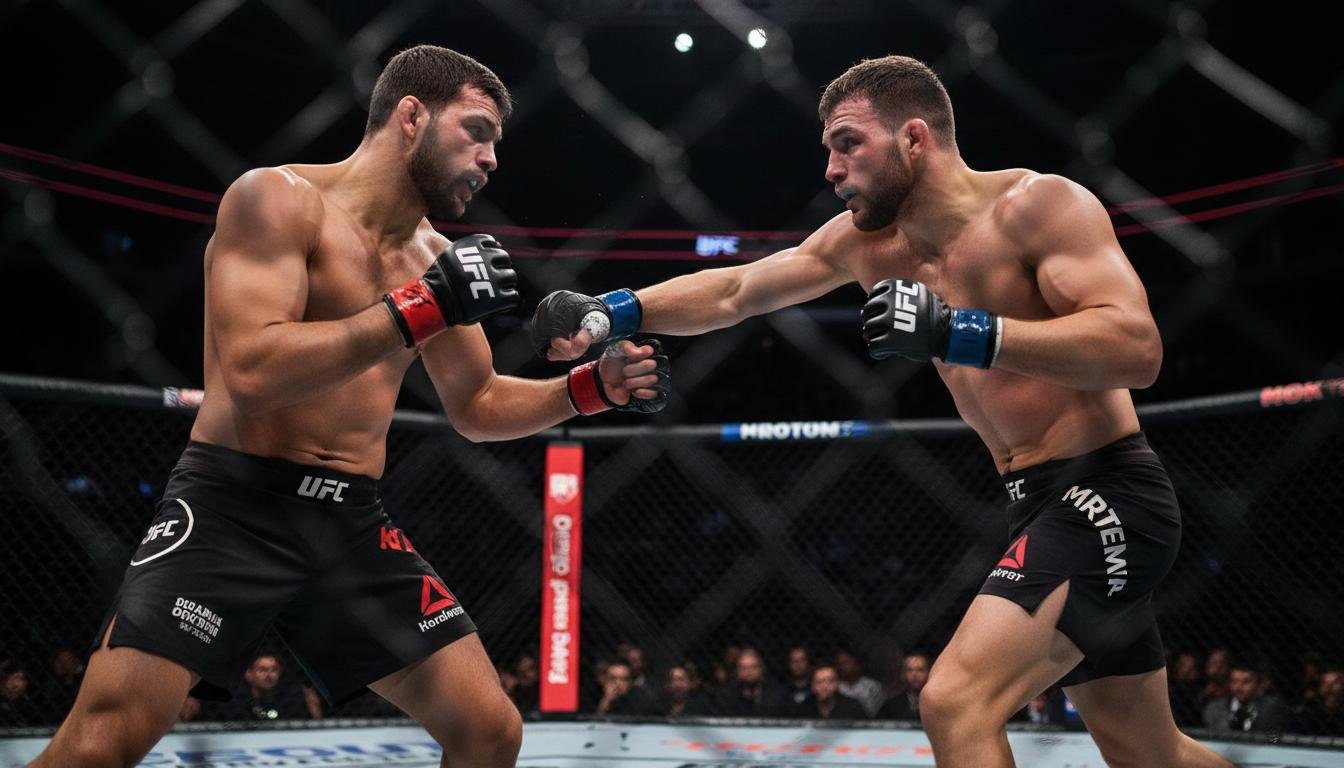
When two fighters step in with opposite stances—one southpaw, one orthodox—the cage subtly tilts. That tilt affects foot positioning, sightlines, and the most dangerous punches. For bettors who understand the geometry and game plans behind those stances, there’s an edge beyond raw records and hype.
Why stance matchups matter more than you might think
Stance is not just a cosmetic detail; it creates recurring positional battles inside every exchange. When a southpaw faces an orthodox fighter, the fighters’ lead feet often fight for outside position, which opens and closes the straight-line paths for their power hands. Those repeated micro-advantages accumulate across rounds.
There’s also a psychological and preparation element. Most fighters train predominantly against orthodox opponents, so an effective southpaw can present unfamiliar angles and timing. That lack of frequent exposure shows up in footwork mistakes, misreads of feints, and poorer defensive instincts, which makes stance a betting factor worth quantifying.
Core tactical differences and what to look for before you place money
Start by thinking of stance as a set of mechanical constraints and opportunities. The key mechanical items are lead-foot position, the open stance where straight hands clash, and the line of the jab. Each of these affects both striking and grappling transitions, so your pre-fight read must be holistic—not just “who has the better knockout rate.”
Physical attributes matter, but how those attributes interact with stance matters more. A tall orthodox fighter with a long jab can neutralize a southpaw’s angle if he keeps his lead foot outside and uses lateral movement. Conversely, a southpaw with a compact power left and strong leg-kicks can punish an orthodox opponent who over-commits to the inside line.
Lead foot battle and angles
One of the most reliable predictors of fight dynamics in a southpaw-orthodox matchup is the lead-foot battle. Whoever gets their lead foot outside the opponent’s lead foot gains an angle to land their rear hand down the centerline. That means space, timing, and the ability to hide or open attacks.
For bettors, evaluate fighters’ footwork history on tape. Does the orthodox fighter habitually step on the first mover’s outside? Does the southpaw show confidence stepping to the opponent’s outside, or does he drift straight back and accept straight punches? These small tendencies translate directly into success or failure when the stakes are live.
Punching lanes and the power hand
With opposite stances, the power hands sit on the same side of the centerline: southpaw left vs. orthodox right. That makes the long straight rear hand a recurring threat from both camps. Watch which fighter lands the first clean straight hand in filming sessions because the first effective strikes often dictate who presses the fight.
Also, check whether either fighter has a tendency to loop their rear hand or throw it as a snap. A looping rear hand is easier to counter with a short punch or a takedown attempt; a compact, powerful rear hand that travels down the centerline is far more dangerous in this matchup pattern.
Kicks, clinch, and grappling implications
Stance differences shift kicking dynamics: the southpaw’s lead leg lines up differently for low kicks and oblique kicks to the orthodox opponent. If a southpaw uses persistent lead-leg kicks to the orthodox fighter’s supporting leg, he can blunt the latter’s ability to step outside; those leg damage margins are easy to miss on paper but visible on tape.
On the ground, jaw-dropping knockouts are less frequent but positional advantages still matter. The angle that helps a southpaw land a left hand also helps him set up takedowns or trips if the orthodox fighter overcommits. Conversely, wrestlers who can dictate clinch and straight-line pressure neutralize lateral advantages that stance gives.
Translating tactics into a betting edge
Translating fight geometry into wagers means converting qualitative reads into quantitative weights. Create a short model: weigh lead-foot success (20%), rear-hand accuracy (20%), leg-kick volume (15%), takedown defense/offense (20%), and cardio/history of adjusting to opposite stances (25%). That model gives you focus when scanning odds and watching tape.
Odds represent public perception as much as technical merit. Public money often follows reputations and highlight reels, not the small, stance-specific edges. Your job is to identify when the market has underpriced a southpaw’s angle advantage or when an orthodox fighter’s history of solving southpaws makes him the better pick despite the books’ lines.
| Factor | Why it matters | How to weight it |
|---|---|---|
| Lead-foot positioning | Dictates which rear hand finds the centerline | High |
| Rear-hand power/accuracy | Primary finishing tool for both stances | High |
| Experience vs opposite stance | Practice reduces surprise variables | Moderate |
| Leg-kick strategy | Affects mobility and angle entry | Moderate |
| Wrestling/clinch | Neutralizes striking angles | High |
Pre-fight checklist for smart bets
Always watch full rounds of each fighter against opponents with the opposite stance when available. Highlight the first 30 seconds of their exchanges: who wins the initial foot position and who lands the first, clean rear-hand shot? Those early patterns repeat and amplify.
- Check opponent experience against southpaws/orthodox fighters.
- Compare reach and how it’s used—does reach translate to jabs or is it vanity?
- Analyze the lead-foot battle in tape: stepping outside vs stepping straight back.
- Look at leg-kick volume and tendency to attack the lead leg.
- Assess wrestling ability and takedown defense as angle-neutralizers.
Use recorded stats to validate your read. UFC official stats provide significant strikes, takedown rates, and leg-kick volumes that confirm what you see in film. If film and numbers align, you’ve likely found a solid edge; if they diverge, pause and re-evaluate.
Live betting: how dynamics evolve and what to watch
Live betting is where stance knowledge becomes especially valuable. If a southpaw fails to get outside the foot in round one, his odds of landing that decisive rear hand drop dramatically. Conversely, if he consistently wins the lead-foot battle, his value in live markets often rises before the bookmaker adjusts.
Watch for mid-fight adjustments. Some orthodox fighters will switch their foot placement aggressively if they notice they’re losing angles; if that read happens, it’s a sign they’re adapting and could swing momentum back. Bet on adaptation when the fighter’s corner has a history of making effective mid-fight changes.
Market behavior and value spotting
Public bettors often miss stance-specific value because they lean on brand names and highlight reels. That overreaction creates value opportunities. Early lines may underprice a southpaw’s unique geometry; later lines sometimes overcorrect if the public suddenly notices “southpaw” in commentary.
Always shop lines across books and watch money flow. If a southpaw’s corner indicates a game plan (via interviews or visible coaching patterns) that emphasizes lead-leg kicks and outside stepping, but the market treats him as a slight dog, that mismatch often represents betting value.
Case studies and personal experience
Early in my betting life I focused on stylistic overlays without formalizing them. After a few small wins and losses I quantified those reads and began tracking how many fights swung on the first lead-foot exchange. That simple change—recording who stepped outside in round one—improved my hit rate because it separated fluky outcomes from repeatable technical advantages.
Another clear pattern I learned was to pay attention to stance-switchers. Fighters who can blurr stances hurt the matchup-based models because they remove the clean geometry. I started placing smaller bets or avoiding lines entirely against high-frequency switchers unless their metrics for switching (accuracy and success) were demonstrably elite.
Practical staking and bankroll rules
Never bet size based solely on confidence in a stance reading. Treat your stance-based advantage like any other edge: quantify expected value and scale bets according to your bankroll. For most bettors, single-digit unit wagers are sensible until a pattern has proven itself across many bets.
- Determine your unit size as a small percentage of total bankroll (1–3%).
- Allocate only a portion of your unit to stance-driven bets until you build a verified track record.
- Use positive expected value as the sole criterion for bet size increases, not gut or recency.
Hedging can be useful in live betting if you obtain a sudden market shift after a clear tactical development—especially if that development directly contradicts your pre-fight read. Hedge conservatively to lock a profit or minimize loss; don’t chase reversals emotionally.
Red flags and traps to avoid
Beware of small sample bias. A fighter’s single impressive win against an opponent of the opposite stance does not prove a systematic advantage. Always contextualize wins by opponent quality and fight circumstances. Bad refereeing, short-notice changes, or injury variables can skew small datasets.
Another trap is overemphasizing “southpaw is inherently better.” While there is often a measurable left-handed advantage in combat sports, it’s conditional on skill sets. A technically superior orthodox fighter with strong outside footwork and dominant wrestling will neutralize most southpaw angles.
Applying stance-aware analysis to bets will not turn every wager into a winner, but it will raise the signal-to-noise ratio of your choices. Focus on measurable factors—lead-foot success, rear-hand accuracy, leg-kick planning, and wrestling—that interact predictably with stance. When prep work is precise, the markets usually lag; that’s where value lives. Bet smaller, watch closer, and let the geometry of the fight guide your sizing and timing.
Sources and experts cited:
- UFC Stats (UFC) https://www.ufc.com/stats
- ESPN MMA (ESPN staff) https://www.espn.com/mma/
- MMA Fighting — Ariel Helwani https://www.mmafighting.com
- Sherdog (Sherdog staff) https://www.sherdog.com
- Tapology (Tapology staff) https://www.tapology.com
Full analysis of the information was conducted by experts from sports-analytics.pro