Betting on ground control time is one of the subtler edges a disciplined MMA bettor can exploit. It’s not as flashy as predicting a knockout, but when you understand the mechanics that drive control minutes, you can find mispriced props and live opportunities that the casual bettor misses.
Why ground control time matters for bettors
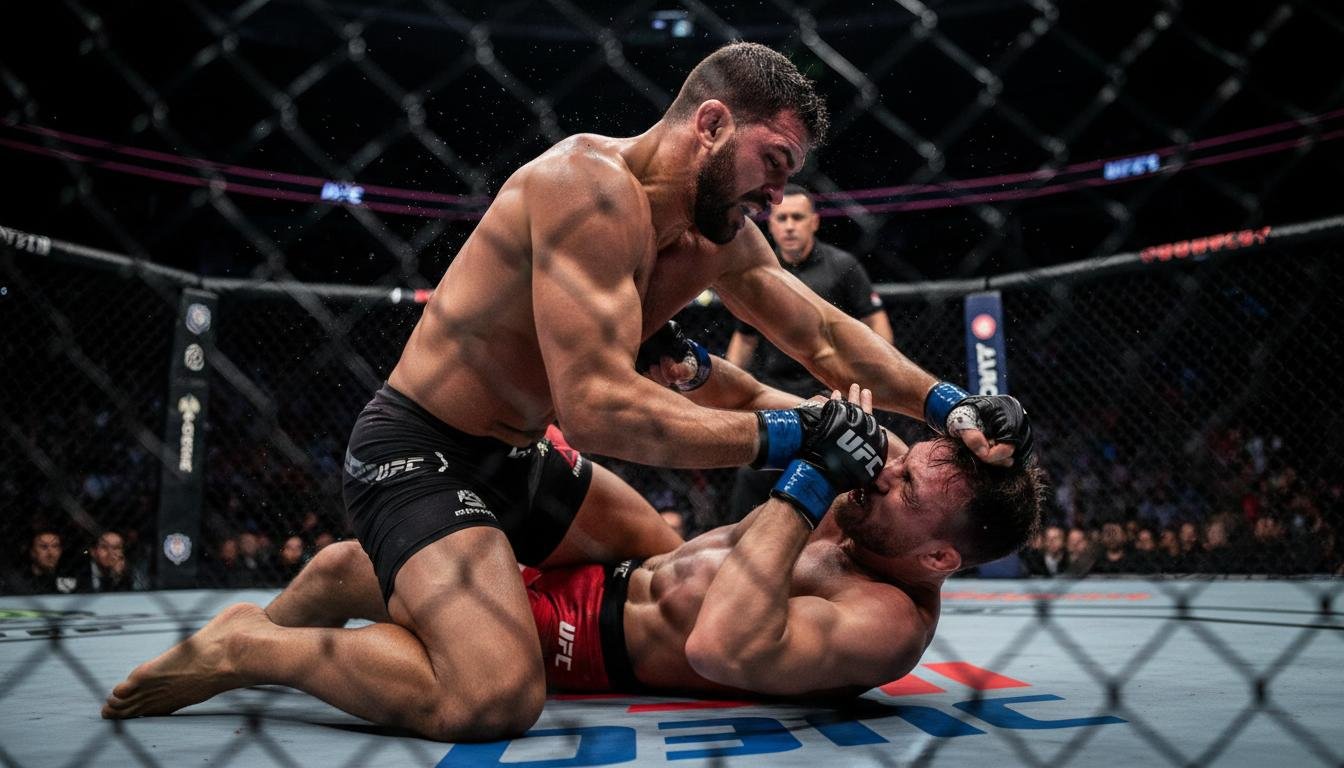
Top control often shapes rounds and outcomes in ways that aren’t obvious from punch counts alone. Judges award effective grappling and control, referees stop fights from dominant positions, and sustained control creates submission opportunities that change odds.
From a betting perspective, ground control is measurable and repeatable: takedown success, time spent in dominant positions, and escape rates are trackable metrics. Those metrics let you convert qualitative scouting into quantitative edges for props and live markets.
Core metrics to evaluate before you bet
Not every stat carries equal weight. Focus on a short list of indicators that directly predict control time: takedown accuracy, takedown defense, average takedowns per 15 minutes, time in control (per fight), and scramble/reversal frequency.
Below is a compact table that summarizes each metric and why it matters for ground-control betting.
| Metric | Why it matters | Where to check |
|---|---|---|
| Takedown accuracy | Predicts likelihood of successful takedowns when attempted | UFC Stats |
| Takedown defense | Signals how often a fighter stays off the mat | UFC Stats |
| Average control time | Directly measures how long a fighter keeps opponents on the ground | UFC Stats / fight reports |
| Submission attempts per 15 min | Indicates aggressiveness and ability to finish from top | UFC Stats |
| Scramble/reversal rate | Shows whether a fighter loses or regains control during exchanges | Video review / fight logs |
Reading styles: how backgrounds predict control minutes
Wrestlers and high-level sambo grapplers generally create more control time because their takedowns are geared toward maintaining top position. Look for entries that finish with a chest-to-chest top position rather than a body-lock to feet; the former tends to yield longer control sequences.
BJJ specialists vary: some prefer submission hunting from mount and back control, which increases control time, while others spend more time in guard and sweep, producing less top control even if the fight is grappling-heavy. Recognizing the difference matters.
Strikers who willingly engage in clinch work can also generate ground time, particularly if they have heavy upper-body trips or strong top pressure. Conversely, high-level counter-strikers with excellent takedown defense often suppress opponent control time, even against aggressive grapplers.
Pre-fight checklist: what to research
Create a short, repeatable checklist you review before every wager on ground control props. The checklist should include takedown success over the last three fights, opponent quality adjustments, recent injuries, and weight-cut effects that influence stamina.
- Recent takedown attempts and success rate (last 3–5 fights)
- Takedown defense across opponents with similar wrestling profiles
- Fight pace and cardio expectation—does control decay across rounds?
- Stylistic matchup: passer vs. half-guard specialist vs. scrambler
- Camp changes, coaching influence, and any visible tells in recent footage
Combine checklist items into a simple score: strength in takedowns, ability to maintain position, and opponent vulnerability. This makes your decisions less emotional and more evidence-driven.
How to use markets: props, totals, and live bets
Ground-control markets typically appear as over/under props for total minutes of top control, or as round-by-round control props. These are prime spots for bettors who know which fighter drives grappling tempo. Props often move after weigh-ins or when a lineup change happens.
Live betting opens a larger opportunity set. If a known control fighter fails on early takedowns but the opponent shows fatigue or poor scrambling, lines for ground time can swing quickly. Watching the first minute of the fight gives data most pre-fight lines don’t account for.
Round props can be especially valuable. A fighter who historically ramps up grappling in round two is a different bet for first-round control than overall control. Match round-by-round tendencies to the prop structure offered by the book.
A simple quantitative model you can build
You don’t need a PhD to create a model that outperforms instinct. Start with a weighted formula: expected control minutes = (fighter A takedown rate * takedown success * average control per takedown) + adjustments for opponent defense and cardio dilution.
- Collect raw numbers from the last 6–8 fights for both athletes.
- Adjust takedown rate by opponent quality—scale down when takedown attempts came against low-defense opponents.
- Estimate average control per successful takedown using fight footage or reported control time when available.
- Apply a cardio decay factor for fights expected to reach later rounds or when cut weight suggests stamina issues.
Back-test your model on past fight cards where props were offered. Track accuracy over a sample; if your model repeatedly beats the market by a few percentage points, you’ve found an edge worth capitalizing on.
Judge scoring and the limitations of control-focused bets
While control often sways judges, it isn’t an absolute. Effective strikes, octagon control, and submission attempts also count. Betting only on control without considering scoring nuance exposes you to rounds where short bursts of strikes outweigh longer but passive control.
MMA Decisions and similar judge-tracking projects show regional variance and occasional scoring inconsistencies. Use these resources to understand whether certain judges or commissions tend to reward control more heavily than striking.
Live tactics: what to watch in the first two minutes
In play, the first 60–120 seconds reveal a fighter’s game plan. Are they shooting for single-leg entries, clinch trips, or immediate takedown attempts? The style of the initial attempt—high crotch versus double-leg—predicts whether they’ll settle into top control or simply score a takedown and disengage.
Also monitor grappling transitions. If a takedown ends in back control or mount, the live market often underestimates the likely control minutes because it focuses on takedown counts not positional quality. That’s the moment to act.
Managing variance and bankroll with control bets
Ground-control markets are more volatile than moneyline bets because a single early scramble or a quick submission can overturn expectations. Limit your stake size relative to your bankroll and avoid over-committing to long-shot props without a clear statistical edge.
Use unit sizes and treat these bets like trades: if you win early, consider hedging late if the fight dynamics change. Conversely, don’t chase losses with multiple correlated control bets on the same card.
Common mistakes that cost bettors money
Three frequent errors come up: over-weighting pedigree without recent performance, ignoring opponent game-plan changes, and failing to watch film. Relying on historical reputation (e.g., “he’s a wrestler”) without current data leads to mistaken expectations.
Another trap is trusting small sample sizes, especially in fighters with limited UFC data. Regional records can mislead because opponent quality and rule application vary, so always contextualize raw counts before betting.
Practical examples and a personal account
Early in my betting career I backed a favored grappler’s ground-time over based only on career takedowns and a reputation for top pressure. The line seemed generous, but I hadn’t adjusted for a new opponent with elite scramble ability and recent takedown defense improvements.
The fight taught me to dig past totals and watch the last three opponents for similar stylistic profiles. In a later case where I followed that rule and bet the over on ground time, the wrestler landed multiple controlled takedowns and kept dominant positions, and the prop paid at attractive odds.
Tools, feeds, and where to track data
Data sources matter. The official UFC Stats portal provides takedown counts, significant strikes, and control time for most events. Supplement that with judge-tracking sites and fight-by-fight breakdowns to form a fuller picture.
For live observation, use trusted streams and sit with reliable scorecards. Many bettors also follow corner reports and athlete social media for camp notes that influence stamina and tactics.
Advanced ideas for serious bettors
If you’re serious, incorporate opponent-adjusted metrics and Elo-like ratings for grappling effectiveness. Weight recent fights heavier, normalize for round length differences, and run Monte Carlo simulations for expected control distributions in multi-round fights.
Consider building a dashboard that flags when a prop line moves beyond a threshold of expected value according to your model. Automation helps you act quickly when in-play opportunities arise and books lag behind live developments.
Ground-control betting is a niche requiring patience, attention to detail, and disciplined record-keeping. If you treat it like micro-investing—collecting data, applying a repeatable model, and managing risk—you can find consistent edges the broader market overlooks.
Methods described here draw on public fight metrics, judge-tracking research, and practice-tested betting discipline. With preparation and careful watching, ground-control markets can be a stable element in a diversified MMA betting portfolio.
Sources and expert references
- UFC Stats — https://www.ufcstats.com
- MMA Decisions — https://www.mma-decisions.com
- ESPN MMA (Ariel Helwani and staff) — https://www.espn.com/mma/
- MMA Junkie (Mike Bohn and staff) — https://mmajunkie.usatoday.com
- The Action Network (betting analytics) — https://www.actionnetwork.com
- Tapology (fight history and profiles) — https://www.tapology.com
- FightMetric archives / historical stats — https://www.fightmetric.com
Full analysis of the information was conducted by experts from sports-analytics.pro