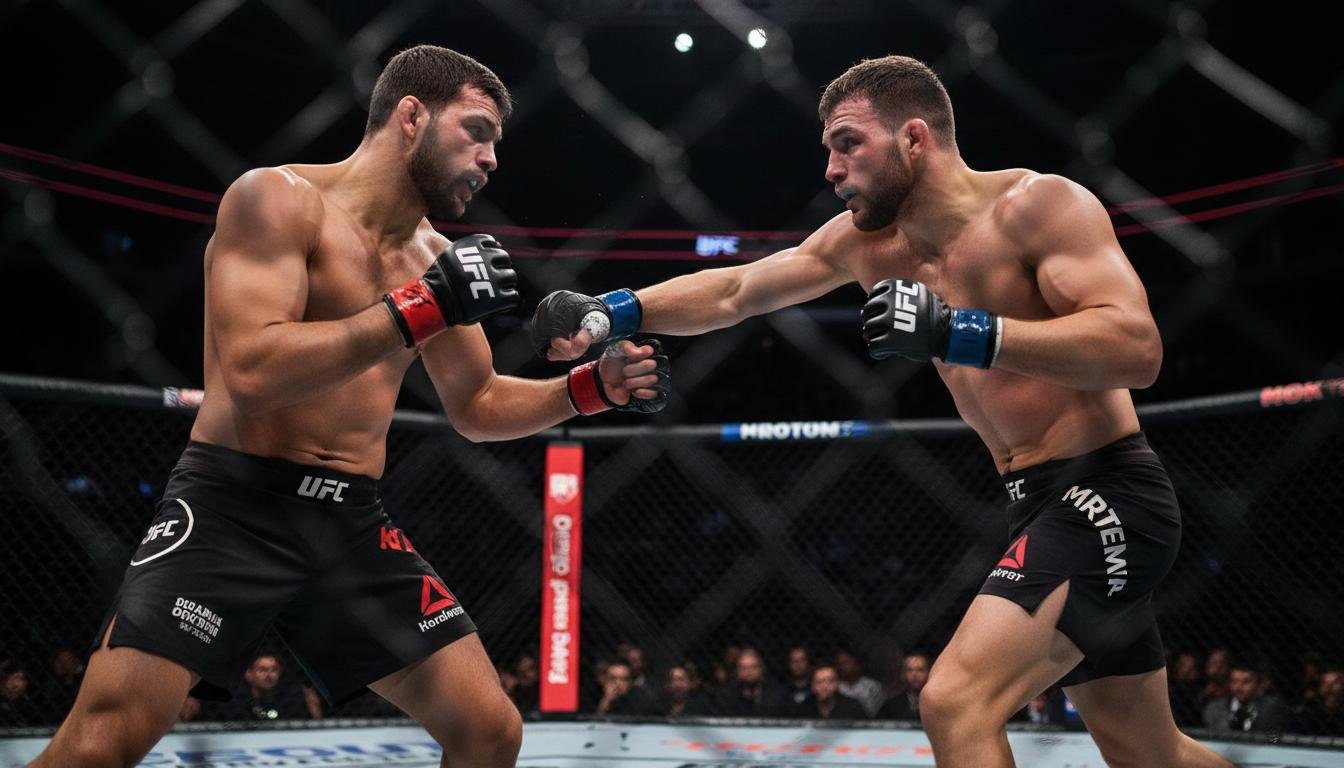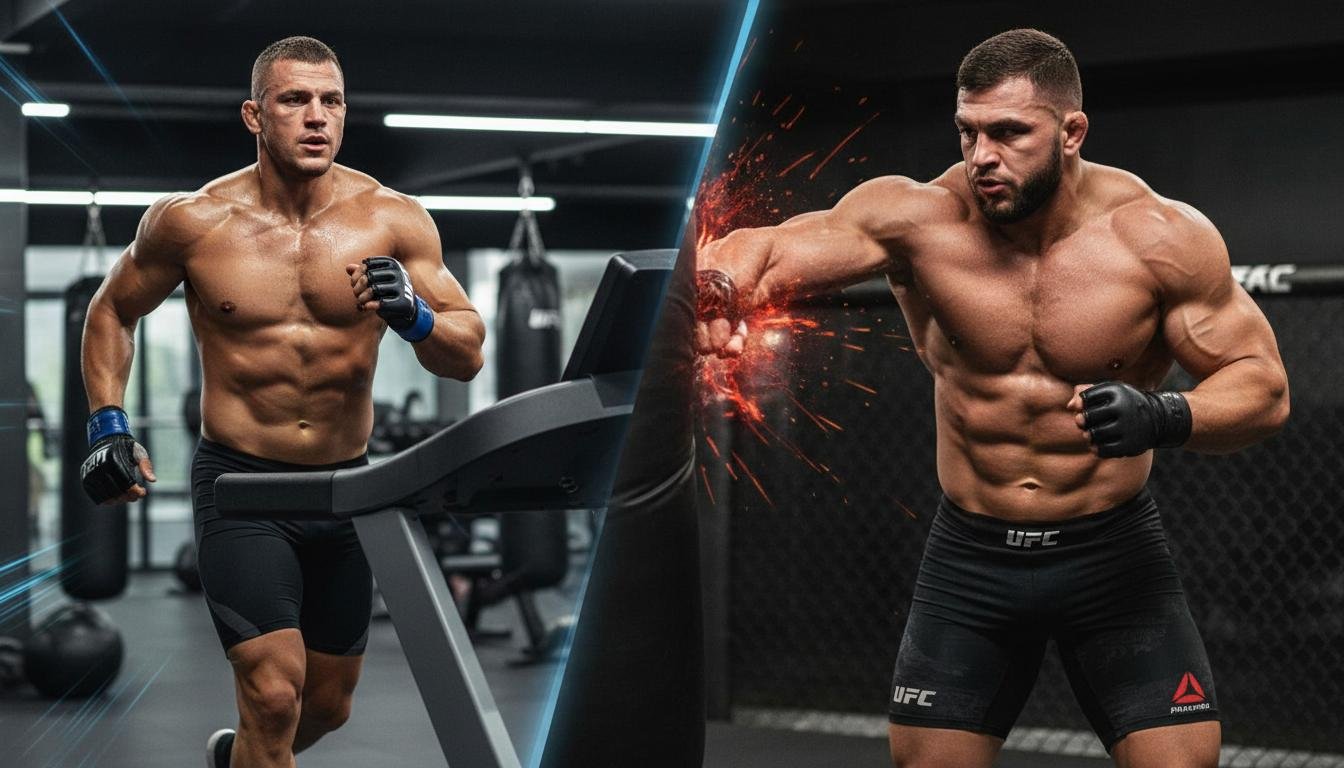
When two fighters step into the Octagon, the contest often reduces to a simple question: who imposes their will — the tireless grinder who outpaces opponents, or the one-punch threat who ends nights abruptly? This article walks through a practical, evidence-based approach to betting on matchups that hinge on cardio versus power, helping you turn observation and stats into a repeatable edge.
Why the cardio vs power framing matters for bettors
Bookmakers price odds around expected outcomes, but they rarely capture subtle edges like endurance decay across championship rounds or an opponent’s inability to string together combinations late. Recognizing whether a fight is a test of sustained output or a hunt for a single decisive strike changes what bets make sense: moneyline, method props, or round markets.
Cardio and power are not binary labels; they exist on spectra and interact with style, weight class, and fight length. A power puncher in a three-round fight is a different betting proposition than that same puncher in a five-round title fight against a relentless pressure fighter with elite conditioning.
Defining the terms: what we mean by “cardio” and “power”
Cardio for MMA means more than aerobic fitness. It includes the ability to maintain pace, recover between exchanges, hold positional control in grappling, and execute technique late into a round or deep into later rounds. A fighter with great fight cardio can sustain a high volume and remain sharp as the clock runs down.
Power is about finishing capability — the force, timing, and placement that make strikes or grappling sequences fight-ending. Power can show up as a knockout punch, a slam, or submission setup that finishes quickly. Some fighters combine both: explosive power with peppers of endurance, complicating simple bets.
How to evaluate fighter cardio before you bet
Start with objective measures: past fight pace (significant strikes landed per minute), total fight time, and late-round output trends available at official UFC Stats. Watch whether a fighter’s activity drops in rounds three to five, and confirm with video: do combinations shrink to single strikes? Do takedowns lose steam? Those patterns matter more than generic fitness labels.
Contextualize age, recent fight schedule, and camp reports. Older fighters or those coming off injury-prone months often have diminished recovery. Conversely, athletes from camps known for endurance-focused training show up ready for high-tempo fights. I’ve tracked fighters across cards and seen a predictable falloff in volume for certain veterans — that drop-off is often where value lives in betting markets.
How to evaluate power and finishing ability
Power evaluation combines quantitative and qualitative cues. Look at knockout percentage, recent highlight finishes, and where the power comes from — is it single-shot KO power or accumulation from heavy volume? Heavy hitters who take high risks to land haymakers may be more vulnerable to counters, especially if their timing starts to slip late.
Film study reveals whether power translates to fight-ending opportunities against different defensive styles. A heavy puncher who scores knockouts against stationary opponents may struggle with mobile, high-output boxers who back them up with combinations. For bettors, the key is not only that a fighter can finish, but how often and against what kind of opponent.
Matchup variables that shift the advantage
Style matchups change the basic cardio vs power story. A pressure wrestler with strong cardio negates a striker’s power by taking the fight to the mat; a rangy counter-puncher invites aggression and picks off heavy hitters. Always map how each fighter’s tools interact rather than evaluating attributes in isolation.
Weight class matters: knockouts are more common in heavyweight because power scales with mass, while lower weight classes tend toward cardio-led decisions. Also consider referee tendencies and cage size; an aggressive ref may stop momentum swings earlier, favoring power, while a loose referee can allow grueling pace to determine the outcome.
Translating analysis into bet types
Choose bet types that match your hypothesis. If you expect cardio to win late, favor decision lines or place a live bet in rounds four and five when the power puncher fades. If the power fighter’s track record shows early finishes, back first- or second-round KO props or round-specific markets at better value than a straight moneyline.
Method-of-victory props often carry higher variance but can offer significant edges when you’re confident about match dynamics. For example, a high-volume fighter with a history of winning by decision against opponents who gas late is a classic candidate for an over/under rounds or decision prop.
Using statistics without losing sight of nuance
Numbers tell essential truths but require interpretation. Significant strikes per minute, takedown attempts, and control time are useful, but they must be broken down by opponent quality and fight context. A fighter’s high strike rate against low-level competition is less predictive than a modest rate maintained across elite opponents.
Track trends, not isolated fights. If a fighter’s cardio diminished in consecutive fights, that signals a structural problem — perhaps weight-cut issues or aging. Conversely, a single outlier (a poor performance due to illness or short notice) should be weighted less unless corroborated by other evidence.
In-fight signals for winning live bets
Live betting is where cardio vs power edges shine. Early rounds reveal whether power is landing and whether cardio is relevant. If a supposed power puncher is missing frequently and breathing heavily after two minutes, value often opens on the cardio fighter in later rounds — odds shift quickly and can be exploited.
Watch non-verbal cues: head movement, footwork, and reaction time. Those are faster indicators of fatigue than raw strike counts. I’ve taken small live positions when a heavy hitter’s footwork collapsed in round two; the market was slow to respond but eventually corrected, producing profitable outcomes more often than not.
Bankroll and risk management specific to these matchups
Because style-based bets are high-variance, size stakes accordingly. Avoid overbetting on single fights; distribute risk across similar plays or hedge with correlated markets (for example, bet a power KO prop and a small decision hedge). This keeps variance manageable while letting you capitalize when your read is right.
Set stop-losses for live betting. If the fight narrative changes — a cut, a takedown sequence shifting control — the odds reflect new information and you should re-evaluate rather than double down emotionally. Discipline separates recreational bettors from consistent winners.
Common traps and how to avoid them
Do not overvalue anecdotes or highlight-reel memories. A viral knockout can make a fighter look like a perpetual one-punch threat when they actually win most bouts by decision. Similarly, underestimating experienced grapplers because they lack flashy finishes is a frequent mistake; control and cardio produce wins without highlight reels.
Avoid recency bias after spectacular fights. Adjust for sample size and opponent level. Use at least a handful of relevant fights as your baseline: two good showings against top competition matter more than a single upset over a journeyman in poor condition.
Practical checklist before placing a bet
- Confirm rounds (3 vs 5) and how that changes advantage.
- Check relevant stats: strikes/min, KO rate, late-round activity drop.
- Review recent camp reports, injuries, weight-cut history.
- Consider opponent style compatibility (wrestler vs. striker, counter vs. pressure).
- Decide bet type and stake size; prepare live triggers if applicable.
Quick comparative table: cardio vs power (at-a-glance)
| Attribute | Cardio-first fighter | Power-first fighter |
|---|---|---|
| Typical edge | Late-round pace, decision probability | Early fight finish, sudden momentum swings |
| Best bet types | Decision, rounds over/under, live late bets | KO/TKO props, round-specific KOs, moneyline in short fights |
| Key data points | Strikes/min trend, takedown rate, control time | KO% vs quality opponents, strike accuracy, single-shot frequency |
Real-life examples and author notes
Over years of following cards and making small-stakes plays, I’ve learned to favor fighters who show consistent late-round dominance when odds underestimate the wear-and-tear factor. On one regional card I tracked, the heavy puncher looked unbeatable coming in but began missing wildly in round two; the market lagged and a small live bet on the grinder’s late-round decision yielded a solid return.
These experiences taught me to blend qualitative film study with the objective metrics mentioned earlier. The best bettors don’t predict miracles — they identify when the market has mispriced a predictable decline in performance or an underrated strength.
Final tips before you lock a wager
Be skeptical of absolute labels and constantly update your model as new data arrives. Keep a simple spreadsheet: rounds, strike rates, KO locations, and late-round percentage declines. Over time you’ll spot which metrics are predictive for the sportsbooks you use and which are noise.
Remember that betting is about edges, not certainties. The cardio vs power frame is a lens to find mispricings; use it disciplinedly, manage bankroll, and accept variance as part of the process.
Sources and experts:
- UFC Stats — UFC.com (official fight statistics)
- ESPN MMA — Mike Bohn and ESPN MMA reporting
- Sherdog — Fight records and event coverage
- PubMed — literature on physiological profiles of MMA athletes (Franchini et al., Miarka et al.)
- British Journal of Sports Medicine — research on combat sports physiology
The full analysis of the information was conducted by experts from sports-analytics.pro