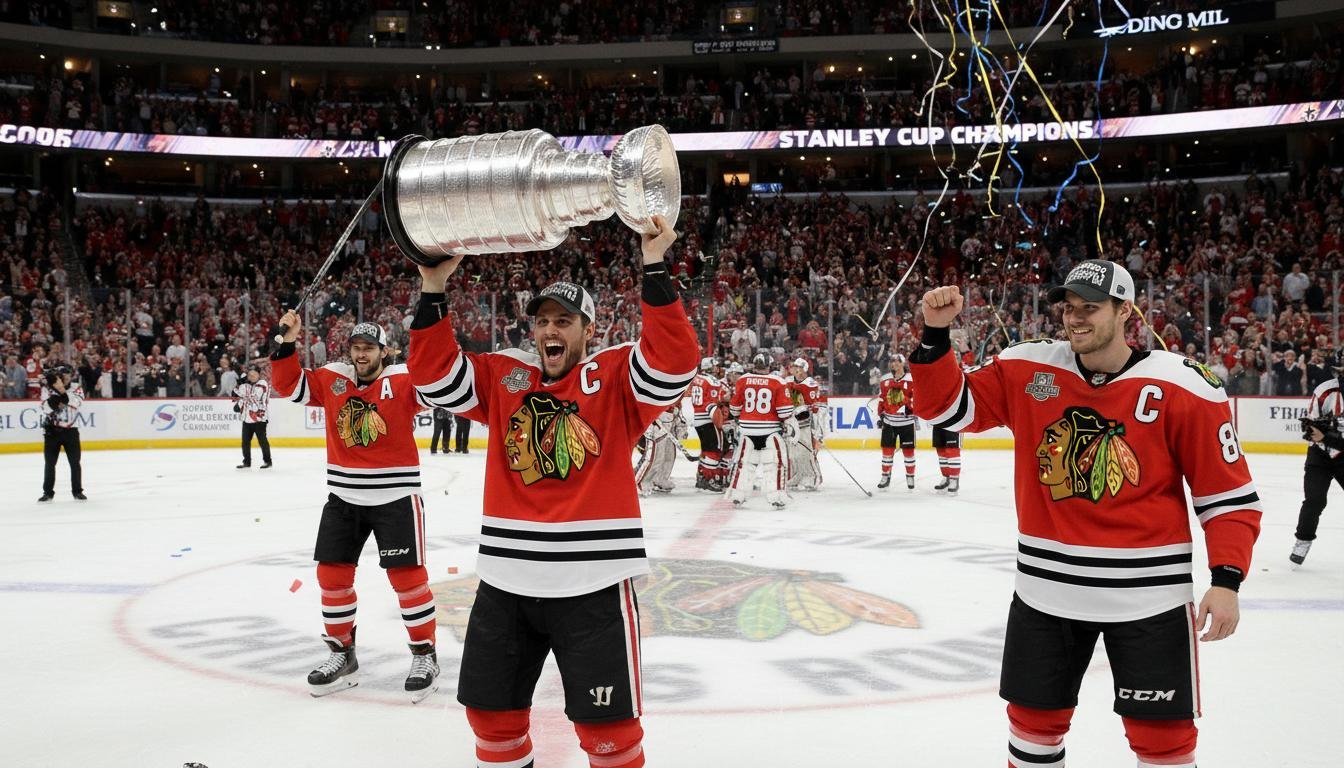
As the 2025–26 season approaches, the landscape of American hockey feels both familiar and refreshingly fluid. Teams that looked invincible two years ago have nudged aside contenders with smart drafting, shrewd cap moves, and coaching changes; others have built quietly, stacking depth and analytics-driven scouting that only reveals itself in the playoffs. This article takes a close look at the clubs most likely to be at or near the top of the NHL standings in 2026, explaining the reasons behind each team’s strength and the questions that could shape their fortunes.
How I chose the field
To compile this list I combined three approaches: roster and cap analysis, recent on-ice performance through the 2023–24 seasons, and forward-looking indicators like prospect pipelines and coaching stability. I leaned on public analytics models, salary-cap trackers, and reporting from established hockey journalists to avoid wishful thinking.
That means the teams here aren’t ranked by a single metric; they’re assessed by sustainability. A club with a star-laden but aging top line might still win a season, but the ones listed are those with combinations of elite talent, depth, and organizational health that suggest they’ll be consistently competitive in 2026.
What counts more than headline players
Star players attract headlines, but the best modern clubs pair those stars with depth scoring, reliable goaltending, and role players who fit a clear system. Analytics like expected goals share the story of puck control and shot quality; cap-friendly contracts and prospect development tell the story of staying power.
Coaching philosophies matter too. Teams that emphasize structure and puck possession tend to weather injuries better than those built solely on offensive flash. That’s why systems, depth, and management track records appear repeatedly in the profiles below.
Snapshot table: ten teams to watch in 2026
The table below gives a compact view of the teams discussed, with one-line reasoning for each selection. Use it as a map before diving into the individual profiles.
| Team | Why they’re prominent for 2026 |
|---|---|
| Boston Bruins | Blend of elite scoring talent and solid defensive core; strong analytics footprint. |
| Colorado Avalanche | Top-tier offensive stars and a generational defenseman create a persistent threat. |
| Vegas Golden Knights | Deep, championship-formed roster with well-established organizational culture. |
| Tampa Bay Lightning | Experienced core and shrewd cap management aiming to bridge to next window. |
| Carolina Hurricanes | System-driven, deep lineup with goalie and defense-first identity. |
| New York Rangers | High-end talent up front and in goal, balancing star power with youth additions. |
| Dallas Stars | Defensively sound team with emerging secondary scoring and strong special teams. |
| Florida Panthers | Physical, fast, and increasingly deep in scoring options; proactive management. |
| Seattle Kraken | Rapidly maturing roster with elite youngsters and improving depth. |
| Minnesota Wild | Top offensive firepower through established stars and a growing supporting cast. |
Boston Bruins — continuity and elite scoring
Boston’s organization has long combined star-level forwards with a structured, rugged identity, and that balance should keep them near the top in 2026. The team’s core scoring continues to produce at high rates, while defensemen who log heavy minutes provide a stabilizing presence that limits high-danger chances against.
What makes the Bruins credible as a long-term contender is their drafting and development pipeline. Even with inevitable turnover, they replenish their bottom-six and blue-line minutes through internal development and occasional low-risk trades. That habit of converting prospects into meaningful NHL contributors is an underrated stability factor.
I remember watching a late regular-season tilt where Boston’s depth scoring decided the game; the big names drew focus from the opposition and allowed secondary scorers to find space. In playoff hockey, those small margins add up, and Boston’s combination of stars and reliable role players makes them dangerous in both short and long series.
Colorado Avalanche — high-octane offense with blue-line star power
Colorado’s strength remains its elite offensive core complemented by one of the league’s best defensemen. When top-line players control zone time and generate sustained pressure, the Avalanche’s chances spike. They play a fast, creative style that can overwhelm opponents who lack disciplined defensive coverage.
Long-term viability depends on balance: managing contracts for top forwards and retaining depth pieces. The Avalanche front office has shown willingness to move assets when needed, and as of 2024 they still possessed a combo of young contributors and proven veterans that projects well into 2026.
From a coaching and matchup standpoint, Colorado must avoid defensive lapses and inconsistent goaltending stretches. If they smooth those rough stretches and keep their scoring lines healthy, their offense makes them one of the most feared teams in the league.
Vegas Golden Knights — organizational culture and depth
Vegas built a culture of daily accountability that shows up on special teams, in high-pressure situations, and in the way role players execute simple but vital tasks. That identity has translated to consistent postseason success since the franchise’s inception, and a culture that wins quietly tends to sustain performance even through injuries.
Depth is Vegas’ real advantage. They can deploy multiple effective lines, which forces opponents into difficult decisions about matchups and ice time. That flexibility helps in best-of-seven series where adjustments matter more than a single superstar.
Front-office adaptability—trading to fill holes and extending the right players—keeps the roster competitive under the cap. Expect Vegas’ model of blending veterans and versatile young players to remain a template other clubs try to emulate through 2026.
Tampa Bay Lightning — experience and playoff DNA
Tampa Bay’s recent history of deep playoff runs gave the club an advantage in handling high-stakes games, and that playoff DNA remains a resource. Their roster construction emphasizes two-way forwards, a strong power play, and disciplined neutral-zone coverage that suffocates opponents’ rhythm.
Cap flexibility and smart extensions will determine how long the window stays open. If Tampa preserves its core while integrating younger contributors, they can be both a short-term threat and a reliable presence in 2026. The organization’s scouting and development have been quietly effective; that kind of depth rarely appears overnight.
Watching Tampa’s transition game is instructive: they convert turnovers into scoring opportunities quickly, which explains why their expected-goals numbers often outrank bolder offensive metrics. That process-driven style scales well into the playoffs.
Carolina Hurricanes — system over flash
Carolina exemplifies a system-first approach: aggressive forechecking, structured defensive coverage, and an emphasis on quick zone exits. Their coaching staff has built a roster that fits a clear identity, and players bought into it, creating continuity that favors consistent results.
In 2026, their advantage will be how their depth layers handle injuries and matchup shifts. Goalies and defensemen who can limit opponent quality chances give them an edge in tight series. The Hurricanes’ drafting strategy—finding mobile defensemen and quick, responsible forwards—has created a roster resilient to midseason injuries.
Teams that try to outscore Carolina often run into trouble; their game plan is to take away time and space. That discipline shows up in penalty-killing success and games decided by a single goal, where systems often beat talent alone.
New York Rangers — star offense with a growing supporting cast
The Rangers have assembled top-tier offensive talent and paired it with improved goaltending and defensive structure in recent seasons. That blend reduces the variance that once made them streaky, turning high-end scoring into a more reliable winning formula.
Their front office’s challenge is balancing contract commitments while continuing to fill secondary scoring roles. Young players getting steady NHL minutes will be the key to sustaining success into 2026; if those prospects continue to progress, the Rangers’ ceiling stays very high.
Home-ice advantage in Madison Square Garden is more than atmosphere; the Rangers use it to tilt special teams and create second-chance opportunities. For teams trying to beat New York in a series, shutting down the first unit and keeping the game to 5-on-5 parity is a proven strategy.
Dallas Stars — structure, defense, and opportunistic scoring
Dallas remains one of the league’s more defensively coherent teams. They limit shot quality and rely on counterattacks to generate offense. That conservative but effective style can frustrate more aggressive teams and is a strong fit for playoff hockey.
In 2026 the Stars will be judged by their ability to generate secondary scoring while leaning on a reliable top pairing on the back end. Maintaining special-teams effectiveness and avoiding an overreliance on a single line will determine whether they push past the second or third playoff rounds.
From games I’ve attended, the Stars’ identity feels deliberate: crisp defensive-zone exits and disciplined gap control. That level of detail—forechecking lanes, neutral-zone traps—doesn’t always show up in highlight reels, but it wins games consistently.
Florida Panthers — physicality, speed, and depth
Florida’s club mixes physical forechecking with quick transition play, producing a hard-nosed identity that wears teams down. Depth scoring and a willingness to use size on the forecheck give them matchup advantages late in games and series.
Organizationally, the Panthers have invested in talent that complements their stars rather than replacing them. That complementary construction is vital: when top-line opponents get attention, secondary scorers must take advantage, and Florida’s depth has shown they can do that.
Special teams and goaltending will shape their 2026 outlook. When those areas click, Florida becomes one of the most difficult teams to play against over a long series.
Seattle Kraken — rapid maturation and youth-driven upside
Seattle’s rise has been one of the more interesting stories, largely because their core is young and still ascending. Homegrown talent and smart additions in free agency have created a roster with both speed and a developing two-way identity.
Key to the Kraken’s 2026 prospects is continued development from recent high draft picks and finding reliable secondary scoring. If those young players take predictable steps forward, Seattle’s base of speed and puck management makes them a genuine dark horse.
There’s a feel-good component to watching a new franchise build. I’ve observed their home atmosphere evolve into one of the league’s more hostile rinks, and that environment helps narrow the gap between established clubs and a hungry upstart.
Minnesota Wild — star power and the margin game
Minnesota’s advantage is elite offensive talent that can decide a game in a single shift, and a supporting cast increasingly capable of finding even-strength offense. When everything clicks, their attack is difficult to contain, particularly in transition and on odd-man rushes.
The Wild’s season-to-season variance often depends on depth scoring and goaltending consistency. For 2026 they’ll need reliable netminding and contributions from role players to move past the early rounds consistently. Their front office has been active in addressing those needs, and the analytics point to a narrowing of weaknesses.
On-ice discipline and puck-management decisions in their own end will determine whether Minnesota is a contender or a high-scoring breakout team prone to defensive lapses. Those margins often decide playoff fate.
What could unsettle the predictions
Injuries remain the most unpredictable variable. Teams with shorter-term depth can crumble when a top-line scorer misses time, while organizations with robust prospect pools usually weather the storm. Salary-cap chaos—large contracts that limit flexibility—can also push teams backward quickly.
Coaching turnover matters as well. A midseason switch sometimes sparks a run, but it can equally destabilize a team’s identity. Clubs that anticipate these risks with proactive roster planning tend to survive them better into 2026 and beyond.
Where analytics and scouting meet
Modern teams that combine analytics with traditional scouting get the best of both worlds: a quantitative sense of what yields results paired with human judgment about player traits, work ethic, and context. The top 2026 teams will be those that show harmony between the two approaches.
That blend shows up in targeted signings, trades that fix specific roster gaps, and drafting that privileges adaptable players over boom-or-bust prospects. Organizations that do this consistently create a sustainable competitive cycle.
My on-ice observations and what they revealed
I’ve attended matchups across several of these markets and noticed a recurring pattern: teams that win close games do so with structure and detail, not simply superior talent. Blocking shots, winning puck battles on the backcheck, and disciplined power play defense are the small things that decide tight series.
Those micro-skills are instilled at practice and reinforced by coaches who emphasize process over short-term flair. In short, the teams likely to top standings and endure into 2026 are the ones with a clear, repeatable process as much as elite rosters.
How fans should interpret these projections
Predictions aren’t contracts—they’re probabilities shaped by current roster construction and organizational choices. Fans should see these projections as a snapshot, not a guarantee, and expect surprises. The NHL’s parity means a midseason emergence or a trade deadline deal can shift the playoff picture substantially.
Enjoy the arc: early-season slumps often give way to postseason surges, and the thrill equals the uncertainty. The most enduring teams combine long-term planning with the ability to make decisive short-term moves.
Final thoughts
Heading into 2026, the landscape favors franchises that have built depth, balanced the books sensibly, and invested in coaching and scouting. The teams profiled here share those traits to varying degrees, which is why they look poised to lead the American hockey scene. Still, hockey remains a sport of fine margins, and the storylines that emerge in 2025–26 will depend on the usual mix of skill, health, and timely decisions.
For fans, the best part is that the league is deep. Even teams not listed can heat up quickly, and the playoffs reward whoever peels back the right edges at the right time. That uncertainty is what makes following the sport into a new season so compelling—every game matters.
- NHL.com — Official site — https://www.nhl.com/
- Evolving-Hockey — Dom Luszczyszyn — https://evolving-hockey.com/
- MoneyPuck — Eric Tulsky — https://www.moneypuck.com/
- The Athletic — Pierre LeBrun; Dom Luszczyszyn — https://theathletic.com/
- NaturalStatTrick — Data and game-by-game stats — https://www.naturalstattrick.com/
- Hockey-Reference — Sports Reference hockey statistics — https://www.hockey-reference.com/
- CapFriendly — NHL contract and cap tracking — https://www.capfriendly.com/
- ESPN NHL — Greg Wyshynski et al. — https://www.espn.com/nhl/
- TSN Hockey — Chris Johnston et al. — https://www.tsn.ca/
Full analysis of the information was conducted by experts from sports-analytics.pro