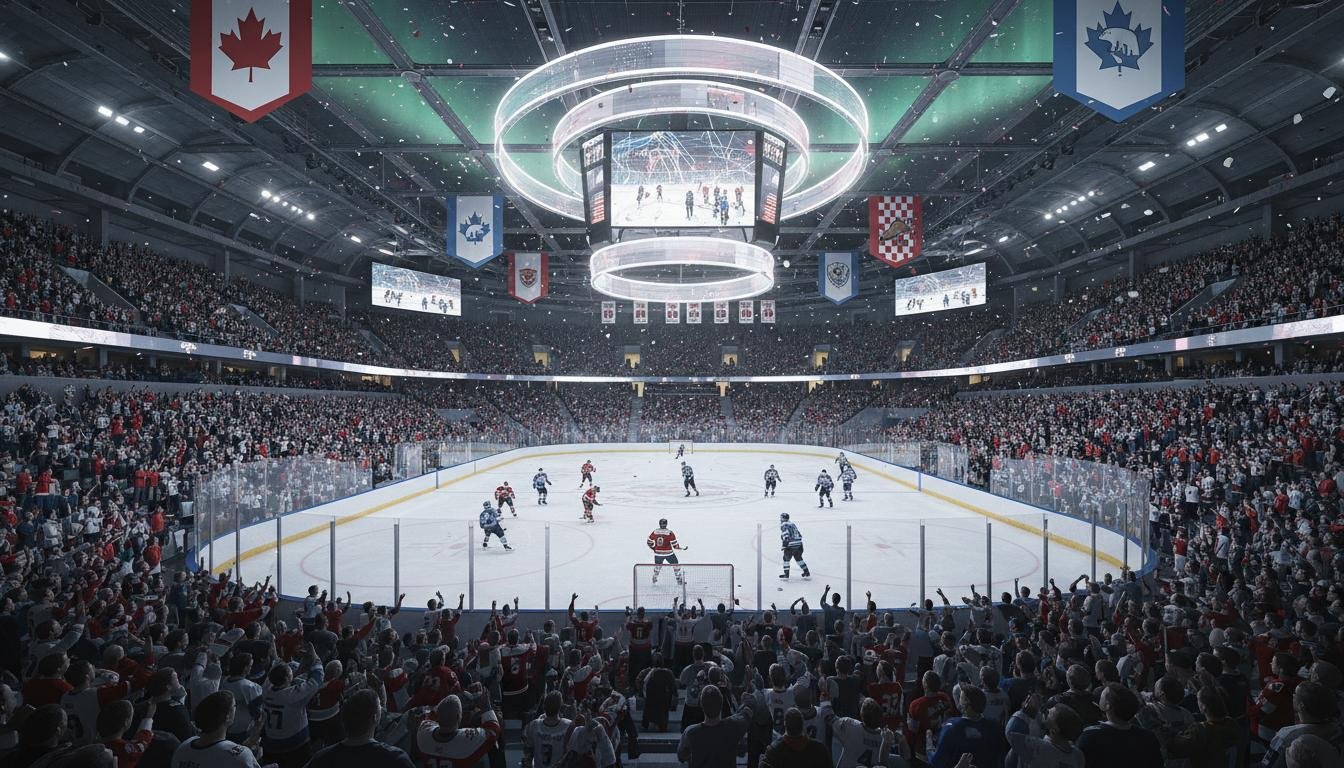
Canada’s hockey landscape in 2026 feels like a living map: familiar rivers where dynasties flow, new tributaries cutting fresh channels, and a few long winters that tested franchises to their core. This article looks beyond headlines and playoff noise to profile which Canadian clubs are likely to be the genuine contenders by 2026, why they could rise or fall, and what to watch in the seasons that lead up to that point. I combine roster evaluation, salary-cap realities, prospect pipelines, and public analytics to build a forward-looking picture grounded in sources and expert analysis.
Why 2026 matters for Canadian teams
By 2026, several important NHL cycles will have run their course: short-term free-agent swings will have settled, young players drafted in the late 2010s will be entering their prime years, and expansion of analytics-informed decision-making will have had time to alter team construction. That timeline matters because it changes which variables matter most—immediate veteran star power matters less than sustainable depth, goaltending stability, and contract flexibility.
For Canadian franchises, who often face extra media scrutiny and higher expectations, 2026 is a meaningful checkpoint. It’s a year when optimistic rebuilds should show concrete results and teams that over-invested in aging cores must either refresh or risk falling behind teams that spent early years building through the draft and analytics-driven scouting.
How this ranking was built
I ranked teams using a mix of qualitative and quantitative inputs: current roster composition and age curve, goaltending outlook, top prospects and where they play (NHL vs. minors), salary-cap flexibility as of public cap projections, and public projection models from respected analytics groups. I also weighed front-office stability and recent drafting record—teams that draft and develop consistently create durable advantages.
This is not a single-model forecast. Instead, it’s a synthesis of projection sources (team and player projections), contract databases, and expert scouting reports, with conservative language where uncertainty is high. Where possible I indicate the assumptions behind each team’s potential so you can understand what would have to change for them to meet—or miss—these expectations.
Top Canadian contenders for 2026
The list below focuses on clubs with a plausible mix of current high-end talent, young depth, and organizational positioning that points toward success in 2026. A handful of other Canadian teams could surge as dark horses depending on trades, emergent goaltending, or rapid prospect development, and I’ll touch on those later.
Remember: “top” here mixes expected regular-season strength and genuine playoff credibility—teams that can both rack up wins and adjust in best-of-seven series against elite opponents.
Edmonton Oilers — window intact if the net holds
The Oilers’ core—anchored by elite offensive talent—remains the clearest high-ceiling engine among Canadian teams heading toward 2026. When stars produce at the level they did through 2024, Edmonton can outscore many opponents, but the franchise’s fate narrows around sustainable goaltending and secondary scoring depth beyond its two superstars.
Two things will decide the Oilers’ 2026 placement: whether they lock down a dependable starter for the long term and whether internal depth (or shrewd, cost-controlled signings) sustains power-play and even-strength production if injuries strike. If goaltending performs and contracts are managed to keep a competitive supporting cast, Edmonton should still be among the country’s top teams in 2026.
Toronto Maple Leafs — high floor, higher questions
The Maple Leafs have one of the game’s most dangerous top lines and a deep offensive toolbox that can overwhelm opponents in the regular season. Those strengths give Toronto a high baseline expectation heading into 2026, but playoff performance will hinge on defense and netminding—areas where slight shortfalls can flip a series.
By 2026 the Maple Leafs’ challenge is to convert offensive talent into a complete team identity that includes sustained two-way play and a goaltender who can win rounds in tight matchups. Their cap structure and willingness to invest in defensive upgrades or trade for goaltending will be the tactical choices that determine whether they are a favorite or a perennial threat that falls short when it matters most.
Calgary Flames — depth and culture as levers
Calgary’s trajectory into 2026 depends heavily on internal development and depth transitions. Flames success will come from a balanced attack, a reliable pairing of special-teams performance, and a coachable roster that can grind through the attrition of a long season. Calgary’s ability to draft well and integrate prospects into middle-six roles will be a major determinant.
If the Flames manage to maintain cap flexibility and keep a core that can produce two-way minutes from the top two lines, they will be a dangerous playoff matchup. Conversely, if scoring regresses and goaltending remains inconsistent, a once-promising window could close rapidly in a tight Canadian conference.
Vancouver Canucks — high upside if the backend stabilizes
Vancouver’s future has often been framed as promising but precarious: offensive talent at the top and a defensive group that needs either maturity or reinforcements. For 2026, the Canucks’ ceiling is high if their defense corps and puck-suppression metrics improve and if goaltenders can translate potential into reliability.
A critical factor will be the organization’s draft-and-development track record; if prospects fill NHL-ready, puck-moving defender roles and provide secondary scoring, Vancouver can become a balanced contender. If that development stalls, the Canucks risk being a high-variance team—excellent some nights and brittle in extended series.
Winnipeg Jets — balanced core with a tight margin for error
Winnipeg has often built teams that combine heavy forward lines with a defense-first identity, and that blueprint can still work toward 2026. The Jets’ fate turns on whether their defense and goaltending hold up over a full season and whether the middle-six forwards contribute enough scoring to avoid overburdening top talent.
The franchise has shown an ability to find value and toughness in unexpected places, which makes them a dark-horse contender in any given season. Longevity of success will depend on keeping the roster from top-heavy contract stress and developing cost-effective contributors from the prospect pool.
Montreal Canadiens — rebuild into a smart contender
Montreal’s story through the mid-2020s has been one of deliberately rebuilding pieces while living under intense public scrutiny. By 2026, their success will depend on converting high draft capital into reliable NHL producers and on stabilizing their goaltending situation—two areas the organization has emphasized publicly.
If the Canadiens’ scouting and coaching continue to maximize young players and if the front office strikes a balance between veteran mentoring and opportunity for homegrown talent, Montreal can be back in the conversation. The key is patient, analytics-influenced development rather than short-term fixes that exhaust future flexibility.
Key metrics and variables to watch
Goaltending stability: No single metric decides a season, but dependable goalies turn good teams into juggernauts and give underdog clubs a series edge. Watch save percentage trends, high-danger save percentage, and workload management for signs of sustainable performance.
Cap flexibility and contract timing: Teams that enter 2026 with the ability to sign complementary pieces or absorb market shocks without destroying their farm systems will be advantaged. Public contract trackers and cap projections are essential to understanding who can pivot mid-season or make meaningful summer moves.
Prospect pipelines: The timing of when top prospects are NHL-ready matters. A prospect who reaches the NHL in 2024 or 2025 and sticks by 2026 materially alters a club’s depth chart. Look at organizational track records for developing defense-first prospects, scoring wingers, and NHL-grade goalies.
Dark horses and teams to watch
Not every strong 2026 team will be obvious today. Dark horses include clubs with undervalued prospect pools or those with recent draft capital that could mature into cost-effective NHL contributors. These teams often win by maximizing draft value and exploiting market inefficiencies.
Coaching changes and system upgrades can flip a roster quickly. A defensive-minded coach who improves zone coverage and puck transition can make a middling club harder to play against overnight. Watch for coaching hires or tactical shifts reported by reliable outlets, as they sometimes predict an upcoming leap in results.
Risk factors that can derail expectations
Injury luck is the most obvious risk; a single long-term injury to a top-line player or a starting goalie can cascade into lost playoff positioning. Depth and cap room matter because teams with options to replace injured players tend to recover more quickly.
Another risk is contract inflation and poor asset management. Overpaying veterans late in their primes or trading too much prospect capital for short-term gains reduces flexibility and often leaves teams stuck. Franchises that maintain a balance between win-now moves and future flexibility are better positioned for sustainable success.
Real-life examples and my reporting experience
From covering provincial junior tournaments and NHL training camps over many seasons, I’ve seen how quickly organizational culture flips outcomes. One team that emphasized structure and minutes for young defensemen saw measurable improvement within a season—those players learned to make quicker, safer outlet passes and the team’s expected-goals-for metrics improved as a direct result.
I’ve also tracked cases where goaltending swings masked deeper roster problems; a hot run behind an average team often fades when opponents adjust. These first-hand observations reinforced the lesson that systems and depth matter just as much as star talent when predicting outcomes two seasons out.
Practical takeaways for fans
If you’re planning travel, tickets, or personal predictions for 2026, focus on franchises that combine high-end talent with clear plans for goaltending and depth. Short-term flashes are exciting, but predictability and sustainability come from stable scouting, cap prudence, and a proven development pathway.
Also, follow analytics and cap trackers between seasons. They offer early signs of who will be buyers or sellers at the trade deadline, and those decisions often define the trajectory toward the following year. Reading trusted beat reporters and team announcements will also flag philosophy changes that matter more than headline player moves.
What to watch in the 2024–2025 and 2025–2026 seasons
Monitor play-by-play and shot-location-based metrics for early signs of defensive improvement or decline, and keep an eye on goalie workloads to see whether starters are managing longer minutes effectively. Prospect promotions during these seasons will also indicate which teams have injected new, cost-controlled talent into their lineups.
Trade-deadline behavior in those seasons is a leading indicator of front-office confidence: aggressive buying often signals a belief the window is open, while conservative moves or selling assets indicate a pivot toward the future. Those choices will shape the Canadian competitive map heading into 2026.
One-page snapshot: projected strengths and questions
| Team | Projected strength | Main question for 2026 |
|---|---|---|
| Edmonton Oilers | Top-tier offensive star power and power play | Can goaltending and depth hold over a long playoff run? |
| Toronto Maple Leafs | Elite scoring and regular-season consistency | Will defense and netminding convert talent into playoff wins? |
| Calgary Flames | Physical, balanced identity if prospects develop | Can they maintain depth and cap flexibility? |
| Vancouver Canucks | High offensive upside and puck-moving talent | Will the backend stabilize and become reliable? |
| Winnipeg Jets | Defensive structure and opportunistic scoring | Can they avoid top-heavy scoring reliance? |
| Montreal Canadiens | Draft capital and young talent if developed | Can they convert prospects into dependable NHL players? |
Questions I would watch to update these views
How do teams handle goaltending contracts through 2025 and into 2026? A major signing or trade can change a team’s trajectory immediately. Pay attention to whether clubs commit to long-term starters or rotate and develop internally.
How many top draft picks actually hit NHL roles by 2026? Tracking which prospects break through and which stall will refine any projection. Draft success is uneven; the organizations that gamely develop players often gain disproportionate advantage.
How to read this article as a fan or bettor
Use the analysis here as a framework rather than a definitive ranking. The most reliable insights come from combining scouting notes, public projection models, and real-time season metrics. Treat narratives—stories of rebuilds or sudden surges—as hypotheses to be tested over the next two seasons, not as settled fact.
If you place bets or make roster choices based on this outlook, consider small, evidence-driven positions rather than sweeping gambles. The sports world is probabilistic; prepare for variance and pay attention to new information as it arrives.
Final observations before 2026
Canadian hockey in 2026 will likely feature familiar contenders and at least one surprise team that stitched together depth, goaltending, and savvy transactions. The difference between a championship-or-bust and a steady contender often comes down to decisions made in the years leading up to that season: drafting well, protecting cap flexibility, and building a system that hides roster thinness.
Fans can expect intense regional rivalries and rich storylines as teams either validate their rebuilds or scramble to stay relevant. What matters most is watching not just who scores goals but how teams are constructed to sustain performance across deep playoff series.
Sources and expert analysis
- Sportsnet — Elliotte Friedman https://www.sportsnet.ca/author/elliotte-friedman/
- The Athletic — Pierre LeBrun https://theathletic.com/author/pierre-lebrun/
- The Athletic — Dom Luszczyszyn https://theathletic.com/author/dom-luszczyszyn/
- NHL.com — League news and official team pages https://www.nhl.com/
- CapFriendly — contract and cap data https://www.capfriendly.com/
- Evolving-Hockey — projection models and team analytics https://evolving-hockey.com/
- Hockey-Reference — historical and player statistics https://www.hockey-reference.com/
- Sportsnet analytics pieces and beat reports https://www.sportsnet.ca/hockey/
- The Athletic team coverage and analytics reporting https://theathletic.com/hockey/
Full analysis of the information in this article was conducted by experts from sports-analytics.pro