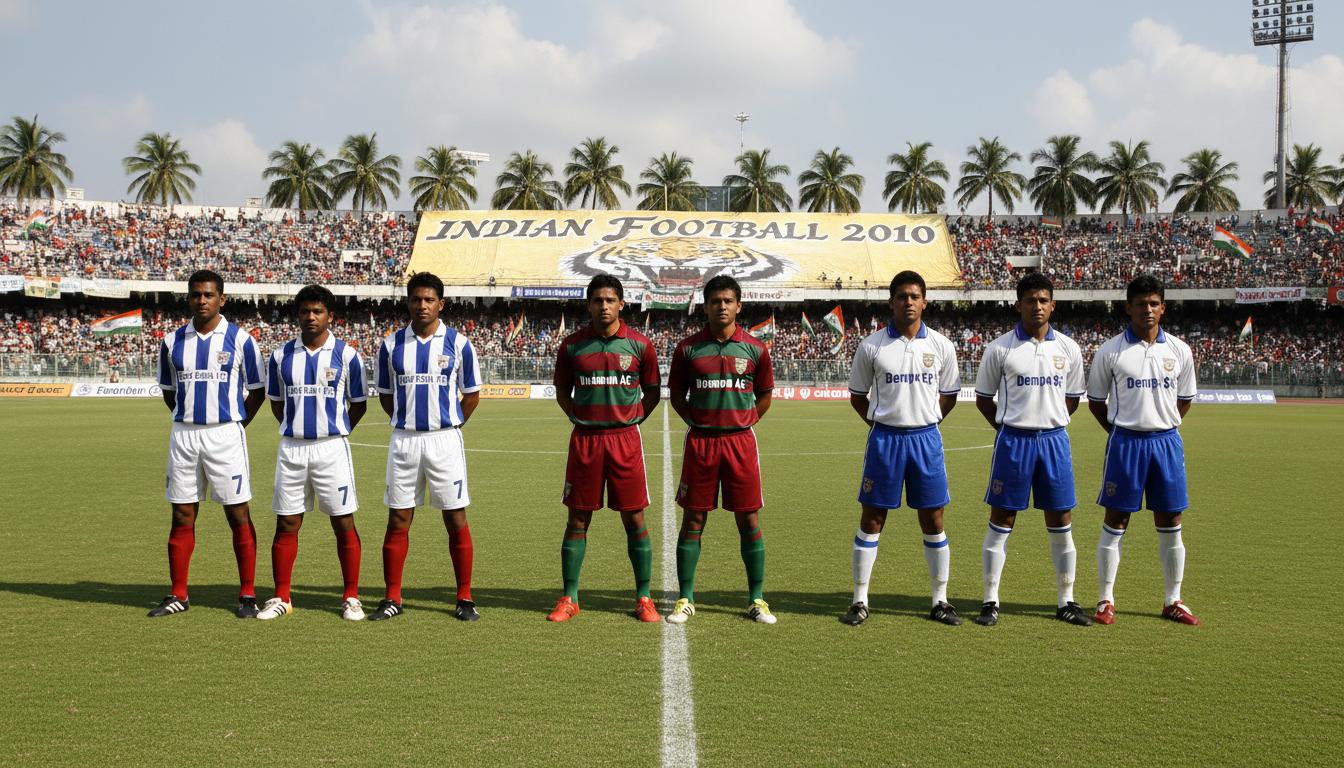
The year 2010 sat at an interesting crossroads for Indian football: the I-League era was settling in, traditional powerhouses were reinventing themselves, and a handful of clubs were setting standards both on and off the pitch. This article walks through the teams that mattered that year, why they mattered, and how they shaped conversations about domestic football in India.
Understanding the landscape in 2010
In 2010, Indian club football revolved primarily around the I-League, state leagues, and a handful of cup competitions like the Federation Cup and the Durand Cup. Infrastructure, coaching, and club management were uneven across the country, which made success a mix of good scouting, strong local support, and occasional financial backing.
Clubs from Goa and Kolkata continued to dominate headlines because of their history and fan bases. At the same time, newer projects from cities such as Pune and Mumbai were beginning to demonstrate that a different model—one focused on youth development and corporate governance—could work in India.
Why certain clubs rose above the rest
Being “best” in 2010 meant different things: titles and trophies mattered, but so did consistency, continental performance, and the ability to produce or attract quality players. Clubs that invested in coaching and scouting tended to do better in the long run, even if they didn’t always win the season’s top prize.
Another factor was continental competition. Teams that qualified for the AFC Cup or Asian Champions League gained valuable experience and visibility, which helped them recruit better players and sharpen their tactics for domestic competition.
Dempo SC (Goa)
Dempo had become synonymous with smart recruitment and nimble football. Backed by a strong local talent pool in Goa and an eye for useful foreign signings, they were consistently competitive around 2010 and brought a professional approach that many other clubs tried to emulate.
Their style emphasized possession play and technical midfielders who could control tempo. That approach paid dividends not just in the I-League but also when they represented India in continental tournaments, where organized structure and tactical discipline mattered most.
East Bengal (Kolkata)
East Bengal’s place in Indian football history is secure, and in 2010 the club remained a heavyweight thanks to passionate supporters and an established recruitment pipeline. The Kolkata derby with Mohun Bagan still defined seasons for countless fans, and East Bengal’s performances in cup competitions kept their reputation sharp.
What sets East Bengal apart is a culture that blends tradition with occasional tactical reinvention. That mix energized local support and helped the club maintain relevance during a period of broader change in Indian club football.
Mohun Bagan (Kolkata)
Mohun Bagan’s legacy is as deep as any club in the country, and their 2010 narrative was built on resilience and a relentless pursuit of silverware. The club’s fan base turns every home match into a high-pressure environment for visiting teams, a factor that has historically translated into clutch performances.
While Mohun Bagan faced challenges typical of large, historic clubs—financial constraints and the need to modernize—its ability to attract prominent Indian talent and maintain a competitive squad kept it firmly among the year’s best.
Churchill Brothers and Salgaocar (Goa)
Goa’s football ecosystem was a major strength for Indian football in 2010, and clubs like Churchill Brothers and Salgaocar benefited from that environment. Both teams combined local talent with pragmatic foreign signings to remain competitive across league and cup matches.
Churchill Brothers in particular built a reputation for a hardworking defensive core, while Salgaocar often impressed with fluid attacking moves and youth integration. Their consistent performances helped keep Goan clubs at the top of domestic conversations.
Mahindra United (Mumbai) and the shifting corporate model
Mahindra United represented a different model: a corporate-backed club that invested steadily in coaching and facilities. Their operational approach influenced other city-based clubs and highlighted how corporate involvement could professionalize Indian football.
However, 2010 also marked difficult decisions for several corporate teams, as parent companies evaluated the cost and priorities of running a top-tier club. That tension between passion and corporate pragmatism shaped the future of Mumbai-based football projects.
Emerging clubs and new approaches
Pune FC and other newer outfits showed that building from the youth up and prioritizing development could yield steady improvements. These clubs emphasized long-term planning—academy structures, coaching education, and community outreach—over short-term marquee signings.
What made these projects notable in 2010 was their professional mindset. Even when matches didn’t always go their way, these teams offered a blueprint for sustainability in a football ecosystem that was often volatile.
What the national team’s situation added
The national team’s performances had a trickle-down effect on clubs: international call-ups raised player profiles and sometimes disrupted club rhythm, but they also pushed clubs to train players to higher standards. This interaction helped raise the level of play domestically in subtle ways.
Coaches who were adept at preparing players for both club and country tended to attract better talent, and those clubs often benefited from improved tactical understanding and fitness regimes that came from exposure to international fixtures.
Table: notable teams in 2010 and why they mattered
| Club | Base | Why notable in 2010 |
|---|---|---|
| Dempo SC | Goa | Consistent top-tier performances and continental exposure |
| East Bengal | Kolkata | Historic club with passionate support and cup pedigree |
| Mohun Bagan | Kolkata | Legacy club with strong competitive identity |
| Churchill Brothers | Goa | Hardworking defense and reliable league showing |
| Salgaocar | Goa | Fluid attack and youth integration |
| Mahindra United | Mumbai | Corporate professionalism and development model |
My view from the stands
I remember a humid evening at Salt Lake Stadium in 2010, watching a Kolkata derby where the crowd drowned out the announcements and every tackle felt like a turning point. Moments like that explain why clubs such as East Bengal and Mohun Bagan remain central to Indian football—they create atmospheres that matter beyond points and tables.
Likewise, a trip to Goa showed me how local community support and organized youth programs produced players who could compete nationally. Those grassroots connections were a major reason Goan clubs punched above their weight.
Legacy and lessons for modern Indian football
The clubs that stood out in 2010 taught two principal lessons: build sustainable structures, and respect local talent pathways. Teams that combined both tended to outlast flashier projects that depended entirely on short-term spending.
For today’s stakeholders, the 2010 season is a reminder that institutional integrity—good coaching, steady youth investment, and community engagement—pays off in the long run. Those principles helped certain clubs weather the challenges that followed in the next decade.
Sources and further reading
For historical results, league tables, and detailed season coverage, these sources provide authoritative information and contemporary reporting: