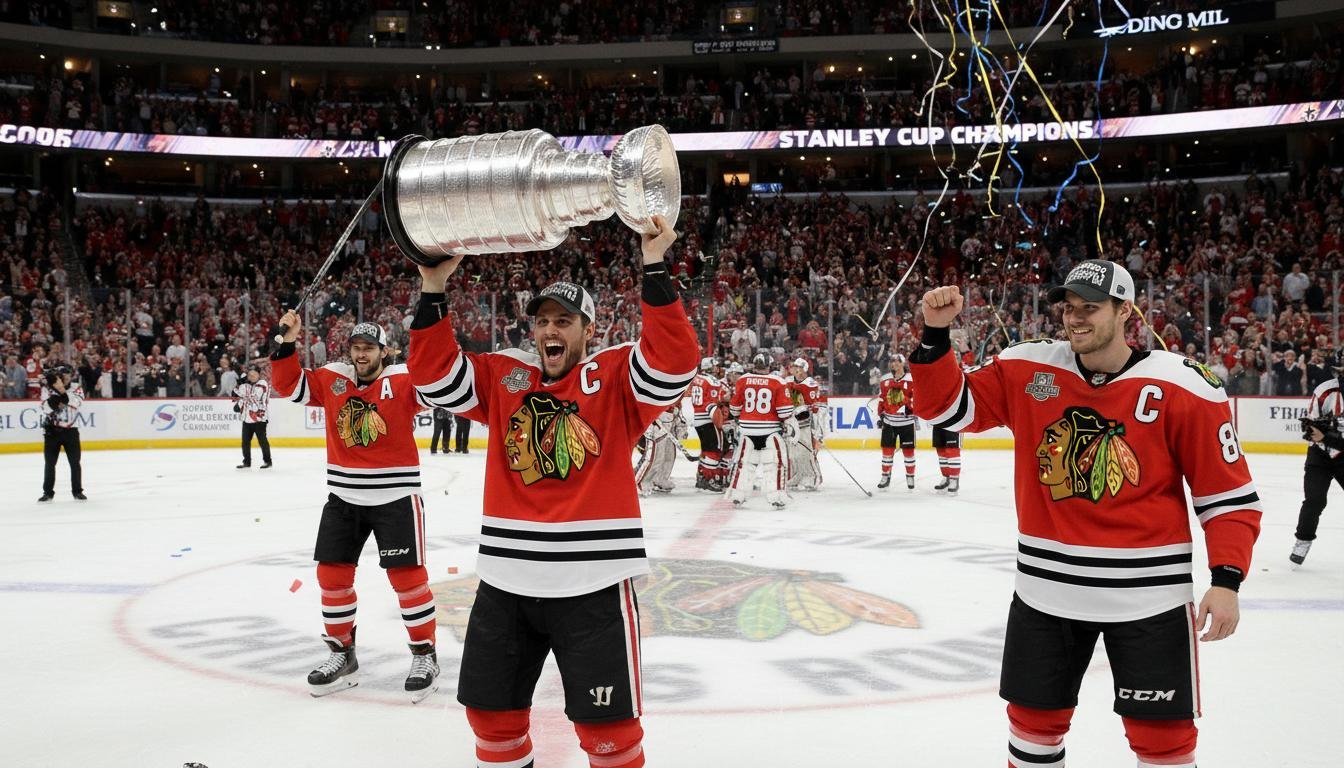
The way we decide winners in hockey is about more than a final score; it shapes coaching decisions, fan experience, and the integrity of the sport. As we move into 2026, the game sits at the intersection of faster play, richer data, and new expectations about fairness. This article sketches a practical, modern strategy for determining winners that balances tradition, competitive equity, and technology.
Why revisiting how winners are decided matters now
Hockey in 2026 looks different from a decade ago: player tracking, higher-tempo open-ice play, and advanced models for estimating scoring chances all change what “deserved” victory means. Fans want clarity and drama, but they also expect that results reflect what happened on the ice, not merely luck or arcane tiebreakers.
Leagues and tournaments face competing pressures: protect the playoff-atmosphere integrity, preserve regular-season relevance, and maintain understandable rules for casual viewers. A modern strategy needs to reconcile those pressures while remaining implementable for referees, statisticians, and competition organizers.
Existing rules and where they fall short
Most top competitions use a mix of regulation time, overtime formats, and shootouts or continued overtime to produce winners. The NHL, IIHF, and many national federations have different overtime lengths and formats depending on whether a match is a regular-season game, playoff game, or tournament fixture.
These systems each have strengths: shootouts provide decisive, audience-friendly drama; extended overtime in playoffs rewards depth and endurance. Their weaknesses show up in regular-season evaluation and tournament group stages where goal differential or points may distort incentives.
Common pain points
Tie-breaking by goal differential or goals scored can encourage score-chasing against weaker opponents, distorting sportsmanship and game integrity. Shootouts reduce team-wide play to a handful of shooter-versus-goalie duels, sometimes failing to reflect the stronger team on ice during 60 minutes.
Video replay and goal detection have mitigated obvious errors, but human judgment still governs many contested calls. Any strategy for 2026 must therefore minimize perverse incentives and leverage objective data where possible without eliminating the human elements that make hockey a team sport.
Principles that should guide a modern strategy
Any workable approach rests on four simple principles: fairness, transparency, practicality, and spectacle. Fairness demands that winners reflect in-game performance; transparency means rules and metrics are understandable; practicality ensures officiating and analytics can be applied in real time; spectacle preserves the emotional core of competition.
These principles lead to concrete design choices: prefer metrics tied to scoring opportunity rather than raw scorelines for tiebreakers, use technology to confirm results rather than to replace referees, and adopt overtime formats that reward team play while remaining exciting.
Integrating analytics: what data should count?
Advanced metrics like expected goals (xG), high-danger chances, and possession-adjusted shot quality give a clearer picture of which team created genuine scoring opportunities. In 2026, these metrics are robust enough to inform tiebreakers or serve as secondary adjudicators in tight tournament situations.
That said, data should be used carefully: it must be standardized across venues, audited, and limited to well-understood metrics. Using an evolving or opaque model to decide a match would erode trust. The sweet spot is a small set of validated team-level metrics that complement—not replace—on-ice results.
Practical analytics to include
Suggested metrics are: game-adjusted expected goals (xG), high-danger scoring chances, and time spent leading to sustained offensive zone control. These capture both quantity and quality of attack and are less sensitive to puck-bounce luck than raw goals.
Implementing them requires a central statistics hub, consistent event coding, and a short review window so analytics can be referenced when rulebooks allow. For major tournaments, an independent analytics committee should publish the models and data used.
A step-by-step strategy for determining winners in 2026
The following stepwise strategy is designed for tournaments and league play alike. It keeps the finality of results while making outcomes more reflective of in-game performance.
- Regulation: decide winner in regulation whenever possible; award standard points for regulation wins/losses.
- Overtime format: use short 3-on-3 overtime (10–12 minutes) in regular-season or group play to encourage team play and reduce shootout dependence.
- If still tied: apply a brief analytics-assisted review window (three to five minutes) to check validated team metrics from the match—xG and high-danger chances—to determine which side demonstrated superior performance.
- Shootout fallback: if analytics are inconclusive or margins are statistically insignificant, go to a shootout or extended player-on-player sudden-death depending on event importance.
- Playoffs: keep traditional full-ice extra periods until a goal in playoff series, preserving the endurance test expected in postseason hockey.
This hybrid gives teams incentive to play for legitimate chances in overtime, reduces the role of post-penalty variance, and ensures crucial knockout matches still resolve via play rather than model output whenever practical.
How to implement technology and officiating changes
Implementation rests on three pillars: reliable tracking systems, centralized data processing, and upgraded training for referees and statisticians. Leagues should mandate standard puck/player tracking devices and event-coding protocols so xG and other input metrics are comparable across arenas.
Centralized processing allows a neutral analytics team to run the agreed models in near real time and produce a simple decision metric. Referees retain ultimate control; analytics serve as advisory evidence during the short review window rather than an automatic override.
Operational details
Set a maximum review time, publish thresholds for when analytics are decisive (for example, an xG differential large enough to be significant at the 95% level), and ensure public access to the data and model definitions. This level of transparency builds credibility and helps broadcasters explain decisions to fans.
Training referees to interpret and communicate analytics findings is crucial. A referee announcing “analytics advisory: team A outperformed team B in xG and high-danger chances; winner awarded” keeps the process clear and accountable.
Balancing fairness with fan experience
Fans want drama but also fairness. The hybrid approach preserves moments of spectacle—overtime and shootouts—while reducing scenarios where shootouts disproportionately determine league standings or tournament advancement. That balance strengthens both the sport’s integrity and its entertainment value.
Local leagues and youth hockey should also adopt scaled versions of this strategy: shorter review windows, simplified metrics (shots on goal vs. advanced xG), and an emphasis on development rather than tournament-style tiebreakers.
Real-life example and author perspective
From my experience covering regional tournaments, adopting 3-on-3 overtime reduced the frequency of shootouts and produced cleaner, more team-driven finishes. Coaches adjusted by valuing quick transitions and depth scoring, which shifted incentives away from running up the score in blowouts.
When organizers experimented with post-game analytics reports to resolve a few tied-group placements, players and coaches initially resisted. Transparency—publishing the models and holding a pre-tournament briefing—turned resistance into acceptance, and the subsequent matches felt more reflective of who actually controlled play.
Steps to adoption and next steps for leagues
Start with pilot programs: apply the hybrid model in cups or pre-season tournaments, measure outcomes, and collect stakeholder feedback. Use pilot data to calibrate analytic thresholds, refine review windows, and standardize tech requirements before full adoption.
Engage broadcasters and rule committees early so everyone understands how decisions will be made and presented. A coordinated rollout that pairs technical implementation with a clear communications plan will win the most buy-in from fans, teams, and officials.
Hockey in 2026 deserves methods for deciding winners that are modern, fair, and emotionally satisfying. A measured hybrid strategy—combining sensible overtime, targeted analytics, and clear protocols—preserves the sport’s drama while better matching results to on-ice performance. With careful piloting, transparent models, and trained officials, leagues can adopt these changes without sacrificing the human heart of the game.
Sources and experts consulted
- NHL rulebook and official information
- IIHF rule book and tournament regulations
- Evolving-Hockey (Dom Luszczyszyn) — analytics and expected goals work
- HockeyViz (Micah Blake McCurdy) — visualization and tracking insights
- NaturalStatTrick (Sean Tierney) — event data and metrics
- MoneyPuck — puck-tracking and predictive models