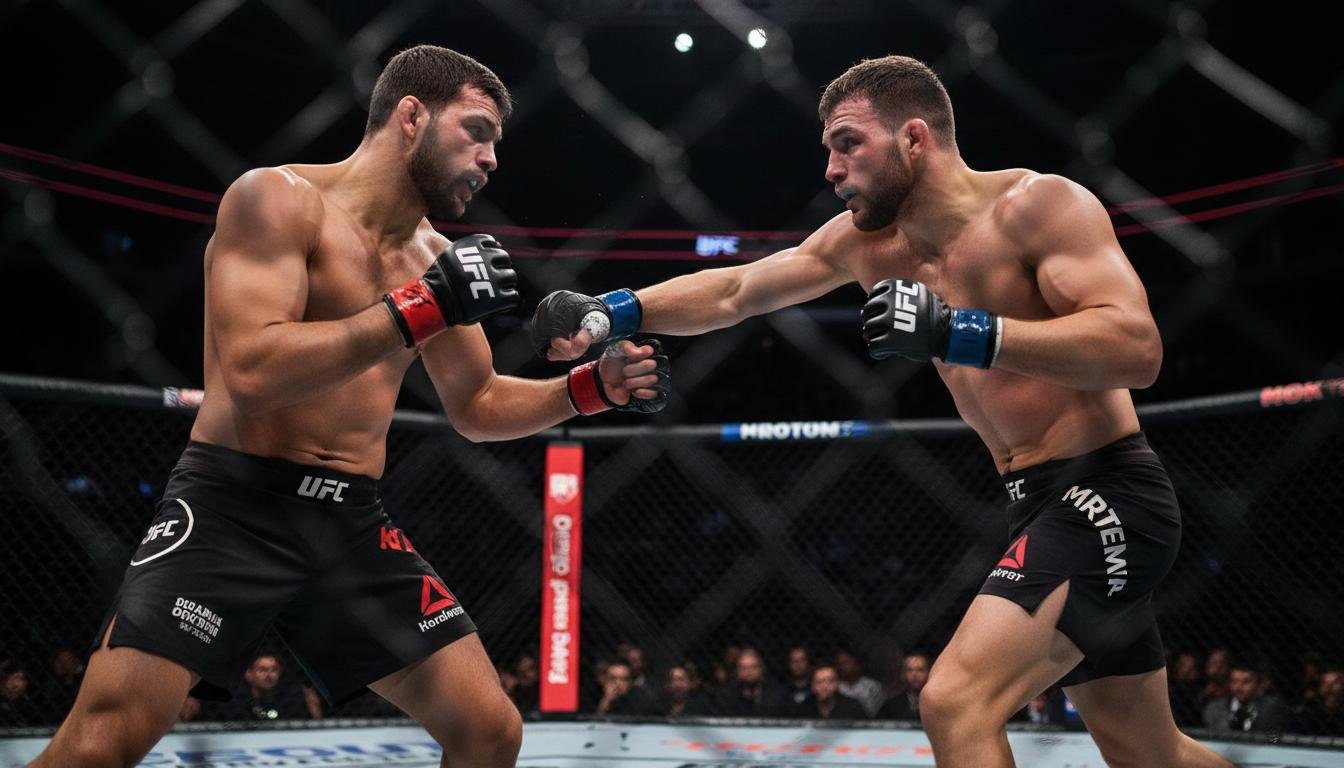
Sports betting attracts sharp analytics, casual fans, and anyone who enjoys the pulse of competition. This guide walks through the evidence, the math, and the human factors that separate hopeful gamblers from consistent, disciplined bettors. Read on for strategies grounded in research, practical rules you can apply immediately, and the real-world lessons learned by professionals.
Why strategy matters more than luck
Most bettors focus on picking winners and losers, but the long-term outcome depends on process, not single results. A solid strategy turns short-term variance into an advantage by managing risk, finding edges, and limiting costly mistakes.
Think of betting like running a small investment fund: returns fluctuate, but consistent rules and risk controls determine whether you grow your bankroll or slowly give it away to the house. That mindset is critical before you place your first wager.
Fundamental concepts every bettor should know
Before placing bets, understand expected value (EV), variance, and implied probability. Expected value calculates the average outcome of a bet over many repetitions; positive EV bets are the only sustainable way to profit.
Variance is the size of swings you will experience. Sports betting has high variance — even the best systems lose frequently — so you must manage bankroll and expectations accordingly. Implied probability converts odds into a percentage to compare against your own estimate of an event’s likelihood.
Odds formats and how to read them
Odds come in American, decimal, and fractional formats. American odds are common in the U.S.: positive numbers show potential profit on a $100 stake; negative numbers show how much you must stake to win $100. Decimal odds express the total payout per unit staked, making expected value calculations straightforward.
Convert odds to implied probability to test for value. For example, decimal odds of 2.50 imply a 40% chance (1 / 2.50). If your model estimates a 48% chance, that bet carries positive expected value and is worth considering.
House edge and juice
Books build revenue by charging a commission, typically called vig or juice. On a standard -110 market (American), you must risk $110 to win $100; that extra $10 per $100 is the bookmaker’s margin. Over many bets, vig erodes returns and makes finding true edges more difficult.
Shop around for the best lines and compare prices across multiple sportsbooks. Small differences in odds compound over time and can turn a negative EV approach into a positive one when combined with disciplined staking.
Bankroll management: the backbone of any plan
Bankroll management dictates how much you stake on each wager and determines whether you survive losing streaks. Smart sizing reduces the chance of ruin and maximizes the benefit when you identify an edge.
Common approaches include flat betting (same stake each bet), percentage staking, and the Kelly criterion. Flat betting is simple and reduces emotional decision-making, while percentage staking ties stakes to your current bankroll and scales risk proportionally.
The Kelly criterion explained
The Kelly formula prescribes an optimal fraction of your bankroll to wager on an edge to maximize long-term growth. It balances reward and risk mathematically, but full Kelly often implies volatile swings that many bettors cannot tolerate.
Practically, bettors use fractional Kelly — half-Kelly or quarter-Kelly — to smooth volatility and protect against model error. Use Kelly only when you have a reliable estimate of edge and variance; otherwise, it can magnify mistakes.
Illustrative table: simple staking guidance
| Risk tolerance | Suggested stake | Notes |
|---|---|---|
| Conservative | 0.5%–1% of bankroll | Low volatility, protects capital |
| Moderate | 1%–2.5% of bankroll | Balances growth and drawdowns |
| Aggressive | 3%–5% of bankroll | Higher growth, greater risk of large drawdowns |
Finding edges: where the money is made
Edges come from superior information, quicker reaction to news, better models, and exploiting market inefficiencies. The sharpest bettors combine multiple small advantages into a meaningful return.
Seek markets where public money moves lines irrationally — often popular-team or celebrity-driven markets. Contrarian opportunities arise when public sentiment pushes odds away from true probabilities.
Market efficiency and closing line value
The betting market tends to be efficient, especially in major sports. Closing line value (CLV) — beating the market’s final line — is a strong signal of positive EV. If your model beats the closing line regularly, you likely have an edge.
Tracking CLV requires discipline and record-keeping. Simple snapshots when markets open and when they close reveal whether you’re improving on market pricing or simply following it.
Using models without worshiping them
Models translate data into probability estimates, but every model has blind spots. Combine quantitative models with contextual judgment — injuries, weather, coaching changes, or travel schedules — to improve accuracy.
Trust models for consistency and speed, but use qualitative adjustments when reliable information is overlooked by public lines. The best bettors iterate their models after each season, learning from errors rather than assuming perfection.
Constructing a predictive model
Building a model starts with a clear question: do you want to predict point spreads, totals, moneylines, or in-play outcomes? That decision guides data collection and the modeling approach you choose.
Predictive models range from simple Elo or regression systems to complex machine-learning ensembles. Start simple and add complexity only when it demonstrably improves out-of-sample performance.
Data sources and feature engineering
High-quality inputs matter. Use official box scores, play-by-play data, weather feeds, and injury reports. Features like pace, efficiency, situational splits, and rest days often carry predictive power beyond raw scores.
Feature engineering — crafting inputs that capture underlying cause-effect — often outperforms throwing raw data into a black-box model. For example, instead of raw win-loss records, use opponent-adjusted metrics to control for strength of schedule.
Validation, backtesting, and avoiding overfitting
Good backtesting uses proper train/test splits, rolling windows, and out-of-sample validation. Overfitting — designing a model that works on historical noise — is the most common failure mode for new bettors who rush to complexity.
Use simple benchmarks and stress tests. If a model’s performance collapses when you shift seasons or slightly vary inputs, you likely overfit. Robust models show modest, reliable improvements over many datasets.
Bet types and where to focus

Sportsbooks offer many products: point spreads, moneylines, totals, futures, props, and live betting. Each product has a different balance of liquidity, vig, and informational efficiency.
Begin with markets that match your skills and data access. Point spreads and totals in mainstream sports like NFL and NBA are highly liquid but competitive. Minor leagues and niche markets may offer softer lines but require specialized knowledge.
Props and futures: higher variance, specific edges
Player props and futures can carry significant bookmaker margins, but they also present opportunities for deep research. Props depend on micro-level data that public markets may ignore, and futures allow you to exploit market bias at season start.
Be cautious: props often feature shorter-term variance and limits from sportsbooks if you win. Use smaller stakes and accept that profitable prop strategies typically require niche expertise and selective wagering.
In-play betting: speed and discipline
Live betting transforms markets quickly as games unfold. It rewards speed, good pre-game models, and the ability to interpret in-game dynamics under pressure. However, it magnifies psychological pitfalls like chasing losses.
To succeed in-play, prepare models that update with live inputs and practice a strict staking plan. Many professionals automate portions of live betting to avoid human reaction times and emotional bias.
Psychology and behavior: controlling your mind
Human biases — recency bias, overconfidence, and the gambler’s fallacy — wreck well-planned strategies. Recognize these tendencies and build rules that reduce discretionary temptation.
Simple behavioral rules help: limit the number of bets per day, precommit to stake sizes, and avoid revenge betting after losses. Many profitable bettors treat their plan like a code of conduct rather than a suggestion.
Dealing with variance and drawdowns
Drawdowns are inevitable. The difference between hobbyists and professionals is how they respond. Professionals cut stakes or step back during prolonged variance rather than chase losses or abandon their systems after a few bad runs.
Set drawdown limits in advance and tie them to objective thresholds. For example, reduce stakes by 50% after a 30% drawdown and halt operations for a fixed review period after a 50% drawdown. Rules like these preserve capital and force disciplined reflection.
Record-keeping and performance analysis
Track every wager: date, market, stake, odds, model or reasoning, closing line, and result. Accurate records reveal true skill and prevent self-deception. Many bettors think they are winning until they audit their history and realize the opposite.
Analyze metrics such as ROI, unit return, CLV, and win-rate by market and by model. Over time you’ll learn which edges persist and which strategies require retirement or retooling.
Simple reporting structure
Create monthly and seasonal reports that focus on process metrics, not only profit. Measure how often you beat the closing line, average edge estimate, and variance in returns. Those process measures are more predictive of future success than raw profit from a short sample.
Automate reporting where possible. A spreadsheet or simple database that produces these metrics saves time, avoids error, and makes pattern detection straightforward.
Tools, resources, and the experts to follow

Use reputable data providers for reliability. Many pros rely on services like league APIs, official statistics, and established analytics platforms. For market data, websites that archive odds movement are invaluable for CLV analysis.
Follow researchers and analysts who publish methodologies and empirical evidence. Learn from practitioners who explain what worked and why — both successes and failures teach lessons.
Recommended reading and resources
- Kelly’s original paper on optimal betting (J.L. Kelly, Jr.).
- Joseph Buchdahl’s analysis in “Sharp Sports Betting” for market-centric strategies.
- Pinnacle’s educational resources on value and market efficiency.
- FiveThirtyEight’s sports models and approach to probabilistic forecasting.
- American Gaming Association for industry trends and data.
Legal, ethical, and practical considerations
Know the law in your jurisdiction. Regulations vary widely and affect where you can place bets, how winnings are taxed, and which markets are available. Betting legally protects you and avoids future complications.
Also consider sportsbook rules and limits. Winning bettors frequently encounter restrictions: lower maximum bets, account limitations, or soft bans on certain markets. Strategies must account for operational realities of the industry.
Responsible gambling
Even systematic, model-driven betting can harm if stakes exceed financial comfort. Responsible gambling practices protect both your capital and mental health: set deposit limits, time controls, and access restrictions if needed.
If betting becomes a source of stress or financial instability, seek help from reputable organizations that provide counseling and resources for problem gambling.
Common mistakes and how to avoid them
Beginner mistakes cluster around chasing short-term wins, overleveraging, and ignoring the vig. Another frequent error is confusing a winning system with a short-term lucky streak — statistical significance matters.
Avoid overtrading and discounting transaction costs like limits, fees, and withdrawal times. Scrutinize any “hot” tip that lacks data-based backing or repeatable logic, and always require evidence before allocating meaningful stakes.
Sample real-life example
Early in my career as an analyst I tracked college basketball lines for a full season, focusing on neutral-site conference tournament games. My model incorporated opponent-adjusted offensive and defensive efficiencies plus rest and travel variables, which were often undervalued by public lines.
Instead of betting aggressively, I used conservative percentage staking and detailed record-keeping. Over a 200-bet sample the model produced modest positive EV but experienced a 20% drawdown mid-season. Adhering to staking rules and iterating on features after the drawdown turned modest edges into a reliable long-term approach.
Advanced tactics used by professionals

Pros exploit correlated bets, leverage hedging strategies, and specialize deeply in a market segment. They often use automated systems to submit bets simultaneously across books to capture fleeting value.
Arbitrage opportunities are rare in liquid markets but do appear briefly; professionals have tools to spot and act on those windows. Another advanced tool is lineup-level expected points models used by bettors in player prop markets.
Automation and bots
Automation reduces reaction time and removes emotion from execution. Many professional operations use APIs and bots to scan odds, execute bets, and manage stakes according to pre-coded rules.
Automation requires careful monitoring, redundancy, and compliance with sportsbook terms. Small coding errors can cause large unintended exposures, so test thoroughly in simulated environments before going live.
How to develop your own winning strategy

Start by choosing a narrow focus: a single sport or even a league and market where you can gather data and develop an intuition. Depth beats breadth in early stages, because edges are easier to find when you specialize.
Build a simple predictive framework, validate it thoroughly, and define a staking plan tied to bankroll size. Keep records and iterate based on evidence. Patience and curiosity outperform impulsive bets every time.
Checklist for launching a strategy
- Define the market and product you’ll trade.
- Assemble reliable data sources and set up storage.
- Develop a baseline model and benchmark it against simple heuristics.
- Create staking rules and drawdown limits.
- Run an out-of-sample test and track CLV.
- Go live with small stakes, then scale responsibly if metrics hold.
Measuring success beyond profit
Short-term profit is noisy. Focus on process metrics that lead to sustainable profit: consistent CLV, low prediction error, and discipline in staking rules. Those indicators are the real currency of a robust strategy.
Over time, aim to refine both your model and your behavior. A bettor who improves error rate and maintains discipline is likely to compound modest edges into long-term success.
When to retire a strategy
Markets change. A strategy that worked last year may fail once information becomes more accessible or public understanding shifts. Set objective retirement criteria, such as a persistent decline in CLV or a statistically significant drop in ROI across multiple seasons.
Retirement doesn’t mean failure; it’s a signal to reallocate effort. The best operators cycle strategies, continually searching for new inefficiencies rather than clinging to old wins.
Practical next steps for readers
If you’re serious about improving, begin with a focused pilot: pick one league, gather data for the last three seasons, build a simple model, and test it out-of-sample. Commit to strict bankroll rules and log every bet.
Read widely from credible sources, follow analysts who publish their methods, and network with other disciplined bettors. Learning from failures — both your own and others’ — accelerates progress far more than chasing hot tips.
This guide condenses key principles used by professional bettors and analytics teams. Strategy matters more than luck, and the best outcomes arise from disciplined stakes, reliable models, meticulous records, and humble iteration. Start small, measure everything, and let evidence guide your choices; over time, those little advantages compound into meaningful results.
Sources and experts
- J.L. Kelly Jr., “A New Interpretation of Information Rate” (Bell System Technical Journal, 1956) https://ieeexplore.ieee.org/document/6773024
- Joseph Buchdahl, Sharp Sports Betting (book) https://www.gamblewise.co.uk/sharp-sports-betting/
- Pinnacle, “Sports Betting Resources” https://www.pinnacle.com/en/betting-resources
- Nate Silver / FiveThirtyEight, sports forecasts and methodology https://fivethirtyeight.com
- American Gaming Association (AGA), industry reports and statistics https://www.americangaming.org
- Ed Thorp, research on odds and gambling mathematics https://en.wikipedia.org/wiki/Edward_O._Thorp
Full analysis of the information in this article was conducted by experts from sports-analytics.pro