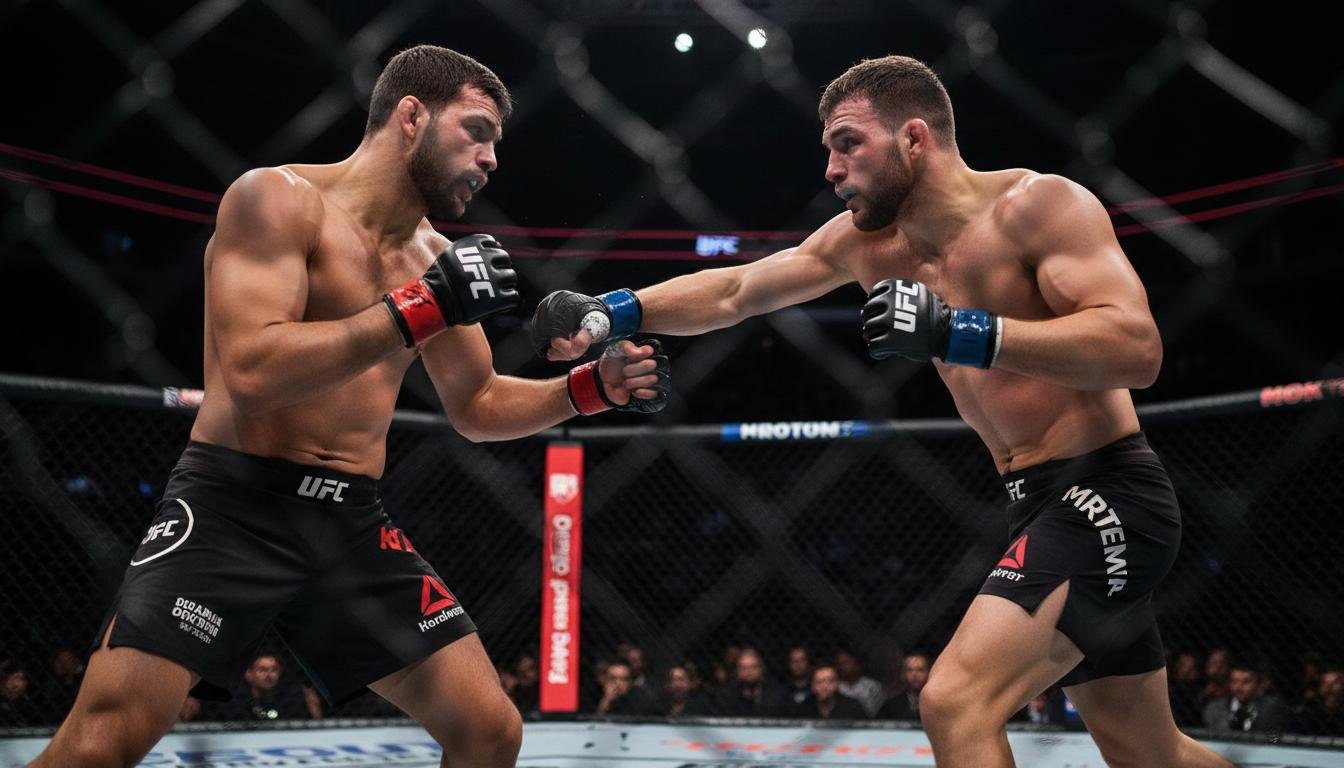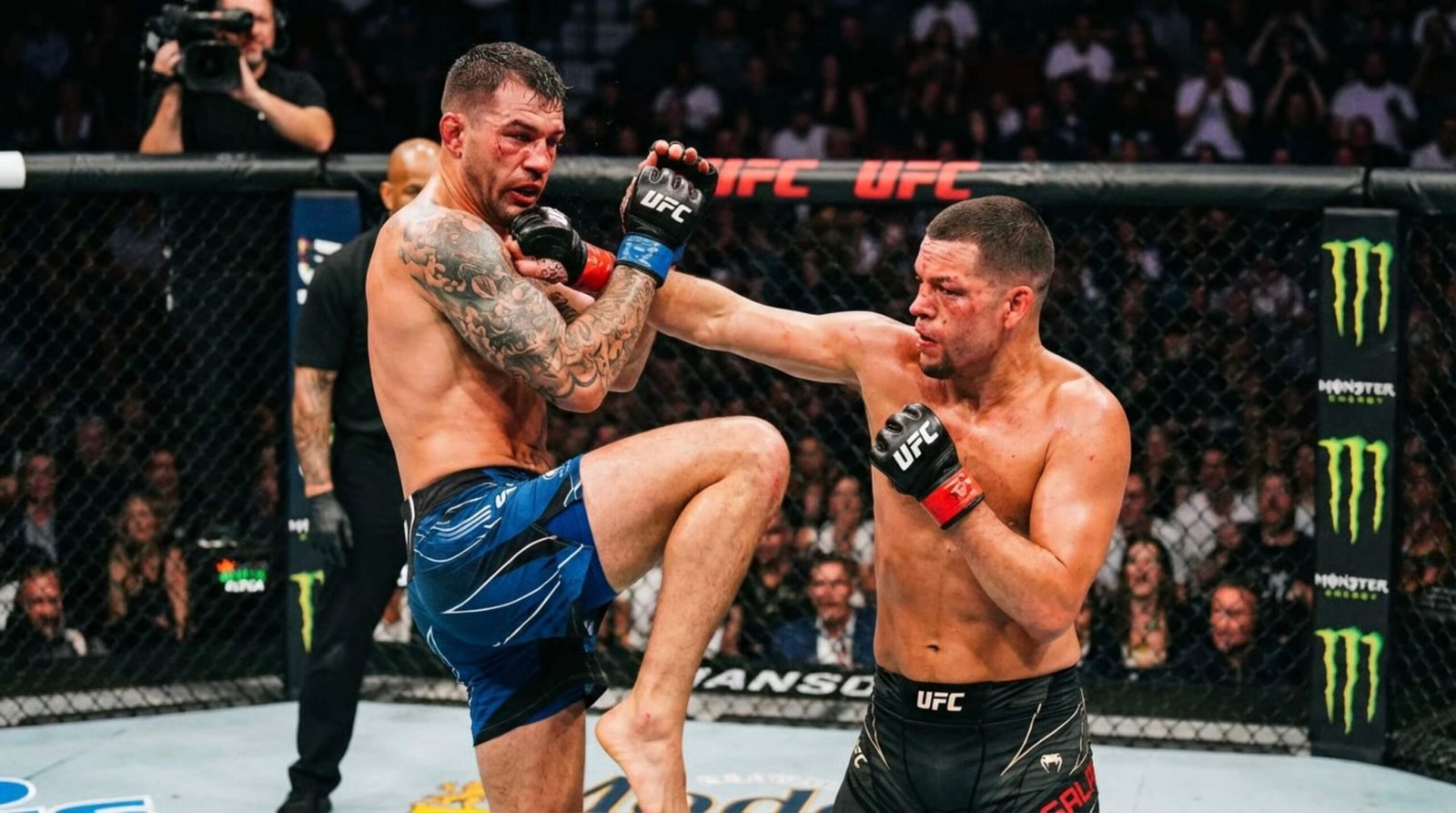
Mixed martial arts is raw, fast, and maddeningly unpredictable — which is exactly why it attracts serious bettors and weekend dabblers alike. This guide walks through what separates smart MMA wagering from guesswork: odds interpretation, model building, money management, live strategies, and the softer intelligence you can’t capture with numbers alone. Read on for a practical, expert-informed playbook you can use whether you’re placing your first bet or refining a model you’ve been running for seasons.
Why MMA betting is its own animal
MMA is a hybrid sport. Unlike baseball or basketball, which have stable, repeatable events and a large volume of comparable plays, MMA has a small sample size for each fighter and many fight-specific variables. That makes historical data noisier and the variance higher.
One more twist: stylistic matchups matter more than raw rankings. A skilled wrestler can neutralize a striker who otherwise looks dominant on paper. The result is a market that can be slow to adjust to contextual factors — and therefore offers opportunities for disciplined bettors.
Markets you’ll see and how they work
Before you place money, know the markets. The most common MMA bets are moneyline (fight winner), method-of-victory, round betting, over/under on rounds, and parlays. Futures and props — like “Will there be a submission?” — are available at larger books and often carry different edges.
Different books sometimes price the same markets very differently. That spread is where value appears. Shopping lines across multiple sportsbooks is a small effort with an outsized impact on your long-term return.
Common bet types (quick reference)
| Bet type | What it means | When to use it |
|---|---|---|
| Moneyline | Pick who wins | Core market; best for general edge hunting |
| Method of victory | Pick KO/TKO, submission, or decision | When fighters’ styles suggest a likely finish |
| Round betting | Pick the round or ranges | High variance but high payout; use when round models are sound |
| Over/Under rounds | Will fight go over or under X.5 rounds | Good for fights with clear tempo disparities |
| Parlays | Multiple bets tied together | Avoid for bankroll; small, disciplined parlays only |
Odds interpretation and implied probability
Odds are information, not destiny. Convert American odds to implied probability to compare the market’s view with your own. For positive odds (+X): implied probability = 100 / (X + 100). For negative odds (-Y): implied probability = Y / (Y + 100). These give a quick read on how much the market favors one fighter.
Remember to adjust for the bookmaker’s vigorish (vig). The raw implied probability sums to more than 100% because sportsbooks build in a margin. Your job is to estimate the true probability and identify situations where your estimate exceeds the market’s implied probability after adjusting for vig.
Simple example
If Fighter A is +150, the market implies a 100 / (150 + 100) = 40% chance. If your research and model put Fighter A’s chance at 48%, that 8-point edge is where value lives — provided your assessment is sound and not wishful thinking.
Always be honest with your probability estimates. Overconfidence is the fastest way to lose bankroll over time.

Building a data-driven edge: the right features
Good models start with relevant inputs. For MMA, useful features include striking accuracy, strikes absorbed per minute, takedown success and defense, submission attempts, significant strikes differential, reach, age, fight frequency, and quality of opponent. Contextual variables — like late-notice replacements, camp changes, or a move up/down in weight class — are also crucial.
Not all features are equally valuable, and some are tightly correlated. For example, strikes landed per minute and significant strikes accuracy often tell overlapping stories; regularization or principal component analysis can help when variables crowd the model.
Quantitative and qualitative inputs
Quantitative data comes from official fight metrics (UFC Stats), aggregated historical odds, and line movement feeds. Qualitative inputs include injury reports, corner changes, and a fighter’s demeanor at weigh-ins. The best models synthesize both types: numbers for baseline probability, human scouting to spot exceptional circumstances.
Feature engineering is often the competitive edge. Derived metrics like “strikes differential vs. opponent quality” or “takedowns per round adjusted for opponent TD defense” are far more predictive than raw counts.
Model types that work for MMA
You don’t need exotic methods to gain an edge; start simple. Logistic regression gives interpretable probabilities for win/loss. Elo-like systems track fighter form and adjust ratings dynamically. Gradient-boosted trees or random forests can capture nonlinear interactions and are useful when you have a wide set of features.
For round markets or time-to-event predictions, consider survival analysis or Poisson models adapted to finish probabilities. Ensemble approaches — combining a few model types — often yield better-calibrated probabilities than single-model outputs.
Validation, calibration, and testing
Backtest carefully and use proper out-of-sample validation. K-fold cross-validation and rolling windows (time-series aware splitting) prevent look-ahead bias and overfitting. Don’t chase headline accuracy; focus on calibration — does a 60% predicted probability translate to ~60% wins in reality?
Brier score and log-loss are good metrics for probability models. Maintain a betting simulator to test strategy performance under realistic bankroll and stake sizing constraints.

A practical, simple modeling walkthrough
Start with a lightweight pipeline: collect fighter stats from UFC Stats, merge in historical matchups and odds, and engineer features such as adjusted striking differential and takedown defense ratio. Use logistic regression to predict P(win) and produce calibrated probabilities with isotonic regression or Platt scaling if needed.
Evaluate on a holdout set of fights you didn’t touch during training. Track not only accuracy but expected value (EV) per bet if you lay stakes using your probability estimates. If the EV is positive and robust across seasons, you may have a usable model.
From probabilities to bets
Turn probability differences into stakes using a staking plan. If you estimate Fighter A at 48% and the market at 40% for +150 moneyline, compute your edge and decide stake size. Many modelers use fractional Kelly to balance growth and drawdown risk.
Keep a careful ledger: date, book, market, odds, stake, and rationale. Patterns emerge in your records that will expose model blind spots faster than any paper analysis.
Bankroll management: the backbone of any strategy
Even a profitable edge will experience long losing streaks in MMA because variance is high. Bankroll rules are not optional; they are survival tools. Set a base unit (for example, 1% of bankroll) and stick to it consistently.
Flat betting is powerful in its simplicity: stake the same unit on every bet. Fractional Kelly scales stakes to edge size but demands accurate probability estimates; overestimation of edge will blow up bankroll quickly. Consider using half-Kelly or quarter-Kelly to tame volatility.
Example staking comparison
| Approach | Pros | Cons |
|---|---|---|
| Flat unit | Low variance, easy discipline | Underutilizes big edges |
| Fractional Kelly | Growth-optimized for known edges | Sensitive to estimation error |
| Proportional (percent of bankroll) | Automatically scales with performance | Still requires edge discipline |

Line shopping and sportsbook selection
Not all books are created equal. Use reputable sportsbooks for liquidity and consistent pricing, but also maintain accounts with low-margin or regional books that sometimes misprice lines. OddsPortal and similar aggregators make line shopping feasible in seconds.
Account management matters too. Spread your action across multiple books to avoid sharp-limits or account restrictions, and keep a small percentage of your bankroll in tools for quick live-bet access. Rebate programs and promos are also meaningful — a steady +1–2% to bankroll via bonuses compounds quickly.
Live betting: opportunities and pitfalls
Live betting is where markets can be slow and mistakes common. If a favorite loses the first round early despite landing most significant strikes, the live line might overreact and offer value on the favorite to finish. Conversely, fading live momentum without model-backed reasons is a losing habit.
Use live betting for specific, well-defined edges: adjust probability based on in-fight indicators your model can track (significant strikes landed, takedown success rates in fight, visible damage). If you can get low-latency data and watch the fight, small, quick stakes on high-confidence edges work best.
Do this, not that, in live markets
- Do: Bet when your pre-fight model’s baseline combines with a measurable in-fight shift (e.g., favored wrestler lands 3 takedowns in the opening minute).
- Do not: Chase a fighter because you like their aggression. Emotions inflate stakes quickly and erode EV.
- Do: Use partial hedges or cashouts to lock profit when you’re in a net positive but faces are war of attrition.
- Do not: Expect live markets to be kind after a late controversial judges’ decision — volatility and limits spike.
Props and futures — where expertise pays off
Prop markets like method-of-victory or round-number bets often have softer pricing because they require deeper scouting. If you know a fighter has an elite submission game facing an opponent with a history of submission attempts conceded, props become a place to find value.
Futures (like a fighter winning a division) are the domain of long-term vision and careful probability discounting. Study potential paths: injuries, matchups, and promotion booking patterns. Futures require patience and a tolerance for locked-up capital.
Soft information that models miss (and how to use it)

Numbers miss camp friction, training-partner quality, and psychological readiness. I once followed a mid-tier fighter who frayed publicly during camp; despite a favorable model, the market was slow to account for his collapse — and he lost. That taught me to weight credible qualitative signals more heavily in marginal cases.
Sources include local reporters, fighter interviews, social media behavior, and medical withdrawals. Weigh such signals for credibility. One-off social media spats aren’t worth much, but a pattern of canceled sparring sessions and late-notice camp changes should alter your probability estimate.
Common mistakes even experienced bettors make
Overfitting models to small-sample noise is probably the most common technical error. In MMA, a fighter’s single knockout or dominant win can skew metrics for months. Guard against overreacting to isolated events.
On the human side, recency bias and favorite bias erode bankrolls. People love supporting favorites or recent highlight finishes; betting should be a cold calculation about value, not a fan’s desire to be part of a moment.
Avoid these tactical errors
- Betting too large on lines that moved against your model without a clear new signal.
- Chasing losses by increasing stake size impulsively.
- Ignoring shop opportunities — a half-point swing can change long-term EV materially.
Record keeping and iterative improvement

Keep a structured log: date, event, fighter A vs. fighter B, book, odds, stake, calculated probability, outcome, and short notes on why you placed the bet. Update your model when systematic biases appear in your results.
Quarterly reviews are crucial. Compare predicted probabilities to outcomes, analyze which market segments produce the best ROI (e.g., undercard fights, novelty props, certain weight classes), and re-allocate effort accordingly.
Legal, ethical, and platform considerations
Know the legal landscape in your jurisdiction. Use regulated sportsbooks where possible — they offer consumer protections, liquidity, and transparency. Where betting is not legal, do not attempt to circumvent local laws.
Protect privacy and account security. Use two-factor authentication, moderate bet sizes on any single account to avoid account restrictions, and avoid suspicious or unlicensed offshore books that might fail to pay winning bettors.
Psychology: staying disciplined when variance bites
Sport betting is an endurance contest. You will have streaks — sometimes long losing ones — even with an edge. Discipline and an unemotional approach separate successful bettors from the rest. Have rules for when to pause, when to re-evaluate, and when to scale bets up or down.
Emotions lead to wrong decisions quickly. A simple routine — research, model output, line check, stake via staking plan — can reduce impulsive bets made when the lights are bright or the anger is hot.
Case study: a week in a pragmatic bettor’s life

Here’s a practical workflow I use and recommend: Monday, update the model with the latest fight results and odds; Tuesday–Wednesday, pull qualitative notes from media and social channels for upcoming fights; Wednesday night, finalize priors; Thursday, watch film snippets on late-notice or stylistically complex fights; Friday morning, line shop and place any pre-fight value bets; Saturday, reserve a watch list for live opportunities and small, disciplined stakes.
This cadence keeps research focused and reduces the impulse to over-bet. It also makes it easier to test which hours and markets actually produce your best edges.
When not to bet
Not every day is a betting day. If your model shows no clear edges, or if you can’t find a book offering a reasonable spread, accept inactivity as a positive outcome. Lost capital from unnecessary action compounds quickly.
Also, avoid markets you don’t understand deeply. If you don’t have good reason to favor a particular prop over the market, pass. Respecting your own limits is a strategy in itself.
Tools, data sources, and where to learn more
Start with official metrics and aggregators: promotion statistics pages, odds aggregators, and reputable analysis sites. Build a simple database of historical fights and odds, and gradually layer in features. If you intend to scale up into live markets, invest in low-latency data and multiple sportsbook accounts.
Educationally, read up on probability, bankroll management, and basic machine learning. The better your probabilistic intuition, the fewer mistakes you will make when translating numbers into bets.
Final thoughts and next steps
MMA betting rewards preparation more than bravado. Consistent profits come from marrying solid quantitative work with credible qualitative intelligence, disciplined staking, and honest, frequent review. Treat it as an iterative craft, not a get-rich-quick scheme.
Start small. Build a habit of careful record keeping and steady improvement. Over months and years, those habits compound into real edge — and real results.
Sources and expert resources
The following authoritative sources and analytics resources were used and consulted in creating this guide. Use them to dig deeper and build your own models and processes.
- UFC Stats — https://stats.ufc.com
- The Action Network — https://www.actionnetwork.com
- OddsPortal — https://www.oddsportal.com
- ESPN MMA — https://www.espn.com/mma
- Sherdog — https://www.sherdog.com
- FiveThirtyEight — https://fivethirtyeight.com
- BetMGM Insights — https://sportsbetting.betmgm.com/en/insights
- MMA Junkie — https://mmajunkie.usatoday.com
Note: full analysis of the information in this article was conducted by experts from sports-analytics.pro