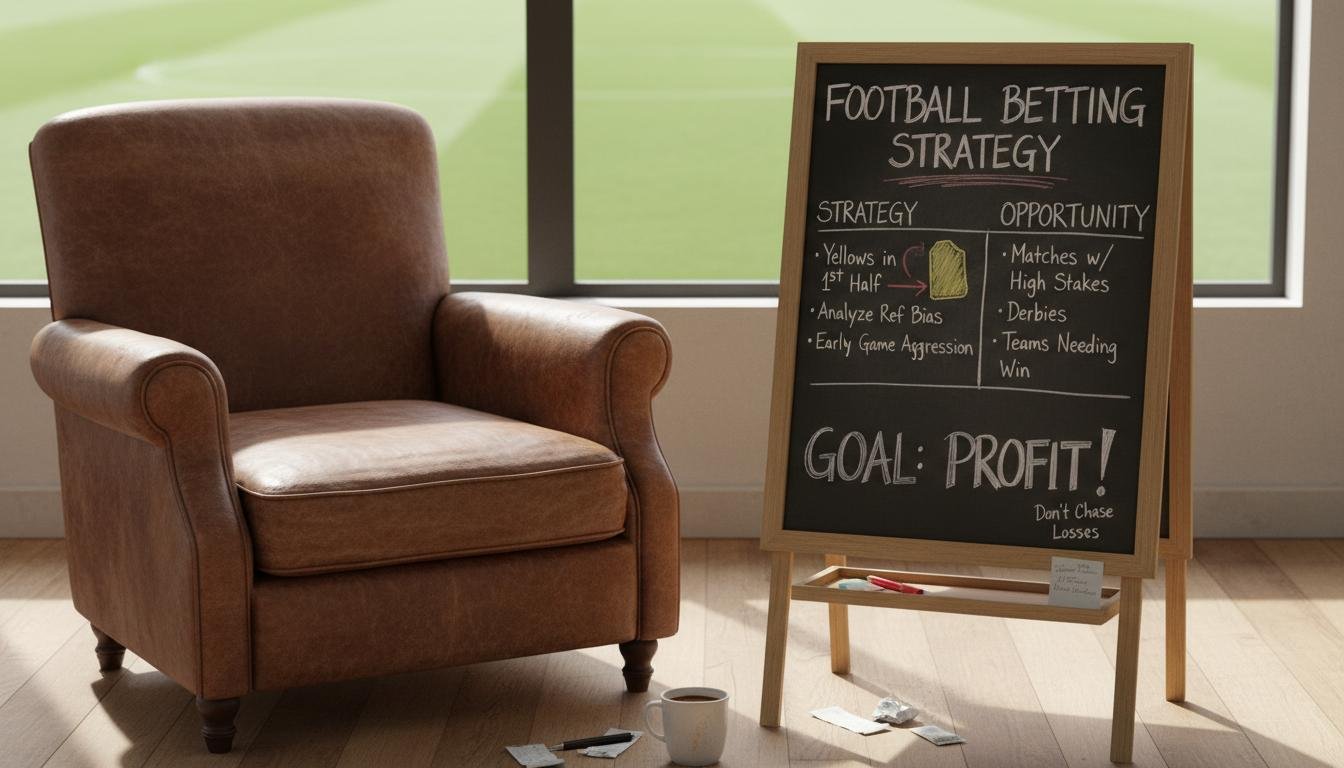
Betting on early cards can feel like finding a narrow lane through a crowded city — rewarding if you pick the right moment, costly if you don’t. This article breaks down a practical, evidence-based approach to targeting first-half yellow-card markets, showing how to read referees, teams, and match context to tilt the odds in your favor.
Why the first half matters for card markets
The first 45 minutes of a match have a different rhythm than the second. Players are fresh, tactics are being tested, and referees use early cautions to set boundaries. Those opening dynamics mean that the first-half card market behaves differently and often offers clearer signals than full-match card totals.
Bookmakers price first-half card markets separately because they’re driven by short-term events — fouls, tactical friction, and referee thresholds — not by fatigue or late-game desperation. That concentrated timeframe can create small but exploitable edges if you prepare.
Core data points you should always check
Before placing a first-half cards bet, gather three types of data quickly: referee tendencies, team disciplinary profiles, and match context. Each of these moves the needle; together they build a meaningful probabilistic picture.
Referee stats matter more than people think. Some officials hand out early cautions to control a game; others prefer a warning approach. Team stats — fouls conceded, tackles in the defensive third, and cards per 90 — reveal playing style and susceptibility to early bookings. Context includes tournament stakes, rivalry intensity, and weather, all of which can ratchet up aggression.
How to read referees
Look for the referee’s average yellow cards per first half and the percentage of matches where they brandish a card before halftime. Those numbers are available on major stats sites and can quickly identify officials who lean card-happy early on.
Also check for historical bias between certain teams; some referees are stricter with visiting sides or tend to sanction tackles in high-contact leagues. When a referee with high first-half card rates is appointed to a fixture with two aggressive teams, the market often underestimates the combined effect.
Team-level signals that predict early cards
Teams that press intensely, commit many fouls in the attacking third, or use physical wingbacks are more likely to draw or receive early cautions. Defensive midfielders with high tackle and interception numbers are often the first to pick up yellows as they break up attacks.
Look at recent trends: a team coming off multiple high-card matches likely carries that style forward. Squad news matters too — the absence of a calm, experienced captain or the inclusion of a recently transferred hard-tackling player can change the expected first-half card profile.
Markets and timing: where to place your bets
Not all markets are equal. Common choices include “over/under x first-half cards,” “team to receive a yellow in the first half,” and “first card — player.” Each has different volatility and juice, so match your market to your edge and bankroll.
Timing is also crucial. Pre-match bets let you capture lines before in-play adjustment, but live betting offers richer signals: opening whistle behavior, early fouls, and referee warnings. I tend to place small pre-match bets when the data is convincing, and then use in-play for larger, more informed stakes after the opening 10–20 minutes.
Practical staking and bank management
Card markets are noisy. Expect frequent small losses and occasional outsized wins. Use conservative stake sizes — 1–2% of your bankroll per selection is sensible for most players — and avoid escalating after losses. A steady, data-driven approach preserves capital and maximizes the value of your edges.
Keep stakes proportional to your confidence. If a referee-team combination shows a strong statistical tilt and the market margin is low, consider a modest increase. Otherwise, treat first-half card bets as a higher-variance complement to your main wagering portfolio.
Indicators you can watch in real time
Live signals are the difference between a speculative guess and an evidence-backed wager. Key early indicators include the number of fouls in the first 10 minutes, a stern word from the referee to a captain, frequent tactical fouling, and visible player tensions such as shoving or persistent arguing.
Another useful sign is the frequency with which a referee halts play for verbal admonitions. Referees who start with strong interventions are more likely to follow through with yellows if offenses continue.
Sample checklist before committing a bet
- Referee: above-average first-half yellow rate?
- Teams: high fouls-per-game and aggressive midfielders?
- Context: rivalry, high stakes, or poor pitch/weather conditions?
- Market value: does the bookie price reflect these factors?
- Live cues: are early fouls or referee warnings present?
Running this short checklist helps you avoid impulsive bets and focus on situations where the numbers and on-pitch cues align.
Common pitfalls and how to avoid them
One trap is overfitting: seeing a pattern in too few matches and betting heavily. Another is ignoring variance and treating small losing streaks as reasons to increase stakes. Discipline beats gut feelings in card markets.
Also be cautious with leagues that have inconsistent officiating standards or delayed card reporting. Lower-tier matches sometimes show strange card distributions because of inconsistent enforcement; these require extra scrutiny or avoidance.
My experience and a short example
In my own betting I learned to respect the referee signal more than team reputations. Early in a season I backed first-half over 0.5 cards several times with a referee known for strict early decisions; the wins were small but frequent and profitable when combined with discipline.
That experience taught me to combine pre-match data with the first 15 minutes of live observation. If the referee and teams meet my pre-match criteria and the opening minutes show physical play, the probability rises enough to justify a stake.
Tools and resources worth using
Use stats platforms for referee and team card histories, and follow betting-focused analytics for market behavior. Live streaming or radio commentary provides immediate color that raw numbers can miss.
Automate where possible: create a short spreadsheet or dashboard that pulls key metrics for referees and teams. Even simple filters — referee first-half yellow rate > league average and combined team fouls > threshold — can save time and highlight value bets.
Sources and further reading
FBref — comprehensive match and player stats
StatsBomb — advanced analytics and event data
WhoScored — team and player ratings, fouls and cards
Pinnacle Betting Resources — articles on market efficiency and staking
Betfair Betting Blog — in-play trading and market dynamics
With practice, a disciplined staking plan, and a focus on referee and team signals, first-half card markets become a controllable source of value. Keep records, iterate on your checklist, and let the early whistle guide you rather than emotion.