Betting on which team will collect more cards in a match is a niche that rewards patience, data, and a feel for the game’s temperament. This market sits between raw statistics and on-field nuance — you need numbers to back a view and situational sense to spot value. Below I walk through practical tactics, what to research, and how to manage risk so your bets stop being guesses and start being informed plays.
How the “more cards” market works
Bookmakers offer a few ways to back disciplinary outcomes: a straight pick on which team will receive more cards, handicapped card lines, and totals for combined yellows/reds. Prices reflect aggregated expectations from modelled team behavior, referee tendencies, and market money, so the goal is to find when your model disagrees with the bookies.
The market can move quickly during the match, especially after a card, injury, or tactical change. Pre-match bettors rely on season-long tendencies, while live bettors exploit short-term signals; both approaches are valid if you adapt staking and timing to the risk profile.
Start with the data: team and player discipline
Begin your research with clear metrics: average cards per match (yellows and reds), cards received when playing home versus away, and cards conceded against different tactical styles. Platforms like FBref and WhoScored provide these basic aggregates, and they make obvious patterns visible — some teams consistently rank high in bookings, season after season.
Drill down to player-level risk. A single aggressive midfielder or a defender with a history of second-yellow dismissals can tilt a match’s outcome. If a team’s core starters are missing, their replacement’s disciplinary profile should alter your expectation for card volume.
Referee profiling and league context
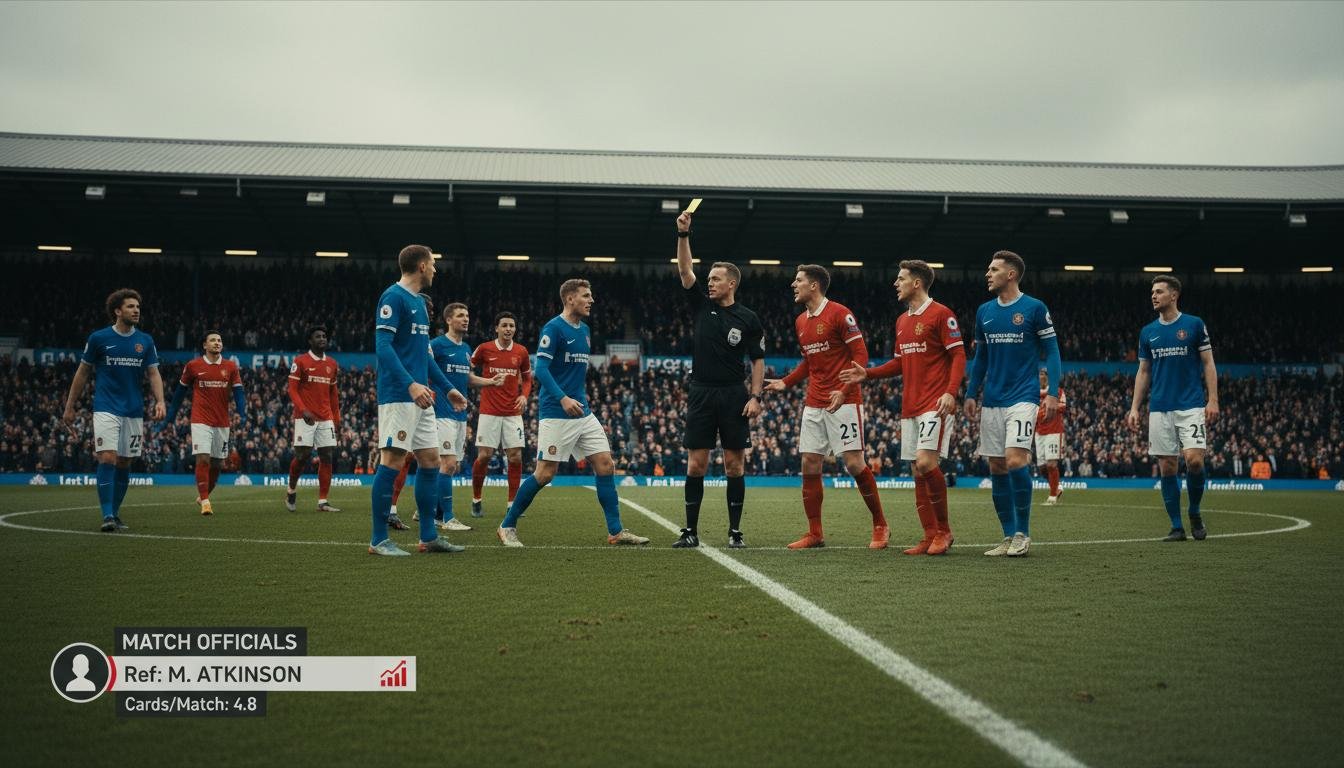
Referees shape the distribution and frequency of cards even more than pundits admit. Some officials issue cards liberally in the first half; others are stricter in stoppage time. Building or consulting a referee database — showing cards per game, cards per foul, and tendencies by team — is one of the highest-ROI pieces of homework you can do.
League context matters, too. Cup ties, local derbies, or relegation battles typically carry higher emotional intensity and more cards than mid-table league fixtures late in the season. Factor in the competition (European, domestic cup, league) when sizing your bet.
Tactical indicators that predict more cards
Certain tactical features correlate with higher card counts: high-press systems, aggressive man-marking, and low-block teams that concede a lot of fouls in dangerous areas. Teams that lose possession often and rely on tactical fouling to disrupt counterattacks also accumulate cautions.
Possession dominance can mean fewer fouls for the ball-carrying side but more cards for the side chasing. Similarly, teams that commit many tackles or have high aerial duel rates generally see more bookings because those situations create repeat contact and confrontation.
Using recent form and situational snapshots
Recent matches are more predictive than older ones. A team on a run of chippy, high-card matches is likelier to continue that pattern than a team whose discipline has improved. Look at the last five to eight games for a realistic picture of current temperament.
Consider situational factors like weather, pitch quality, and travel. Heavy rain and poor pitches produce more mistimed tackles; long-haul travel can increase fatigue and frustration. Those seemingly small elements can be the difference between a market line you accept and one you beat.
Live betting: read the flow, not just the numbers
In-play betting offers great opportunities on the cards market because the early rhythm reveals both referee strictness and team frustration levels. If the referee shows two early yellows or adopts a “control” style, that usually pushes future card expectations higher for the same match.
Watch non-card indicators too: confrontations between players, persistent fouls in midfield, and visible irritation from bench staff. Those dynamics often precede the first red and can swing prices quickly. I’ve won several live bets by spotting an angry right-back repeatedly pulling the opponent back in the buildup to a clear yellow.
Bankroll management and staking
Discipline in staking prevents a few bad runs from wiping your profit. Use flat stakes for speculative card bets or a fractional Kelly approach if you have a calibrated edge. Cards markets are volatile — expect variance — so size positions to survive losing streaks.
A simple rule: limit any single “which team will get more cards” bet to a small percentage of your bankroll. That keeps emotions out of in-play decisions and lets you focus on identifying value rather than recovering losses.
Common traps and cognitive biases
One common mistake is overvaluing a recent heated game as proof of future behavior without accounting for lineup or referee changes. Confirmation bias also creeps in; once you expect a team to be card-prone, you’ll notice the cards and ignore matches where they stayed disciplined.
Avoid chasing markets after a surprise red or a late string of yellows. Those events skew book odds temporarily and can make you pay a premium for bets that look appealing only because emotion is running high.
Practical checklist before placing a bet
Use a simple workflow to make disciplined decisions: check team card averages, review referee history, confirm starting lineups, consider match context (derby, cup, relegation), and look for recent on-field tensions. That checklist turns fuzzy intuition into a repeatable process.
Below is a small hypothetical example to illustrate how to synthesize information quickly. Treat the numbers as illustrative, not sourced facts.
| Metric | Home team (A) | Away team (B) |
|---|---|---|
| Avg cards per match (season) | 2.1 | 3.4 |
| Referee avg cards per game | 4.0 | |
| Recent form (last 5 matches) | 6 cards | 12 cards |
Putting it together: an actionable example
Imagine the away team B shows higher season and recent card averages, the referee historically issues a fair number of cautions, and team B is missing a disciplined defensive midfielder. Those combined signals make a bet on “away team will get more cards” logical, especially if the bookmaker price shows value compared to your internal expectation.
Conversely, if team B is heavily favored to dominate possession, those same numbers might not justify a bet because domination reduces their need to foul. The interplay between stylistic tendencies and match context is where the edge hides.
Track results and iterate
Record every card bet you make: pre-match assumptions, the market price taken, result, and what information you missed. Over time, patterns will appear in your own record that external data won’t show — like consistently misjudging certain referees or overrating the impact of late-season tension.
I keep a simple spreadsheet tracking these elements; it turned nebulous hunches into clear rules of thumb. That feedback loop is essential if you want to turn card betting from a hobby into a repeatable, profitable process.
Betting on which team will get more cards rewards meticulous preparation as much as a good eye for game temperament. Combine solid data sources, referee profiling, and disciplined stakes, and you’ll find opportunities that casual bettors overlook. Start small, keep records, and let the market prove you right over hundreds of decisions rather than a handful of lucky wins.