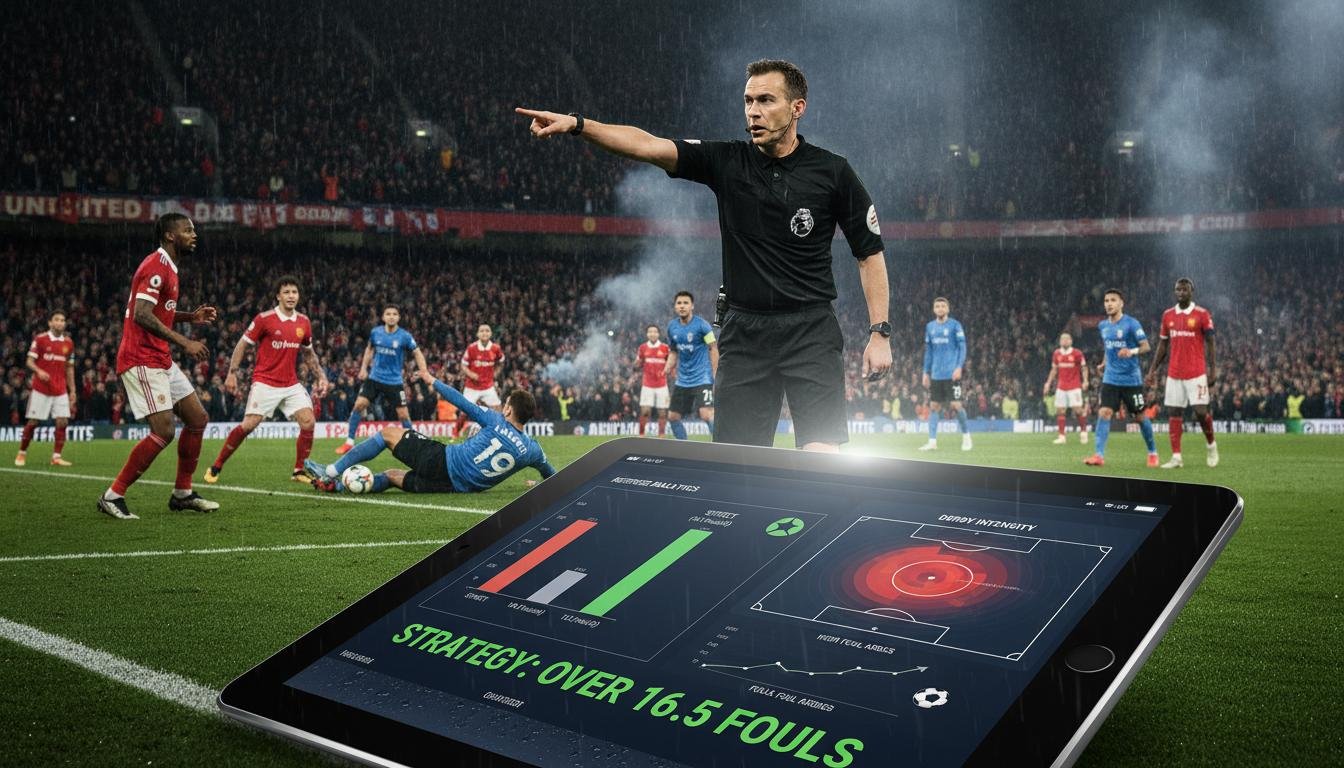
Fouls are a tacit language in football that tells you who’s controlling the tempo, who’s crossing disciplinary lines, and sometimes which team will pick up the higher bill from the referee. This article walks through how to read referee tendencies, which metrics actually matter, and why derbies often break the usual rules. If you want a fouls-focused approach to betting that’s grounded in data and game sense, read on.
Why fouls matter for bettors
Fouls are more than a game statistic — they shape momentum, set-piece opportunities, and card outcomes that influence many betting markets. Markets such as total fouls, team fouls, and yellow-card counts respond directly to how a referee interprets contact and gamesmanship.
Bookmakers price in average tendencies, but they’re rarely perfect at adjusting for referee-specific or fixture-specific quirks. An awareness of which officials call tight games and how rivalries amplify contact gives you an edge when spotting mispriced lines.
How referees create predictable patterns
Referees differ. Some enforce a low tolerance for shirt-pulling and late challenges, while others allow the game to flow and only intervene for clear, dangerous play. These tendencies persist across seasons and can be quantified if you track the right metrics.
Patterns come from style, training, and psychology. Younger referees sometimes call more fouls to assert control; experienced refs may manage physical games with verbal warnings. League officiating guidance and the presence of VAR also alter baseline expectations for intervention.
Home advantage, crowd pressure, and bias
Crowd noise and stadium atmosphere subtly impact decision-making. Studies and practical observation show referees, like other humans, are susceptible to social pressure; close calls in front of a fervent home crowd can swing one way more often than another.
For bettors, this means home derbies with hostile atmospheres often see inflated foul counts and more cards. Adjust your expectations when a high-emotion local match coincides with a referee who historically reacts to crowd influence.
Derbies: a different animal
Derbies compress stakes, heighten contact, and change player behavior. Tackles that would be 50-50 in a regular fixture become tactical fouls; retaliation and persistent physicality push foul totals upward. These matches commonly produce spikes in both fouls and disciplinary sanctions.
Because derbies are emotionally charged, standard team averages become less reliable. Instead, look at past derby behavior for both clubs and the referee assigned. Some referees handle derbies calmly and keep fouls low; others respond to intensity with frequent whistles.
Real-life observation
In my own tracking across seasons, derbies in major European leagues repeatedly showed a bump in fouls per game compared with midweek fixtures between the same teams. The magnitude varied with referee identity and match significance, but the direction was consistent: more contact, more stoppages.
That pattern translated into value when applying a simple rule: if a derby referee’s average fouls per 90 minutes exceeded the league mean by a meaningful margin, the market for total fouls often lagged behind reality for at least a few matches.
Metrics to track (and why they matter)
Not every statistic is equally useful. Focus on measures that directly reflect refereeing behavior and the fixture’s character rather than raw team aggression metrics that can be noisy.
| Metric | Why it matters |
|---|---|
| Referee fouls per 90 | Direct indicator of how often a ref stops play for fouls. |
| Referee cards per 90 (yellow/red) | Shows strictness and likelihood of booked fouls changing markets. |
| Team fouls per 90 (home/away) | Baseline for team behavior versus referee baseline. |
| Head-to-head derby averages | Captures fixture-specific spikes that general league stats miss. |
How to gather reliable data
Use reputable data providers for referee and fouls statistics — official league sites and established analytics firms give the cleanest series. Public reports often lag, so build a small database or spreadsheet you update weekly for the leagues you follow.
Consistency matters: compare metric windows (last 6 matches vs. season average) to avoid overreacting to one-off anomalies. Also adjust for context — red cards, injuries, or tactical shifts can temporarily change teams’ fouling profile.
Putting a fouls-based betting strategy into practice
A usable strategy blends quantitative screening with qualitative match reading. Start by filtering fixtures where the assigned referee’s foul and card rates differ materially from market expectations.
Then layer on derby or rivalry status, the teams’ tactical profiles (pressing teams commit more fouls), and match context such as elimination ties or relegation battles — those intensify fouling and disciplinary risk.
Pre-match checklist
- Verify referee history: fouls/90 and cards/90 over the current season.
- Check both teams’ fouls per 90 home and away.
- Identify derby status or recent heated encounters between clubs.
- Scan team news for absences of disciplined players who usually commit fouls.
- Compare the bookmaker’s line to your model; look for deviations you can justify with data.
In-play strategies
Live markets can offer better value because in-play lines react to early trends. If a ref is already issuing multiple fouls or bookings in the first 20 minutes, total foul lines may drift in your favor for the rest of the match.
Watch how the referee manages early physicality. Frequent stoppages or an early yellow for tactical fouls often predict continued strictness. Conversely, if the ref lets play flow despite heavy contact, the in-play market may overprice fouls later on.
Risk management and limits
Markets for fouls are relatively thin compared to goals or match result lines. Accept smaller stakes or use micro-betting units when exploiting perceived edges. Keep records of every bet to measure whether your strategy actually outperforms random variance over time.
Remember efficiency: high-quality data and niche knowledge can give short-term edges, but bookmakers adjust. Don’t chase losses and always set explicit bankroll limits — fouls markets are volatile and can produce streaks both ways.
Common pitfalls and how to avoid them
Avoid overfitting to a single referee or fixture. Refereeing styles can shift after high-profile mistakes, refereeing seminars, or policy changes from governing bodies. Reassess referee baselines quarterly rather than assuming permanence.
Also beware confirmation bias: if you expect derbies to be dirty, you might selectively remember the rough ones and ignore calm derbies. Let consistent data drive your adjustments, and treat anecdotal exceptions as prompts to re-check the numbers, not as proof.
Fouls-focused betting is a subtle craft: it asks you to read officials as well as players, to combine hard numbers with match temperament, and to respect the variability that comes with intense rivalries. With careful tracking, disciplined stakes, and attention to derbies’ special characteristics, fouls can be a reliable angle rather than a random noise.