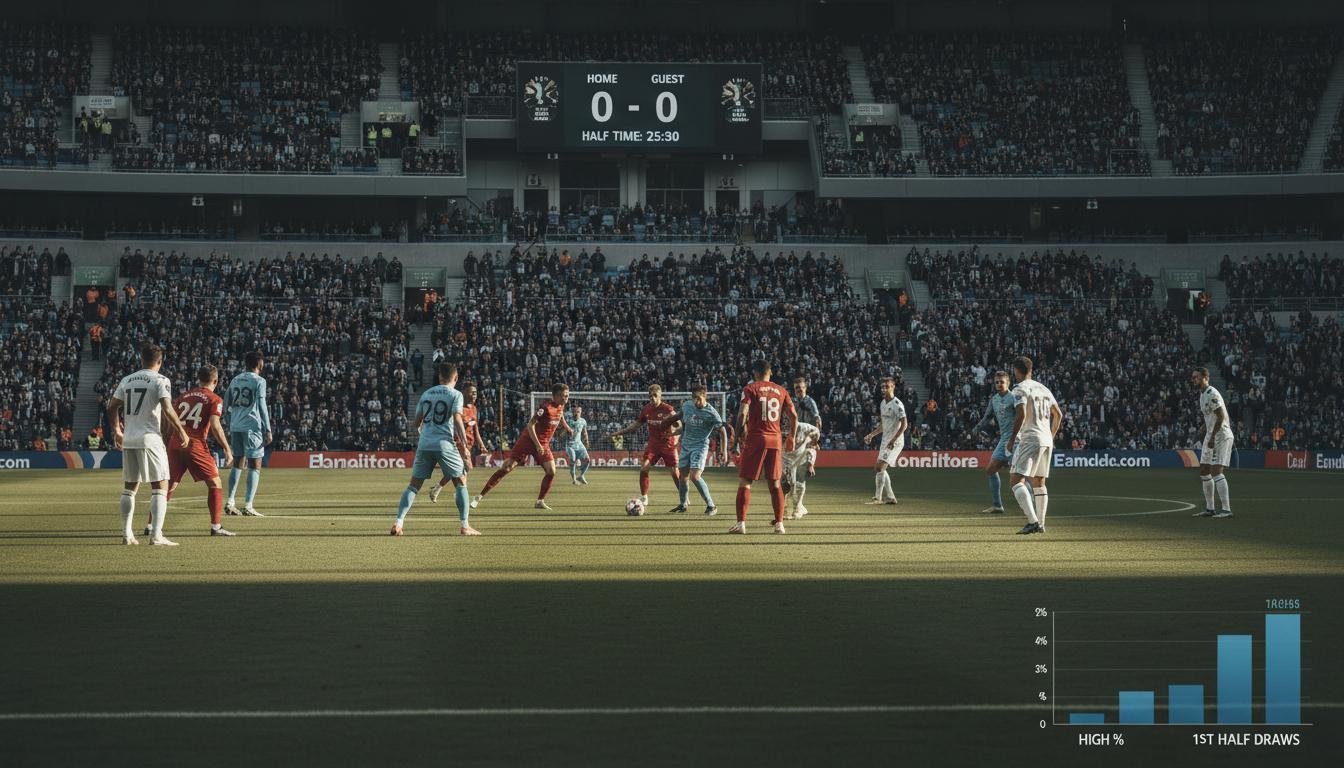
Betting on the first-half draw is one of those niche plays that looks simple at first glance: no goals before the break. But beneath that plain surface there’s a web of tactical patterns, statistical signals, and market quirks that separate a thoughtful edge from a coin toss. This article walks through the practical thinking, data to prioritize, and staking rules you should use if you want to turn the 0–0 or 1–1 halftime market into a repeatable strategy.
Why the first-half draw market matters
Bookmakers price first-half draw markets differently from full-time results because dynamics in the opening 45 minutes are more constrained. Teams are fresh, managers are cautious, and substitutions haven’t shifted patterns yet. That means variance is lower and small predictive advantages can translate into consistent profit if you manage risk carefully.
The market also offers attractive odds relative to outright outcomes: because many bettors overvalue favorites to score early or underestimate defensive setups, first-half draw lines can display soft pocketed value. The key is identifying when the odds reflect true probability and when they are distorted by public sentiment or headline news.
Core indicators to evaluate before placing a bet
Not every match is suitable. Successful bettors focus on a short checklist of reliable indicators: team first-half goal rates, early-season lineups, tactical balance, head-to-head trends, and situational incentives such as travel or schedule congestion. Each indicator nudges probability and the blend of signals is what creates value.
Below are the most impactful factors, each followed by what to look for and why it matters in the first-half draw market.
Team first-half scoring and xG profiles
Historical first-half goal rates tell you whether a team tends to score or concede early. Use xG (expected goals) by half from services like Understat or FBref to see if chances created or conceded in the opening 45 correspond with the box score. A team that consistently posts low first-half xG against high defensive xG allowed is a stronger candidate for 0–0 HT or draw HT.
Keep an eye on the distribution, not just averages. Some teams score early or late; a squad with a high full-time xG but almost all goals after the 60th minute is far friendlier to the first-half draw market than its total-season goal tally suggests.
Formation, tactical intent, and coaching style
Managers who prioritize compact shape and low risk early on will increase the odds of a scoreless or balanced first half. Defensive-minded midblocks, cautious wingbacks, or a central midfielder shielding the back four are tactical cues worth spotting pre-match. Opposing pressing teams may provoke mistakes, but if the press cannot convert territory into clear chances, the result will often remain even at halftime.
Pre-season interviews, recent match reports, and heat maps can reveal whether a manager has shifted approach. A small tactical tweak — for example, moving from an aggressively attacking 4-3-3 to a conservative 4-2-3-1 — can materially affect first-half scoring rates.
Lineups, absences, and match fitness
Missing creative forwards or an injured attacking midfielder can severely blunt a team’s first-half threat. Conversely, if a key defensive midfielder is out, early opportunities for the opponent may spike. Lineups announced an hour before kickoff are often the most valuable information for this market.
Pay particular attention to teams fielding rotated or young sides in congested schedules — these lineups tend to be more conservative early as coaches prioritize not conceding over chasing an early lead.
Context: competition stage, incentives, and travel
Cup dead rubbers, early-season friendlies, and teams preserving energy for midweek European matches often produce dull first halves. Points-heavy matches (relegation battles or must-win fixtures) can go both ways; sometimes teams open cautiously, producing a first-half draw, while other times desperation produces early fireworks. Use context to weight the checklist rather than treat it like a binary rule.
Travel and weather matter too. Long away trips and heavy rain tend to suppress attacking fluency and increase the probability of uneventful first halves. These factors are underrated but measurable in live markets.
How to read the market and spot value
Odds are your primary signal of market perception. Compare multiple bookmakers and the exchange (Betfair or similar) to see where money is moving. Value exists when your estimated probability exceeds the implied probability of the offered price. Practically, that means building a rough probability model using the indicators above and hedging your view across several books.
Use small historical models: calculate the historical frequency of 0–0 or draw at halftime for the teams involved over the last 12 months, then adjust for lineup and tactical factors. If your adjusted probability implies a 40% chance but the book offers 1.9 (implied 52.6%), there is no value. Flip it: if you estimate 50% and the price is 2.4 (implied 41.7%), you have an edge worth staking.
Simple odds comparison table
| Indicator | Signal toward HT draw | When to downgrade |
|---|---|---|
| First-half xG (low) | Stronger | High opposition early xG |
| Conservative lineup | Stronger | Attacking rotation or late fitness return |
| Adverse weather/travel | Stronger | Short travel, home advantage major |
Staking, bankroll rules, and sizing
Discipline beats intuition. Flat-staking small percentages of a defined bankroll reduces variance and allows you to measure whether your edge is real. Many experienced bettors use 1–2% flat stakes or a fractional Kelly when they have a quantified edge. Fractional Kelly (25–50% of calculated stake) smooths volatility while still growing an advantage over time.
Keep detailed records: stake, odds, pre-match reasons, and match outcome. Over months, these logs show which indicators predict first-half draws effectively and which are noise. Adjust sizing only after you see consistent, statistically significant returns.
Live betting and hedging techniques
Live markets offer dynamic ways to improve returns. If you back a first-half draw pre-match and the game opens with early chances but no goal, markets often shorten; conversely, a quiet start can lengthen value. Hedging with a small lay on the exchange if the opponent scores early or taking a lay when the market moves dramatically are sensible tactics for risk control.
When in-play, watch tempo and body language rather than only statistics. A team committing more numbers forward without creating quality chances increases the chance of a late first-half goal; that would be a signal to hedge. If both teams play with caution despite possession shifts, holding the original bet is often best.
Common mistakes and how to avoid them
The most frequent errors are overreacting to a single statistic, chasing bets after losses, and ignoring market movement. Avoid heavy stakes based on a single news item unless you can translate that into a change in probability backed by historical precedent.
Another pitfall is failing to distinguish between 0–0 HT and any draw HT (0–0 vs. 1–1). These are correlated but driven by different mechanics; teams that score late might not create chances early, so treating them interchangeably will hurt your edge.
Practical example from experience
I once targeted a Championship fixture where both sides averaged fewer than 0.4 first-half xG and both managers favored conservative setups in a congested schedule. Lineups confirmed both teams rested key attackers. The market offered attractive odds on the halftime draw, and I placed a modest flat stake across two bookmakers. The first half was cagey and ended 0–0; the payout was modest but statistically consistent with my model. Recording that trade and similar ones over a season helped refine the checklist above.
That experience reinforced two lessons: trust small, repeatable edges rather than “gut” shots, and always check lineups. Those two checks alone will eliminate a large share of bad first-half draw bets.
Further reading and tools
If you want to dig deeper into modeling soccer outcomes, start with classic statistical literature and practical data sources. Building a simple half-by-half model using xG inputs and lineup adjustments is a solid first project for anyone serious about this market.
Below are authoritative sources and experts referenced while researching the tactics and modeling approaches discussed here. Use them to build your own checklist and to verify the statistical claims you encounter in betting forums.
Sources and expert references:
- Pinnacle betting guides and articles
- Betfair Betting Blog — football analysis
- Understat — expected goals by match and team
- FBref — match and player statistics
- FiveThirtyEight Soccer (SPI) — analytics-driven coverage
- Dixon, M., & Coles, S. (1997) — Modelling association football scores (Journal of the Royal Statistical Society)
- StatsBomb — analysis and articles on football data
- UEFA — official match data and reports
Betting on the first half is less about predicting miracles and more about patiently exploiting micro edges. If you combine careful data checks, sensible stake sizing, and disciplined record-keeping, the first-half draw market can become a reliable part of your betting repertoire.