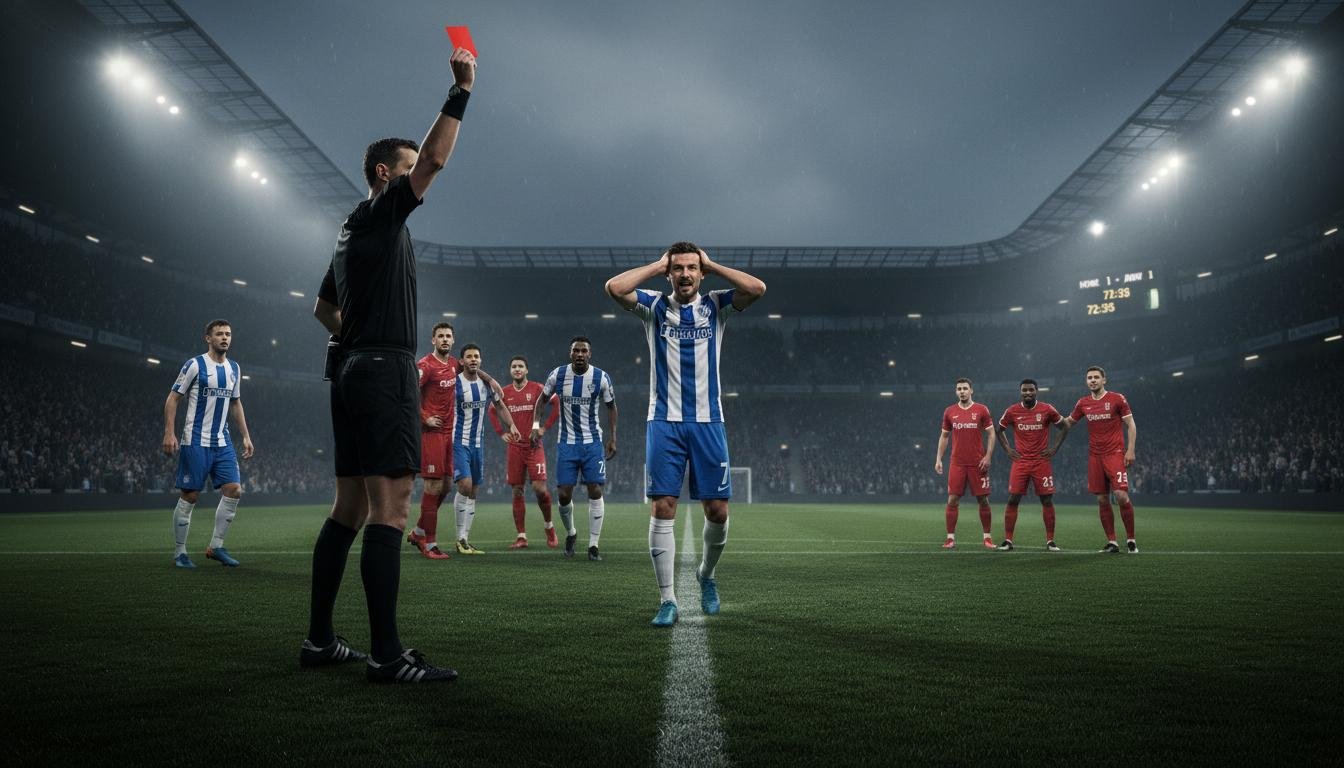
Red cards are one of football’s most abrupt pivots — a single violent tackle, professional foul, or second yellow can tilt the balance in seconds. For in-play bettors, that moment is both a threat and an opportunity: markets zig before you can blink, managers reshuffle their plans, and the scoreboard doesn’t always tell the whole story. This article breaks down how to read those moments, where value often hides, and how to size stakes so a single referee decision won’t wreck your bankroll.
Why a red card creates a true turning point
A red card changes three things at once: numbers, tactics, and psychology. Losing a player reduces a team’s absolute defensive coverage and usually forces compacting the formation; it also hands the opposing coach a tactical choice — probe patiently or push aggressively. That combination creates a volatility spike that moves probabilities more than a standard substitution or injury.
Data providers and analysts consistently show a measurable advantage for teams with an extra player, particularly in the short window after the card. The most immediate effect is space between the lines: with one less defender, passing lanes open and the favored side can force overloads down a flank or in midfield. That structural shift is why odds swing quickly and why sharp in-play traders watch the first 10–20 minutes after a dismissal closely.
Context first: the match factors that change everything
Not all reds are equal. The minute the card happens, who receives it, the scoreline, and each side’s tactical identity all matter enormously. A first-half red when the score is 0–0 is a different animal from a 78th-minute dismissal with a team protecting a one-goal lead. Read these elements before you bet.
Consider the team styles: possession-focused teams with a technical midfield are likely to grind advantage, moving the ball and probing patiently. Counter-attacking sides may prioritize quick transitions and get value from a stretched opponent. Manager tendencies also matter — some coaches defend deep and invite pressure, others re-shape aggressively to snatch two or three goals while the undermanned team is disorganized.
Which markets react best and when to use them
Bookmakers react fast, but they don’t always price nuance perfectly. The most common profitable markets after a red card are Asian handicaps, next-goal markets, and certain corners/booking lines. Match odds often overreact immediately; that’s where disciplined live traders find edges, especially when manual lines lag in smaller leagues.
Smaller, targeted markets also shine. A red card increases variance in “next goal” and “first goal after X minute” wagers because the team with the extra player can press high-value chances before the opponent reorganizes. Likewise, the Asian handicap absorbs the swing cleanly — taking -0.5 or -1 on the advantaged side can capture a shift without exposing you to large overrounds in the outright market.
| Situation (minute) | Market to consider | Rationale |
|---|---|---|
| 0–30 (early) | Match outright / Asian -0.5 | Longer time to exploit advantage; favorites tend to convert dominance into goals |
| 30–60 (middle) | Next goal / Asian -0.5 to -1 | Tactical reshuffles take effect; next-goal captures momentum swings |
| 60–75 (late-middle) | Over/Under & next goal | Fatigue and space increase goal probability; live movement often creates value |
| 75+ (late) | Under/away hold / cash-out opportunities | Limited time reduces full comeback chances; probability of hold increases |
Practical approach to sizing and timing bets
Staking matters more after a red card than in pre-match markets because variance spikes. I recommend a percentage-based approach: smaller stakes for higher volatility bets and larger, but still controlled stakes for clearer value. A sensible rule is 1–2% of bankroll on typical in-play opportunities and 0.5–1% if the market is thin or the league is unfamiliar.
Timing is crucial. Sometimes the best prices appear immediately as the in-play market updates; other times a coach’s substitution clarifies intent and the true probability becomes apparent 10–15 minutes later. Don’t rush in solely because a price dropped — wait for tactical signs such as formation changes, substitutions that prioritize solidity, or moments when the undermanned side looks organized defensively.
How to read tactical signals live
When a dismissal occurs, watch three live indicators: shape, personnel, and momentum. Shape is how the undersized team restructures (back five, compact midfield, or aggressive press). Personnel tells you who comes off and who moves into a pivotal role. Momentum is possession share and where shots are being taken. These signals point to whether the extra man will translate into imminent chances or a slow siege.
For example, if the favored team immediately brings on an extra creative midfielder and plays the ball into wide areas, expect a period of sustained pressure — a next-goal bet or Asian handicap becomes attractive. If the undermanned coach substitutes an attacker for a defender and drops into a low block, the market may overprice attacking chances; consider backing a low-goal outcome or a hold for the favorite instead.
Risk control and common pitfalls
Emotion is the biggest pitfall. A red card triggers adrenaline and the temptation to double down. Resist revenge-like chasing. Also watch for market liquidity — smaller leagues can have volatile, thin markets that move unpredictably. If odds are artificially soft or a bookmaker has paused updates, the risk of being stopped out or having your bet trimmed rises.
Another trap is misreading the score context. A team already chasing by multiple goals may be demoralized by a red but also more willing to gamble, creating space for counters. Always reconcile the scoreboard with the substitution patterns before pressing the trigger.
Case studies from live wagering
I once watched a Championship match where a home midfielder was sent off in the 18th minute while the score remained 0–0. The away team, historically attack-minded, immediately tightened possession and their in-play Asian -0.5 line shortened dramatically. I placed a moderate stake and the away side scored twice before halftime — a textbook early-red conversion to goals.
Conversely, I’ve seen late reds — a defender sent off at 82′ with his team leading 1–0 — and the market priced a collapse that never came. The home team dug in with two center-backs and a conserved midfield; the match finished 1–0. Those experiences taught me to calibrate stakes down for late-game dismissals and to consider opposing manager tendencies before betting big.
Data and tools to sharpen decisions
Use live expected goals (xG) feeds, possession charts, and heatmaps when available. Providers like StatsBomb and Opta power many in-play products and can show whether the extra man is creating high-quality chances or merely prolonging possession. Betting exchanges also offer valuable sentiment — large back or lay volumes can indicate where sharps are placing money.
Set simple rules for yourself: a live xG swing in favor of the advantaged team, combined with attacking substitutions, is a robust signal. If you don’t have access to advanced feeds, trusted live commentary and simple stats (shots on target, touches in box, and possession in attacking third) still provide actionable insight.
Ethics, discipline, and long-term edges
Remember that red cards are random events to some degree. A long-term betting strategy treats them as one of many factors rather than a guaranteed path to profit. Document your trades, note when you win or lose after red cards, and refine rules that match your win-rate and bankroll tolerance. Discipline wins where bravado loses.
Over time, you’ll internalize which leagues and managers produce the most consistent post-red patterns. That institutional knowledge, paired with disciplined staking and good data, is what separates profitable in-play bettors from those who rely on gut feeling alone.
Author’s note
I’ve applied these principles across dozens of live markets and learned the hard way that patience beats haste. A few measured bets after early dismissals have paid far more than frantic, oversized wagers after late-game reds. Treat the red card as an informational advantage — not a certainty.
Sources and experts
- FIFA — Laws of the Game: https://www.fifa.com/what-we-do/football/laws-of-the-game
- StatsBomb (analysis and data tools): https://statsbomb.com/
- FiveThirtyEight soccer predictions and analysis: https://fivethirtyeight.com/tag/soccer/
- Opta / StatsPerform (data provider): https://www.statsperform.com/
Articles and research on red-card impacts: see analysis pieces on The Conversation and The Guardian for applied match studies and commentary.