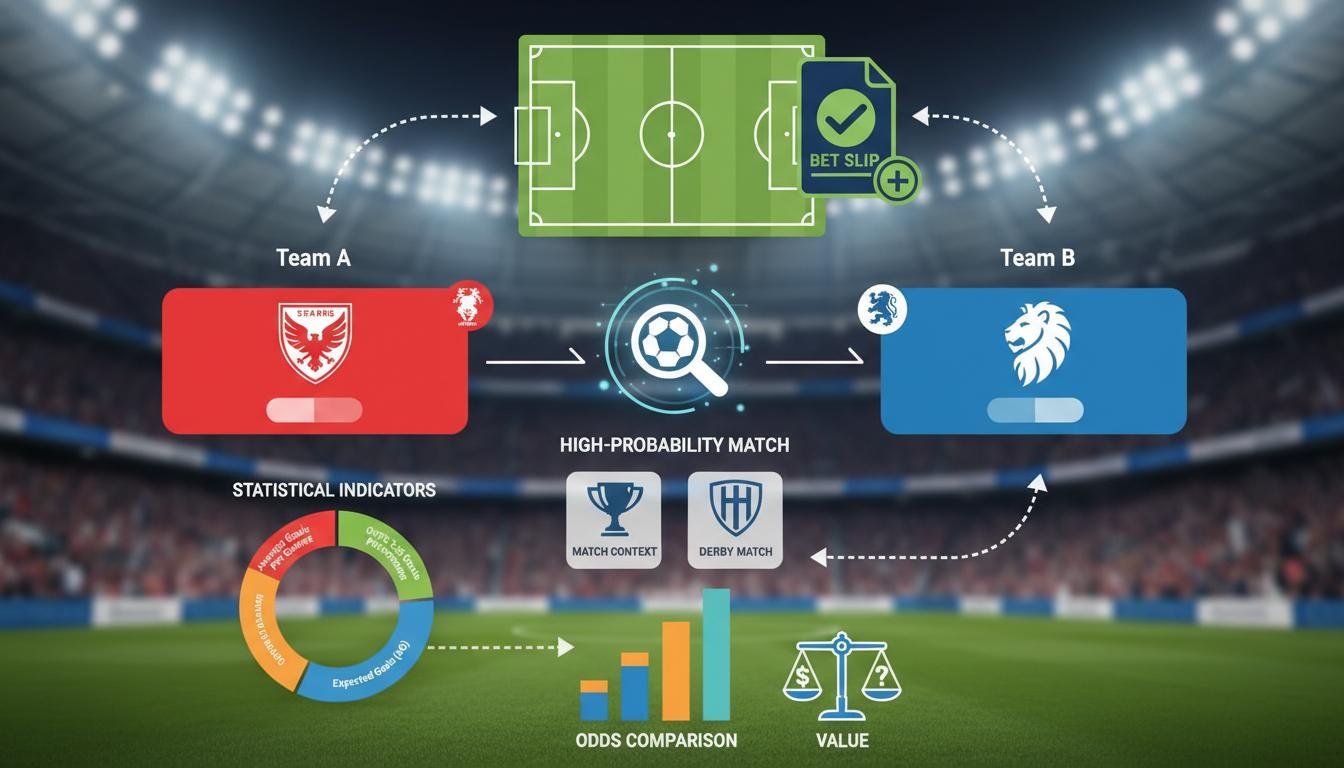
Combining a total goals market with a both teams to score (BTTS) bet is one of those pairings that looks simple on paper but rewards nuance in practice. It’s attractive because it increases odds while still feeling rooted in the same event: goals. This article walks through why the combo works, how to pick matches, practical staking, in-play adjustments, and common traps to avoid.
How the total + BTTS market works
The combined bet requires two linked outcomes to occur: the match must exceed or fall under a chosen goals threshold (for example, over 2.5), and both teams must score at least once. Bookmakers offer this as a single market where both conditions need to be satisfied for a win.
Because the two components are related but not identical, their probabilities interact in interesting ways. BTTS cares only about at least one goal from each side, while totals care about the sum; a 1–1 result satisfies BTTS and over 1.5 but fails over 2.5. Understanding that overlap is critical to finding value.
Why bettors use this combination
There are two main appeals: value and information leverage. Combining markets increases the payout compared to a single market, and if you know how to read attacking/defensive indicators, you can target mismatches that the market misprices.
Another advantage is flexibility. You can pair a conservative total (over 1.5 & BTTS) to tilt toward predictable goals or push for higher returns with over 2.5 & BTTS when you expect an open, attack-minded fixture. The trick is matching match profile to market selection, not chasing higher odds for their own sake.
Match selection: what to look for
Start with the underlying numbers: expected goals (xG), shots on target, and the percentage of matches where both teams scored. Sources like Understat and WhoScored provide team-level xG that’s far more informative than raw goals scored or conceded.
Target leagues and teams with clear offensive/defensive profiles. Leagues such as the Dutch Eredivisie and the German Bundesliga often produce higher totals and BTTS rates, while certain low-scoring defenses in Italy’s Serie A reduce BTTS probability. Always cross-check with recent form, injuries to key defenders or attackers, and lineup announcements.
Contextual indicators that move the needle
Home and away splits are vital. Some teams are conservative at home and open away, or vice versa; those patterns change the conditional probability of BTTS and the expected total. If Team A concedes late goals away and Team B tends to score at home, the BTTS component becomes likelier.
Motivation and scheduling matter too. Cup rotations, congested fixtures, and travel can turn ordinarily defensive teams brittle. Weather and pitch quality also influence totals — heavy rain often depresses shot volume and scoring chances, while wind can favor direct play and reduce possession-based defenses.
Reading odds and finding value
Don’t bet solely on the decimal price; translate it into implied probability and compare it with your modeled probability. If you estimate a 40 percent chance that over 2.5 & BTTS occurs and the market implies 30 percent, that’s value. Use conservative adjustments for model uncertainty.
Market inefficiencies often appear after late team news. If a favored defender is ruled out and the bookmaker is slow to react, the combined market can drift to a better price. Similarly, look for differences between bookies — some specialize in lines for certain leagues and will consistently offer sharper prices.
Staking and bankroll management
This combo is higher variance than single-line bets because two conditions must be met, so manage stake size accordingly. A fixed-percentage approach (1–2 percent of bankroll per bet) keeps volatility tolerable, and the Kelly criterion can refine stakes if you have a reliable edge and variance assumptions.
Track results by market type (e.g., over 1.5 & BTTS vs. over 2.5 & BTTS) so you can see where your edge actually sits. If one market shows persistent losses, reduce exposure or revisit your selection filters.
In-play tactics and hedging
In-play markets are where combined strategies shine because live events reveal much about match dynamics. A 1–0 halftime score with the under pressure and both teams creating chances may make an in-play over/BTTS hedge attractive at improved odds.
Hedging is also practical if you’ve staked a big pre-match ticket and the game evolves unfavorably. For example, if you’re on over 2.5 & BTTS and it’s 2–0 with 10 minutes left, a small lay on BTTS or a bet on no goal for one team can protect profit or reduce a loss, depending on the live prices.
Common mistakes and how to avoid them
One frequent error is overestimating team attack quality based on recent high-scoring outliers. Use longer-term xG and shot profile data to avoid being swayed by an anomalous 4–3 result. Faithful reliance on raw goals skews perception.
Another mistake is ignoring correlation. A team that often wins 1–0 can simultaneously give you a high probability of over 0.5 goals but a low BTTS chance. Treat each market component separately and then model their intersection rather than assuming independence.
Practical examples and a simple decision rule
Consider a match where both teams average 1.5+ xG per match, concede more than 1.2 xG, and have BTTS percentages above 65 percent in their last ten matches. That profile favors over 2.5 & BTTS. Conversely, two defensively disciplined sides with low xG concede averages push you toward under total or avoiding BTTS.
Here’s a compact decision rule to test: require at least two of these indicators — combined average xG > 2.5, recent BTTS rate > 60%, and at least one team with an away attacking bias — before considering over 2.5 & BTTS. Back more conservative totals with fewer indicators.
Example outcomes table
Below is a small table showing how different final scores affect a sample bet of over 2.5 & BTTS.
| Final score | Over 2.5? | BTTS? | Combined result |
|---|---|---|---|
| 3–1 | Yes | Yes | Win |
| 3–0 | Yes | No | Lose |
| 2–1 | No | Yes | Lose (if total is >2.5) |
| 1–1 | No | Yes | Lose |
Tracking and continuous improvement
Record every bet with context: market, stake, odds, model probability, team news, and final score. Over time you’ll see which leagues and selections produce a positive edge and which are noise. This empirical feedback is the backbone of sustainable betting.
Periodically audit your model assumptions. If your xG inputs or BTTS thresholds stop correlating with outcomes, recalibrate. The market evolves — teams change managers, transfer windows reshape squads, and statistical relationships shift.
Final thoughts and practical discipline
When executed with data, discipline, and realistic staking, the total + both teams to score combo can be a potent part of a bettor’s arsenal. It rewards careful match selection and punishes impulse decisions, which makes it a good discipline-builder as well as a profit-seeking tactic.
Start small, use trusted data sources, and treat every bet as an experiment. Over time you’ll learn the leagues and situations where the market gives you an edge and when it’s wiser to sit out.
Sources and further reading
- Understat (expected goals and team data): https://understat.com/
- FiveThirtyEight Soccer Predictions (SPI and modeling discussion): https://projects.fivethirtyeight.com/soccer-predictions/
- StatsBomb (analysis and articles on football analytics): https://statsbomb.com/
- Pinnacle Betting Resources (market insights and betting math): https://www.pinnacle.com/en/betting-resources
- WhoScored team statistics and match reports: https://www.whoscored.com/