Live betting lives or dies by speed, context, and restraint. The “next card” market — a tiny window that asks which team will receive the next yellow or red — is one of the fastest-moving, highest-variance markets in football in-play. This article unpacks how that market works, which signals matter most, and how to build a practical approach that respects bankroll constraints and referee unpredictability.
What the “next card” market is and why it’s tempting
The “next card” market lets you back the team likely to pick up the next yellow or red. Odds change every second as fouls, stoppages, and referee actions alter perceived probabilities. Bookmakers price in referee tendencies, team discipline records, and match context, but their models can lag, especially after unexpected events.
The attraction is obvious: a quick profit from a single event, often with modest stakes. The danger is also obvious — variance is extreme and human factors dominate. Unlike total shots or corners, cards are sparse and clustered, so a single error can wipe out many small wins.
Key factors that move the market in-play
Understanding what actually influences card probability helps you spot edges. Three broad groups matter: referee tendencies, match context, and immediate micro-events such as fouls or substitutions. Markets react fastest to visible infractions; they react slower to cumulative context like frustration or tactical shifts.
Bookmakers watch live footage and models. However, markets can overreact to obvious events (a bad challenge) or underreact to subtle trends (rising tension after a VAR call). If you can interpret the signal faster or more accurately than the market, you can exploit short-lived pricing errors.
Referee behavior and card distribution
Referees vary widely in carding rates. Some issue cautions early; others let tempers simmer. Knowing the official’s historical yellow/red rates is essential. Those stats won’t predict a specific moment, but they set a baseline for how aggressive a referee is likely to be under pressure.
Research into referee behavior shows measurable differences by official and by context — home advantage, time in match, and high-stake fixtures all influence decisions. Use official-specific data as a weight in your in-play decisions rather than the sole determinant.
Game state, context, and tactical triggers
Game state shifts the incentives for fouling. A team chasing a goal late will accept more risky tackles; a team protecting a lead will slow play and risk professional fouls that draw yellows. Team discipline records (yellow cards per 90, fouls committed) are useful before kick-off but must be adjusted as the game evolves.
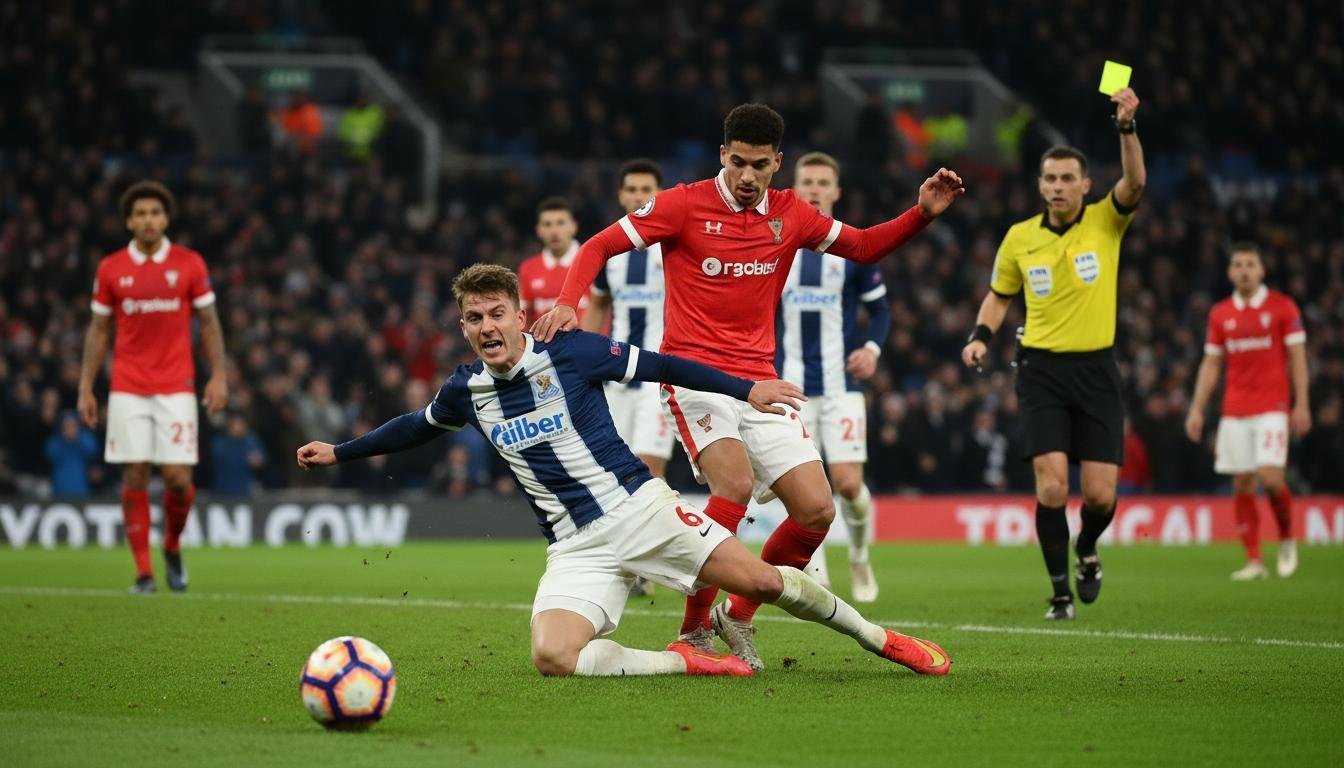
Key triggers to watch: VAR interventions, controversial bookings, substitutions that introduce more aggressive players, and visible frustration from managers or players. Those events change the probability landscape more than pre-match models suggest.
Step-by-step live strategy for “next card”
Below is a practical sequence you can use while watching the match and the live market. Treat it as a framework, not a rigid algorithm. Context and quick judgment remain your responsibility.
- Pre-game prep: Know the referee’s card rates, both season and recent form. Have team discipline numbers ready.
- Watch the opening 15 minutes: If the referee is card-happy early, raise your baseline expectation and sizing. If not, be conservative.
- Monitor micro-events: A hard foul, a VAR check, or a tactical substitution are immediate signals to consider a quick stake.
- Estimate probability fast: Convert the market odds into implied probability and compare to your gut/weighted expectation. Only act when you believe the market misprices the chance by a meaningful margin.
- Use small stakes and tight stop rules: Decide before you bet the maximum percent of your live-bankroll you’ll risk on any single “next card” outcome.
Speed and discipline combine here: if you hesitate, the market will close the gap. If you bet impulsively, you’ll likely lose over time.
Bankroll and stake management for rapid markets
Because card markets are high variance, stake sizing must be conservative. A good rule: never risk more than a very small fraction of your overall bankroll on a single “next card” bet. Many experienced live bettors stick to 0.2–1% per micro-bet depending on confidence and edge.
Kelly Criterion-style staking can work if you have a reliable edge estimate, but in practice your edge is noisy and estimates are optimistic. Consider a fractional Kelly or a fixed-percentage approach instead to reduce blow-up risk.
| Estimated edge | Suggested stake (% of live bankroll) |
|---|---|
| Low (1–3%) | 0.2–0.4% |
| Moderate (4–7%) | 0.5–0.8% |
| High (8%+) | 0.9–1.2% |
Use the table as a guideline, not gospel. A true long-term approach aggregates many small, carefully managed wagers — not a handful of desperate punts.
Practical tips, discipline, and common pitfalls
Tip: focus on a subset of leagues and referees. Depth beats breadth in live markets. Familiarity with how particular officials and match environments evolve will sharpen your reactions.
Don’t chase losses. “Next card” markets invite emotional bets after misses. Stick to pre-set staking rules and accept that variance will create losing stretches. Keep a log of live bets to learn about your edge and error patterns.
Avoid betting when your only signal is crowd noise or a commentator’s hot take. Visual and tactical signals — an obvious foul, player retaliation, or a VAR review — are far more reliable.
Real-life example from my experience
In a Championship match I tracked a referee known for early cards and a team that frequently conceded tactical fouls late. Around the 62nd minute a frustrated winger earned a hard but not-card-worthy tackle. The market momentarily offered long odds on the opposing team getting the next card because the foul looked ambiguous on replays.
I placed a small bet backing the official’s propensity to yellow for retaliation, sizing at about 0.5% of my live bankroll. Two minutes later, a late push after a corner saw the referee show yellow. The stake was small, but the trade illustrated the method: know the ref, read the micro-events, and keep size modest.
Tools and data to use
Build a quick reference: a table or spreadsheet of referees’ card frequencies, team fouls per game, and recent disciplinary trends. Use live stats feeds from trusted providers and multiple bookmakers to spot price discrepancies.
Commercial data providers (Opta/StatsBomb) and bookmaker resources can inform pre-game prep. During play, latency matters — pick a reliable stream and a low-latency bookmaker or trading platform.
Responsible play and legal considerations
Live markets can encourage frantic action. Set strict limits for time and money. If you find yourself increasing stakes to recoup losses, stop and reassess. Responsible practices protect your bankroll and mental health.
Check local law and platform terms before live-betting, as some jurisdictions restrict in-play markets. Always use licensed bookmakers or regulated exchanges for safety and fairness.
Mastering the “next card” market is less about predicting a single yellow and more about building quick, repeatable processes: pre-match referee knowledge, attentive reading of micro-events, strict staking rules, and the discipline to walk away when the market isn’t offering value. With patience and careful record-keeping, you can turn a chaotic market into a manageable portion of an in-play program.