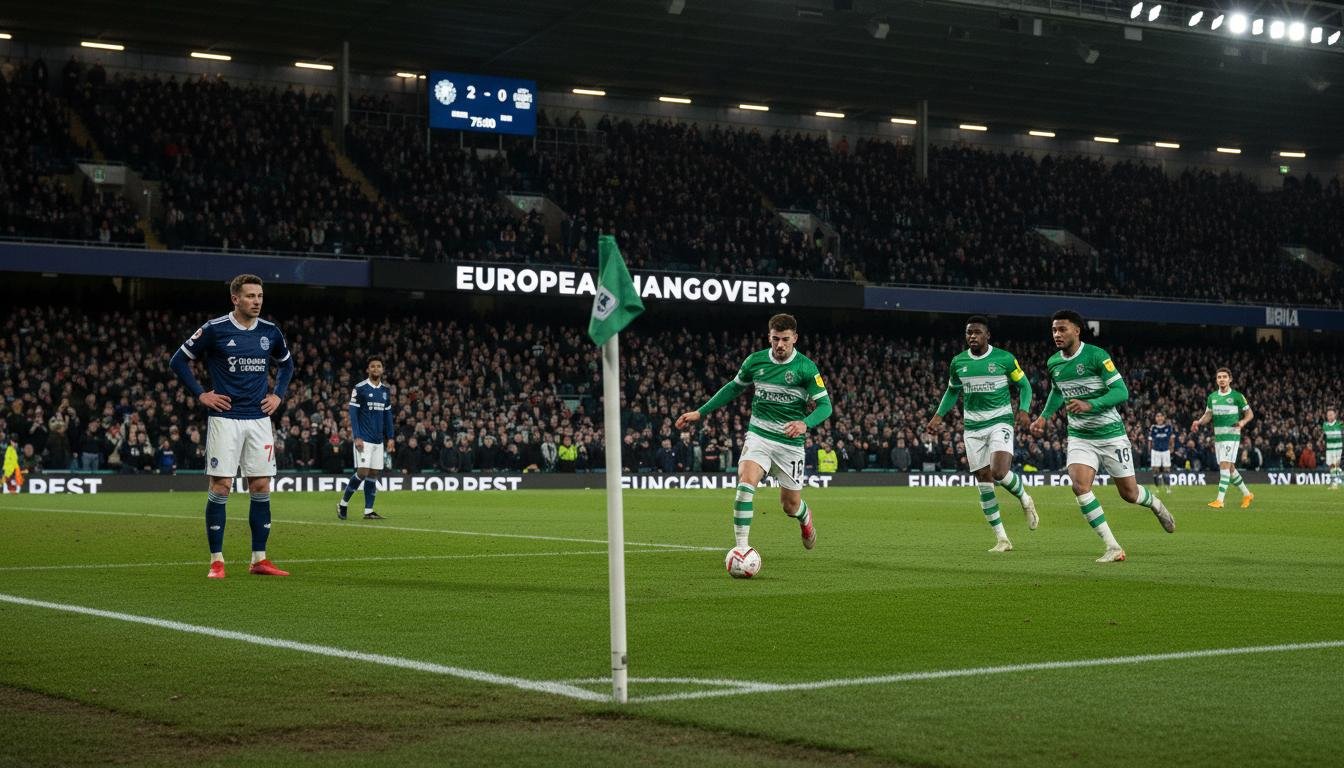
Matches that follow midweek European ties are a different animal: teams arrive battered, rotated, or oddly motivated, and markets react quickly. If you want an edge, understanding how clubs prioritize competitions, how managers rotate, and how bookmakers price uncertainty will change bets from guesswork into calculated risk. This article walks you through practical checks, market angles, staking discipline, and a simple checklist you can use before you press “place bet.”
Why post-European cup fixtures behave differently
European competition introduces travel, extra minutes and altered training cycles; those factors often blunt a team’s sharpness the following weekend. Players who logged heavy minutes are more likely to be sub-par physically, while managers may rest starters to protect them for domestic priorities, creating unpredictable lineup combinations.
Beyond fatigue, motivation varies. A club chasing a league title might field full strength after a midweek cup if points are essential, while a side with early-season injuries or a comfortable league position may deprioritize the domestic match. Reading those signals—manager comments, recent selection patterns and club context—matters more than raw form lines.
Key indicators to check before committing money
Before you place a bet, run a quick pre-match audit: minutes played by likely starters in the last 72 hours, travel distance and time zones, days of rest, confirmed injuries, and manager rotation history. Markets respond to these facts, but they sometimes lag; a clear benching pattern or late travel scramble will tilt value toward the underdog or a lower-goals angle.
Other timely data points include lineup confirmations and market movement. If a club posts a rotated XI, odds will adjust; if bookmakers are slow or lines offer inflated favorites, you’ve found an exploitable inefficiency. Also watch for public betting trends—heavy one-sided money can create value on the opposite side if you think the market overreacts.
Practical betting angles to use
There are a small number of market types that tend to perform well around these fixtures because they reflect the match realities: Asian handicaps for favorites likely to be weakened, under 2.5 goals if rotation reduces attacking threat, and draw/no-bet on favorites if a single mistake could decide a low-energy game. Each of these markets protects against the variance introduced by unexpected rotation.
Totals and BTTS (both teams to score) also deserve attention. Rotated defenses can concede naively, but rotated attacks may lack cutting edge; that makes game-specific research critical. If both sides rested strikers while defenders carried minutes, a lower total is often the smarter play than backing the home moneyline at inflated odds.
Using lineup confirmation and live betting
Lineup releases are the single most valuable piece of pre-match information for these fixtures because they reveal the manager’s priority for the game. Waiting for the confirmed XI before placing a high-stakes pre-match bet reduces the chance of being blindsided by wholesale rotation or late injuries.
Live betting can be especially profitable when you know the context: if a favorite begins with a visibly weakened XI and looks flat for 10–15 minutes, live markets often overreact and present opportunities on handicaps or totals. That said, live markets move quickly; only stake more when you have fast access to reliable data and the discipline to reject impulsive lines.
Balancing probability and market value
Every bet should separate true probability from the implied probability of the odds. After European fixtures, implied odds often misprice fatigue and rotation because bookmakers hedge across many markets. Your job is to estimate how rotation changes outcome probabilities and only back bets where the market underestimates the effect.
For example, if you assess that a rotated favorite’s chance of winning dropped from 60% to 45% but the market still prices them at 55%, that gap represents value on the opponent or a draw/half-cover market. Always quantify your edge before committing a meaningful stake.
Bankroll management for higher-variance fixtures
Post-European cup matches are higher variance by nature, so tighten your staking compared with routine league fixtures—use half or two-thirds of your usual stake sizes until lineups are confirmed. Reducing unit size preserves capital while you exploit small edges; expect more short-term noise and fewer guaranteed returns.
Set clear stop-loss limits for a block of fixtures and avoid chasing losses; the temptation to “make up” a bad run in high-variance games is what turns smart bettors into emotional ones. Discipline here is as valuable as any tactical insight.
Checklist you can use in five minutes
Below is a compact table you can reference quickly; mark each factor green/amber/red to guide stake sizing and market selection. The idea is speed and consistency—make the same checks for every post-European match so your decisions become habit rather than impulse.
| Factor | Why it matters | Action |
|---|---|---|
| Minutes played in last 72 hours | Indicator of fatigue and likely rotation | Reduce stake if many starters over 60 minutes |
| Travel distance / time zones | Recovery disrupted by long trips | Favor the home/less-traveled team or totals down |
| Confirmed XI | Direct evidence of priorities | Wait for lineups; adjust market selection |
| Manager rotation history | Predictability of squad changes | Grade managers and weight accordingly |
Real-life tips from experience
In my years covering fixtures, the smartest bettors were patient: they watched rotation patterns across two to three matchdays and built a mental map of which managers rotate defensively or offensively. That map allowed them to predict the type of XI a manager would select and to attack markets that rewarded those patterns.
I once avoided a favorite simply because the coach had a history of swapping his central pairing after high-intensity continental nights; the market had not adjusted and the bet lost. Avoiding that trap—the one where you think the name on paper equals the team on the pitch—saves more money than any single winning tip earns.
Routine to follow before placing a bet
Adopt a simple, repeatable workflow: (1) check the last 72 hours minutes and travel; (2) look for lineup confirmations; (3) read manager quotes for clues on priority; (4) compare multiple bookmakers for line value; (5) size your stake according to a tightened unit for variance; and (6) document the bet and the reasoning for future learning. This routine turns intuition into verifiable process.
Keeping a short log—score, stake, edge and post-match notes—builds institutional memory. Over time you’ll notice patterns that raw stats miss, like which clubs always field a certain core regardless of travel or which leagues show more rotation; those patterns are the currency of long-term profit.
Sources and further reading
- UEFA — research and information on competition scheduling: https://www.uefa.com
- FiveThirtyEight — analytical articles and club soccer coverage: https://fivethirtyeight.com/tag/soccer/
- Stats Perform / Opta — match data and statistical services for fixture analysis: https://www.statsperform.com
- The Athletic — in-depth club and manager rotation coverage: https://theathletic.com
- PubMed — search for peer-reviewed studies on fixture congestion and player performance: https://pubmed.ncbi.nlm.nih.gov
- Transfermarkt — squad depth, minutes and transfer context: https://www.transfermarkt.com