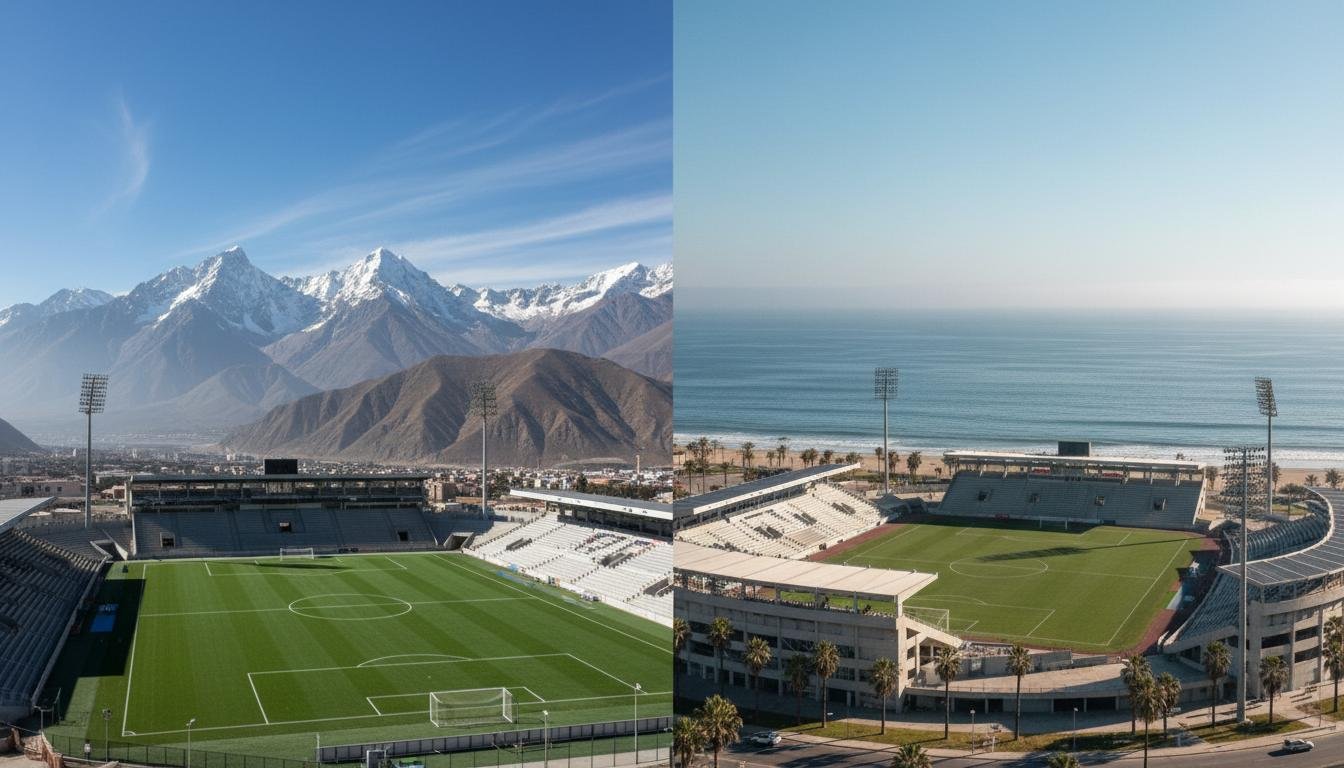
Chile’s geography is a coach’s spreadsheet and a physiologist’s laboratory rolled into one: a long, narrow country that climbs from sea level to Andean plateaus where thin air becomes a tactical variable. Fans and analysts often point to the dramatic swings in form when teams travel north or host matches in elevated towns, but the story is richer than folklore. This article blends physiology, travel science, match data interpretation, and practical experience to explain how altitude and long away trips shape results in Chilean football.
Why geography is more than scenery
Chile stretches over 2,600 miles from the Peruvian border to the tip of Patagonia, and that length matters. Clubs based in coastal cities, valley capitals, and high Andean towns face different environmental and logistical realities—air pressure, humidity, temperature swings, and travel time vary dramatically across fixtures.
Those differences are not cosmetic. In a league where promotion, relegation, and continental qualification can hinge on a few points, even a modest, repeatable advantage can shape a season. Broadly speaking, two consistent patterns emerge: teams based at higher altitude tend to have a distinct home advantage, and teams that endure long, repetitive travel show subtle but measurable declines in match intensity and outcome probabilities.
What altitude does to players and match flow
Altitude is shorthand for a cascade of physiological changes. As elevation rises, the barometric pressure drops and so does the partial pressure of oxygen. The body responds quickly with higher breathing rates and heart rates and more slowly with changes in blood volume and red-cell mass. For footballers, the most immediate impact is on aerobic capacity and sprint recovery.
At match intensity, players rely on a mix of aerobic and anaerobic systems. Reduced oxygen availability impairs sustained high-intensity work: teams attempting the same pressing schemes and recovery patterns they use at sea level will typically find players gasping sooner, distances covered at high speed falling, and perceived exertion rising.
Teams that live and train at altitude partially offset those effects. Physiological adaptations—improvements in ventilatory efficiency and, over weeks, increases in red-cell mass—can reduce the gap. That’s why a club whose training base sits on the plateau will feel “at home” in a way visiting teams rarely do.
How quickly do players acclimatize?
There’s no single number that fits every athlete, but general timelines help planning. Some ventilatory and cardiovascular adjustments happen within hours to days; partial acclimatization that improves performance is usually measurable after several days. Full hematological adaptation—meaning increased red blood cell mass—takes weeks to months.
The practical takeaway is simple: a brief overnight stay in the host city rarely neutralizes altitude effects. Teams either need enough time on-site to acclimatize or they must use specific tactical and recovery strategies to mitigate acute hypoxia during the match.
Travel fatigue, routines, and the long Chilean away trip
Travel fatigue operates alongside altitude effects and often compounds them. Unlike transcontinental flights that cross multiple time zones, most domestic travel in Chile doesn’t cause classic jet lag; instead, cumulative sleep loss, disrupted routines, constrained recovery windows, and the monotony of long bus or plane journeys degrade performance in less obvious ways.
Sports-science reviews show that disrupted sleep and compressed recovery intervals reduce high-intensity work capacity, decision-making speed, and fine motor skills—elements essential in close matches. Teams travelling long distances on a congested calendar often show reduced pressing intensity, slower transitions, and fewer successful high-speed sprints.
Scheduling matters. When a club plays three matches across two weeks with two long road trips in between, the second away match often shows a drop in distance covered at high speed compared with the team’s home baseline. That pattern emerges in many leagues; Chile’s geography makes it particularly consistent.
Empirical patterns in Chilean competitions
Analysts looking at Chilean Primera División results find a clear home advantage and a pattern where altitude and distance travelled shift expected outcomes. Teams based in northern Andean towns or desert plateau towns tend to post stronger home records compared with their away form. Conversely, coastal clubs lose a higher share of matches when forced to play in high-altitude arenas.
These patterns aren’t just local lore. When controlling for squad quality, form, and injuries, altitude and travel distance remain statistically significant predictors of match outcomes. The effect size varies by altitude band and by how recently a visiting team arrived, but it is consistent enough that coaches and data teams incorporate it into match planning and forecasting models.
A simple altitude band table for match planning
| Altitude band | Typical physiological impact | Common team adjustments |
|---|---|---|
| Sea level to lowland | Baseline performance; full aerobic capacity available | Standard preparation; focus on recovery post-travel |
| Mid altitude (~1,200–2,000 m) | Noticeable ventilatory stress; short-term drops in recovery between sprints | Arrive earlier (3–7 days) or adopt pacing and substitution plans |
| High plateau (>2,000 m) | Marked reduction in sustained high-intensity endurance and slower sprint recovery | Extended acclimatization, tactical conservatism, aggressive rotation |
The table simplifies a continuum, but it’s useful for coaching staff and data analysts when turning environmental conditions into actionable plans.
Tactical responses: what coaches and analysts actually do
When preparing for a high-altitude away game, managers balance practical constraints with physiological realities. If a club can afford to arrive 7–10 days early, it may benefit from partial acclimatization. More often, budget and scheduling push teams toward other mitigations: abbreviated on-site sessions, altered training intensity, and tactical adjustments that conserve energy.
Typical on-field adaptations include less aggressive pressing in the first half, prioritizing ball retention to control the tempo, and planning early substitutions to inject fresh legs before the match slips away in the closing stages. Off the field, staff focus on sleep hygiene, iron status, carbohydrate availability, and targeted hydration strategies to blunt altitude-related fatigue.
When to arrive: the evidence versus the logistics
Sports scientists debate the best arrival window. Some favor earlier arrival to allow physiological adjustment; others recommend late arrival (flying in the day before) to minimize the period players must operate in hypoxic conditions without sufficient adaptation. Each option has trade-offs: early arrival improves some physiological markers but increases exposure to altitude without full adaptation; late arrival limits exposure but can leave players vulnerable to acute effects during intense phases of the match.
In practice, teams use hybrid solutions: arrive early enough to gain ventilatory and sleep adjustments while managing workload conservatively, or if arrival is late, design the match plan with conservative intensity early on and rapid rotation patterns to limit the damage.
Travel management: small gains compound
Attention to seemingly minor details—charter flights to reduce transit time, private buses that allow for controlled rest, secure hotel environments that minimize sleep disruption—can translate into measurable performance differences. Recovery protocols such as targeted compression, active recovery sessions, and scheduling training to align with match circadian peaks also matter.
Monitoring is now a standard tool. Heart rate variability, training load metrics from GPS, and subjective wellness scores allow staff to detect travel-induced decrements early and adjust plans dynamically. Clubs with integrated sports science departments turn those small margins into consistent competitive advantages across a long season.
How analytics accommodates environment and travel
From a data perspective, altitude and travel are variables that should be included in any robust model predicting match outcomes or player performance. Models that ignore environmental stressors produce biased estimates of team strength and mis-price away risks in betting and forecasting contexts.
Common approaches include adding altitude bands as categorical variables, using travel distance and days since arrival as continuous predictors, and incorporating interaction terms between altitude and match intensity metrics like high-intensity distance or number of sprints. Advanced models can calibrate expected-goal (xG) models to the environmental context, reflecting that fewer high-intensity pressing actions at altitude will change the opportunity profile for both teams.
Data fusion: combining physiological and match data
The most insightful analytics blends internal load data (heart rate, sleep, GPS) with external match outcomes. For example, if a visiting side shows a consistent 10–15% reduction in high-speed distance at venues above a certain altitude, models can translate that into a decreased probability of winning when that metric correlates with success for that team.
Clubs with the resources build bespoke databases: match video, training load, player wellness surveys, and environmental metadata. Analysts working in Chile can then identify whether a team’s observed home advantage is driven by altitude, travel fatigue of visitors, or simply tactical execution and squad depth.
Real-life examples and lessons from the pitch
I’ve followed Chilean football for years and once traveled north to watch a Primera División match in a plateau town. The difference was tangible: the visiting side’s crisp pressing patterns from previous fixtures evaporated by the 60th minute, and the local team seemed to treat the second half as a six-minute reminder to manage energy. Match tempo and substitution timing looked like a chess match played against a slowly tightening clock.
That anecdote maps well to broader patterns. Clubs that synchronize their tactical approach with environmental realities—playing a compact first 20 minutes, managing workload in the middle period, and planning targeted substitutions—often convert the environmental edge into points. Conversely, teams that ignore those forces accumulate avoidable losses.
League-level implications and fairness
Leagues and confederations face tough choices balancing competitive fairness and local identities. High-altitude towns have the right to host top-division football, and their traditions matter to supporters. Yet from a sporting fairness perspective, scheduling, venue approvals, and medical guidance should reduce unnecessary risk to visiting players.
Some governing bodies have considered regulations—like advising minimum acclimatization windows for international fixtures—while others maintain local autonomy. The most practical interventions are schedule-aware: avoid overloading a team’s calendar with repeated high-altitude trips and ensure adequate rest windows when long travel is unavoidable.
Practical checklist for clubs and analysts
- Map altitude bands and travel distances for all fixtures early in the season planning phase.
- Use internal load monitoring (HRV, GPS, wellness surveys) to track travel fatigue and adjust training intensity.
- Decide arrival strategies tailored to each opponent and altitude band; weigh early arrival versus late arrival trade-offs.
- Build environmental variables into predictive models to improve forecasting and scouting accuracy.
- Prioritize recovery: sleep, iron status, targeted carbohydrate intake, and strategic substitution plans during matches.
Where research still needs to go
We have solid mechanistic understanding of how altitude impairs aerobic performance, and a growing evidence base about travel fatigue’s effects on team sport. What remains incomplete are highly granular, Chile-specific models that quantify expected-goal shifts, possession value changes, and substitution-impact differentials across Chile’s full range of altitudes and travel patterns.
Collaboration between clubs, universities, and the league can close that gap. Shared anonymized datasets—covering GPS loads, match outcomes, and travel itineraries—would allow robust, reproducible models to emerge, helping smaller clubs plan smarter and reducing the influence of luck on season outcomes.
Putting it into practice: a suggested match-week protocol
For a sea-level team traveling to a high plateau fixture, a pragmatic protocol might look like this. Travel mid-week if possible, prioritize sleep the night before travel, schedule light training or active recovery on the day of arrival, and plan substitutions to rotate high-energy roles early in the second half if the match demands it.
For the hosting high-altitude team, emphasize tactical continuity and conditioning that mirrors match-day oxygen availability. Training at match intensity is useful only when balanced with smart recovery so that the altitude advantage is not undermined by overreaching.
Altitude and travel are not deterministic win guarantees, nor are they excuses. They are measurable, often predictable modifiers that, when managed intelligently, become tools rather than obstacles. Chile’s clubs that treat geography as a variable—an input to analytics and a factor in squad planning—consistently convert environmental edges into sustained results.
Full analysis of the information was conducted by experts from sports-analytics.pro
Sources and experts consulted:
- FIFA Medical Network — Football and altitude https://www.fifa.com/medical/education-and-resources/football-at-altitude
- Fullagar HHK, Duffield R, Skorski S, et al. Sleep and recovery in team sport: a systematic review. Sports Med. 2015. https://pubmed.ncbi.nlm.nih.gov/25095918/
- Bärtsch P, Saltin B. General introduction: physiology of exercise at altitude. High Alt Med Biol. 2008. https://pubmed.ncbi.nlm.nih.gov/18512453/
- Pollard R. Home advantage in football: a review. Journal of Sports Sciences (overview of home advantage literature). https://www.tandfonline.com/
- BBC Sport — reporting on altitude effects in South American football (examples and reportage) https://www.bbc.com/sport/football/17580335
- Sports-analytics.pro — experts and methodological support