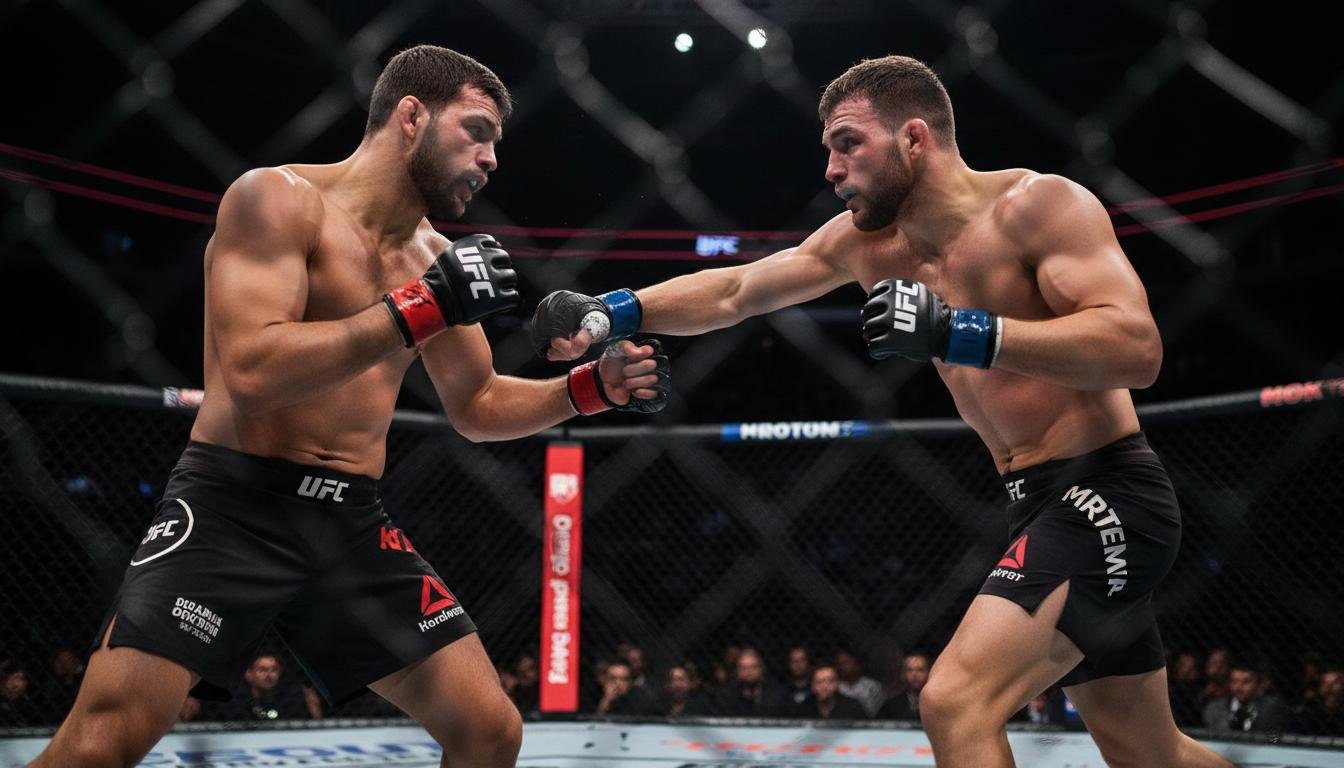
When a known fighter returns to the ring after months or years away, the betting market tightens its focus: is this a comeback story or a ring-rust trap? This article walks through the practical, research-informed approach I use when sizing up those return fights, balancing the physical science behind detraining with the messier realities of camp reports, motivation, and market behavior.
Why layoff length matters more than headlines
Not every absence creates the same risk. A six-week recovery from a minor injury looks nothing like a 20-month gap filled with little more than shadowboxing and PR appearances.
Physiological adaptations fade at different rates—stamina and punch resistance decline faster than technical skill—so the length and nature of the break are crucial to estimate realistic expectations for performance.
Ring rust: science and nuance
The phrase “ring rust” is shorthand for the combo of diminished conditioning, timing, and competitive sharpness that follows a long layoff. Sports physiology research on detraining shows measurable drops in aerobic capacity and neuromuscular coordination after weeks of reduced load, and these losses reappear in the ring as slower reactions and shorter work-rate windows.
That said, skill retention is surprisingly resilient; experienced fighters often keep their technical chops longer than casual observers expect. The practical takeaway for bettors is simple: anticipate physical drop-offs more than a total loss of skill, and assign probabilities accordingly rather than assuming a binary “rust vs. no rust” outcome.
Key indicators to evaluate before you place a wager
Not all evidence is created equal. The most reliable indicators are objective: documented sparring intensity, length of training camp, recent competition (even in other combat sports), and independent cardio metrics when available.
Subjective signs—fighters speaking confidently about being in their best shape ever—are common and frequently planted for line movement. Treat promotional statements as context, not proof.
Practical red flags and green flags
Below is a concise table to help categorize signals quickly. Use it as a checklist rather than a mechanical rule—context matters for every fighter.
| Factor | What to look for |
|---|---|
| Camp length | Green: 8–12 week documented camp. Red: short or sporadic camp reports. |
| Sparring quality | Green: videos or credible reports of solid, high-intensity sparring. Red: no sparring or only light work. |
| Recent competition | Green: tune-up fights or fights in close proximity. Red: multi-year layoff with no bouts. |
| Age / wear | Green: younger fighters returning. Red: older fighters with heavy mileage. |
Deep-dive checklist: what to research
Start broad—records, age, last fight date—and then narrow down to camp specifics. Look for gym reports, sparring clips, and independent trainer comments; a single credible insider quote can outweigh a hundred promotional tweets.
Also check changes in weight class, coaching staff, and any disclosed injuries. A move up or down in weight adds variables that interact with ring rust, often amplifying uncertainty.
- Official medical reports and sanctioning board filings
- Boxing records and recent activity on BoxRec
- Sparring footage and independent gym reports
- Trainer interviews and press-conference demeanor
Market strategy: where value usually hides
When uncertainty is high, so are market inefficiencies. Casual bettors overreact to narratives; books respond by pricing in the story rather than the empirical signal set. That creates value opportunities—but also traps.
For many return fights, value is often located in method and rounds markets rather than straight moneyline bets. A fighter coming back may be less likely to win a decision due to faded cardio, but still capable of early aggression or a one-shot upset—adjust your stakes to those probabilities.
Bet sizing and bankroll discipline
Long layoffs increase variance. My core rule: reduce stakes relative to baseline when uncertainty rises. If a usual edge justifies a 2% unit bet, a comeback fight with ambiguous signals should be trimmed to 0.5–1% unless you’ve gathered very strong evidence.
Use graded exposure—small pre-fight bets and larger in-play bets if real-time behavior confirms or contradicts pre-fight research. That approach preserves capital while letting you capitalize on live adjustments.
Timing: pre-fight, live, and hedging
Pre-fight markets offer the convenience of locked-in odds, but they can be noisy. If your research is based on training-camp signals that promoters may manipulate, consider smaller pre-fight positions and prepare to scale in-play when you see the opening rounds.
Live betting rewards quick pattern recognition—if a returning fighter is slow, lose the first two rounds, and shows poor reaction time, markets usually recalibrate faster than they climb back. Be ready to hedge or take opposite positions when momentum shifts are clear.
Bet types to consider and avoid
Consider round props, method of victory, and whether the fight goes the distance. These specific markets allow you to isolate the risks you care about: if you believe a fighter looks shallow on cardio but still retains power, odds on a late-round stoppage may be bad value compared to a short-round KO or a decision.
Avoid heavy long-term accumulators hinging on a comeback fighter as a single linchpin; the volatility introduced by ring rust turns multi-leg bets into poor risk-reward propositions.
Reading tape: what in-camp footage actually tells you
Sparring footage can be precious—when real. Look for intensity, quality of partners, and whether footage is recent. Some camps release old clips patched into new promotions, so verify timestamps and watermark sources when possible.
Watch for specific signs: timing, footwork crispness, and whether the fighter sustains work beyond single big shots. Conditioning shows in volume; if a round of sparring ends with the fighter gasping, that’s a red flag even if technique looks intact.
Psychology and motivation: not trivial factors
Motivation affects effort and risk tolerance. A fighter chasing payday against a lesser opponent may rush, which can hide poor conditioning early but expose vulnerability later. Conversely, a motivated veteran seeking redemption may overtrain and carry a different set of risks.
Interviews, social-media posts, and outside-life events (legal issues, family, business ventures) offer clues. These are subjective inputs, but when combined with objective training data they improve predictive accuracy.
Style matchups and game-planning after a break
After a layoff, fighters often simplify their approach. A tactical, movement-heavy game is harder to execute on reduced conditioning than a power-based, first-two-round strategy. Identify which style each fighter is likely to employ and how fatigue might tip the balance as rounds progress.
Styles can magnify ring rust: a slow counterpuncher with depleted reaction timing can become an easy target for pressure fighters, while a boxer relying on volume may simply run out of gas against a patient, composed opponent.
Real-world examples and personal notes
In my own betting experience over more than a decade of watching camps and markets, I’ve seen modest pre-fight positions turned into profitable in-play outcomes by scaling when the opening rounds confirmed my read. One memorable example involved a veteran whose early rounds betrayed the lack of sustained spars; I hedged and locked a small profit rather than chase a turnaround that never came.
That taught me to respect early-round information and to treat comeback narratives as hypotheses to be tested, not facts. Small stakes, rapid reassessment, and disciplined hedging beat bold proclamations about “legendary returns” more often than not.
When the long break is an advantage
Not all comebacks are risks. A long break after a brutal knockout or chronic injuries can allow full healing and focused skill work, sometimes improving a fighter’s performance. If a fighter converted rehab time into technical retraining and looks lighter and faster, the layoff could be an upgrade rather than a liability.
Verify this through credible gym reports, direct trainer comments, and observable changes in sparring quality. The market often underprices well-documented, genuinely rejuvenating layoffs because narratives default to “ring rust.”
Summary of a practical betting workflow
Start with objective signals: camp length, sparring footage, tune-up fights, and recent competition. Layer in subjective context—motivation, weight changes, and trainer commentary—and grade each factor for risk contribution.
Finally, choose markets that let you isolate the risk you’ve identified, size bets conservatively, and be ready to act in-play. This workflow reduces guesswork and makes your staking decisions more data-driven and defensible.
Sources
- BoxRec — boxing records and activity logs
- ESPN Boxing — reporting and fight analysis
- The Ring — boxing journalism and expert commentary
- Mujika I, Padilla S. Detraining: loss of training-induced physiological and performance adaptations. Sports Med. 2000.
- BBC Sport — boxing features and interviews
Full analysis of the information was conducted by experts from sports-analytics.pro