This article is a forward-looking, evidence-based survey of who is positioned to sit at the top of the UFC landscape in 2026. I rely on public fight records, objective fight metrics, and the commentary of experienced journalists and former fighters to explain not just who should be on a list, but why—what skills, durability, and career arcs underpin a fighter’s staying power. Read on for detailed profiles, the analytic signals that matter, and matchups that will clarify the pecking order over the next two years.
Methodology: how I decided who belongs on this list
Picking the best fighters two years out requires a blend of historical evidence and measured projection. I prioritized sustained elite performance (title runs or repeated wins over top-10 opposition), age and activity trends, stylistic advantages, and the objective metrics available on public platforms like UFC Stats and recognized reporting outlets.
Expert commentary from veteran reporters and former champions was used to add context: what the naked numbers miss (cage IQ, recovery, and camp changes). Where possible I anchored statements to authoritative sources rather than intuition—fighter records, activity levels, and fight-level metrics informed the rankings.
Why projections matter more than hype in 2026
Two years is long enough for clear improvements or declines. Fighters who peak late, change weight class, or rebuild after injury can flip the landscape quickly. That’s why this piece treats names as probabilities: candidates are weighed by likelihood to be elite in 2026, not simply by current buzz.
Rather than a static “top 10,” the emphasis is on stability—fighters who combine skill diversity, fight finish rate, and consistent activity. Those three features are the most durable predictors of sustained success in the promotion.
Lightweight and welterweight contenders to watch
The 155-170 pound range is always a hotbed of depth. Lightweight tends to reward elite grappling plus heavy finishing instinct; welterweight often favors athleticism mixed with tactical striking. Both divisions will be defined over the next two years by who can blend offense and defense without losing durability.
At lightweight, fighters with a proven takedown-and-control base who also finish remain safest to project forward. At welterweight, those who can mix precise striking distance with wrestling answers will cement themselves among the best.
Islam Makhachev — consistency and elite grappling
Islam Makhachev’s profile is the archetype of how an elite grappler sustains dominance: tight takedown entries, relentless top control, and systematic positional advances. Fighters who lack the scramble skills or takedown defense often struggle to mount a meaningful offense against him.
Makhachev’s ceiling isn’t only positional dominance; his incremental improvements in striking and cardio expand matchup versatility. Through measurable metrics—control time and takedown success—he demonstrates the kind of reproducible advantages that make him a safe projection for 2026 status among elite lightweights.
Justin Gaethje — fight-finisher who ages well
Justin Gaethje built a reputation on pressure, power, and a uniquely dangerous striking rhythm. Fighters like him live and die by output and damage absorption; the key for 2026 is activity and game-plan adaptation rather than raw attrition.
Gaethje’s value in a short-list projection is that he can end fights early and remain relevant even against younger opposition. If he keeps selective matchmaking and maintains recovery patterns, he will still be a headline-level threat two years out.
Featherweight to lightweight crossover stars
Those who move between 145 and 155 pounds often do so to chase favorable matchups or titles. The best exponents combine fast-twitch striking with solid takedown defense, retaining explosiveness after a weight change.
In 2026, the division’s top names will be those who adapt power and timing to new frames without sacrificing cardio or chin. Versatility across weight classes is a multiplier for long-term status.
Alexander Volkanovski — pace, craft, and reinvention
Alexander Volkanovski’s career is a study in adjustment: slicing down opponents’ advantages while adding layers to his own game. His high fight IQ and conditioning make him difficult to surprise and easy to place on a list of ongoing elite performers.
Even as opponents chase specific counters, Volkanovski’s ability to retool strategy—mixing angles, changing rhythm, and varying output—keeps him in the conversation for the foreseeable future. That strategic elasticity is a big reason projection models favor him for sustained top-tier placement.
Ilia Topuria — young, technical, and fearless
Ilia Topuria represents the type of younger elite who threatens to establish a long run: precise striking, high pressure, and a balanced grappling base. His fight finishes point to both power and timing, while his relative youth suggests growth capacity.
Projection for Topuria is tethered to his ability to absorb exposure at the highest level and to maintain activity. If he continues to take—and beat—top opposition, he will be among the headline names in 2026.
Middleweight and light heavyweight pillars
Middleweight and light heavyweight divisions reward punch precision and takedown answers. Longevity in these classes often stems from movement, fight IQ, and the capacity to avoid one-shot losses over time—factors that push a fighter from “good” to “all-time contender.”
Predicting 2026 requires watching for those who balance ring control with selective aggression. A few contenders already show the combination of attributes necessary to be staples on any top list.
Israel Adesanya — technical striking and matchup control
Israel Adesanya is an example of a precision striker whose control of range changes outcomes. His ability to pick shots and manage distance makes him less dependent on explosive aging curves than other fighters.
For his 2026 projection, the questions are activity and how modifications in training affect adaptability. But his strategic striking and documented film study habits make him a plausible perennial top-of-division figure.
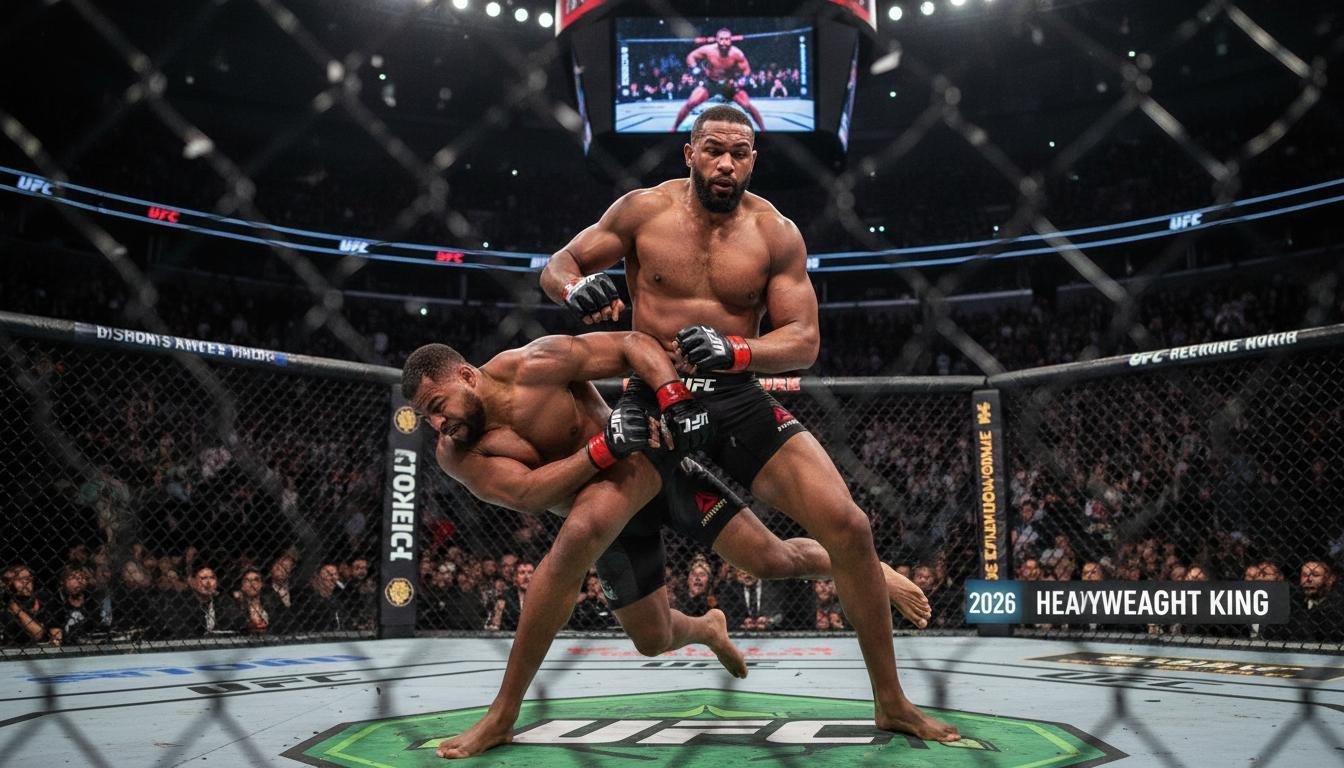
Jon Jones — retraining and heavy-weight projection
Jon Jones’ move up from light heavyweight to heavyweight (and associated training choices) altered the variables evaluators track. The core advantage he carries is range and fight IQ—two traits that transfer across weight classes better than raw speed.
His projection depends on handling the physical differences at heavyweight long-term. If Jones can preserve mobility and fight planning, his record of dominance at 205 pounds provides a strong foundation for continued elite status in 2026.
Bantamweight and flyweight: dynamic, stylistic elites
Smaller divisions are driven by speed, timing, and volume. Fighters who pair creative striking with defensive discipline tend to outlast one-dimensional knockout artists because they can consistently win rounds while minimizing catastrophic exchanges.
When forecasting two years ahead, look for those who evolve stylistically—adding grappling or improving defense—rather than relying solely on a single weapon.
Sean O’Malley — creative striking and marketable poise
Sean O’Malley’s value is a mix of technical creativity and brand appeal. From a pure-fight perspective, his timing and diverse striking toolkit make him a disruptive matchup for a range of bantamweights.
For a 2026 projection, health and activity are key. If he remains active and continues to push technical boundaries while shoring up defensive gaps, he’s positioned to be among the most notable names in the division.
Aljamain Sterling — wrestling base and adaptability
Aljamain Sterling’s approach illustrates how a strong wrestling and scrambling game can neutralize top-level strikers. His craft lies in taking fights to where he has advantages and denying opponents’ strengths.
Whether Sterling remains at the very top depends on health and how opponents game-plan against his wrestling. Those variables make him a plausible 2026 staple if he keeps evolving tactically.
Women’s divisions: technique, speed, and shifting hierarchies
Women’s MMA features rapid generational turnover in certain divisions, so projections must weigh age, recent activity, and whether a fighter’s skill set is transferable against rising talent. Champions who keep busy and test themselves against varied styles tend to hold up better over time.
Expect turnover in some classes, but also expect certain versatile fighters to anchor the top for years—those who pair striking variety with wrestling or elite scramble defense.
Zhang Weili — pressure striking and grit
Zhang Weili’s aggressive style and heavy-volume striking make her a durable projection for continued relevance. She combines forward tempo with technical punching and has shown the ability to adapt after losses.
Her 2026 outlook leans positive as long as she remains active and picks matchups that stretch her skill set rather than overexpose vulnerabilities. Fighters who learn quickly from setbacks tend to sustain high-level runs.
Rising female talents — the names to watch
Beyond established names, the next tier comprises athletes who add wrestling to striking or vice versa, and who maintain high activity at regional and international levels. These fighters typically make a jump into contention by sustaining two-to-three notable wins in sequence.
Tracking promotion-level matchmaking and small-sample metrics—like significant strike differential and submission attempts—reveals which prospects are likely to break through by 2026.
Young breakouts and the next generation
A list of the best in two years must include those who are young enough to ascend and have already beaten credible opponents. These are athletes with polished fundamentals and the hunger—and management—to chase elite victories rather than padding records.
Key signs of an imminent breakout are consistent finishes, the ability to beat veteran gatekeepers, and measurable improvements in fight IQ. Those indicators point to fighters most likely to appear on the elite lists in 2026.
Metrics that matter: the analytics behind the selections
Not all statistics are equally predictive. I weight certain metrics higher: takedown defense, striking differential (significant strikes landed minus absorbed), control time for grapplers, and finish rate. These correlate strongly with long-term success when combined with age and activity level.
UFC Stats is the primary public repository for these measures, while matchup-level film study and expert scouting identify style-specific advantages that raw numbers might miss. Combining both approaches yields more resilient projections than metrics alone.
Table: probable elite list going into 2026 (by weight and reason)
| Fighter | Weight class | Why they’re projected elite |
|---|---|---|
| Islam Makhachev | Lightweight | Elite grappling, control, systematic offense |
| Alexander Volkanovski | Featherweight | High fight IQ, conditioning, adaptability |
| Jon Jones | Heavyweight | Range, technical striking, elite fight planning |
| Israel Adesanya | Middleweight | Precision striking, distance control |
| Ilia Topuria | Featherweight | Balanced finishes, youth and growth curve |
| Sean O’Malley | Bantamweight | Creative striking, timing |
| Justin Gaethje | Lightweight | High finish rate, pressure striking |
| Zhang Weili | Women’s straw/welter classes | Volume striking, durability |
High-stakes matchups that will determine 2026 rankings
Certain fights act as litmus tests. When elite grapplers meet top-level strikers, the outcomes often reveal wider systemic advantages or current limitations. Matchups that mix styles—high-volume strikers vs. pressure grapplers—will have outsize importance for the 2026 pecking order.
Examples of the kinds of fights that settle debates include top-level grapplers vs. rangy strikers and younger pressure fighters vs. established technicians. Those bouts expose whether development is tactical or merely physical.
Injuries, inactivity, and the biggest wildcards
No projection is complete without considering the unpredictable: injuries, contract disputes, and life events. A fighter sidelined for a year loses development time, and younger rivals can overtake them quick. That makes activity as important as talent when forecasting 2026.
Management choices—fight frequency, opponent selection, and camp stability—often determine whether an elite skill set turns into a multi-year reign or a brief headline sprint. Those variables are why some fighters with similar records diverge dramatically over two seasons.
How fans and analysts should watch the calendar
To keep the picture current, focus on fight-level indicators: did a fighter improve takedown defense? Did they handle a new elite opponent’s strongest weapon? These answers are revealed through live fights and post-fight film study, not through hype cycles.
Reliable sources—official fight statistics and reporting from seasoned analysts—make the difference. Watching for consistent improvement in measurable areas gives a clearer sense of who will be at the top in 2026.
Practical takeaways for bettors, fans, and coaches
Bettors should weigh durability and adaptability higher than a single flashy win. Coaches and camps must focus on filling demonstrable skill gaps rather than chasing stylistic fireworks, because opponents at the elite level will exploit weaknesses ruthlessly.
For fans, the exciting part is watching development unfold: which fighters add new tools and which stall. That narrative—improvement vs. decline—is the most reliable storyline for the next two years.
Final thoughts on predicting the next two years
Forecasting the top names for 2026 is less about naming a static “best of” list and more about identifying durable skill sets, activity patterns, and adaptability. Fighters who combine these elements are the likeliest to remain elite as the sport evolves and new challengers arrive.
Expect turnover, and expect surprises. The safest investments in predictions are those anchored to measurable advantages and consistent activity, supported by expert scouting and fight metrics. Those are the pillars that will keep a fighter’s name on lists of the best into 2026 and beyond.
Sources and expert reporting used for this analysis
- UFC (official site and media) — provides fight records, event pages, and official announcements. UFC
- UFC Stats — the primary source for fight-level metrics, takedown and striking numbers. UFC Stats
- ESPN MMA — reporting and analysis from seasoned MMA reporters and analysts (news, interviews, long-form pieces). ESPN MMA
- MMA Fighting — event coverage and analysis; useful for interview context and expert quotes. MMA Fighting
- Sherdog — historical records, fighter databases, and long-form reporting. Sherdog
- Tapology — rankings, fight history, and fan-adjusted metrics helpful for matchup context. Tapology
- Ariel Helwani — veteran MMA reporter and commentator, for reporting context and industry perspective. Ariel Helwani
- Brett Okamoto (ESPN) — UFC reporting and analytical pieces used to contextualize trends. Brett Okamoto
- Daniel Cormier — former champion and analyst contributions on technique and strategy. Daniel Cormier (analysis)
- John Morgan (MMA Junkie) — event reporting and fighter interviews that inform activity and camp trends. John Morgan
Full analysis of the information was conducted by experts from sports-analytics.pro