Germany’s top-flight football has always combined tactical smarts, passionate supporters, and a steady conveyor belt of young talent. As we move into 2026 the landscape looks familiar but more competitive: established giants still carry heavyweight budgets and reputations, while newer project clubs and smartly run mid-table teams keep closing the gap. This article takes a careful look at who matters now, why they matter, and what to watch as the Bundesliga and German clubs navigate domestic and European ambitions.
How I judge greatness in the modern German game
“Best” is more than trophies. I weigh consistent league performance, youth development, financial sustainability, European results, and the club’s ability to renew its squad without breaking the bank. German clubs that combine academy output with clever recruitment tend to sustain success longer than those that rely on one or two expensive signings.
Data and scouting matter, but culture and coaching do too. A club with a clear playing identity and competent coaching staff — whether that identity is high press or possession control — usually outperforms in tight seasons because they know how to grind results when injuries or fixture congestion arrive.
The perennial giants
Certain names inevitably anchor any conversation about top German teams: huge fanbases, stadiums that rattle the stands, and international reputations that attract talent. These clubs still set the baseline for ambition in Germany due to financial muscle, global branding, and deep squads that cope with domestic cups and European commitments.
Even so, their supremacy isn’t absolute. Tactical evolution, savvy rivals, and unexpected transfer-market shifts mean titles are harder to take for granted, and each season feels like a fresh test of institutional resilience and strategy.
Bayern Munich
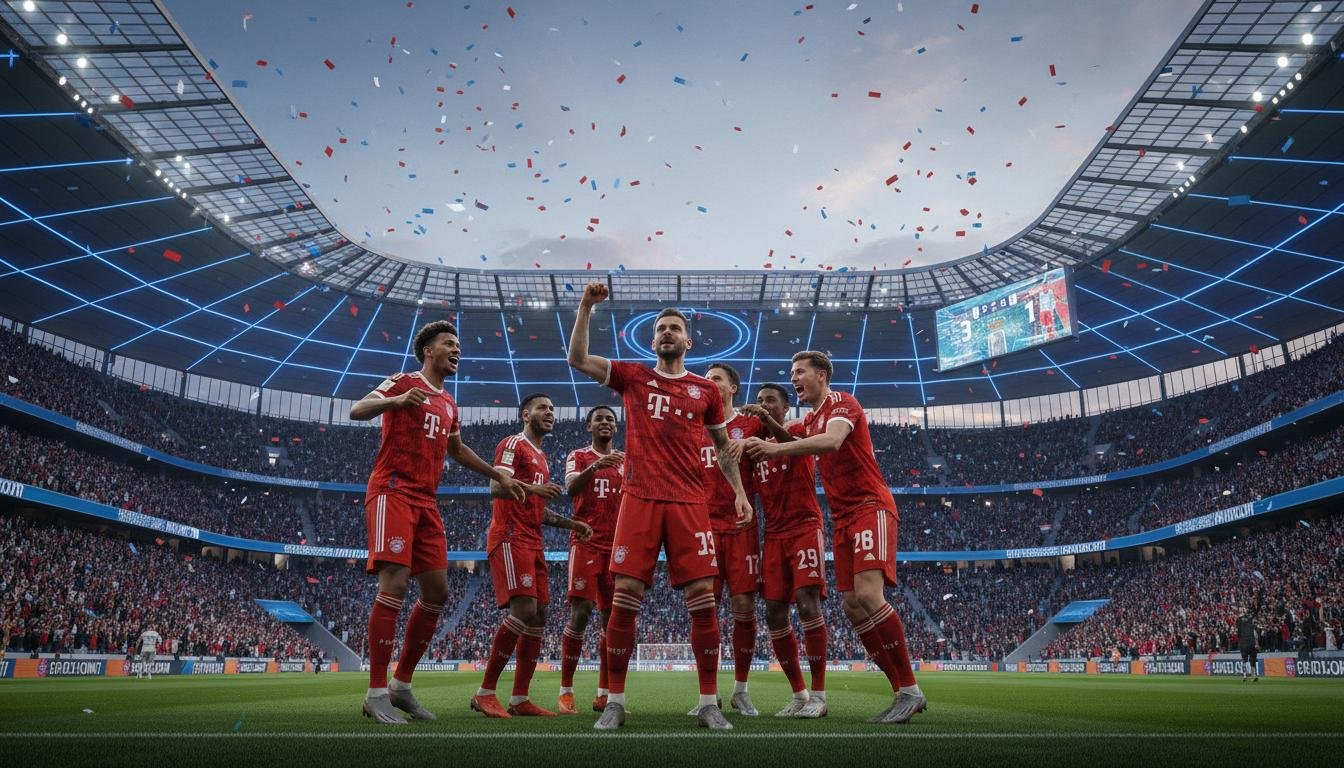
Bayern remains the benchmark: world-class infrastructure, one of Europe’s deepest squads, and a global scouting network. Their academy and scouting produce or identify players who fit a demanding winning culture, while commercial revenues fund continuity at the top level.
On matchdays the Allianz Arena still feels like a pressure-cooker where expectation is part of the architecture. Having watched Bayern at home, what struck me was less the spectacle and more the relentless demand for precision from the very first minute — a reminder that institutional excellence is as much about standards as it is about stars.
Borussia Dortmund
Dortmund combines ferocious home atmosphere with a developmental philosophy that has made them a launchpad for young talent. The club’s ability to buy low, develop, and sometimes sell high gives them a sustainable model even when chasing Bayern domestically.
Their tactical approach blends intensity with verticality, and when the young core clicks they are among Europe’s most dangerous counter-attacking sides. Dortmund’s challenge is balancing player sales and keeping a spine strong enough to contest every trophy.
Rising challengers and well-run contenders
Beyond the giants, a cohort of clubs has shown they can push for titles and represent Germany well in Europe. These teams are often characterized by tight recruitment, modern coaching setups, and a willingness to invest in data, sports science, and youth.
Their rise is a reminder that strategic management can narrow historic gaps quickly in a league that rewards smart planning and coherent identity.
RB Leipzig
Leipzig’s model — heavy investment in analytics, coaching, and young talent — has translated into sustained top finishes and strong European performances. Their recruitment is targeted, often unearthing players with significant upside who thrive in an organized, high-intensity system.
Their challenge is long-term acceptance among traditional fans of German football, but on the pitch they have proven to be a consistent thorn for older powerhouses and a regular European competitor.
Bayer Leverkusen
Leverkusen built a reputation for intelligent coaching and a compact recruitment plan that emphasizes players who fit a dynamic, attacking system. The club’s continuity in coaching and structure has translated into competitive league campaigns and deeper runs in continental tournaments.
What makes them dangerous is the blend of tactical clarity and player development — a recipe that keeps them in title conversations while maintaining financial prudence.
Eintracht Frankfurt and Union Berlin
Frankfurt and Union are different examples of how clubs outside the traditional top three can thrive. Frankfurt mixes continental experience with a robust scouting network that spots late bloomers, while Union’s steady, community-driven rise reflects patient leadership and clever transfer decisions.
Both clubs show that identity — whether the physical resilience of Union or Frankfurt’s European hunger — can translate into consistent top-half finishes and occasional deep cup runs.
Dark horses and legacy clubs pushing for revival
Teams like VfL Wolfsburg, 1899 Hoffenheim, Borussia Mönchengladbach, and Schalke still carry heritage, resources, or tactical profiles that make them unpredictable and capable of bounce-backs. Some work from robust academies, others from focused investment campaigns that can return them to European contention.
These clubs are often the bargaining chips of a league in flux: attract the right coach or a smart young cohort and they can re-enter title races quickly. The flip side is that without stability they can slip back toward mid-table anonymity just as fast.
| Club | Key strength | What to watch |
|---|---|---|
| Bayern Munich | Depth and experience | Squad renewal and tactical flexibility |
| Borussia Dortmund | Youth development | Retention of core talents |
| RB Leipzig | Analytics-driven recruitment | European consistency |
| Bayer Leverkusen | Coaching continuity | Managing expectations under pressure |
| Eintracht Frankfurt | European pedigree | Squad depth in winter |
European competition and financial levers
Champions League and Europa League runs still determine budgets, prestige, and recruitment reach. Clubs that advance in Europe gain revenue and experience that amplify domestic competitiveness, which is why European performance is a central component of “best” in any given season.
UEFA coefficients, TV deals, and sponsorship influence how aggressively clubs can chase talent. For German teams, a balanced model — mixing commercial growth with homegrown talent — remains the most sustainable path to long-term success.
What to watch through 2026
Key signals to follow are managerial appointments, transfer-window strategies, and the health of academies. A mid-season coaching change or a breakout youth prospect can reshape a club’s trajectory quickly in the German system, where tactical fit matters immensely.
Also watch how clubs integrate analytics and sports science into daily routines; those operational improvements often show up as fewer injuries, more consistent late-season form, and better player resale value in the transfer market.
Germany’s top teams in 2026 will likely be a mix of tradition and innovation: clubs that honor their identities but adapt ruthlessly to the modern game. Whether you favor the safe excellence of established giants or the thrilling unpredictability of rising projects, the Bundesliga’s competitive blend makes every season worth watching.