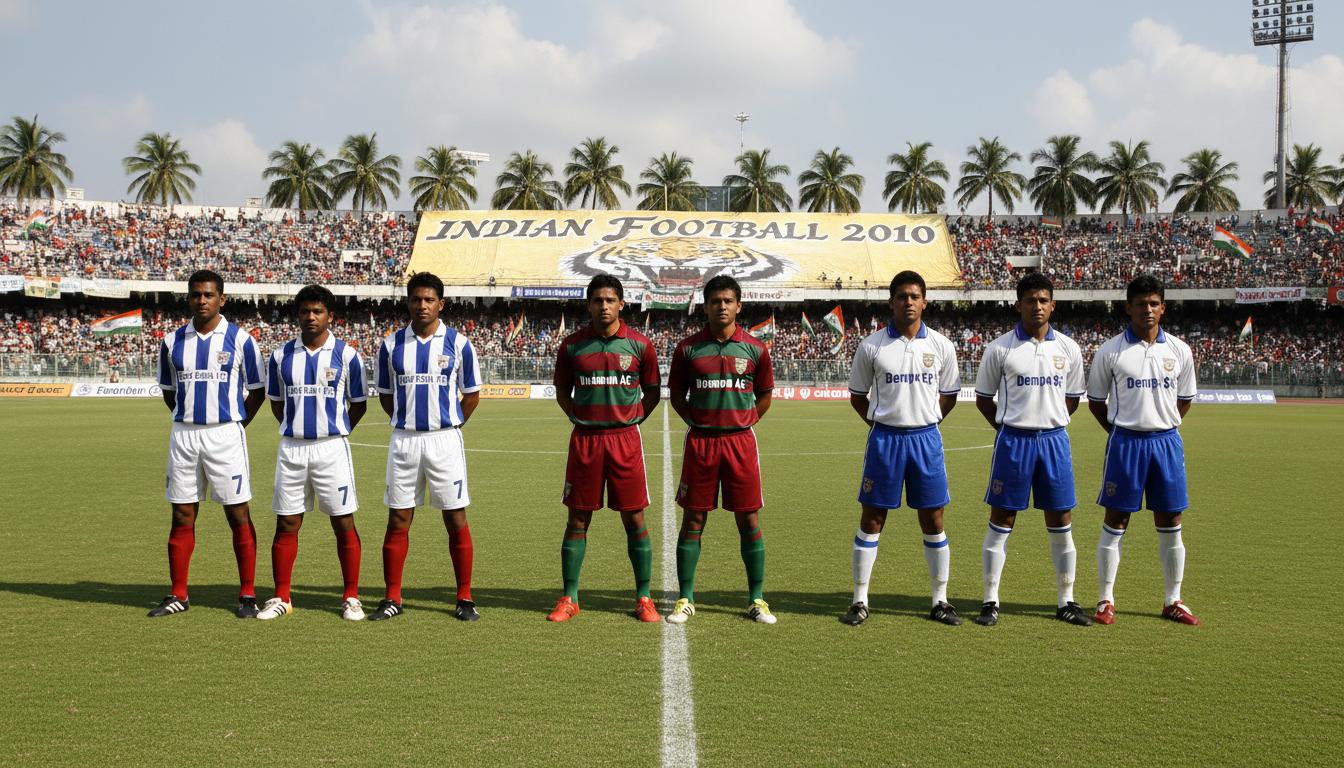
The year 2010 feels like a hinge in modern Indian football, when long-standing clubs and emerging forces shared the spotlight. Fans still filled historic grounds in Kolkata and Goa, while new ambitions and modest investments were beginning to reshape the national game.
Setting the scene: how Indian football looked in 2010
Domestic football in 2010 revolved around a handful of competitions and a core group of clubs that carried most of the attention. The I-League, the Federation Cup and regional tournaments framed the calendar, and club loyalties ran deep in their home cities.
International exposure was limited but growing; a few clubs had tasted continental competition and used that experience to raise standards at home. The era felt transitional because professional structures were still settling, even as crowds and media interest hinted at bigger changes to come.
Standout clubs of the moment
Below is a concise look at the teams most commonly mentioned when people speak of the best clubs circa 2010. The table highlights their regional base and what made them notable that year, without trying to enumerate every trophy.
| Club | Region | Why notable in 2010 |
|---|---|---|
| Dempo SC | Goa | Consistently competitive, known for producing technically sound players and challenging on the national stage |
| Churchill Brothers | Goa | Strong squad depth and a reputation for steady league performances |
| East Bengal | Kolkata | Huge fan base and a long tradition in domestic cup competitions |
| Mohun Bagan | Kolkata | Historic club with passionate supporters and a central role in Indian football culture |
| Salgaocar | Goa | Known for youth development and competitive squads in regional and national contests |
Dempo SC: the measured achiever
Dempo were widely regarded as one of the most professionally run clubs in India at the time, especially in nurturing technical players who could pass and move under pressure. Their approach favored possession and tactical discipline, which often set them apart in domestic ties.
Beyond the pitch, Dempo’s stable management and scouting networks made them attractive to ambitious players, and that stability showed in consistent league performances. They were also among the clubs most willing to test themselves in continental fixtures, a sign of broader ambition.
East Bengal: tradition and fervor
East Bengal carried one of the largest and most loyal fan bases in the country, and their matches—particularly against rivals—could feel like theater. The Kolkata crowd’s intensity often gave the team an emotional edge, turning ordinary fixtures into pulsating events.
On the sporting side, East Bengal combined experienced veterans with emerging talents, aiming to balance flair with structure. Their cup pedigree and appetite for big matches kept them in conversations about the best teams of the period.
Mohun Bagan: history that shapes identity
Mohun Bagan’s legacy loomed large in 2010, not just as a club but as a cultural institution in Indian football. That history created expectations: supporters demanded success and the club frequently responded with spirited campaigns in domestic competitions.
While management and results sometimes oscillated, the team’s capacity to attract top domestic talent and produce memorable derby moments ensured they remained central to any discussion about the country’s leading clubs.
Churchill Brothers and Salgaocar: Goa’s sturdy contenders
Goa’s clubs were significant because the state had become a footballing heartland, producing skillful players and passionate local support. Churchill Brothers, with their well-rounded squads, and Salgaocar, with a focus on youth and technical coaching, both contributed to this regional strength.
The Goan model—community engagement, strong youth pipelines, and a focus on attractive football—made these clubs resilient and competitive. They repeatedly challenged the big Kolkata names and pushed the overall standard of the league higher.
Key competitions and what they meant
In 2010, the I-League carried the most weight as the national league competition, while the Federation Cup and historic tournaments like the Durand Cup offered knockout drama and silverware for hungry squads. Success in these events defined seasons and club narratives.
For players and coaches, performance in domestic competitions often opened doors to national selection or coaching opportunities. Clubs that managed consistent league campaigns while also performing in cups gained reputations for depth and management quality.
Players, coaches and tactical trends
The era favored tactically disciplined systems with emphasis on organization—teams that could control transitions and defend compactly tended to fare better against unpredictable opponents. Coaches who introduced modern training methods or emphasized fitness gave their clubs an edge.
Player development was uneven: some clubs invested in youth systems while others leaned on experienced imports and senior domestic pros. Where a club merged both approaches, the results often followed in stability and sustained competitiveness.
Fan culture and the matchday experience
Watching a Kolkata derby in 2010 remains one of my vivid memories: the noise, the banners, the rival chants weaving into a single, electrifying atmosphere. Even smaller regional matches could feel intimate and intense, with local supporters turning out in strong numbers.
This passion translated into real pressure on visiting teams and created home-field advantages that could decide close league races. For many fans, club identity and local pride mattered as much as trophies.
Legacy and why 2010 still matters
The clubs that stood out around 2010 laid much of the groundwork for the changes that followed—the move toward greater professionalism, improved youth training, and later structural shifts in Indian football. Their trials and experiments informed how newer initiatives approached the sport.
Remembering the best teams from that year is less about compiling a static ranking and more about acknowledging a scene in motion: clubs balancing tradition and modernity, fans keeping passions alive, and a game quietly preparing for a busier, more connected decade.
Where to explore more
If you want to dig deeper, look for archived match reports, club histories and contemporary news coverage from 2009–2011; they reveal the nuances behind league tables and cup results. Visiting club museums or local fan forums can also provide color that statistics alone cannot capture.
What stands out when you do that research is the mix of gritty realism and optimism—a football culture rooted in place, yet reaching for a broader stage. Those teams from 2010 still teach us about planning, community, and the slow, stubborn work of building a footballing identity.