2010 was one of those years that changed how we remember club football: dramatic finals, tactical revolutions, and a handful of teams that dominated headlines and trophies. Whether you measured greatness by silverware, stylistic influence, or the sheer quality of the starting XI, this era produced clubs whose reputations still echo today. I’ll walk through the teams that mattered, why they mattered, and how their 2010 campaigns shaped the modern game.
Why 2010 stands out
The calendar year 2010 bridged two distinct moments in club football. The 2009–10 season closed with classic continental showdowns, while the latter half of the year set up fresh rivalries and managerial shifts that defined the next decade. Inter Milan’s treble under José Mourinho, Barcelona’s continued technical excellence, and domestic power shifts in England and Germany made 2010 feel like a pivot point.
Beyond trophies, 2010 was notable for tactical narratives: possession versus pragmatism, pressing that evolved into the modern high-press, and managers whose personalities left lasting marks. Fans remember matches, but football historians mark the movement of ideas—and 2010 was rich with both.
How to judge the “best”
Ranking clubs is inevitably subjective, but a useful checklist includes trophies won, consistency across competitions, squad depth, and cultural influence. I factor in calendar-year trophies (Champions League, domestic leagues, Club World Cup), tactical innovation, and the presence of world-class players who changed games on their own.
There’s also context: financial resources, injury crises, and fixture congestion can tilt a season. When a club wins despite those headwinds, it earns extra weight in any list of the year’s elites.
Standouts of 2010
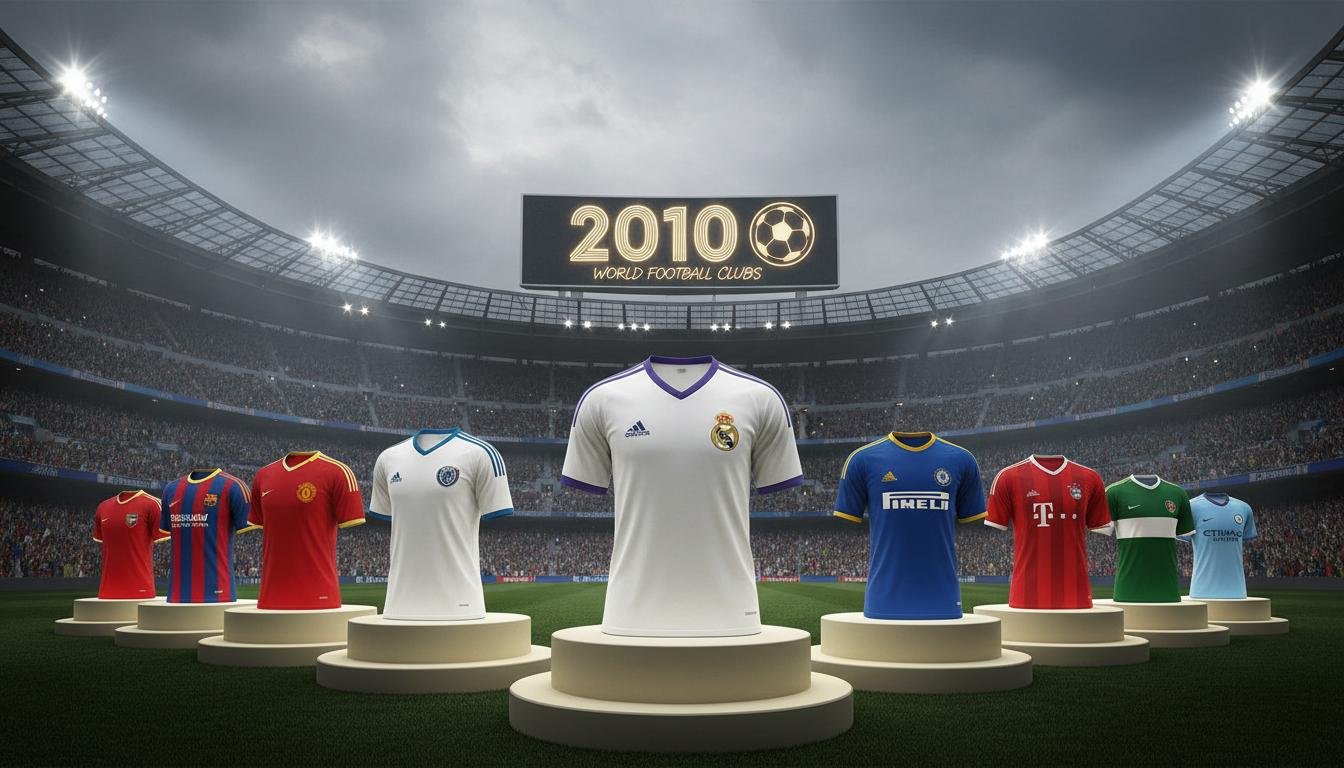
Below are the clubs that, by trophies and influence, stood tallest in 2010. I’ll outline what each achieved and why it mattered, with a short snapshot of key players and defining matches.
Inter Milan
Inter’s 2010 is the headline story: Serie A, Coppa Italia, and the UEFA Champions League—Mourinho’s treble is still discussed with reverence. The Champions League final against Bayern Munich in May 2010 remains a tactical masterclass for defensive organization combined with ruthlessness in attack.
Diego Milito was Inter’s decisive performer, scoring crucial goals as Wesley Sneijder pulled the strings in midfield. The squad blended steel and craft—Maicon’s runs, Samuel Eto’o’s work-rate, and a rearguard marshalled to near-perfection.
FC Barcelona
Barcelona arrived in 2010 as the tail-end beneficiaries of a revolution that began years earlier: a culture of technical excellence and positional play. Even as Inter snagged the Champions League in May, Barcelona’s influence remained broader—La Masia graduates like Lionel Messi, Xavi, and Andrés Iniesta continued to define an aesthetic.
Barça’s 2009 treble had already altered expectations; in 2010 they were still elite, winning La Liga and producing classic performances that other clubs tried to copy. Watching them felt like watching football’s grammar rewritten.
Bayern Munich
Bayern were the dominant German force in 2010, regularly winning the Bundesliga and rebuilding toward continental ambitions. Their season culminated in a Champions League final appearance against Inter—an encounter that showed the thin margins between a trophy and near-miss.
Bayern’s roster combined veterans and emerging talents, and their consistency in domestic competition set the template for the club’s decade-long dominance that followed.
Chelsea
Chelsea won the 2009–10 English Premier League under Carlo Ancelotti, showcasing a potent attack and resilient defense. Didier Drogba and a physically imposing midfield led a team that could grind results as well as win with flair.
Their league title mattered because it signaled the rise of a Premier League style that could mix physicality and tactical nuance—and because it kept England competitive on the continental stage.
Manchester United
Manchester United remained a force in 2010 though they did not dominate as they had earlier in the decade. Sir Alex Ferguson’s side produced memorable European nights and sustained domestic pressure, keeping the club within easy reach of major honors and maintaining a depth of squad few could match.
United’s importance in 2010 was as a yardstick: any club aspiring to be the world’s best had to measure itself against their relentless standards.
Other notable contenders
Real Madrid’s 2010 story was transitional—Cristiano Ronaldo continued to score, and managerial changes promised a new era. In Germany, Schalke and Borussia Dortmund were building toward future prominence, and in France, Olympique de Marseille claimed domestic glory in 2010 and reminded Europe that Ligue 1 could produce compelling challengers.
Across South America, clubs like Internacional and Estudiantes remained influential, underscoring that “best” can’t be confined to Europe alone; club football’s heartbeat is global.
A compact table: top clubs and key 2010 achievements
This table provides a quick reference to major honors or milestones for the year.
| Club | Key 2010 achievement |
|---|---|
| Inter Milan | UEFA Champions League winner; Serie A and Coppa Italia (treble) |
| FC Barcelona | La Liga winner; continued global influence through playing style |
| Bayern Munich | Bundesliga winner; Champions League finalist |
| Chelsea | Premier League winner |
How these clubs influenced football after 2010
The tactical ripples from 2010 are still visible. Barcelona’s emphasis on short passing and positional rotation shaped youth coaching worldwide. Inter’s pragmatic counterbalance demonstrated that defensive structure, combined with clinical finishing, can still conquer possession-heavy opponents.
Clubs like Bayern and Chelsea showed that deep squads and strong recruitment pipelines create durability. In practical terms, academies and scouting networks learned from these models, and clubs across Europe adjusted budgets and philosophies accordingly.
Reflections from the stands
I watched parts of Inter’s Champions League run and remember the stadium hum as if it were yesterday. The drama of that season—late goals that swung ties, managers who out-thought each other, and players hitting form at the right moment—made being a fan feel urgent and immediate.
Those matches aren’t just memories; they shaped how I analyze teams now: looking for balance between philosophy and pragmatism, and for players who can both follow a system and improvise when the moment demands it.
Where to look for more authoritative records
If you want detailed match reports, official competition histories, or year-end summaries, consult the organizing bodies and contemporary coverage. UEFA and FIFA archives provide authoritative match reports and tournament summaries, while major outlets like BBC Sport and ESPN offer accessible season recaps.
For statistical and historical analyses, the IFFHS and reputable football historians compile yearly awards and rankings that capture both trophies and broader performance metrics.
Across trophies, tactics, and memorable performances, the clubs highlighted here made 2010 a remarkable year for the sport. They didn’t simply win; they pushed football’s boundaries—on the pitch and in the boardroom—and left patterns that clubs and coaches would study for years after.