Cricket in 2026 will feel familiar and new at once: traditional powers still loom large, but smarter selection, data-driven coaching, and restless domestic leagues have shuffled the deck. This article looks beyond headlines to the structures and trends that determine which national sides will be genuinely elite, and why some teams look primed to lead across formats.
How I judge a team’s standing in 2026
Evaluating international sides in 2026 isn’t about a single ranking or a headline result; it’s about depth, adaptability across formats, and the health of domestic systems. A top-tier team will have consistent pipelines — youth programs, strong domestic competitions, and a coaching setup that uses analytics without losing sight of human judgment.
Form, of course, matters: recent tournament performance and series wins are important signals. But for a robust picture you also need to weigh injury management, player workload strategies linked to busy franchise calendars, and the ability to reset quickly between Test, ODI and T20 commitments.
Quantitative and qualitative metrics behind the assessment
On the quantitative side I look at ICC rankings where applicable, win-loss ratios across 18–24 months, and player-performance clusters (strike rates, economy, averages adjusted for opposition and conditions). These numbers reveal who is winning and how, but raw stats need context — a bowling average on flat tracks is different from one earned on seaming pitches.
Qualitatively, I factor in leadership stability, selector clarity, and the culture of the dressing room. Teams with consistent captains and clear succession plans tend to navigate transitions better, turning potential dips into manageable cycles rather than long-term decline.
Projected top contenders and why they matter
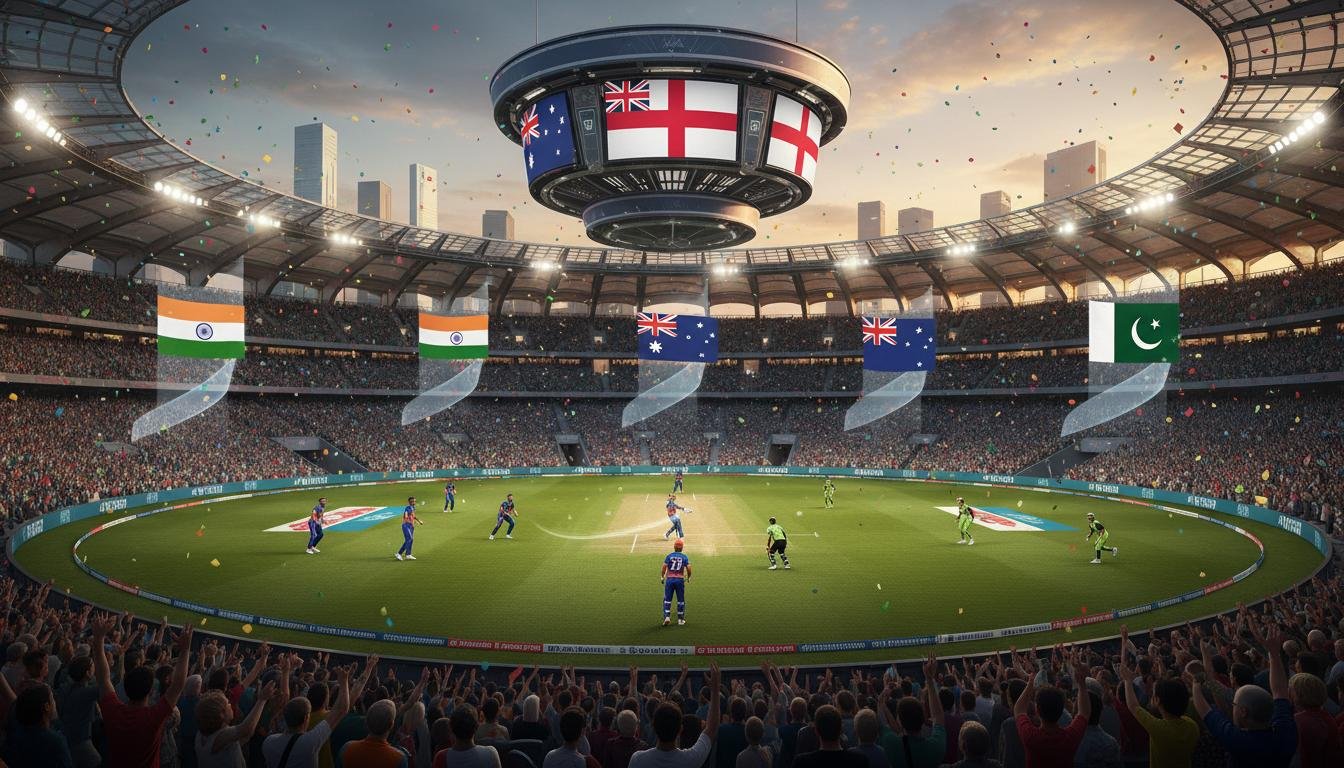
Predicting precisely who will be “the best” in 2026 is risky; instead, I identify the core group of teams most likely to lead world cricket — teams that combine infrastructure, talent, and recent form. These sides are not listed in strict order but as the realistic contenders shaping the landscape.
| Team | Why they’re contenders |
|---|---|
| India | Huge talent pool, dominant white-ball depth, strong youth development and financial resources |
| Australia | Match-winning fast bowlers, test pedigree, excellent domestic competitions |
| England | Power-hitting depth, innovative coaching, long T20/ODI experience |
| New Zealand | Consistent team culture, balanced attack, outsized impact despite smaller population |
| Pakistan | Raw bowling talent, rapidly improving white-ball structure, strong franchise influence |
| South Africa | Deep seam and spin resources, athletic fielding, ongoing talent replenishment |
| Bangladesh | Rapidly improving core group, growing domestic structures and overseas experience |
| Afghanistan | World-class spin and emerging white-ball athletes, disruptive potential |
This table offers a snapshot; beneath each name are nuanced reasons that reflect both present strength and likely growth paths toward 2026.
India: depth and domestic machinery
India’s advantage is structural: a massive talent pool fed by strong state systems and the Indian Premier League, which continues to act as both a development engine and a proving ground. By 2026, the matchday XI will likely blend established international stars with IPL-tested youngsters who understand high-pressure international-style scenarios.
Where India can still improve is workload balance and Test preparation on foreign surfaces. If selectors and coaches keep managing central contracts in ways that let fast bowlers and all-format players find rhythm without burnout, India will remain a dominant force across formats.
Australia: fast bowlers and a relentless culture
Australia’s DNA still centres on aggressive fast bowling and a relentless competitive culture that produces match-winners consistently. Their domestic Sheffield Shield has a proven track record of producing Test-ready cricketers and their Big Bash League strengthens white-ball bench depth for international transitions.
Key to Australia’s 2026 outlook will be how they integrate younger pace prospects into an aging core and how they adapt to the strategic challenges of modern T20 and ODI cricket. Their coaching networks and fitness regimes give them an edge in injury prevention and peak performance timing.
England: innovation, power, and format specialization
England’s experiment-driven approach since 2015 has evolved into a system that embraces power-hitting, rotation policies, and format specialization. Their red-ball revival and continued dominance in white-ball batting depth make them a hybrid threat that can win anywhere when team balance clicks.
Their vulnerabilities are the occasional inconsistency in bowling in tug-of-war matches and managing the considerable demands placed on marquee players. If domestic competitions continue supplying fearless batters and adaptable bowlers, England will remain a top pick in 2026 for limited-overs tournaments and Tests at home.
New Zealand: consistency, culture, and smart tactics
New Zealand punches above its weight because of a cohesive team culture, excellent leadership pathways, and shrewd tactical planning. Their ability to produce multi-dimensional cricketers who can adapt rapidly between formats keeps them competitive even against larger cricketing nations.
Continued investment in domestic coaching and maintaining a talent pipeline that rewards adaptability will be crucial. Given their track record, New Zealand will be a top contender in multi-format series and ICC events through 2026.
Pakistan: bowling riches and sporadic white-ball growth
Pakistan’s case is built on unpredictability and a deep seam and spin pool that can dismantle any batting order on their day. Their strong showing in franchise leagues and investments in white-ball coaching have the potential to turn potential into consistent performance.
The main task for Pakistan is stability — in selection, player workload, and coaching philosophy. If they harness their young fast-bowling talent with better batting continuity, they will be dangerous across all conditions by 2026.
South Africa: talent resurgence and bounce-back potential
South Africa often finds itself in cycles of talent depletion and resurgence, but the structures that produced great fast bowlers and athletic fielders remain intact. With proper retention and transition strategies, their next generation can deliver a return to the upper echelon of the game.
Crucially, South Africa must manage player exits to franchise leagues and repurpose domestic competitions to keep talent engaged. If they succeed, they will be a top Test and ODI side again by mid-decade.
Emerging challengers: Bangladesh and Afghanistan
Bangladesh has transitioned from being a tricky opponent to a consistent contender by improving youth coaching, investing in facility upgrades, and gaining exposure in overseas leagues. Their batting depth and spin options make them particularly competitive in subcontinental conditions.
Afghanistan’s rapid rise is driven by world-class spinners and a cohort of white-ball athletes comfortable in pressure situations. Continued professionalization, better access to high-level competition, and injury management could see Afghanistan upset traditional hierarchies in 2026.
Format-specific leaders: Test, ODI and T20 outlooks
Tests in 2026 will still reward seam bowling on green tracks and disciplined spin on wearing surfaces. Teams like Australia, India, and South Africa are best placed for long-format dominance due to their domestic red-ball structures and seam depth.
ODIs will favour sides that blend power scoring with reliable middle-order anchors and incisive death bowling. India and England are likely front-runners here because of their batting depth and varied bowling options that can adapt to white-ball requirements.
T20s depend on talent identification and execution under pressure; franchise circuits like the IPL, BBL, and PSL will continue shaping T20 squads. England, Pakistan, and South Africa — with their emphasis on power and bowling variety — can be expected to perform strongly in T20 events.
Role of franchise cricket and its double-edged sword
Franchise leagues have become both a development platform and a logistical headache. On the positive side, leagues accelerate player development by exposing youngsters to international teammates and coaches; on the negative side, they create scheduling congestion and load management problems.
Teams that figure out smart rotation policies and use franchise exposure to complement national preparation will get the best of both worlds. Expect countries with cooperative boards and smart central management to get disproportionate benefits from the franchise era by 2026.
Analytics, sports science, and marginal gains
By 2026, teams that have integrated analytics into selection and match tactics will enjoy clear advantages. Those advantages are not mystical: better opponent scouting, load management, fielding placement optimization, and training focus on specific weaknesses all shrink margins into consistent wins.
Sports science remains the backbone of long campaigns. Teams that invest in recovery protocols, personalized fitness programs, and psychological support systems will better handle the modern calendar and avoid slumps tied to fatigue or injuries.
Coaching, leadership, and the value of clarity
Leadership stability correlates with on-field results more often than people assume: when captains, coaches, and selectors present a unified vision, teams perform with purpose. Countries with rotating leadership or unclear selection policies often backslide even when talent levels are high.
By 2026, expect the most successful sides to be those where experienced players mentor younger ones and where the coach’s philosophy is clearly implemented across formats. That alignment reduces surprises and builds a recognizable team identity.
Dark horses and what could disrupt expectations
Cricket is a game of nice surprises. Teams like the Netherlands, Ireland, or Zimbabwe can upset tournaments with a short burst of form, particularly in T20s where a few standout performers can carry a side. Investment in grassroots and exposure to high-level competition are the decisive factors for these teams to break through.
Disruption can also come from rapid domestic reform or a single generation of extraordinary players. Keep an eye on boards that are liberalizing talent development and on young players who dominate franchise leagues — they can accelerate a national team’s ascent quickly.
What to watch in 2026: four early-season indicators
First, examine how teams perform on foreign tours; winning away series remains the clearest sign of true strength. Second, assess how well emerging players integrate into pressure matches — if rookies are match-ready, the depth is real.
Third, monitor injury rates and rotation policies; teams that keep their core fit across a calendar year are more likely to sustain success. Fourth, follow leadership continuity — a settled captain-coach pair often yields strategic coherence in tense tournament moments.
Personal notes from the field
Over years of watching tours and league matches, I’ve often seen teams that invest in small, repeatable practices outperform squads that chase headline fixes. Simple, consistent conditioning, honest post-game review sessions, and targeted batting against express pace make a material difference over a season.
On several occasions I’ve watched promising youngsters come into franchise circuits and instantly adapt because the leagues simulate international pressures. Those experiences suggest that the 2026 elite will be those who combine local coaching integrity with international exposure.
How fans should interpret rankings and predictions
Rankings are helpful, but they’re snapshots. A team’s placement at a season start should be interpreted as probability, not destiny. Expect surprises and remember that in cricket, a combination of the right conditions, a motivated squad, and a bit of fortune can change outcomes quickly.
If you’re a fan planning to follow the 2026 season, focus on trends more than single results. Look for continuity in selection, emerging talent flourishing in domestic or franchise cricket, and how teams adapt tactically to opponents — those are more reliable indicators of long-term success.
Final thoughts on the world order of cricket in 2026
The next few years will consolidate advantages for teams with deep domestic systems, clear leadership, and the flexibility to rotate players across formats without losing identity. While India, Australia, England, New Zealand, Pakistan, and South Africa form the likely front rank, the beauty of cricket is its capacity for rapid change and occasional upsets.
Watch for smart boards that invest in analytics and player welfare; they will turn potential into consistent success. And remember: the best teams in 2026 will be those that blend talent with temperament — the ones who win big matches and rebuild intelligently when they lose.
Sources and expert contributors
- International Cricket Council — https://www.icc-cricket.com
- ESPNcricinfo — https://www.espncricinfo.com
- Wisden — https://www.wisden.com
- Cricbuzz — https://www.cricbuzz.com
- FiveThirtyEight (cricket coverage) — https://fivethirtyeight.com/tag/cricket/
- Harsha Bhogle (commentary and analysis) — https://harshabhogle.com
Full analysis of the information in this article was conducted by experts from sports-analytics.pro