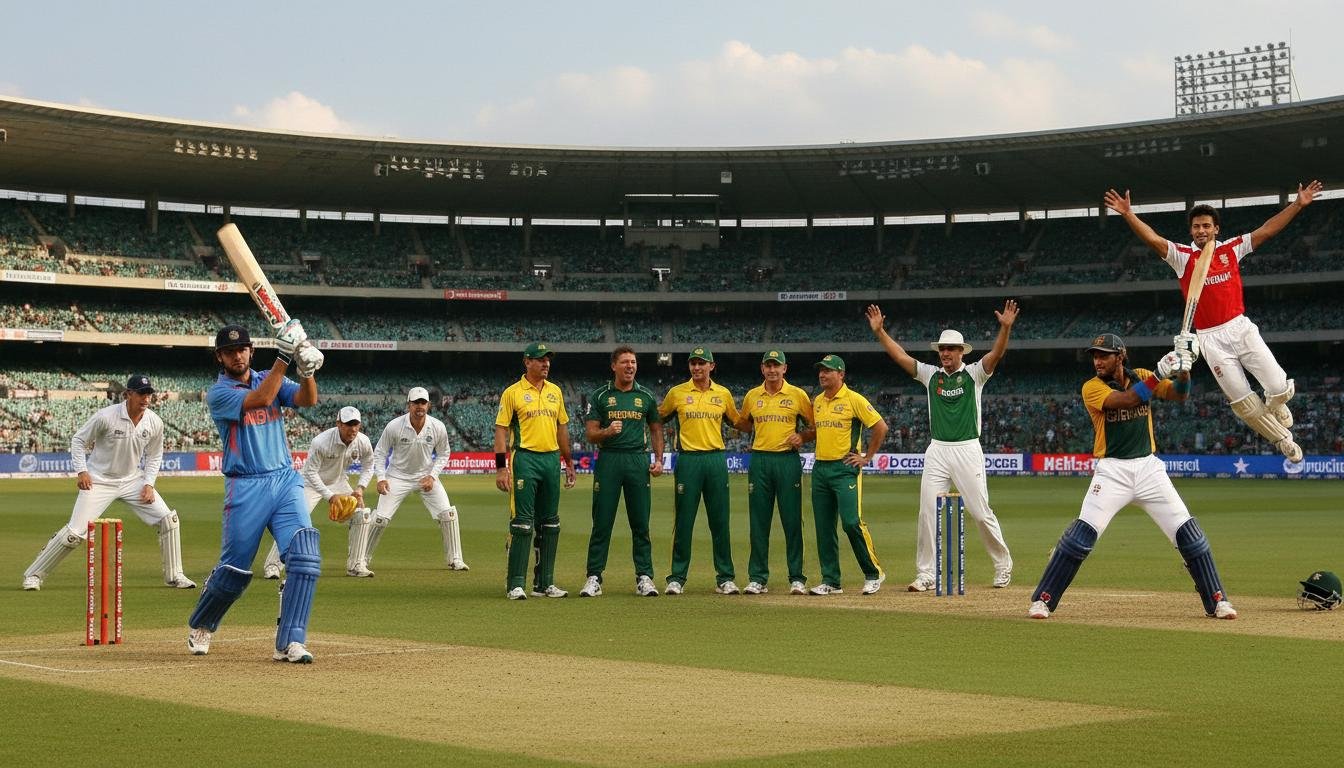
2010 was a year when cricket felt both familiar and unsettled: established powers kept proving their mettle while new styles and shorter formats began reshaping priorities. This article looks back at which sides stood out across Test, ODI, and Twenty20 cricket, why they did so, and how the season’s shifts presaged the decade ahead.
Setting the scene: formats, rankings, and momentum
The international calendar in 2010 was crowded with bilateral series, tri-nation tournaments, and the ICC World Twenty20 in the Caribbean. Teams rarely had the luxury of focusing on one format; fitness, rotation, and specialized tactics became essential. Rankings in Tests, ODIs, and T20s did not always point to the same leaders, and that split is central to understanding who really were the top sides that year.
Top teams at a glance
Rather than a single definitive list, 2010 produced a cluster of teams that dominated in particular formats or periods. Below is a compact table summarizing the strongest sides, their format strengths, and a few defining players.
| Team | Format strength | Notable players (examples) |
|---|---|---|
| Australia | Test & ODI depth | Ricky Ponting, Michael Hussey, Brett Lee |
| South Africa | Test dominance, pace attack | Graeme Smith, Dale Steyn, Hashim Amla |
| India | ODI batting strength, rising leadership | Sachin Tendulkar, MS Dhoni, Virender Sehwag |
| England | T20 breakthrough, steady Tests | Paul Collingwood, Kevin Pietersen, Andrew Strauss |
| Pakistan | Match-winning unpredictability | Shahid Afridi, Misbah-ul-Haq, Umar Gul |
| Sri Lanka | Experienced batting core | Kumar Sangakkara, Mahela Jayawardene, Lasith Malinga |
| New Zealand | Organized bowling, improving batsmen | Brendon McCullum, Ross Taylor, Daniel Vettori |
| West Indies | T20 firepower, inconsistent in Tests | Chris Gayle, Dwayne Bravo, Shivnarine Chanderpaul |
Australia: experience and depth
Australia entered 2010 with a legacy of consistency across formats. Even as legends of the 2000s moved on, the side retained match-winners in both batting and bowling. Their domestic system kept talent flowing, and they could still grind out Test wins while producing heavy hitters for limited overs cricket.
Their challenge was adapting to the increasing prominence of T20 specialists, but in walls of technique and a winning culture they remained a global benchmark.
South Africa: raw power and a pace battery
South Africa’s 2010 identity was built on fast bowling and disciplined batting. With bowlers who could extract bounce on any surface and batters who could anchor innings, they were a formidable Test side. Their inability to win a major ICC title still lingered, but on home and neutral turf they were routinely hard to dislodge.
Dale Steyn’s rise into genuine world-class status and dependable runs from the top order made them especially dangerous in multi-Test series.
India: batting riches and a new leadership era
India’s strength in 2010 was indisputably its batting. A deep middle order, world-class openers, and a captain who was redefining white-ball leadership gave them an edge in ODIs. The team was also transitioning toward a greater emphasis on athletic fielding and specialist roles in T20 cricket.
Domestic depth and the popularity of cricket at home ensured a steady pipeline of talent, and the period set the stage for India’s success on the international scene in the coming years.
England: a T20 breakthrough and steady progress
England’s year was most notable for their World Twenty20 success, which gave the team a confidence boost and showed the value of adopting clear white-ball strategies. In Tests they were improving under thoughtful leadership, and their young bowling group was beginning to deliver consistent performances.
That T20 title signaled a shift: England would start taking limited-overs strategy more seriously, a change that paid dividends later in the decade.
Pakistan: brilliance shadowed by inconsistency
Pakistan remained cricket’s most unpredictable powerhouse in 2010—capable of brilliance and self-sabotage in equal measure. They possessed bowlers who could terrorize any lineup and batsmen who thrived on instinct. When systems held together they could beat anyone; when they didn’t, results swung the other way.
The raw talent was unmistakable and made Pakistan a perennial dark horse in tournaments.
Sri Lanka: veteran calm and tactical savvy
Sri Lanka’s strength lay in experience—two world-class batsmen in Sangakkara and Jayawardene, plus bowlers who could take crucial wickets. Their approach in 2010 leaned on technique and game intelligence rather than sheer power. That made them particularly efficient in constructing and defending totals.
As a unit they were harder to surprise, and they remained competitive across all formats.
New Zealand and West Indies: contrasting stories
New Zealand in 2010 was quietly building toward the confident, system-driven side that would trouble top teams later in the decade. Their bowlers and a core of gutsy batsmen made them reliable opponents. The West Indies were oscillating—talent in abundance, especially for T20, but inconsistent preparation and structural problems limited long-term success.
Both teams produced memorable moments and players who would shape the next ten years of cricket.
Key tournaments and turning points
The 2010 ICC World Twenty20 in the West Indies was the standout event, and it served as the clearest sign that white-ball specialists were reshaping national plans. England’s triumph there forced cricket boards to reconsider resource allocation for T20 talent and strategy.
Bilateral series also mattered: series wins and losses between traditional rivals shifted confidence and rankings. Home advantage remained decisive in Tests, while tours offered glimpses of how adaptable teams were across conditions.
What separated the very best from the rest
Several recurring factors defined the top teams in 2010: a reliable leadership structure, depth in both batting and bowling, strong domestic competitions, and the ability to rotate players without losing cohesion. Teams that invested in coaching, analysis, and fitness outlasted those relying solely on individual brilliance.
In short, the best sides combined talent with systems that absorbed injuries, managed workloads, and encouraged role clarity.
Personal memories from the season
I remember watching the T20 matches in the Caribbean and feeling the crowd lift whenever a big-hitting opener took charge; those games were electric and revealed how much the sport had shifted. On the longer end, Test matches between South Africa and top opponents felt like chess matches at high speed—small tactical adjustments decided series.
Those contrasts—pure spectacle versus patient strategy—made 2010 uniquely compelling for a cricket fan.
Legacy: how 2010 shaped the decade
By the end of 2010, the sport had begun a clear move toward format specialization, and boards that adapted earliest gained an edge. England’s T20 success, India’s ODI depth, South Africa’s Test solidity, and Australia’s enduring culture each left fingerprints on how teams recruited, trained, and planned.
The season didn’t produce a single dominant power across all formats, but it did produce conversations and changes that influenced how cricket was played and managed for years afterward.
For readers who want to dig deeper, authoritative match reports, ranking archives, and season reviews from the ICC and ESPNcricinfo provide detailed statistics and series narratives that complement the overview above.