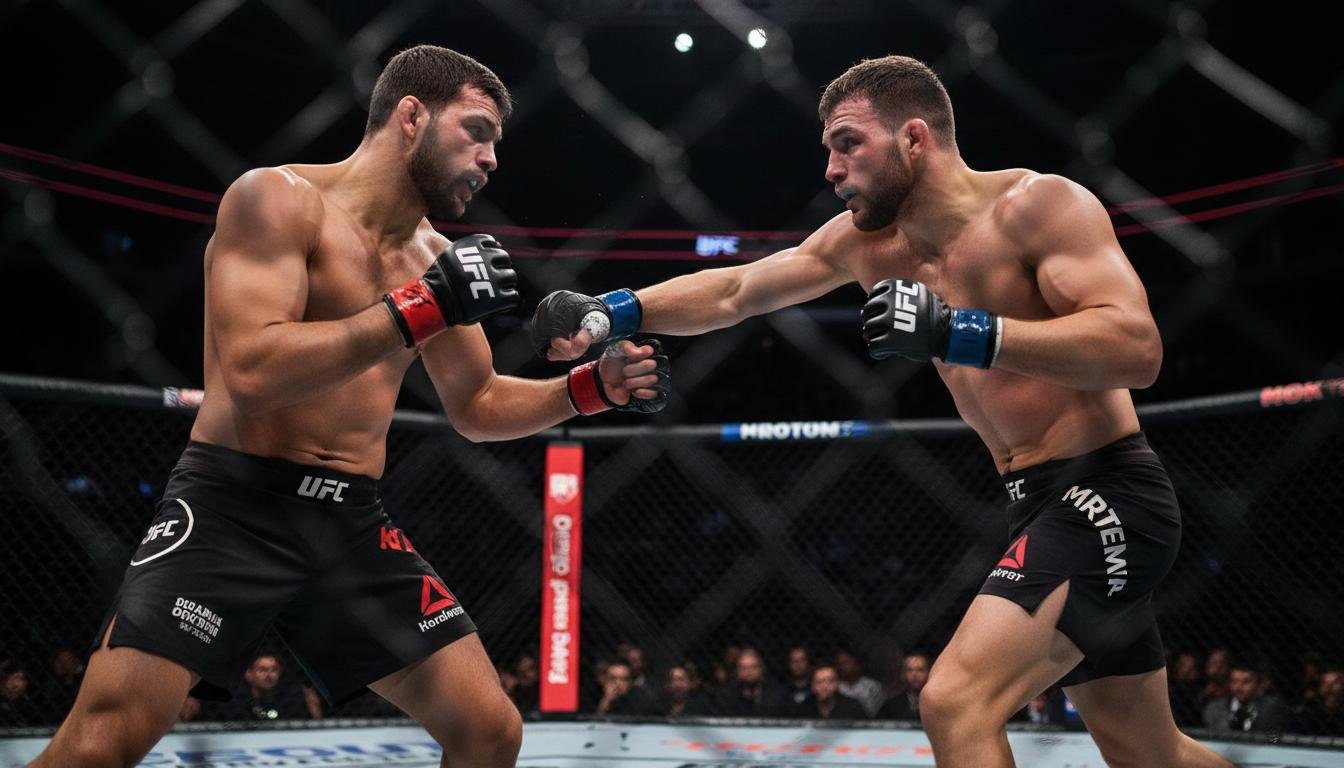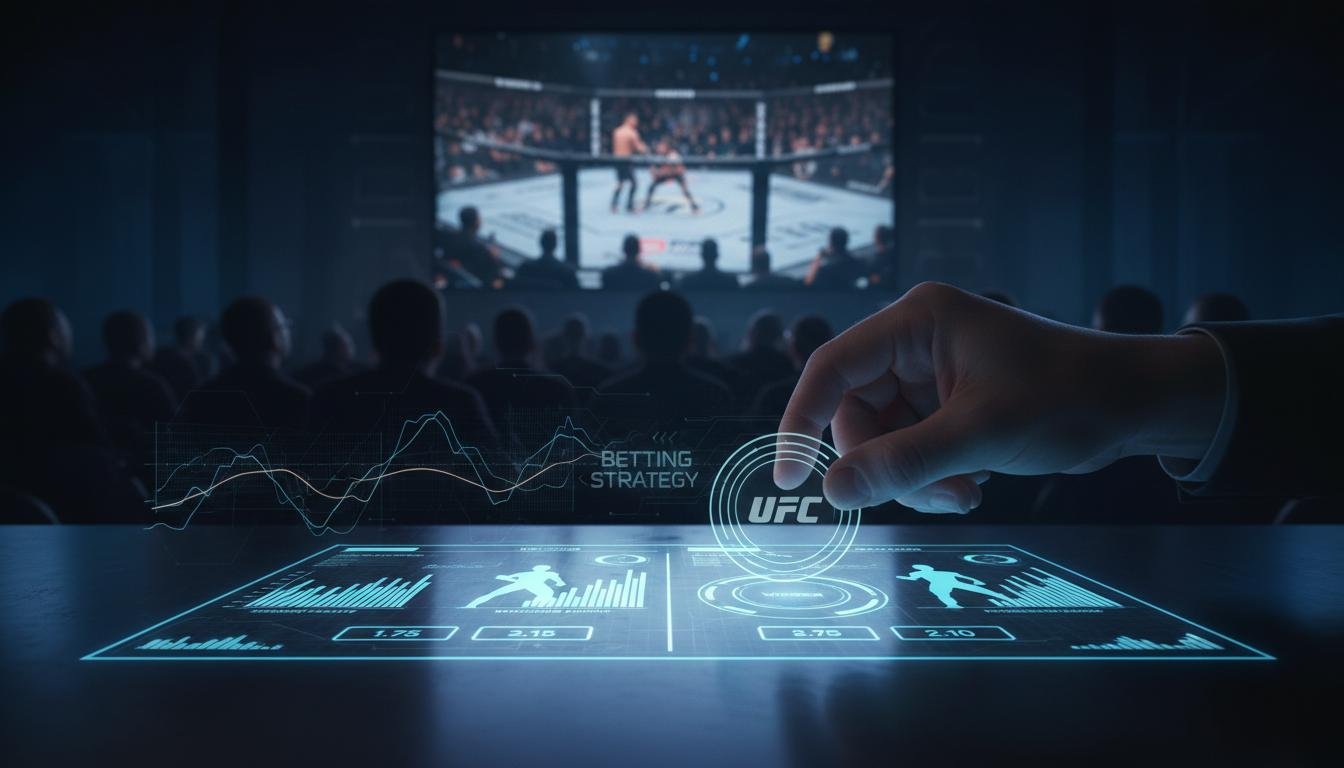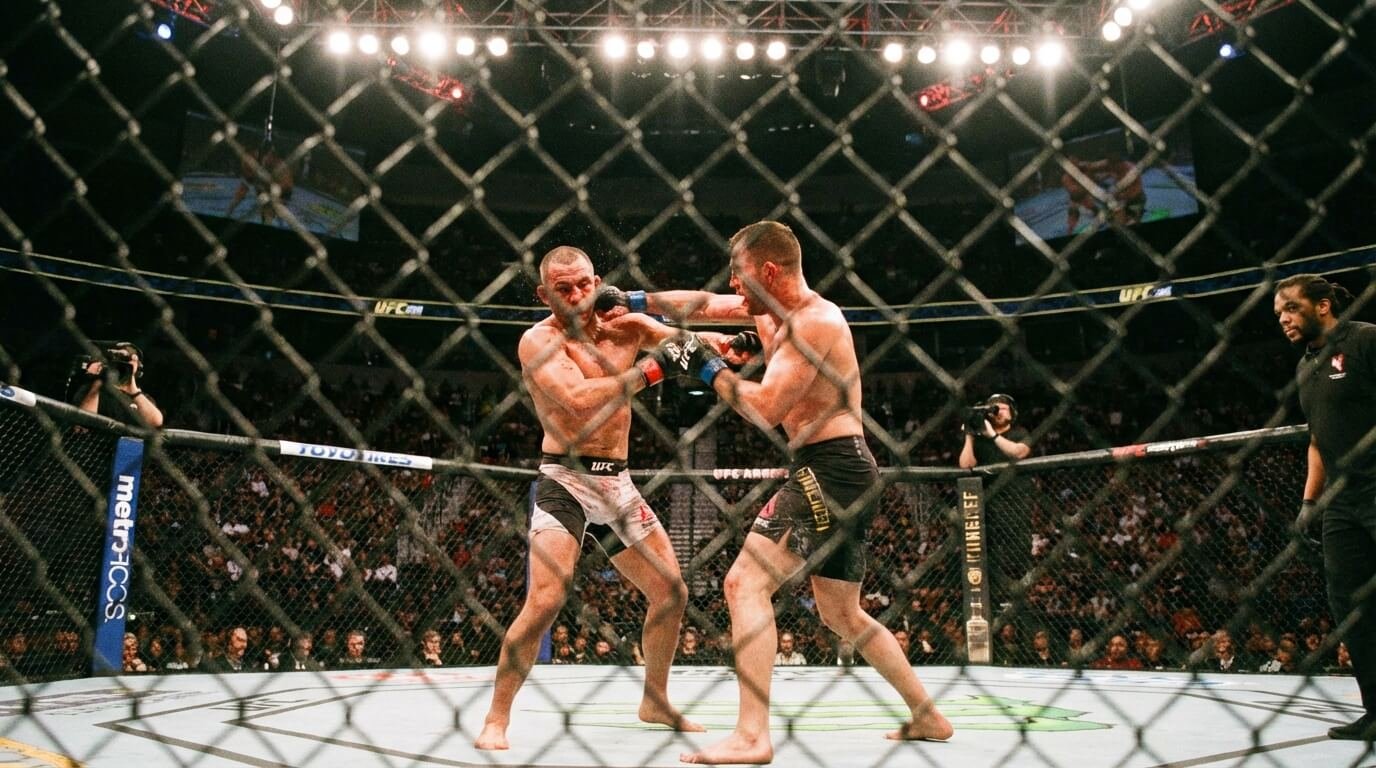
Betting the total rounds in a UFC fight is an exercise in probability, observation, and controlled risk. Unlike picking a winner, total-rounds markets force you to judge whether a fight will end early or go the distance — and that judgment hinges on stylistic matchups, finishing rates, and how the stakes shape fighter behavior.
Why betting the total rounds deserves your attention
Total-round wagers let you exploit information that moneylines and method-of-victory markets sometimes ignore. Odds makers price winners with broad strokes, but round totals reflect specific assumptions about fight tempo, finish probability, and whether athletes will push for a stoppage.
For bettors who study tape and statistics, these markets can offer value. A fighter with a huge finishing percentage but poor cardio might be overpriced for an early-round finish, or an underdog with defensive holes might provide a tempting “over” on rounds because the favorite is unlikely to risk a reckless approach.
Core variables that move the total-rounds market
Think of a fight as a series of conditional events: how likely is a finish in each round given the matchup and how does that accumulate? The primary variables are finishing rates, decision frequency, style matchup, and fight length (three vs five rounds).
Contextual modifiers matter too: championship and main events are five rounds, which changes incentives. A fighter known for slow starts may be more likely to take rounds in a five-round fight, increasing the chance the contest goes the distance.
Finishing rate and sample size
Finishing rate — the share of fights a fighter ends versus being finished — is the single most important stat. But raw percentages lie when sample sizes are small. A prospect with three first-round TKOs looks dangerous, but three fights don’t equal predictive power.
Weight class also affects finishing rates. Heavier divisions typically see higher strike power and more early stoppages, while lighter divisions trend toward points decisions. Always adjust finishing expectations for class-wide tendencies.
Styles make fights — and rounds
If a power striker faces a high-volume wrestler, the most likely outcomes are either a late stoppage after wear or a grinding decision. Conversely, two aggressive strikers can mean a high chance of early finishes, making the “under” rounds market more attractive in certain books.
Analyze how fighters create or avoid damage. Clean knockout power, ground-and-pound control, and submission proficiency each suggest different round distributions.
Cardio, age, and fight pace
Cardio profiles determine where stoppages are likeliest to occur. Fighters who gas after two rounds increase the probability of a late stoppage against a durable opponent. Age compounds this; older fighters can maintain early bursts but struggle in championship rounds.
Round-by-round pace stats — strikes thrown and absorbed per minute — give clues on wear. A fighter who absorbs many strikes consistently is a candidate for being stopped later, which benefits the “over” in longer fights.
Injuries, fight camp reports, and motivation
Pre-fight news can shift round expectations materially. A reported knee tweak or a short-notice replacement changes the calculation. Motivation matters: a contender fighting for a title shot will often push harder for a finish than a mid-card athlete preserving ranking.
Watch weigh-in behavior, social media posts, and coach interviews. They often hint at game plans and whether a fighter intends to slow the pace for judges or hunt early damage.
How to read the markets and spot value
Odds for “over/under total rounds” usually appear in half-round increments (e.g., 1.5, 2.5, 3.5). These prices embed the bookmakers’ aggregated assumptions about finish probability each round. Your task is to estimate a differential between your model and the market.
Start by building a simple expected-finish model. Combine each fighter’s finish rate, opponent-adjusted metrics, and matchup-specific factors to produce a per-round finish probability, then aggregate to estimate market fair odds.
Practical quick model
Here is a straightforward approach you can run mentally or in a spreadsheet: estimate Fighter A’s chance to finish per round (Fa) and Fighter B’s chance (Fb). The chance the fight reaches the end of round n is the product of neither finishing before that point.
Multiply out per-round survival probabilities and contrast the cumulative probability of finishing before a given round against the market’s “under” price. If your calculation shows a higher chance of an early finish than the market implies, the “under” may be mispriced.
Sample decision matrix
| Scenario | Market tendency | Smart play |
|---|---|---|
| High finishing rates vs durable opponent | Market favors over | Consider under if durability reduces finishing efficiency |
| Low-volume wrestlers | Market leans under (short fights less likely) | Lean to over in five-round bouts |
| Short-notice replacement | Market uncertain | Bet live after round 1 if replacement shows limited gas |
Live betting: the biggest edge for total rounds
Live markets move fast, and that’s where disciplined bettors can find edges. Watching the first round gives direct information you cannot fully capture pre-fight: actual pace, effective power, and whether the game plan is unfolding as expected.
If an aggressive striker misses wildly and looks tired after one round, the probability of a later stoppage drops; live odds often lag this realization. Conversely, a dominant grappler grinding early can make the “over” more valuable as the fight wears on.
Timing your live bets
Good moments to act: after Round 1 if the fight was slower or faster than predicted; immediately after a knockdown that doesn’t finish the fight; or when fouls and point deductions shift scoring incentives. Avoid impulsive wagers during chaotic sequences.
Use small, focused stakes live. The goal is to exploit temporary inefficiencies, not to chase action. Live betting complements your pre-fight model rather than replacing it.
Bankroll management and staking
Total-rounds bets can produce streaks of wins and losses. Limit exposure per event and size bets relative to edge, not emotion. A flat-percentage approach — risking 1–2% of your bankroll on perceived edges — preserves longevity.
Record every wager and review outcomes. Tracking the context — opponent matchup, finish type, live vs pre-fight — will reveal which scenarios you consistently predict well and which to avoid.
Common mistakes and how to avoid them
Overweighting highlight-reel knockouts is a frequent error. A few spectacular finishes inflate perceptions of finishing ability. Counter this by normalizing to class and adjusting for sample size.
Another pitfall is ignoring fight incentives. A #1 contender and a gatekeeper with little to gain will fight differently, affecting round outcomes. Always factor in the motivational context when deciding between over and under.
Biases to watch for
Recency bias makes the most recent fight overly influential. Confirmation bias leads you to see only evidence that supports a pre-existing view. Combat these by using checklists and objective metrics for each wager.
Maintain disciplined sizing rules so single events do not derail your bankroll after a misleading early finish or an unlucky stoppage.
Personal experience and real-world examples
In my own wagering, I found the biggest gains came from focusing on matchups with clear stylistic contradictions. I remember betting the “over” in a three-round contest where a persistent wrestler faced a striker known to gas; the fight went to a late stoppage after constant control wore the striker down, and live odds had inflated too late.
Conversely, I paid for overconfidence when a rising prospect with a string of first-round finishes faced a high-level opponent who neutralized power with grappling. That loss taught me to prioritize opponent-adjusted finishing metrics over raw highlight reels.
Checklist before placing a total-rounds bet
- Confirm number of rounds (3 vs 5) and adjust expectations accordingly.
- Compare fighters’ finish rates and class averages for context.
- Assess style matchup: striker vs wrestler, volume vs power, submission threat.
- Evaluate cardio, age, and recent camp reports for injuries or motivation.
- Decide pre-fight or live bet and plan stake size relative to edge.
How to get better over time
Refine inputs to your model and expand the data you track. Add opponent-adjusted finish rates and round-by-round pace metrics. Over months, a disciplined database will reveal patterns invisible in single fights.
Engage with reputable analysts and read post-fight breakdowns to understand why outcomes diverged from expectation. Slow, consistent improvement beats chasing quick wins in this market.
Betting the total rounds in UFC bouts rewards careful observation and patience. With a clear model, disciplined stakes, and attention to matchup detail, you can turn these nuanced markets into a steady part of your betting toolkit.
Sources and experts
- UFC Stats — official fight statistics and round-by-round metrics
- ESPN MMA — reporting and analysis (Brett Okamoto, Damon Martin)
- MMA Fighting — news and expert commentary (Ariel Helwani)
- Sherdog — historical fight records and databases
- Oddschecker — market prices and betting guides
- Betfair Betting Blog — articles on sports betting strategy
Full analysis of the information was conducted by experts from sports-analytics.pro