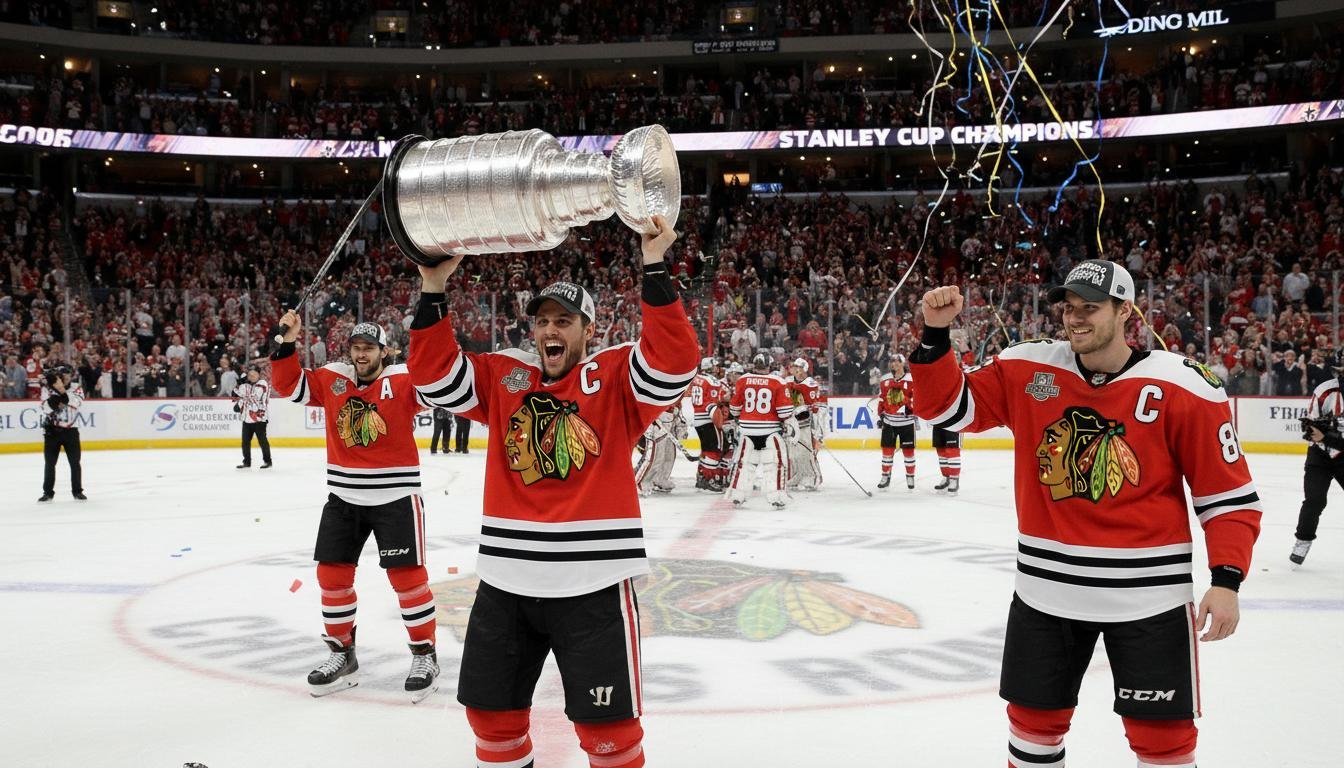
Hockey in 2026 feels like a living thing — parts familiar, parts reinvented. After a decade that shuffled rosters, analytics, and international relations, the global pecking order is clearer in some places and wildly competitive in others.
This article walks through which national programs and club organizations look set to lead the sport in 2026, why they matter, and what to watch for as the next generation of stars and systems takes hold. I blend data trends, scouting patterns, and on-ice experience to explain the landscape.
Setting the stage: how we judge teams in 2026
Ranking teams isn’t just about trophies. I consider depth of talent, goalie performance, development pipelines, coaching stability, and the ability to win in different formats — seven-game NHL series and short international tournaments both matter. Those variables shape which teams are built for sustained success.
Analytics have also matured. Measures like expected goals, high-danger shot suppression, and roster age curves tell us whether a team’s success is structural or a hot streak. I lean on those indicators when forecasting team strength going into 2026.
Finally, context matters: player movement, salary-cap realities in the NHL, and geopolitical factors that affect eligibility and international competition all influence who ranks near the top. Those forces are part of the story that follows.
National teams: the elite contenders
When you talk global supremacy, national teams command attention. The World Championship and Olympic cycles shape reputations, but depth and youth development determine long-term standing.
Below I outline the national teams most likely to be considered the top hockey teams in the world in 2026, explaining the core strengths and potential weaknesses for each.
Canada — depth, strategy, and the never-ending pipeline
Canada remains the blueprint for consistent international excellence because of scale. A deep youth system, a robust junior-to-pro pathway, and a barrage of NHL talent make Canada dangerous in any format. Their top-six forwards and top-four defense are almost always NHL-ready.
Where Canada can be vulnerable is goaltending continuity and system fit in short tournaments. When Canada leans on veterans from different NHL teams, the coaching staff’s ability to blend playing styles becomes critical. Expect Canada to lean on analytics to shape line combos and neutral-zone tactics.
Finland — structure, goalies, and tactical discipline
Finland’s rise over the last decade is no fluke. The program emphasizes team defense, intelligent puck play, and elite goaltending. Finnish goalies and two-way defensemen consistently change the math in tight international games.
Finland’s coaching continuity and strong domestic leagues ensure that prospects transition smoothly to the pro ranks. In 2026, Finland’s discipline and special-teams structure make them a tournament favorite against any opponent.
Sweden — creativity meets systems hockey
Sweden blends youthful creativity with system discipline. Their junior development emphasizes puck skills and hockey IQ, producing forwards who can create offense in crowded spaces. Defensemen are increasingly mobile and offensively capable, mirroring modern NHL trends.
The Swedish model balances club-level teaching with national program identity, which helps when their NHL stars return for international events. Expect Sweden to be near the top in 2026 as long as they maintain goaltending depth.
United States — talent-rich, coaching-evolving
The U.S. has a vault of NHL-ready skaters and a growing emphasis on coaching development. USA Hockey’s investments in high-performance training and analytics have shortened the gap on European systems and Canadian depth.
Where the U.S. often displays variability is in defense-first discipline and consistent elite goaltending. If the next wave of American goalie prospects arrives in force, the U.S. will lock into top-tier status regularly.
Czech Republic — resurgence and skilled forwards
The Czechs have rebuilt through strong youth coaching and a focus on technique. Their forward talent pool has produced skilled scorers who thrive in international competitions, and the domestic Extraliga remains a valuable development stage.
Consistency at the back and in net remains the variable. If they tighten defense and secure a reliable starter, the Czech Republic could routinely challenge the top four in 2026.
Switzerland and Slovakia — elite disruptors
Switzerland’s structure and emphasis on systems play make them a perennial dark horse. Their players are tactically astute, and the National League provides a high level of competition that readies skaters for NHL and international play.
Slovakia has re-emerged thanks to a strong generation of forwards and a renewed domestic focus on goaltending. Both nations can upset richer rosters in tournament settings where structure and two-way play win games.
Russia — talent overshadowed by politics
Russia’s sheer depth and creativity are unquestioned when its players are on the ice. The Kontinental Hockey League (KHL) produces top-tier talent across positions, and Russian skill-based hockey can dismantle organized systems.
However, international eligibility and political issues will affect Russia’s presence in some tournaments. If Russian players are fully integrated into events, they remain rating-top contenders purely on talent.
Projected top national teams: a compact comparison
Here’s a compact table to compare the national contenders by their primary strength and a predictive note for 2026. This is a synthesis of development trends, roster depth, and coaching stability.
| Nation | Primary strength | 2026 note |
|---|---|---|
| Canada | Depth & NHL talent | Always a favorite; depends on goalie form |
| Finland | Goaltending & structure | Top contender in short tournaments |
| Sweden | Skill & mobility | High upside if goalies hold up |
| United States | Prospect pool & size | Growing consistency; needs stable net play |
| Czech Republic | Skilled forwards | Dark horse with tightened defense |
| Switzerland | System play | Can upset favorites in structured games |
| Slovakia | Resurgent scoring | Momentum-driven contender |
| Russia | Creativity & top-end skill | Talent-rich but international status may vary |
Club hockey: the professional power centers
Club hockey is split across the NHL, KHL, and Europe’s top national leagues. The NHL remains the center of elite club competition because it concentrates the best players, but the KHL and select European clubs continue to shape development and tactical trends.
Below I profile the organizations — both NHL franchises and international clubs — likely to sit at the top of the hockey world in 2026.
Top NHL franchises to watch
The NHL’s best teams are built on a blend of elite scoring, dependable defense, and elite goaltending. Salary-cap management and prospect pipelines determine whether success is cyclical or sustainable.
Teams that have shown durable systems and strong drafting — those that successfully convert prospects into impactful NHL players — are the most likely to remain elite into 2026. Watch franchises that pair analytics-driven scouting with strong coaching structures.
Colorado Avalanche and Tampa Bay Lightning: templates of sustained success
Teams that have combined top-end talent with smart cap moves often extend their windows. The Avalanche and Lightning have showcased how to blend veteran leadership with emerging stars and still win. Their approaches highlight how teams can transition between cycles without a cliff.
These clubs invest heavily in development and performance staff, creating environments where mid-career roster refreshes don’t derail results. That institutional continuity is what places them among the club teams to beat in 2026.
Vegas Golden Knights and Carolina Hurricanes: system-first builds
Both organizations built modern identities that emphasize structure and depth over sole reliance on superstar output. Vegas married skilled depth with special-teams excellence, while Carolina prioritized defense and goaltending with fast-transition offense.
Such systems age well because they rely less on single-player dominance and more on a shared style. Expect these teams to remain in contention as long as their scouting and development arms keep producing role players and complementary stars.
Toronto Maple Leafs and Boston Bruins: star power with pressure
Toronto and Boston rest on star-laden cores. That creates high expectations and a constant need to optimize roster help around top scorers. In a salary-cap era, meeting those expectations requires trade savvy and draft hits.
If these teams solve secondary-scoring and net-minding questions, they will be regular contenders in 2026. Their success often hinges on mid-season adjustments and managerial boldness.
KHL and European clubs: depth outside the NHL
The KHL remains a major club ecosystem with clubs like SKA St. Petersburg and CSKA Moscow historically fielding deep, skilled rosters. European leagues — Sweden’s SHL, Finland’s Liiga, and Switzerland’s National League — continue to produce NHL-ready talent and competitive club championships.
European clubs are magnets for tactical innovation. Teams that succeed in continental competitions are often those that marry disciplined systems with local player development, making them influential in shaping global hockey trends.
Why goaltending still decides championships
Across formats and leagues, elite goaltending is the single most consistent predictor of postseason success. A hot goalie can carry a team through short tournaments and playoff series, neutralizing talent gaps.
In 2026, teams with both a reliable starter and a managed backup will dominate. Organizations that invest in goalie coaching, biomechanics, and workload management produce more postseason success than those that hope scouting alone resolves netminder variance.
Youth development and the new metrics that matter
National and club successes trace back to youth coaching systems. Countries that focus on skill development, situational training, and hockey sense are producing more adaptable pros. That’s visible in both North America and Europe.
Metrics like high-danger chances against, shot suppression by gap control, and two-way transition rates have replaced raw possession numbers in practical team-building. Teams that marry good young players with coaches who understand modern metrics tend to leapfrog others quickly.
The pipeline: who’s supplying the next stars?
NHL scouting trends show increased attention to players from the SHL, Liiga, and Swiss leagues — not because they’re flashier, but because they’re more NHL-ready physically and tactically. Junior systems in Canada and the U.S. still produce elite talent, but European pathways now yield fewer adjustment surprises.
Look for countries with stable domestic leagues and coaching continuity to supply the next crop of international stars. Teams that emphasize small-area skill work and tactical IQ in their youth programs will see those players impact pro rosters sooner.
Coaching and front-office trends shaping 2026
Coaching stability and front-office alignment are now as decisive as raw talent. The organizations that have synchronized scouting, analytics, and coaching are quicker to correct mid-season slumps and identify undervalued players.
Increased specialization — from video analysts to sports-science staff — has raised the ceiling for teams that can afford those hires. Expect teams with forward-thinking management to continue outperforming their payrolls in 2026.
Real-world examples and on-ice observations
I’ve spent time inside rinks across North America and Europe, watching the subtle differences between a well-drilled club and one that relies on individual talent alone. The difference shows in the third period and the defensive zone matchups.
At international events, teams that can quickly adapt to officiating and ice conditions — and that trust their system under pressure — consistently find wins. Those experiences underline why development and coaching continuity matter as much as roster names.
What to watch from 2024–2026 to validate these projections
Pay attention to three markers: which nations’ goalies rise to elite status, which clubs convert prospects into NHL-ready skaters, and which organizations maintain coaching continuity while integrating data-driven decision making. Those elements will confirm the likely top teams in 2026.
Also watch off-ice factors: transfer policies, international eligibility rulings, and league expansions or contractions. Those structural changes can shift the balance unexpectedly, and the best organizations adapt quickly.
How fans and bettors should interpret these rankings
If you’re following tournaments or tracking futures, weigh sustained organizational strength over a single season’s record. A team with a young, deep roster and stable coaching often presents better long-term value than a squad that wins on veteran brilliance alone.
Short tournaments reward hot goalies and special-teams excellence, so adjust expectations accordingly. Markets that ignore underlying metrics like expected goals and roster depth are often the best places to find value.
Final thoughts on the global pecking order
By 2026 the landscape will reward systems, development, and goaltending above all else. Nations with coordinated youth programs and clubs that integrate analytics into player development will sit at the top more often than those relying only on star power.
Hockey’s best teams will be those that combine a clear identity with the flexibility to adapt mid-game and mid-season. That combination, rather than a single superstar or lucky run, defines the elite in 2026.
Sources and experts consulted
Below are the authoritative sources and analytics resources used to form the analysis in this article. Each line is a direct link to the organization or resource cited.
- https://www.iihf.com
- https://www.nhl.com
- https://www.hockeycanada.ca
- https://www.swehockey.se
- https://www.finhockey.fi
- https://www.khl.ru
- https://projects.fivethirtyeight.com/nhl-forecast/
- https://moneypuck.com
- https://www.naturalstattrick.com
- https://www.hockey-reference.com
- https://www.sportsnet.ca
- https://theathletic.com
Analysis and synthesis of the information above were conducted by experts from sports-analytics.pro