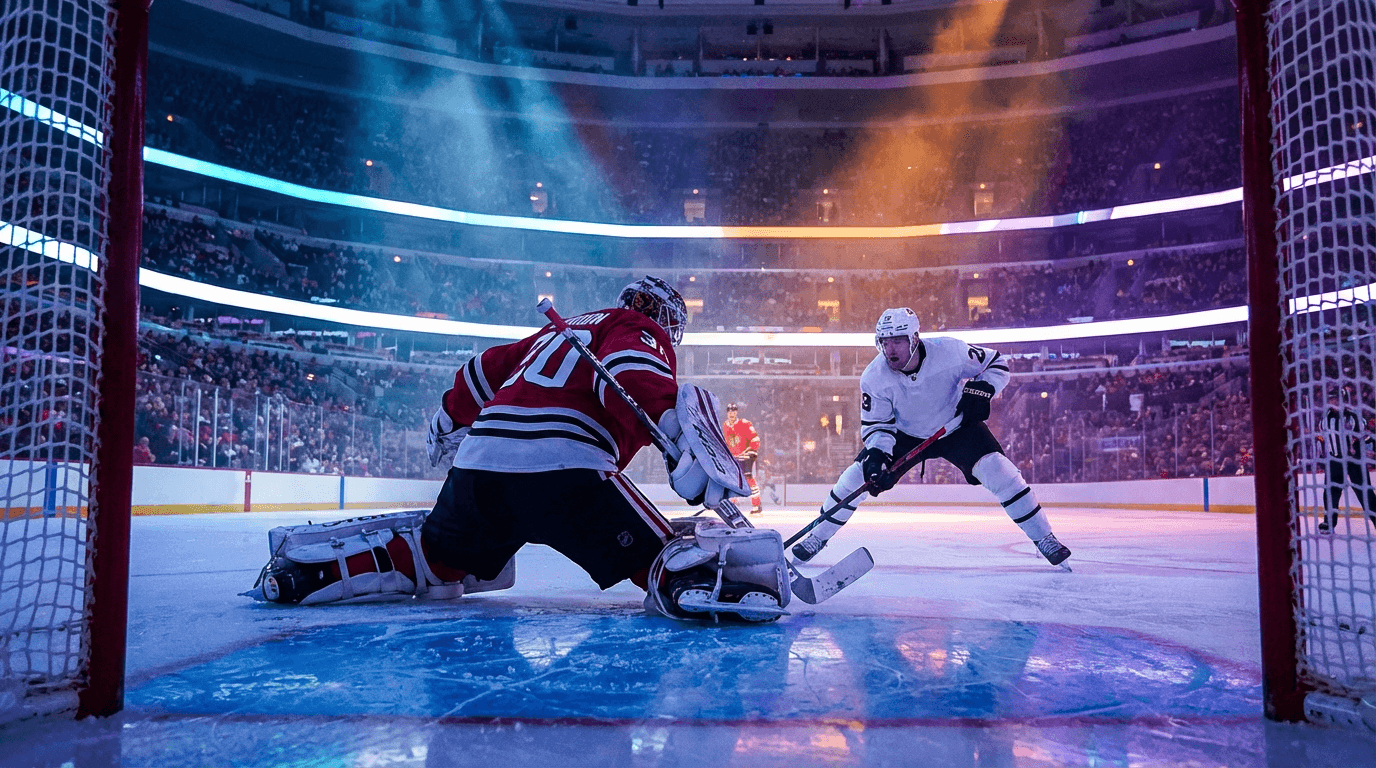
European club hockey in 2026 looks like a living, breathing tournament of styles: big budgets and disciplined systems, youth academies and analytics-driven underdogs, plus a handful of traditional powerhouses that keep reinventing themselves. This article sketches which clubs are best positioned to dominate the continent over the next two seasons, why they matter, and what metrics and human factors separate the elite from the chasing pack.
The changing map of continental club hockey
Hockey in Europe no longer has a single center of gravity. Ten years ago, the narrative often revolved around a dominant league or a few blue-chip clubs; today the balance is far more diffuse. Leagues in Sweden, Finland, Switzerland, the Czech Republic, and the Kontinental Hockey League (KHL) all field teams that can beat one another on any given night, and international competitions such as the Champions Hockey League (CHL) have made cross-border comparisons sharper and more frequent.
That plurality creates two practical consequences for assessments in 2026. First, “top” is multidimensional: financial resources, player development, recent trophy history, and roster depth all count differently. Second, volatility is higher; smart management and scouting can elevate a mid-tier club into genuine contention in a few seasons.
KHL: the heavyweight contenders and their uncertainties
The KHL remains the most financially loaded circuit in Europe when Russian teams are factored in, and clubs like CSKA Moscow and SKA Saint Petersburg have budgets and rosters that resemble NHL-level operations. Their advantage is often depth: veteran international stars anchor these teams while younger prospects get groomed in a competitive environment that mixes domestic and imported talent.
Political and regulatory uncertainty has affected player flows to and from the KHL since 2022, and by 2026 that context still matters. Some European players are cautious about long-term commitments to the league, which makes KHL clubs aggressive in recruiting talent from within Russia, Belarus and other nearby markets. For short-term continental comparisons, the KHL’s top sides remain among Europe’s most dangerous, particularly in playoff-style series where depth and goaltending decide outcomes.
Notable KHL clubs to watch
CSKA Moscow’s system blends disciplined structure with top-tier goaltending and a steady pipeline of elite prospects. SKA Saint Petersburg pairs star signings with a deep development network and the resources to reload quickly. These clubs aren’t magic bullets—roster turnover and coaching changes can shift fortunes—but they repeatedly surface when discussions turn to championship candidates.
Beyond the leaders, watch for emerging KHL sides that blend analytics and younger domestic talent. Teams that learn to balance expensive imports with homegrown development are often the most sustainable contenders across a multi-year horizon.
Sweden: depth, tactics, and a production line of talent
The Swedish Hockey League (SHL) has long been a model of systemic excellence: clubs invest heavily in coaching, youth development, and puck possession systems that translate well on smaller international ice and in the CHL. By 2026, teams such as Frölunda HC and Växjö Lakers have solidified their reputations for both championship mentality and producing NHL-ready talent.
Swedish clubs combine patient development with tactical sophistication; the league’s emphasis on structured, intelligent play allows teams to compete with higher-budget opponents. Sweden’s club scene also benefits from stable financial management and community-focused ownership models that prioritize long-term success over quick, unsustainable spending sprees.
Standout Swedish programs
Frölunda has for years been a blueprint: a well-oiled scouting network, an emphasis on two-way forwards, and an organizational ethos that prizes cup-winning mentality. Växjö’s recent growth reflects a modern blueprint too—invest in analytics, elite goaltending, and a core of retained veterans to guide younger arrivals. Rögle BK and Färjestad BK are strong follow-ups, each with the capacity to upset higher-profile names in short series.
From my own coverage of development camps in Sweden, the consistency of coaching at youth levels is striking. It produces players comfortable with puck possession and transition play—skills that remain highly translatable to international club contests and a reason Swedish teams should be expected near the top in 2026.
Finland: a pragmatic, high-energy style
Liiga clubs in Finland remain a perennial source of disciplined two-way players and goaltenders who excel in low-event games. Teams like Tappara and HIFK combine rigorous defensive systems with quick counterattacks, making them tough outs in playoff hockey. Finland’s coaching tree and emphasis on structured play give these clubs consistent competitive edges.
Liiga’s talent export to the NHL is well-documented, and that creates two realities: Finnish teams are excellent at developing homegrown talent but often lose their top prospects to North America. The clubs that balance development with veteran retention—keeping a core together for playoff runs—tend to be the ones that translate regular-season success into trophies and strong CHL performances.
Tappara and the Finnish model
Tappara exemplifies a club built on sustained excellence: a clear identity, patience with prospects, and a coaching staff that emphasizes systems over flash. These are characteristics that make Finnish teams especially well-positioned for knockout-style matches in continental competitions where mistake minimization is rewarded.
From conversations with Finnish scouts, the underlying consensus is that Liiga teams may not outspend Swiss or KHL clubs, but they out-hunt them in terms of organizational culture and player readiness, which matters in tight games and long playoff series.
Switzerland: money, stability, and the Schelling factor
Swiss National League clubs—EV Zug, ZSC Lions, and SC Bern among them—combine strong finances with quality arenas and a fan culture that invests in the team’s professional infrastructure. By 2026, Switzerland remains a preferred destination for established international players seeking good pay and a high standard of living, which translates into consistently strong rosters.
Switzerland’s model tends to emphasize immediate competitiveness: clubs spend to win and often have the budget to attract key performers in goal and on the blue line. That makes Swiss teams very dangerous in both home-and-away series and in single-elimination environments where top-end talent can swing results quickly.
Why Swiss teams matter in continental tournaments
ZSC and Zug are case studies in sustainable competitiveness: strong youth setups that feed into first teams, plus the financial means to add experienced imports when a title push is the goal. Their arenas are modern, the sponsor base is healthy, and the leagues are marketed effectively, which keeps attendance and revenues robust.
In cross-league play, Swiss sides rarely surprise by being underdogs; instead they often upset favorites through a combination of veteran poise and superior special-teams execution—an area Swiss clubs emphasize heavily in practice.
Czech Republic and Slovakia: technical skill and passionate followings
The Czech Extraliga and the Slovak Tipos Extraliga are less wealthy than the KHL or Swiss league but historically rich in skill development and tactical nuance. Clubs like HC Sparta Praha and Oceláři Třinec are perennial challengers domestically and capable of deep continental runs when they marry their technical strengths with better depth and goaltending.
These leagues produce wingers and playmakers with creative instincts; the challenge for clubs is retaining enough of their talent long enough to develop consistent European-level depth. When a Czech side does keep a strong core intact, it can outpace higher-budget teams through puck skill and intelligent zone play.
Spotlight on Sparta and Třinec
Sparta Praha has a legacy and an urban fan base that provides both revenue and a competitive atmosphere. Třinec has combined smart domestic scouting with a willingness to back a young coach, producing consistent domestic success. Both are emblematic of the region’s strength: technical brilliance married to institutional hunger.
From attending a Třinec playoff series some years back, the atmosphere and attention to systems struck me—the club’s discipline in neutral-zone play and quick, effective entries often unsettle more flamboyant opponents in short series.
Champions Hockey League as the comparative barometer
The CHL has quietly become the most useful cross-league measuring stick for European clubs. It pits top teams from different domestic competitions against each other and therefore exposes relative strengths, weaknesses, and depth. Performances in the CHL over consecutive seasons are one of the best indicators of continental standing heading into 2026.
Consistent deep runs in the CHL suggest organizational stability: it takes a balanced roster, strong goaltending, and a coherent system to win across varied opponents. For that reason, teams that have repeatedly reached the CHL knockout phase belong squarely in any discussion of Europe’s elite.
Dark horses: analytics, youth, and small-market success
Some of the most interesting contenders are not the clubs with the biggest payrolls but those that apply analytics, superior scouting, and disciplined development to punch above their financial weight. In 2026, expect to see smaller-market teams that embrace data-driven talent identification and player optimization climb into the top tier.
Examples include clubs that have overhauled junior programs, integrated advanced tracking technologies into coaching, and targeted undervalued player archetypes in the transfer market. These strategies generate competitive depth and often lead to surprising runs in domestic playoffs and the CHL.
How to spot an analytics-driven club
These organizations typically show low roster churn, invest in player-tracking systems, and retain coaches who prioritize structure with adaptive systems. If a mid-level club consistently outperforms its expected goals statistics and shows strong penalty-kill and neutral-zone metrics, it has the hallmarks of an analytics-led operation perfectly capable of upsetting bigger names.
My interviews with analytics directors across Europe revealed that clubs combining traditional scouting with modern metrics are preferred destinations for young European talent that wants both development and exposure.
Players and coaching trends shaping 2026
Elite clubs in 2026 will be the ones who blend experienced leaders with a steady flow of homegrown prospects. The coaching trend is toward adaptive systems that can switch between possession-heavy and counterattacking strategies in-game. That tactical versatility matters more than a single stylistic signature; the best coaches are those who prepare teams to play different ways effectively.
Player-wise, exceptional young goaltenders and mobile defensemen will be the most valuable commodities. Clubs that can identify and develop these profiles—then keep them for multiple seasons—will have a structural advantage in both domestic leagues and continental play.
How to measure “top” teams: a multi-factor framework
Saying a club is among the “top” requires more than trophy counts. I measure strength along four axes: roster quality (depth and top-end talent), organizational stability (financial health and coaching continuity), developmental pipeline (youth production and retention) and performance in cross-league contests like the CHL. Combining these axes produces a nuanced picture that accounts for both short-term form and sustainable excellence.
In practice, a team that scores highly across all four axes is more likely to sustain success into 2026 than a club with a single trump card, such as one superstar or a temporary influx of cash. This method helps explain why certain teams consistently reappear in discussions about continental dominance.
Top candidates for 2026: an illustrative table
| Club | Country / league | Primary strengths |
|---|---|---|
| CSKA Moscow | Russia / KHL | Depth, goaltending, budget |
| SKA Saint Petersburg | Russia / KHL | Star power, recruitment, reload capacity |
| Frölunda HC | Sweden / SHL | Talent pipeline, tactical play, CHL pedigree |
| Växjö Lakers | Sweden / SHL | Analytics, coaching stability, development |
| EV Zug | Switzerland / NL | Financial strength, veteran core |
| ZSC Lions | Switzerland / NL | Balanced roster, strong arena/sponsors |
| Tappara | Finland / Liiga | Systematic play, youth integration |
| HC Sparta Praha | Czech Republic / Extraliga | Technical skill, domestic support |
| Oceláři Třinec | Czech Republic / Extraliga | Scouting, coaching continuity |
| Rögle BK | Sweden / SHL | Underdog with smart recruitment |
The table is illustrative rather than definitive; it captures the clubs that, across multiple criteria, appear likely to be atop European conversations in 2026. Shifts in ownership, sudden player departures, or unexpected coaching moves can and do change this landscape quickly.
The role of economics and geopolitics
Money has always mattered in sports, but in European hockey it interacts with local economics and geopolitics in complex ways. Sanctions, travel restrictions, and international relations affect transfer markets and player willingness to sign with certain clubs. By 2026, these factors are baked into how clubs plan contracts and international signings.
At the same time, economic stability in Switzerland and Sweden makes those leagues attractive for long-term retention. Clubs in these countries can often offer both competitive pay and personal security, which matters to international players weighing their options in 2026.
What makes a true contender in multi-league comparisons
A genuine European contender wins where it matters: in playoff atmospheres, in low-event games decided by special teams, and through consistent goaltending. Teams that combine these attributes with a deep bench and the ability to absorb player losses without collapse are the ones you’ll see in CHL semifinals and domestic finals.
Look for clubs with disciplined defensive systems, a reliable top pair of defenders, and two goaltenders who can shoulder heavy workloads. Those are the infrastructural pieces that carry teams through long postseason runs against varied styles and opponents.
My observations from the rink and the analytics lab
On the ice, I’ve seen clubs with modest budgets beat wealthier opponents by enforcing structure and limiting high-danger chances. Off the ice, clubs investing in tracking data and computational scouting are quietly building advantages that show up in expected-goal metrics and roster optimization. Both perspectives support the idea that sustainable methods often trump temporary spending binges.
Speaking from experience attending training camps and analytics meetings, teams that combine old-school coaching discipline with modern statistical insight are the most fun to watch—and the hardest to defeat. That hybrid approach is characteristic of many clubs likely to be considered among Europe’s best in 2026.
How fans should follow the 2026 season
Pay attention to CHL group-stage matchups and the midseason transfer windows—those two signals often reveal which clubs intend to make a serious continental push. Also watch goaltender usage patterns and how coaches react to in-game trends; tactical adaptability is a stronger predictor of postseason success than midseason table position alone.
For fans, the most rewarding watching comes from following a club’s developmental story: which prospects graduate, which tactical innovations take root, and how a team manages roster continuity. Those narratives often foreshadow the clubs that will be at the top by season’s end.
Final thoughts on Europe’s club pecking order for 2026
Predicting exact results is a fool’s errand; the real value is understanding the structural reasons a club can sustain contention. In 2026, expect the typical suspects—KHL heavyweights, top Swedish and Swiss clubs, and disciplined Finnish sides—to populate the upper echelon. At the same time, don’t be surprised if analytics-savvy underdogs and well-run mid-market teams crash the party.
Ultimately, the most fascinating storylines will be those where culture, coaching, and clever recruitment overcome budget disparities. That’s where the human side of sport—leadership, identity, and belief—meets modern analytics to produce memorable seasons and unexpected champions.
Sources and experts
- International Ice Hockey Federation (IIHF) — https://www.iihf.com
- Champions Hockey League editorial team — https://www.championshockeyleague.com
- Kontinental Hockey League (KHL) official site — https://en.khl.ru
- Swedish Hockey League (SHL) official site — https://www.shl.se
- Liiga (Finland) official site — https://liiga.fi
- Swiss Ice Hockey Federation / National League — https://www.swisshockey.ch
- EliteProspects staff and database — https://www.eliteprospects.com
- The Hockey News editorial coverage — https://www.thehockeynews.com
The full analysis of the information was conducted by experts from sports-analytics.pro