Live markets move fast and the “next corner” bet is one of the most reactive, high-frequency opportunities in football trading. Unlike match outcomes, this market requires reading immediate momentum, team tendencies, and match context in real time. The reward is a short-duration bet that can be shaped by a handful of clear signals rather than long-term projection.
Why the next corner market behaves differently
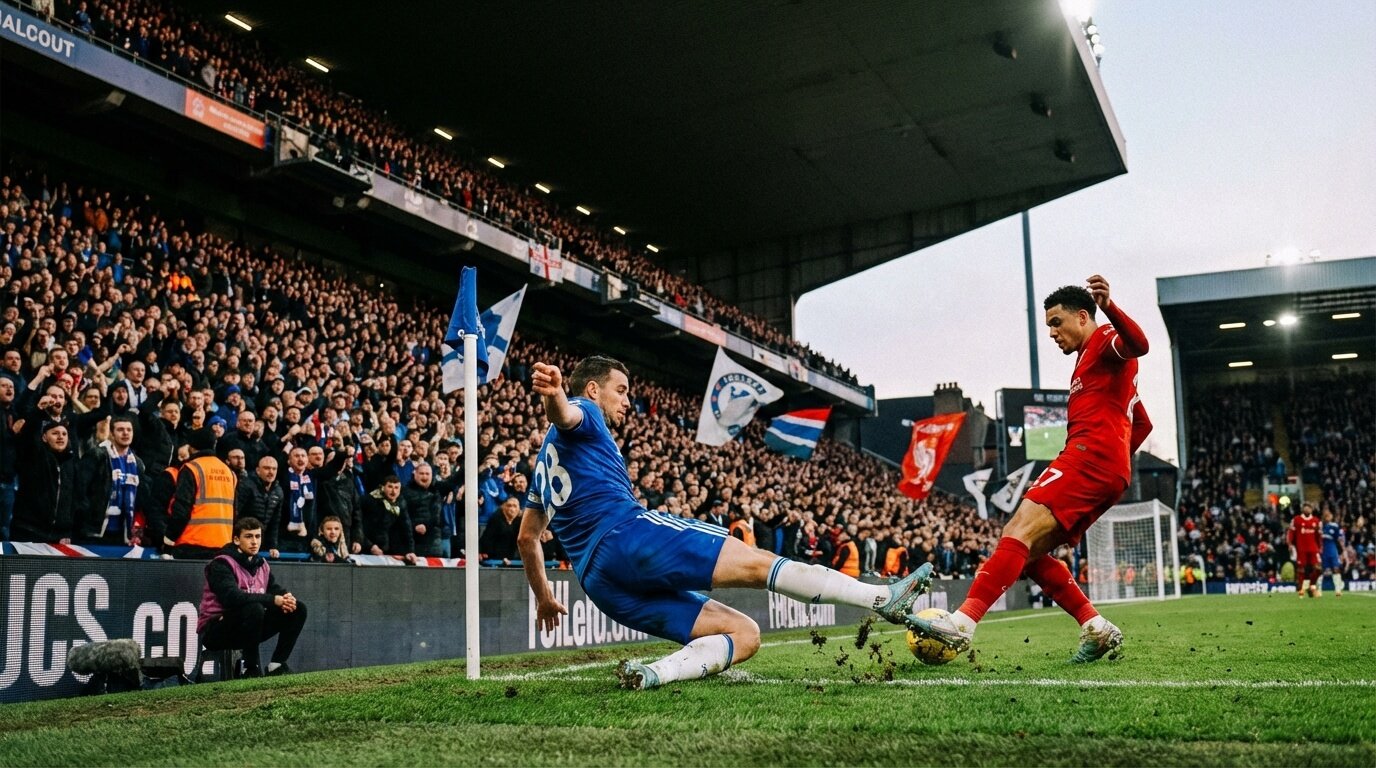
Corners are triggered by very specific events — blocked shots, deflections, and defensive clearances under pressure — which makes their occurrence strongly linked to attacking intent and set-piece frequency. That concentrated trigger means short bursts of play can change the odds dramatically in a matter of seconds.
Bookmakers price in both historical data and live events, so prices often lag slightly behind what you can see on the pitch. That lag, when combined with a disciplined approach, creates the edge traders exploit. Understanding this latency is the first step toward effective live strategies.
Pre-match preparation: identifiers to track
Preparation begins before kickoff. I always scan a few key statistics: average corners per match for each side, possession share, and attacking third pass volume. These baseline figures tell you which teams habitually create corner-heavy sequences and which do not.
Lineup matters as much as numbers. A team missing its fullback who overlaps aggressively, or a creative winger who cuts inside and forces defenders to concede corners, changes the dynamic. I keep a short checklist of players whose presence or absence materially affects corner rates.
Simple pre-match checklist
Use a concise checklist before the match: recent corners per 90, attacking third touches per 90, and pace of play (long balls vs. short passes). These metrics are quick to collect on sites like FBref and StatsBomb and they fit on one screen for a fast pre-game scan.
| Metric | Why it matters |
|---|---|
| Corners per 90 | Shows baseline frequency to expect in live markets |
| Attacking third touches | Indicates sustained pressure that produces corners |
| Key absent players | Alters typical attacking routes and set-piece outcomes |
Reading live indicators and signals
The live market depends on observable cues: a team pressing high for consecutive possessions, repeated throw-ins near the opponent’s box, or a goalkeeper struggling under crosses. These are immediate, actionable signs that a corner is more likely within the next minute or two.
I watch for sequences rather than single events. A single cross that misses the target isn’t enough. Two or three progressive attacks culminating in a blocked shot or forced clearance in the final third is the kind of pattern that justifies a near-term corner bet.
Common high-quality signals
High-quality signals include sustained attacking periods, substitutions that bring fresh attacking impetus, and fatigue in the defending fullbacks. Each of these increases the probability of corners in short windows.
Also pay attention to contextual factors such as the scoreline and game state. Teams chasing a goal often take more risks and produce more corners; conversely, a side protecting a lead may congest their box and concede more corners from desperate play by the opponent.
Timing, staking and risk control
Timing is everything. The best moment to place a next corner bet is after you’ve observed a clear attacking sequence and before the market fully adjusts. That window is narrow — often under 10 seconds — so pre-positioned stake plans make sense.
Use a fixed fraction of your live-betting bankroll for each play, typically 0.5–1.5 percent for aggressive traders and 0.25–0.75 percent for conservative approaches. Since these are short-duration bets, frequency can inflate variance quickly; strict staking keeps drawdowns manageable.
Practical staking rule
One practical rule I use: set a maximum of five consecutive losing next corner bets before pausing and reassessing. That forces discipline and prevents streaks of bad timing from eroding your bankroll.
Also consider special sizing around key minutes. For example, 75th–85th minute may see teams pushing harder, so raising stake size slightly there can be justified if your pre-match and live indicators align.
Tools and data that give an edge
Apps with low latency and trustworthy event feeds are non-negotiable. I use a fast streaming feed and a second screen showing live stats like possession in the final third and number of crosses. Combining vision and data shortens decision time.
Authoritative data providers such as FBref and StatsBomb give pre-match and post-match context that informs which fixtures are corner-prone. For live event detection, Betfair’s market movement and Pinnacle’s in-play odds often reveal how bookmakers react, which you can use to time entries.
Advanced tactics and common pitfalls
Advanced traders layer multiple tiny edges: target corners when an attacking fullback is receiving the ball in the final third, or after a failed counter where the defense is out of shape. Scalping the market on the back of clear momentum shifts can compound small edges into consistent returns.
Pitfalls are as important as tactics. Chasing after odds have moved is the most common mistake. Also beware of referee patterns — some refs award corners generously during certain matches, while others let play continue more often. Referee familiarity comes with experience and improves live judgement.
A real example from my trading desk
In a midweek cup tie I watched a Championship team press relentlessly for ten minutes while their opponent made repeated defensive clearances. I placed a small next corner bet when the ball was recycled to the left winger and a fresh substitute sprinted down the flank. The corner came within 18 seconds and the price offered good value compared to how the market moved after the initial attacking sequence.
That trade wasn’t flashy — it followed the checklist: pre-match corner propensity, clear in-play pressure, and a physical mismatch on the flank. Small, repeatable setups like that are what build live-betting returns over time.
Responsible practices and trade review
Record every live play. I keep a simple log: timestamp, match state, signal observed, stake, odds, outcome, and a quick note on what I did right or wrong. Reviewing this weekly reveals patterns in both success and error, and helps refine the checklist.
Finally, only risk what you can afford to lose. The next corner market is exciting because results resolve quickly, but the rapid turnover also means losses can accumulate faster than in longer-term bets. Practice restraint and review your trades as if you were auditing another trader’s record.
Sources and experts
- FBref — comprehensive football statistics and team metrics: https://fbref.com/
- StatsBomb — analytics and articles on set pieces and match events: https://statsbomb.com/
- Pinnacle — live betting resources and market insight: https://www.pinnacle.com/
- Betfair Betting Blog — practical trading guides and in-play analysis: https://betting.betfair.com/
- StatsPerform / Opta — professional event data and analytics services: https://www.statsperform.com/