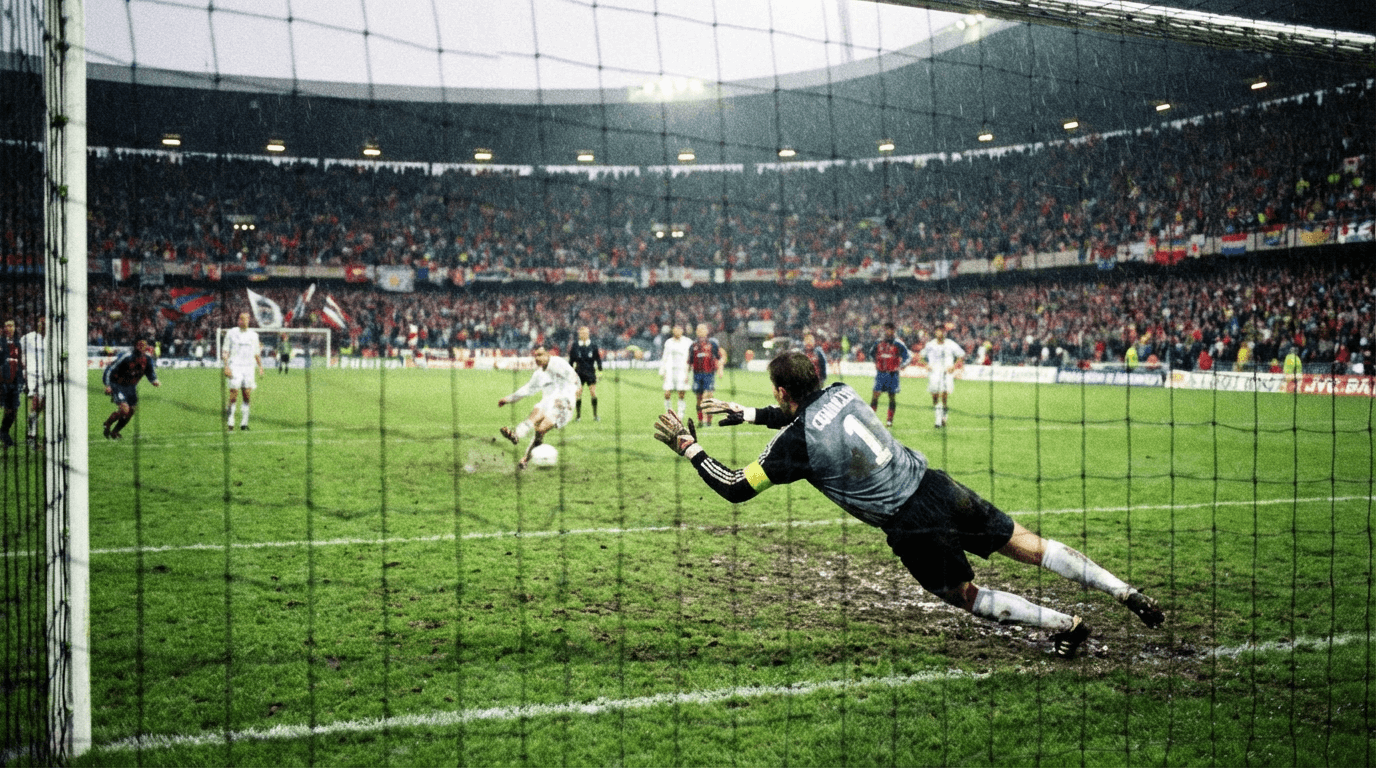
Correct-score markets are the catnip of football bettors: tempting, specific, and dangerously volatile. A single goal — a late penalty, an unlucky deflection — can turn a tidy forecast into a losing ticket, which is exactly why correct-score bets pay so well when they land.
Why correct-score betting behaves differently
Unlike simple match-winner or over/under bets, correct-score markets ask you to predict the exact distribution of goals for both teams. That specificity multiplies variance; dozens of plausible scorelines exist and each carries a small probability, so the market often offers long odds for results that are nonetheless realistic.
Bookmakers price those many possibilities with a margin, and they are conservative where uncertainty is high. That creates two realities: the average bettor will lose more often, but a disciplined approach and a simple probabilistic model can sometimes expose predictable edges.
The math behind score predictions
At the heart of many scoreline models is the Poisson distribution, which treats goals as independent random events happening at a stable average rate. The earliest practical use of this idea in football modeling goes back decades and was refined in influential work by Maher, and later Dixon & Coles, who adjusted for low-scoring dependencies and home advantage.
Modern analysts layer expected-goals (xG) data and team form onto those basic rates. xG captures shot quality, not just quantity, and helps correct naive averages — a team that creates high-quality chances will have a higher expected goal rate than one that only fires low-probability shots from distance.
Quick table: a toy Poisson example
Below is a compact demonstration using a hypothetical match where the home team’s expected goals (λ) is 1.6 and the away team’s λ is 1.0. The probabilities are the product of each team’s Poisson probabilities; the “fair odds” column shows the reciprocal of that model probability (no bookmaker margin included).
| Score | Model probability | Fair decimal odds |
|---|---|---|
| 0–0 | 0.074 (7.4%) | 13.5 |
| 1–0 | 0.119 (11.9%) | 8.4 |
| 2–0 | 0.095 (9.5%) | 10.5 |
| 1–1 | 0.119 (11.9%) | 8.4 |
| 2–1 | 0.095 (9.5%) | 10.5 |
| 3–2 | 0.025 (2.5%) | 39.4 |
That table shows why some scorelines (1–0, 1–1) naturally appear more often than exotic ones like 3–2, and why implied odds differ so sharply across outcomes. Your task is to spot times when bookmakers’ prices diverge enough from your model’s fair odds to justify a bet.
Practical strategies that work in the long run
There is no magic formula that turns correct-score bets into guaranteed profit, but several complementary techniques improve your long-term chance of success. First, narrow your universe: pick leagues and teams you can analyze reliably, preferably where you can access xG and lineup information.
Second, focus on value rather than “hot” scorelines. If your model shows a 10% chance of 2–1 but the bookmaker pays 12-to-1 (decimal 13.0), that’s value. If you have a disciplined staking plan and a small edge across many bets, the law of large numbers works in your favor.
Covering multiple outcomes and trading
Because exact scores are risky, many bettors combine several strategies: place a small stake on a primary correct score and hedge with a larger bet on broader markets like “home win” or “over 1.5 goals.” Another option is trading on an exchange: back a score pre-match and lay it in-play if momentum shifts, locking in profit or cutting a loss.
In-play trading requires quick decisions and familiarity with how odds move after key events. I’ve used small back-and-lay scalps on exchanges in games where my pre-match model disagreed with the market and a red card or substitution created a short window to realize a guaranteed return.
How to size bets: a conservative Kelly approach
Staking matters as much as selection when variance is high. The Kelly criterion gives a theoretically optimal fraction of bankroll to wager when you have an edge, but full Kelly often produces large, volatile stakes in practice. Use a fractional Kelly (one-quarter or one-half) to keep draws and downswings manageable.
For example, if your model gives 2–1 a 9.5% chance (p=0.095) and a bookmaker offers 12.0 decimal odds, the Kelly fraction (full) comes out extremely small: roughly 1.3% of bankroll. That’s already conservative, but cutting that by half or more is advisable for most recreational bettors.
What data and adjustments matter most
Raw league averages are a starting point, but you should adjust for home advantage, recent form, injuries, and suspensions. Weather and pitch conditions affect goals too: windy or heavy pitches tend to depress scoring. Contextual information often shifts probabilities more than long-term averages do.
Expected-goals models, as published by sites like StatsBomb and FiveThirtyEight, are particularly useful because they quantify the quality of chances. When xG and raw goals diverge for a team—say a low-scoring side creating high xG—you may expect regression toward more goals, and that can create value in the correct-score market.
A small checklist before you wager
- Confirm starting lineups and last-minute absences.
- Check expected-goals and recent shot quality numbers.
- Adjust for head-to-head tendencies and tactical matchups.
- Compare your fair odds to several bookmakers and exchanges.
- Decide stake using fractional Kelly and your risk tolerance.
Common mistakes and how to avoid them
One frequent error is overconfidence in a single model. No model is perfect, and overfitting to past results leads to brittle predictions. Cross-check your outputs against simple heuristics, and don’t bet on a single tiny perceived edge that hasn’t been stress-tested.
Another mistake is chasing losses. Correct-score markets punish impatience: after a run of bad luck you may be tempted to increase stakes to “make back” losses, which only amplifies risk. Keep a strict bankroll plan and record every bet so you can review outcomes objectively.
When to fold the strategy
There are seasons and contexts where correct-score betting is especially unwise: tournaments with lots of unknowns (cup games with reserve lineups), extreme weather conditions, and competitions with limited data. In these situations the bookmaker’s edge widens and your model’s signal weakens.
If you’re experiencing a long losing streak despite sticking to your process, take a deliberate cooling-off period, review assumptions, and consider recalibrating your model. Successful bettors measure their expected-value per bet and accept that variance will exist; they don’t confuse short-term outcomes with long-term skill.
Correct-score betting rewards discipline, a simple probabilistic framework, and humility in the face of variance. It’s not a get-rich-quick scheme, but with sound modeling, conservative staking, and clear rules about when to walk away, you can make informed decisions that turn a volatile market into a test of process rather than luck.