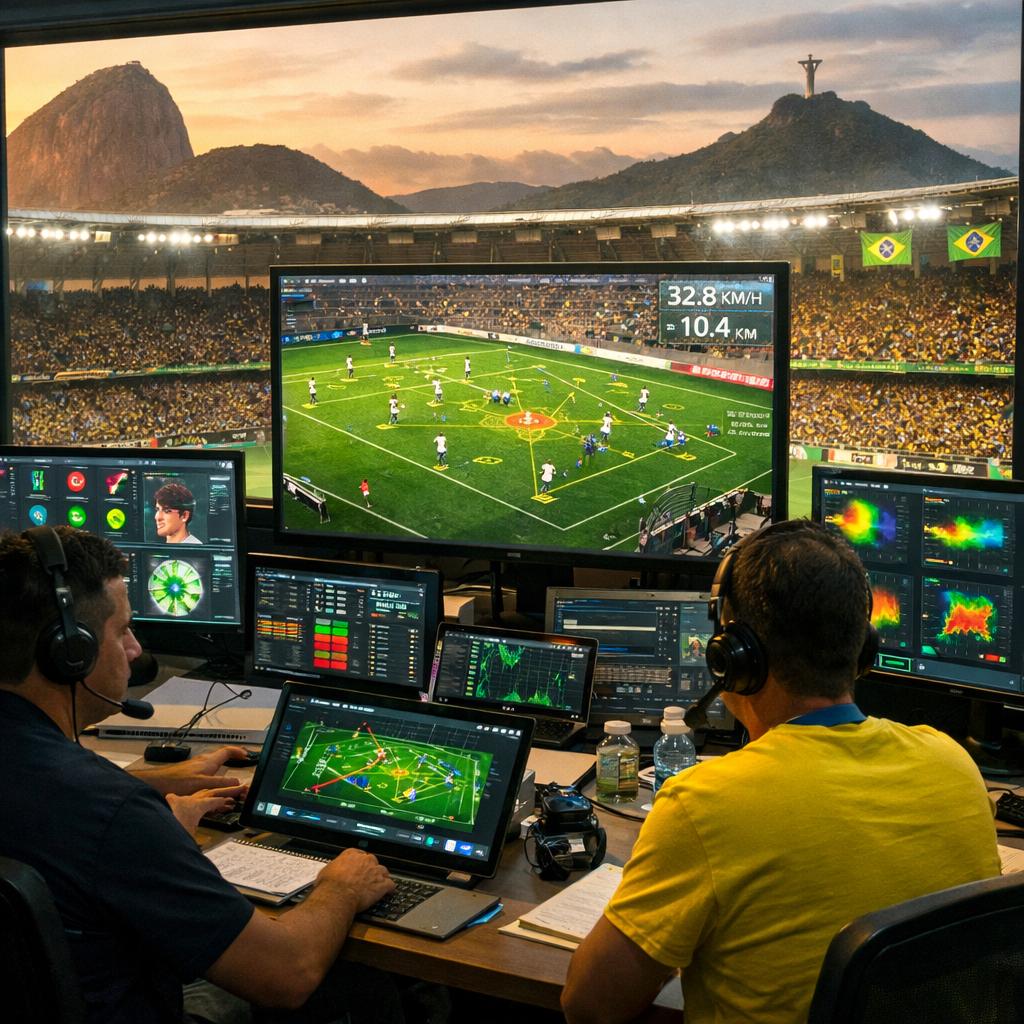
In stadiums where samba once drowned out stat sheets, a quieter revolution has been gathering momentum: teams are translating movement and moments into measurable advantage. The term Football Analytics in Brazil 2026 captures a moment when clubs, universities, broadcasters, and startups converge around data with greater clarity and ambition than ever before. This article traces that convergence, explains its practical impacts, and offers a realistic view of where the game heads next.
Why 2026 feels like an inflection point
Several developments converged to make 2026 a symbolic year for analytics in Brazilian football. Investments in match-tracking technology, wider international collaboration, and a generation of coaches comfortable with numbers created a tipping point where data stopped being an optional add-on and became part of routine decision-making.
That shift is visible not only at elite clubs but also at mid-table teams and academies, where modest budgets now buy actionable insights rather than glossy dashboards. The result is a more level analytical playing field: smarter scouting, sharper player load management, and more nuanced tactical planning across divisions.
Building the technical backbone
Behind every useful insight is a stack of technology: cameras and GPS trackers collect raw positions, event providers log actions like passes and shots, and software layers convert chaos into metrics. Brazil’s major stadiums and training centers have progressively upgraded tracking systems, allowing for synchronized multi-camera coverage that supports both coaching use and broadcast enrichment.
Open-source tools and cloud services have lowered the barrier to entry. Smaller clubs can rent event feeds or subscribe to analytics platforms instead of building in-house databases, while larger institutions invest in bespoke models for expected goals, pressing danger, and individualized load metrics.
| Capability | Typical adopters | Impact |
|---|---|---|
| Multi-camera tracking | Top-tier clubs, broadcasters | Fine-grained positioning, tactical analysis |
| Wearables & GPS | Clubs and academies | Workload monitoring, recovery planning |
| Event data feeds | Most professional teams | Performance metrics, scouting filters |
How coaches and analysts are actually using data
Analytics stopped being about obscure metrics and began to ask practical questions: which pressing triggers produce turnovers, how to sequence substitutions for maximum effect, and when a player’s performance decline is injury risk rather than form. Coaches pair video with metric-driven hypotheses and test them across training cycles or smaller competitions before applying them to high-stakes matches.
On match day, analytics often serve two roles: strategic preparation and micro-adjustment. Pre-match reports shape opponent-specific plans, while live dashboards flag patterns that demand halftime tactical shifts or targeted substitutions—turning numbers into timely coaching choices.
Scouting and the pipeline: smarter recruitment
Clubs in Brazil have long relied on scouts with keen eyes. Data supplements that expertise by highlighting undervalued players whose style or outputs fit a club’s profile. Rather than replacing human judgment, metrics narrow the search, freeing scouts to focus on context—attitude, adaptability, and tactical intelligence.
For academies, analytics help map developmental trajectories. Coaches monitor physical maturation, technical output, and decision-making quality across age groups, using standardized metrics to track whether a youth prospect is trending toward professional readiness or plateauing.
Startups, universities and the research ecosystem
Universities and local startups have become fertile ground for innovation. Academic groups publish models adapted to Brazilian play styles, and startups translate those models into products for clubs and broadcasters. This ecosystem accelerates iteration: research prototypes find quick testing grounds within willing domestic clubs.
Collaboration sometimes takes the form of internal internships, where students work with a club’s analytics team; other times it’s open competitions and hackathons that surface creative approaches to predicting performance or optimizing training load schedules.
Media, broadcast, and the fan experience
Broadcasters now layer analytical narratives into their coverage, turning subtle positional trends into compelling storylines and interactive graphics. Fans gain new vocabulary—pressing intensity, progression value, packing numbers—making post-match debates richer and more evidence-driven.
Clubs also use analytics for fan engagement: personalized content, tactical explainers, and fantasy-friendly metrics that deepen the relationship between supporters and the sport without undermining the emotional unpredictability that defines football.
Betting markets, integrity, and regulation
The proliferation of data creates secondary markets—betting platforms and derivative products—that rely on the same inputs. That raises integrity concerns: comprehensive access to event feeds or live tracking can confer an information edge that distorts markets if not regulated carefully.
Leagues and federations have responded with clearer data-distribution policies and enhanced monitoring of suspicious activity, but the balance between commercial opportunity and fair play remains a live policy issue requiring constant attention.

Ethical and privacy considerations
Wearables monitor heart rates, load, and micro-movements, which are sensitive personal data. Clubs must navigate consent, storage, and purpose-limitation in ways that protect players while preserving the benefits of data-driven care. Transparent policies and athlete education are now part of a responsible analytics program.
Moreover, models trained on historical data can encode biases—valuing certain body types or styles—so teams need to interrogate model behavior and ensure decision-making remains holistic and just.
A practical roadmap for clubs getting started or scaling up
Clubs should prioritize outcomes before tools: identify three clear decisions that analytics will support, then acquire the minimal technology stack to answer those questions. That focus prevents investment in flashy capabilities that sit unused.
- Define priority decisions (scouting filters, injury prevention, match tactics).
- Secure reliable data sources and a simple pipeline for cleaning and storage.
- Embed analysts with coaching and medical staff for iterative testing and feedback.
Training internal users is crucial. Upskilling coaches to interpret metrics, and analysts to present insights in coach-friendly language, transforms raw numbers into routine practice rather than ceremonial reports.
Challenges ahead and opportunities to watch
Costs remain a barrier for smaller clubs, and talent in the analytics labor market is competitive. Yet those challenges spawn innovation: shared-service models, federation-supported data pools, and cloud-based subscriptions make capabilities more accessible. Expect creative financing and partnerships to widen adoption.
Another opportunity is localization: models and visualizations tailored to Brazilian tactical norms, climate, and competition schedules will outperform imported one-size-fits-all solutions. Homegrown tools that respect local context are likely to dominate the next wave.
From numbers to culture
Ultimately, technology without cultural adoption stalls. The most successful teams are those that integrate analytics into training rhythms, pre-match routines, and player development conversations. Data becomes a language everyone speaks—coaches, med staff, scouts, and players—rather than a secret dialect for a small team of specialists.
As a long-time observer of the scene, I’ve seen analytics move from novelty to necessity. That shift changes how matches are prepared and how careers are managed, but it also preserves what makes Brazilian football special: improvisation, flair, and the human stories behind every metric.
Where this takes us next
Expect incremental rather than seismic change over the next few years: more nuanced models, wider access, and better integration between live analytics and coaching. The tools will improve, but the real evolution is cultural—the point at which clubs treat evidence as routine rather than optional.
In that sense, 2026 is less an endpoint than a hinge: a year when analytics moved firmly into the mainstream, setting the stage for smarter, fairer, and more engaging football across Brazil. The playbook has been rewritten, but the next chapters remain to be written on the field.