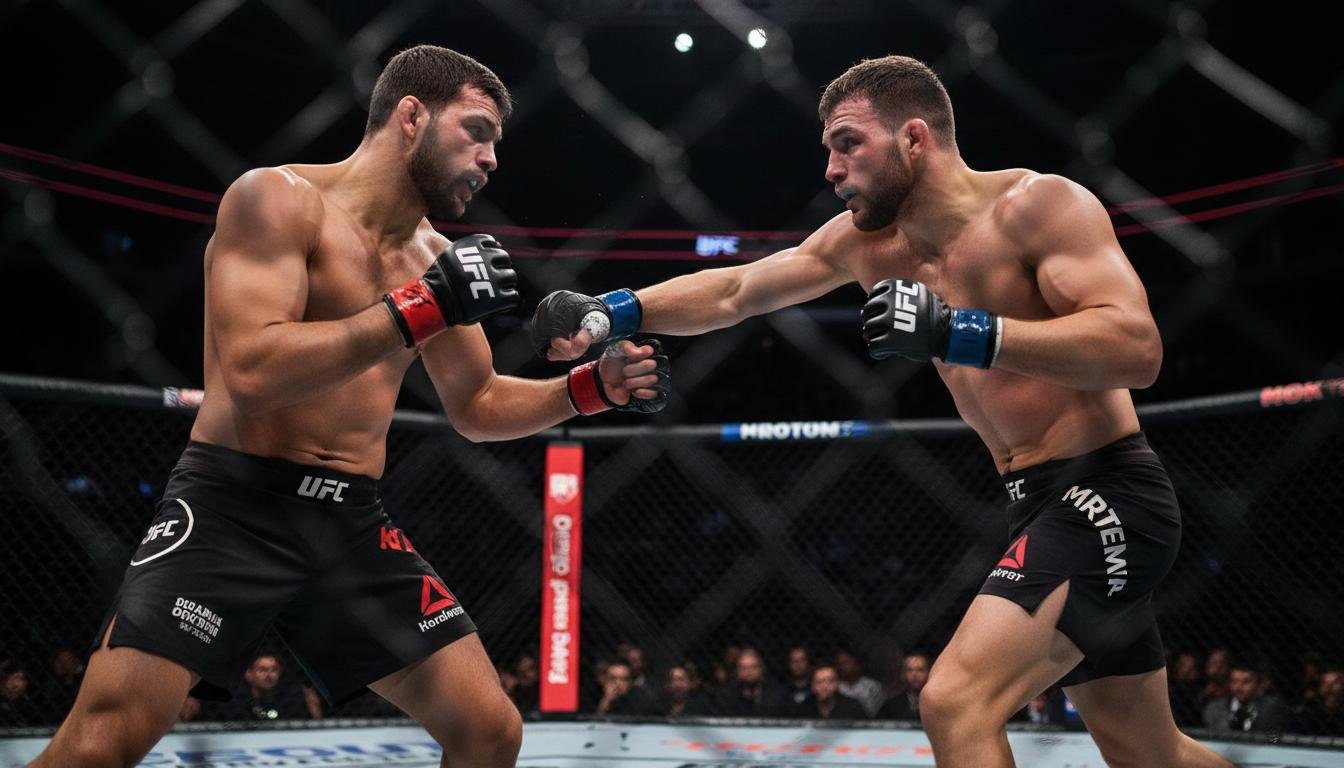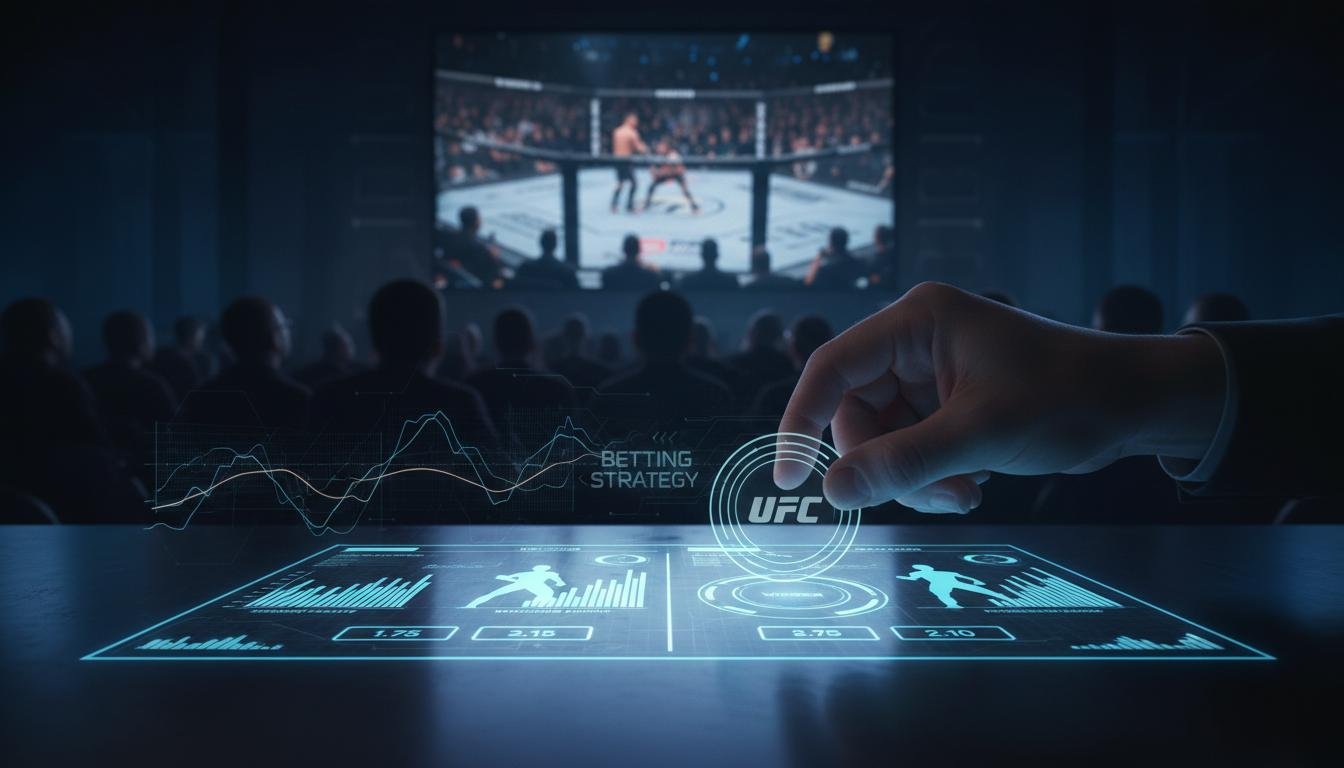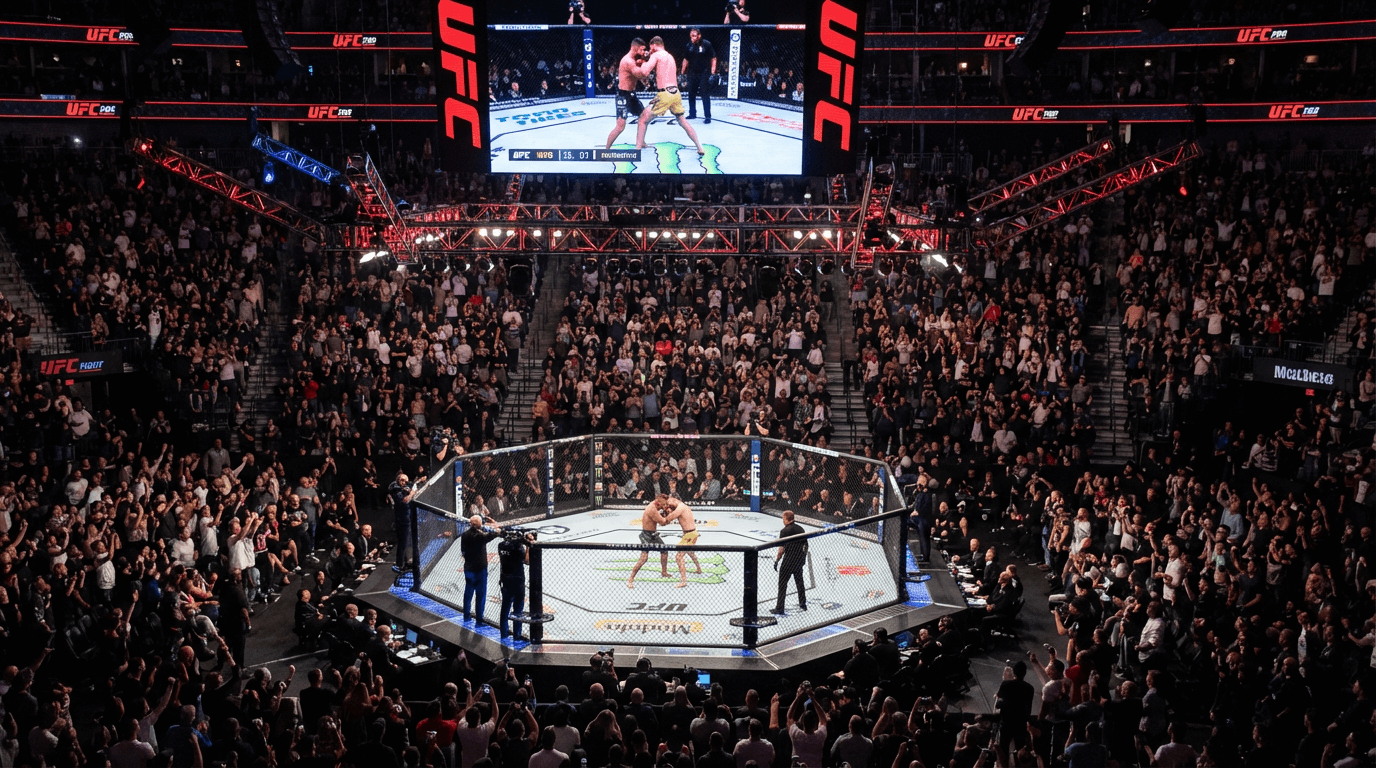
Mixed martial arts is chaotic, thrilling, and maddening for bettors. This guide walks through the evidence-based tactics professional bettors and analysts use to turn emotion into measurable advantage, from reading the numbers to managing a bankroll and executing bets during fight week.
Why UFC betting demands its own playbook
MMA differs from team sports in ways that matter to bettors. One fighter can change a bout with a single counter punch or a sudden submission, and stylistic matchups often dominate outcomes more than general records.
Unlike baseball or basketball, where volume reduces variance across many events, UFC fights are discrete, high-variance affairs. That makes careful selection and risk control essential, because the market can be volatile and unforgiving.
Understanding the sport’s specific dynamics — pace, strike differential, takedown success, and fight IQ — provides the edge. Bettors who treat fights as just another item on a betting board usually lose more than they gain.
How odds work and where value hides
Odds are shorthand for implied probability. Converting them into percentages reveals whether a line offers value compared to your estimate of a fighter’s true chances.
For example, a -150 favorite implies a 60 percent chance of winning. If your model or assessment assigns a fighter a 66 percent chance, that -150 line would represent positive expected value (EV).
Professional bettors chase EV, not winners. You can be correct more often than not and still lose if your stakes ignore value. Conversely, disciplined EV betting wins over time despite short-term swings.
Types of bets and when to use them
Moneyline bets on who wins are the backbone of UFC betting, but props and round markets often offer superior edges when exploited correctly. Each market has different information signals and levels of bookmaker margin.
Prop bets — method of victory, round, or whether a fight goes the distance — can be softer than moneylines because they split attention and require specialized knowledge. Parlays increase payout but multiply bookmaker edge and variance.
Use moneylines for matchup clarity, props to leverage deep scouting, and parlays sparingly as a small, discretionary portion of your ticket mix.
Converting odds and implied probability
American, decimal, and fractional odds are convertible. For American odds: if positive, implied probability = 100 / (odds + 100); if negative, = -odds / (-odds + 100). Decimal odds simply invert to probability: 1 / decimal.
Always adjust implied probability for bookmaker margin. The raw sum of implied probabilities across outcomes often exceeds 100 percent; normalizing removes the overround and gives a cleaner comparison to your model’s probabilities.
Normalization is essential when comparing multiple sportsbooks or when aggregating market-implied information for modeling purposes.
Data sources that matter: where to look and why
UFC Stats (often called FightMetric historically) is the primary open-source dataset for fight metrics. It tracks strikes, takedowns, distance, and other fight-level statistics that are predictable and useful.
Other sources add context: official UFC fight footage, dispute reports, medical suspensions, training camp notes in reputable outlets, and betting market history from OddsChecker or sportsbook APIs. Combine numbers with reliable qualitative intel.
For long-term modeling, keep a local database of cleaned UFC Stats data augmented by fight tapes and trustworthy reporting. That’s how expert handicappers separate signal from noise.
Key metrics to prioritize
Significant strike differential and accuracy are predictive of sustained success when they’re not distorted by volume fights against poor opposition. Look for consistency across multiple fights rather than single-event spikes.
Takedown accuracy, takedown defense, and submission attempts matter in stylistic matchups. A wrestler with high takedown success versus a defender with poor takedown defense will generally impose their game plan.
Other important measures include reach and height (for striking range), pace (strikes per minute), and fight duration tendencies. Weight-class context changes how much each metric matters.
Adjusting for opponent quality
Raw stats are noisy if fighters face vastly different levels of competition. Rating opponents and applying opponent-adjusted metrics reduces bias and improves predictive power.
Simple opponent adjustments can use average opponent ranking or an Elo-style system. More sophisticated methods weight outcomes by opponent strength and recency, improving model calibration.
Experts typically avoid overfitting by limiting the number of features and penalizing complex interactions unless the dataset supports them.
Building a predictive model: practical steps
Start simple: a logistic regression using a handful of opponent-adjusted features yields robust baseline predictions. Complexity helps, but only when it provides measurable out-of-sample gains.
Split your data into training and validation periods, and test on a holdout set consisting of the most recent fights. The market constantly changes, so temporal validation is critical to avoid optimistic bias.
Track calibration — if your model says a fighter has a 70 percent win probability, they should win about seven out of ten similar fights. Calibration beats raw accuracy for betting decisions.
Features and transformations that work
Use rate statistics (strikes landed per minute, takedown success rate) rather than cumulative totals. Rates normalize for fight length and opponent style and reduce variance in small samples.
Incorporate binary indicators for recent layoffs, short-notice fights, or fights outside the standard weight class. These factors often shift true probability at the margins and are poorly priced initially by the market.
Feature engineering can include interaction terms like striker vs. grappler matchups, which capture the non-linear dynamics of MMA better than raw metrics alone.
Validation and backtesting
Backtest your strategy against historical lines where possible. Compare model probabilities to closing lines: consistent, significant divergences indicate either a model advantage or mis-specification.
Simulate staking strategies during backtesting to estimate drawdowns and variance. Metrics like Sharpe ratio and maximum drawdown help you understand practical performance, not just theoretical EV.
Experts iterate quickly: a failed hypothesis is folded back into the pipeline, and the model is retrained with new constraints or features aiming for better out-of-sample performance.
Bankroll management: the backbone of survival
Even the best predictive model will go through losing streaks due to variance. Bankroll rules protect capital and prevent emotional, destructive betting during slumps.
Define your unit size as a small percentage of your total bankroll — many professionals use 1–2 percent units for single wagers and smaller fractions for speculative parlays or futures.
Consistency and discipline matter more than chasing a few extra dollars. Plenty of bettors with good ideas have blown through bankrolls by overleveraging early gains.
Staking systems: Kelly, flat, and hybrid approaches
The Kelly criterion optimizes growth rate given your edge and odds, but it is sensitive to estimation error. Many pros use a fractional Kelly (one-quarter or one-half) to reduce volatility.
Flat betting — staking the same percentage or unit regardless of edge — simplifies management and controls downside but leaves potential EV on the table when edges are large.
Hybrid approaches use Kelly-derived sizing when the model’s confidence exceeds a threshold and flat units otherwise. That balances growth with stability and is popular among data-driven bettors.
Line shopping, limits, and market efficiency
Odds vary across books. Using multiple sportsbooks — and exchanges where available — reduces the effective margin and lets you capture small edges that compound over time.
Line shopping is the single most actionable habit for most bettors. A few cents difference on many wagers compounds into substantial profit over months and years.
Be aware of limits and account restrictions. Consistent winners can face reduced limits or margin changes, so spread action across multiple trusted books to avoid being pigeonholed.
Timing your bets
Some edges exist early, when books are setting initial lines, while others appear late as news or public money moves odds irrationally. Identify which timing your strategy benefits from and act accordingly.
Late value often comes from injury news, weight cut reports, or coach corner intel. Conversely, early books with low liquidity occasionally misprice fighters, offering edges to model-driven bettors.
Maintain a log of when your most profitable bets were placed to refine timing strategy. Patterns of success will guide whether you should bet early, late, or both.
Prop bets and round markets: where nuance pays
Props and rounds bet markets can be softer than moneylines because they split attention and require more granular knowledge. That creates opportunities but also traps for the unwary.
Method-of-victory props hinge on style matchups — a heavy striker against a durable but slow grappler has differing prop expectations than two well-rounded athletes. Film study beats intuition here.
Round betting and over/under fight time are sensitive to game-plan predictions. Fighters who historically push pace are likelier to finish early, and that pattern can be exploited if pricing ignores subtleties.
When to favor props over moneylines
Use props when your information advantage is more granular than the market’s. Examples include knowledge of a developing cut that reduces cardio or a camp switch that alters striking approach.
Props also work well when moneyline juice is steep. If a favorite’s straight price is too expensive, a prop with higher EV relative to the vig may be a better use of capital.
Keep stakes conservative with props, since variance and bookmaker margins can be higher than on straightforward moneylines.
Live betting: speed, focus, and execution
Live markets offer rapid opportunities because momentum and small events (an early knockdown, a quick takedown) change probabilities on the fly. Speed and discipline are essential.
Successful live bettors specialize; they watch fights, understand momentum metrics, and use pre-decided rules to act quickly. Emotions are dangerous in-play — never “chase” in the moment.
Tools like real-time strike stats and round-by-round handicapping templates help. If you can process information faster and more accurately than the market, live betting can be highly profitable, albeit stressful.
Common live strategies
Fade the emotional public after an early flurry that doesn’t materially change a fighter’s expected ability. Markets often overreact to short bursts of offense or scare moments.
Bet on implied stamina shifts when fighters known for gas problems suddenly show fatigue signs. Live lines might lag because sportsbooks price for full rounds rather than micro-fluctuations.
Avoid large, impulsive wagers after controversial referee decisions or stoppages. Such events introduce noise and volatile line changes that are usually smoothed out in subsequent markets.
Psychology and common mistakes to avoid
Bettors fall into a handful of predictable traps: overconfidence after a streak, revenge betting, and trusting hype more than data. Recognizing these tendencies is the first step to avoiding them.
Confirmation bias leads bettors to overweight information supporting their view and discard contrary evidence. Structured checklists and decision rules reduce this error dramatically.
Another frequent problem is betting too much on fighters you root for. Separating fandom from handicapping is uncomfortable but necessary for long-term success.
How experts manage bias
Successful handicappers keep pre-fight notes and a betting rubric: variables that must be present to place a wager. If a fight doesn’t meet those criteria, they skip it no matter how tempting the odds.
Some pros use red-team reviews — a colleague challenges assumptions before a big bet. That adversarial analysis surfaces weaknesses and reduces groupthink.
Post-mortem reviews of losing and winning bets, with honest attribution of cause, build institutional memory and prevent repeating mistakes.
Advanced modeling techniques used by pros
Pros often move beyond simple logistic models to ensemble methods, Elo ratings tailored for MMA, and Monte Carlo simulations that translate fighter styles into probable fight paths and round outcomes.
Monte Carlo approaches simulate fights thousands of times using distributions for strikes and takedowns, producing a probability distribution over outcomes rather than a single point estimate.
Elo variants that account for recency and opponent quality create dynamic ratings that outperform static rank systems. Experts tune the decay parameters to balance new information with historical performance.
When complexity helps — and when it doesn’t
If your dataset is small, adding dozens of interaction terms invites overfitting. Complexity must buy predictive improvement on holdout data to be justified.
Use simpler models as baselines and introduce complexity in steps, validating each addition with a clear marginal gain. In practice, small, stable improvements beat flashy but fragile models.
Complex models also require robust monitoring. If inputs like strike detection or judge tendencies change, models must be updated promptly to avoid systematic drift.
Record-keeping and a repeatable research routine
Professionals log every bet: date, sportbook, line, stake, rationale, model probability, and outcome. This creates the dataset you use to tune strategy and measure real-world performance.
Review records weekly and monthly for trend changes. Look for creeping biases, an increase in variance, or shrinking ROI that might indicate your edge is eroding or your samples are too small.
Make research a ritual: fight-week watchlists, tape sessions on Tuesday–Wednesday, and final checks 12–24 hours before weigh-ins. Structure reduces last-minute panic and poor choices.
Legal, ethical, and responsible gambling considerations
Always comply with local laws and sportsbook terms of service. Jurisdictions differ widely in what’s legal and in how futures and prop payouts are handled.
Set hard loss and time limits. The National Council on Problem Gambling provides resources to keep betting recreational and safe. Professional bettors still impose personal rules to mitigate impulse risks.
Transparency and record-keeping also protect you from suspicious activity and help resolve disputes with sportsbooks should they arise.
Example playbook: how professionals approach a fight week
Start the week by updating your database with recent fights, medical suspensions, and training camp news. Early clarity on a fight’s intrinsics shapes whether it’s worth further attention.
Mid-week focus moves to film study: two tape sessions, one concentrating on recent performance, another on stylistic tendencies and deviations in game plan. Note any changes from past approach.
On weigh-in day, check for missed weight, hydration reports, and official medical suspensions. Adjust probabilities if weight issues imply a diminished fighter or an easier matchup the following night.
Placing the bet: checklist before staking
- Has the line moved since you first modeled the fight, and why?
- Do you have any insider information that materially alters the matchup?
- Does the stake size respect your bankroll rules and the estimated edge?
- Is there a better prop or timing to capture superior value?
Use the checklist as a hard stop. If any item fails, postpone the wager or reduce the stake rather than trusting gut feeling in the moment.
Sample bets and a small case study
To ground theory in practice, consider a hypothetical middleweight bout between Fighter A, a high-output striker with poor takedown defense, and Fighter B, a high-level wrestler with limited striking defense.
Your model assigns Fighter B a 62 percent chance to win based on opponent-adjusted takedown success and control time, while the closing moneyline is -135 (57.4 percent implied). That discrepancy suggests positive EV.
If your bankroll unit is 2 percent and you use a half-Kelly on a 4.6 percent edge, your stake might be 1.1 units. A modest, structured wager captures the edge without risking excessive capital.
| Bet type | Rationale | Stake (units) |
|---|---|---|
| Moneyline (Fighter B) | Opponent-adjusted takedown advantage and ground control | 1.1 |
| Round prop (Rounds 3–5) | Expect slower start due to measured pace and conditioning | 0.3 |
| Method prop (Decision) | Wrestler likely to control and score over rounds | 0.2 |
What to expect in the first year of systematic betting
Variance will challenge your patience. Even a well-calibrated model can experience long losing streaks, so the main task is surviving those stretches while preserving capital and discipline.
Expect modest compound gains if your process is sound and edges are genuine. Most professional bettors focus on steady, compounding returns rather than lottery-like paydays.
Refinement, not radical turnaround, is the path forward: improve features, prune bad habits, and grow the bankroll cautiously as evidence accumulates.
How experts keep up with the sport and the market
Follow reputable MMA journalists for training camp, injury, and matchup context; follow bookmaker and market-watch services for line movement and consensus odds. Blend both inputs for a fuller picture.
Experts often engage with a small circle of other bettors to exchange insights while avoiding leaking actionable positions. That limited information exchange improves perspective without introducing group biases.
Attend local shows or watch more tape than the average fan. The marginal benefit from extra viewing time is high; patterns in footwork, timing, and recovery show up slowly and require focus to identify.
Common questions beginners ask
“How many fights should I bet per week?” Start slow. Quantity is less important than quality. A handful of well-researched bets each week beats dozens of shallow tickets.
“When should I stop during a losing run?” Have pre-defined drawdown limits and a plan for review. Stop when the data suggests model degradation or when your edge is no longer present, not when your emotions peak.
“Are futures worth it?” Futures carry high variance and long hold times but can be profitable if you identify undervalued young fighters or division dynamics early. Allocate only a small portion of your bankroll to futures.
Practical tools and software
Start with spreadsheet-driven models before investing in more complex infrastructure. Google Sheets or Excel with clean data, calculated features, and simple logistic regression often suffice for initial edges.
As you scale, use a local database (Postgres or SQLite) and Python for reproducible analysis. Libraries for data science and visualization speed iteration and testing.
Automated line trackers and API access to multiple sportsbooks are invaluable for line shopping and execution. Build or subscribe to a reliable odds-feed service to maintain a timely edge.
Ethics, disclosure, and interaction with sportsbooks
Always be honest with sportsbooks and follow their terms. Exploiting technical loopholes or mispriced promotions without intent to follow rules can lead to account restrictions.
When using experts’ content, credit appropriately. This guide draws on public datasets and industry writing; consult original authors for deeper dives into specialized topics.
Maintain privacy and security: use secure passwords, two-factor authentication, and segregated email accounts for betting to protect your financial information and wagering history.
Final practical checklist before you bet
- Confirm model probability vs. market implied probability (normalized).
- Assess fresh qualitative information from camp reports and weigh-ins.
- Check account balances and line availability across books.
- Apply bankroll rule and staking algorithm for stake sizing.
- Log the bet with rationale, expected edge, and target timeframe for review.
Use this checklist every time. It turns informal hunches into disciplined decisions and builds a track record you can analyze objectively.
Recommended habits for long-term success
Sleep on big wagers. Many experts avoid placing large stakes on late-night impulse decisions. A day of reflection often highlights overlooked risks.
Maintain continuing education: read new analyses, follow statistical innovations, and watch fight film frequently. The sport evolves, and your methods must evolve with it.
Finally, treat betting as an investment in a process, not a shortcut to fast money. Incremental improvements compound into measurable advantage over time.
Sources and expert resources
- https://www.ufcstats.com/
- https://www.ufc.com/
- https://www.pinnacle.com/en/betting-resources
- https://www.actionnetwork.com/
- https://www.oddschecker.com/
- https://www.espn.com/mma/ (Ariel Helwani, Marc Raimondi, Brett Okamoto)
- https://fivethirtyeight.com/
- https://www.sherdog.com/
- https://www.mmajunkie.usatoday.com/ (Mike Bohn, Nolan King)
The full analysis of the information was conducted by experts from sports-analytics.pro