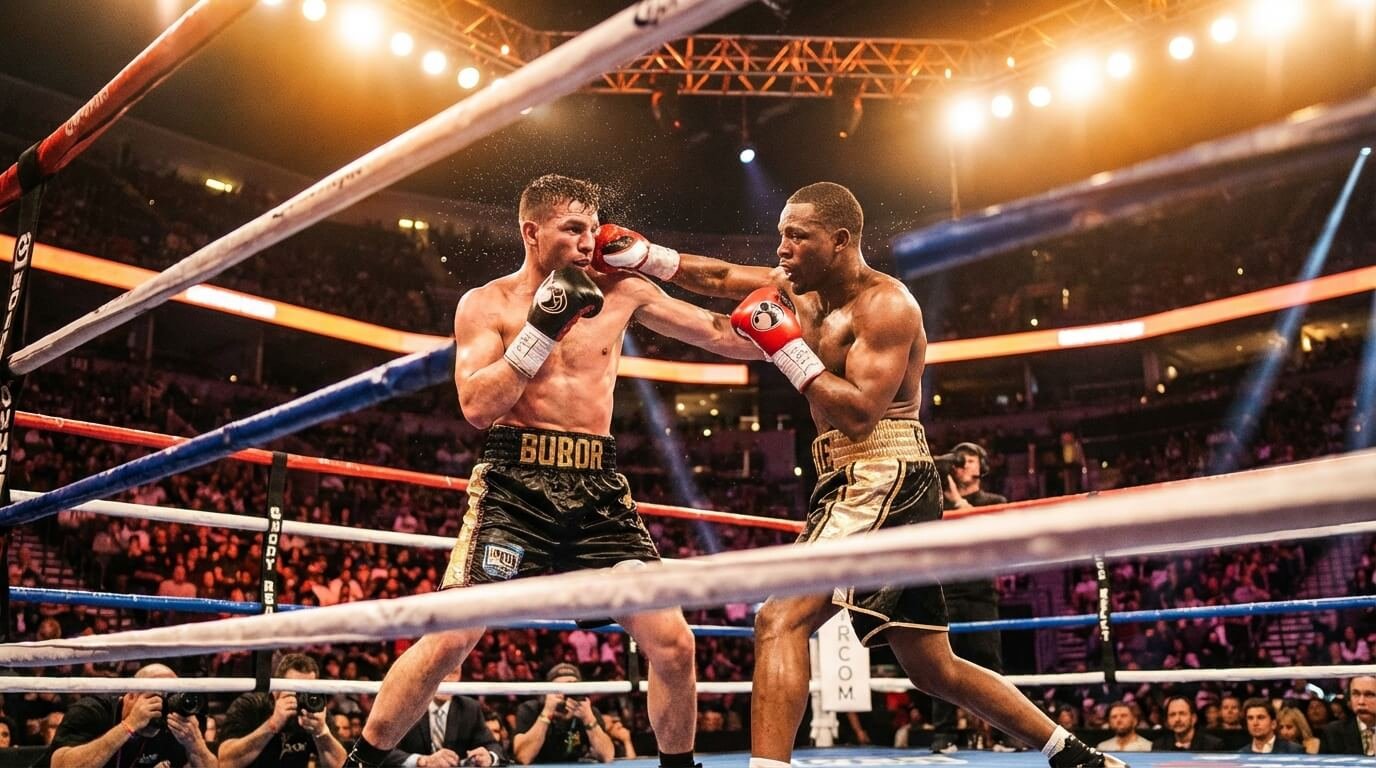
Betting on boxing can feel like standing at a crossroads in the ring: every angle matters, and one small mistake can cost you the round. This guide pulls together practical strategy, data-driven thinking, and real-world lessons from journalists, statisticians, and professional bettors so you can wager more like an analyst and less like a fan.
Why boxing is different from other sports
Boxing is a matchup sport, not a team sport. Unlike baseball or basketball, where aggregate team performance smooths over individual quirks, each fight hinges on style interactions, physical variables, and a single referee’s decisions. That creates both opportunity and risk for bettors.
Round-based scoring, stoppages, and weight cuts introduce volatility most betting markets struggle to price precisely. That volatility is your friend if you understand the levers—styles, stamina, and situational factors—and can spot where bookmakers have mispriced the odds.
Understand how odds reflect probability
Odds are a shorthand for implied probability plus the bookmaker’s margin. Converting odds into implied probability reveals how much value a bet must offer before it’s worth placing. For American odds, the conversion is straightforward and should be the first calculation you make.
Always factor in the vig. If a fighter is -150, the implied probability is 60 percent, but the true chance to break even is lower once you remove the book’s edge. Smart bettors look for situations where their estimated probability exceeds the implied probability after accounting for the margin.
Simple odds conversions
Here are the typical conversions you should know for quick mental math: for American odds, if the favorite is -200, that implies a 66.7 percent chance; a +200 underdog implies 33.3 percent. If your own model or read of the fight suggests a different percent, you have a potential edge.
Use online calculators for accuracy, but train yourself to recognize large gaps between market probability and your estimate. Those gaps point toward value.
Find value, not certainty
Most bettors chase winners; expert bettors chase value. A favorite might offer a higher chance of winning, but that doesn’t mean the market offers fair payout relative to that chance. Your goal is not to pick winners every time but to make bets where the expected value is positive.
Expected value (EV) is calculated as (probability of win × payout) − (probability of loss × stake). If that EV is positive over many bets, the math favors you. This is where models, discipline, and record-keeping make an otherwise noisy sport profitable.
Styles make fights: how to read stylistic matchups
“Styles make fights” is not a cliché here—it’s a predictive principle. A boxer who pressures and throws volume will often overwhelm a counterpuncher if the counterpuncher cannot control distance or sap the aggressor’s gas tank. Conversely, a slick boxer can frustrate and outpoint a slow, pressure fighter for long stretches.
Study film deliberately. Look beyond highlight reels to middling rounds. Note how each fighter handles adversity, cuts off the ring, and shifts tempo. These micro-observations often reveal sustainable edges that odds markets underrate.
Key style categories to evaluate
- Pressure puncher: high output, seeks close quarters, can fade late.
- Slick boxer: uses movement and jab, relies on defense and scoring.
- Counterpuncher: waits for mistakes, thrives on timing and accuracy.
- Power puncher: finishes early if opponent missteps but may not maintain pace.
Match the categories to identify where edge lies. For instance, an older power puncher versus a young pressure fighter might be a candidate for a late-round fade on the favorite.
The role of physical and situational variables
Age, recent activity, weight drain, reach, hand speed, and even training camp reports matter. Small medical issues or a reported illness during camp can swing a 60/40 line dramatically once the fight starts, so follow reliable news sources closely in the weeks leading to fight night.
Travel, altitude, and ring size also affect outcomes. A fighter who thrives in a large ring with space to move may be disadvantaged in a smaller venue where a pressure opponent can close distance more effectively.
Checking camps and pre-fight indicators
Pre-fight tune-ups and sparring reports are useful but noisy. Put more weight on repeated credible reports and footage showing a fighter’s sharpness or lag. Social media hype is easy to manipulate; give more credibility to professional journalists and independent sparring footage when it surfaces.
Weigh the reliability of sources: seasoned reporters with a track record of accurate camp reporting are far more valuable than anonymous camp buzz.
Use data: punch stats, compubox numbers, and records
CompuBox punch stats, BoxRec records, and historical activity provide quantifiable inputs you can use in models or mental logic. Look for sustainable patterns: does a boxer consistently land a high percentage of power shots? Is there a drop in output as fights progress?
CompuBox data is imperfect—it’s human-collected and sometimes inconsistent—but over long samples it reveals tendencies. Use it alongside film study to triangulate your assessment rather than as the sole datapoint.
Build a model that fits your goals
You don’t need a graduate degree to build a useful model; you need clarity about what you’re predicting and the data you trust. Many bettors start with simple logistic regression or Elo-style ratings designed to predict win probability based on variables like age, activity, reach, knockout rate, and opponent quality.
Calibrate the model to real outcomes and backtest it on past fights. If the model consistently overestimates favorites or underestimates underdogs, adjust variables or add interaction terms like “style versus style.” Predictive power improves when modelers include qualitative signals—trainer changes, weight cut problems, or known tendencies to wilt under pressure.
Sample simple model components
Here are variables that frequently show predictive value: recent activity (number of fights in last 18 months), opponent-adjusted knockout ratio, average landed punches per round, age differential, and ring rust indicators. Weight class trends and reach differential are also important.
Keep your model as simple as it needs to be. Overfitting to noise will ruin out-of-sample performance. Start small, prove incremental improvements, and avoid the temptation to add every available metric.
Bankroll management: the engine of long-term profit
Preserving capital is primary. Professionals risk only a small, fixed percentage of bankroll on any single bet, typically between 1–3 percent for flat staking, or a fraction of that under Kelly staking. The goal is survival through slumps so that edges compound over time.
Decide on a unit size in advance and treat it as sacred. Avoid chasing losses by increasing unit size—this behavior rapidly destroys long-term returns and often signals emotional betting rather than analytical wagering.
Kelly criterion and practical staking
The Kelly criterion allocates stake proportionally to perceived edge: fraction = (bp − q)/b, where b is decimal odds minus 1, p is your estimated probability, and q = 1 − p. Full Kelly can be aggressive; many bettors use fractional Kelly (one-quarter or one-half) to reduce variance.
Kelly rewards consistent small positive edges while protecting against ruin. If you’re uncomfortable with the swings Kelly induces, use a conservative flat or percentage system instead and focus on improving your edge estimate.
Bet types and when to use them
Boxing markets offer moneyline, method-of-victory, round betting, over/under rounds, and prop markets like whether the fight goes the distance. Each market has different liquidity and bookmaker margins, so choose depending on where you find the best edge.
Moneylines are straightforward and often efficient for marquee fights. Round and method markets are profitable for bettors who are specialized—if you can identify a fighter prone to early finishes or someone likely to fade, these markets pay well for edge.
| Bet type | Best use | Risk level |
|---|---|---|
| Moneyline | General win probability; efficient but lower variance | Medium |
| Method of victory | Value when you anticipate KO/TKO or decision tendencies | High |
| Round betting | Good for late-round finish or specific finishing tendencies | High |
| Live betting | Capitalize on in-fight momentum or bookmakers slow to react | Medium–High |
Live betting: how to profit from shifts during the fight
Live markets move quickly and often overreact to one or two rounds. If you prepared pre-fight and have a model for round-by-round probabilities, live betting lets you exploit mispriced shifts after seeing how the fighters start.
Prioritize two elements in live wagering: composure and speed. Composure prevents emotion-based chasing; speed lets you pounce when lines move in your favor. A defined ladder of acceptable live prices helps avoid impulsive mistakes.
Common live-betting opportunities
- Fighter starts slow but typically ramps up—live lines may overreact to the first round.
- Underdog lands big early but lacks stamina—late-round value may appear on the favorite.
- Referee or ring size influences early exchanges—adjust quickly if a fight is being officiated unusually.
Having pre-fight thresholds for when to bet live (e.g., after the second round if your expected pattern hasn’t matched) keeps decisions grounded and replicable.
Psychology: manage bias and crowd influence
Fan bias, recency bias, and confirmation bias wreck disciplined betting. Big-name fighters attract public money that can push lines away from true value. Recognize when markets are priced by sentiment rather than analysis and position accordingly.
One useful tactic is to separate your fan identity from your bettor identity. If you cannot be objective about a fighter you support, remove yourself from any moneyline exposure and instead look for contrarian prop or round bets where your judgment is more detached.
Record-keeping, review, and continuous improvement

If you don’t track every bet, you don’t know whether your edge exists. Record the market odds, your estimated probability, stake, result, and post-fight notes about why the model was right or wrong. Over time, patterns in misses illuminate model weaknesses.
Schedule periodic review sessions to audit your assumptions, update priors, and refine variables. Small, consistent improvements compound into superior long-term performance.
How to shop lines and use multiple books
Line shopping is the low-hanging fruit of positive expected value: identical bets will pay more at some books than others. Open accounts at several reputable sportsbooks and move funds between them to capture the best price for the same market.
Use odds aggregator sites to compare prices quickly, and consider smaller sportsbooks for niche markets. Beware of signing bonus terms and wagering requirements that obscure the real cost of using a particular book.
Regulations, limits, and account management
Sharp accounts are often limited by sportsbooks if they detect consistent winners. That means you must manage how you present bets. Spreading stakes across multiple books, varying bet types, and sometimes using middle-market lines conservatively can preserve access.
Always keep documentation for larger wagers and use reputable, licensed sportsbooks. Regulatory environments vary by jurisdiction, so confirm local legality and tax treatment of gambling winnings where you live.
Common mistakes even experienced bettors make
Overconfidence in single-fight predictions, ignoring small but important qualitative signals, and failing to factor in match-day injuries are recurring errors. Another frequent mistake is trusting public parlays or futures markets that are heavily manipulated by popularity rather than probability.
Watch out for “last-minute changes” that shift the calculus: a new trainer, a missed weight target, or a fighter who looked heavy and slow at weigh-in. These are often predictive of in-ring underperformance, and sharp bettors price them quickly.
Real-world examples and lessons
In one regional title fight I followed, the public favored the veteran based on name recognition despite a two-year layoff and poor sparring reports. My model penalized ring rust heavily, and the fighter faded in round five, losing a decision. A moderate underdog bet that day paid off and reinforced the need to quantify inactivity.
Another time, live betting turned a small pre-fight stake into a larger profit after the favorite hurt his hand in round two—information visible in movement and punch output but not reflected in initial live lines. Fast reaction and restraint kept that play profitable.
When to avoid betting
There are times when the smartest move is no move. If you lack trustworthy information on training camp, or if markets are balanced and no clear edge exists, skip the bet. Discipline over activity wins in the long run.
Avoid betting solely for entertainment. If you find yourself placing a wager because the night feels exciting, step back. Profit requires detachment and a rules-based approach.
Tools and resources to improve your edge
Use BoxRec for fight records, CompuBox for punch statistics, and established outlets like The Athletic and ESPN for credible reporting. Betting analytics platforms such as Pinnacle’s betting articles and Action Network add model-backed commentary, while odds aggregators show where lines differ across books.
Keep a compact toolkit: film software for slow-motion review, a spreadsheet or simple database for tracking wagers, and mobile alerts for line movements on fights you monitor closely.
Responsible gambling and bankroll longevity
Betting should be treated as a long-term, probabilistic activity, not a shortcut to income. Set loss limits, take regular breaks, and never stake money you cannot afford to lose. If gambling feels compulsive, use self-exclusion tools offered by sportsbooks and seek professional help.
Experts recommend setting monthly or quarterly loss thresholds and strict unit sizes tied to your total bankroll. These rules preserve capital and prevent emotional decisions during losing streaks.
Putting it together: a pre-bet checklist
- Have I quantified the implied probability from the market odds?
- Does my model or judgement produce a different probability, and why?
- Are there recent camp reports, injuries, or weigh-in issues that change the picture?
- Have I shopped the best line across books?
- Is the stake consistent with my bankroll rules and the estimated edge?
- Am I betting for analysis or emotion?
If you can answer each item clearly, the bet is worth considering. If even one item is uncertain, hold off until you have more confidence or clearer value.
How experts think about long-term profitability
Top bettors stress process over outcomes. They focus on repeatable actions: disciplined staking, disciplined line shopping, and constant model refinement. Short-term results will vary wildly in boxing; what matters is an edge that holds up across hundreds of bets.
Experts also diversify. They bet different markets, develop specialties in certain weight classes or regions, and collaborate with trusted informants who provide credible camp information. Diversification reduces exposure to idiosyncratic risk that can wipe out single-market specialists.
Final notes and practical next steps
Start small, keep rigorous records, and treat your approach like a business. Learn to think in probabilities, not certainties. In a sport where a single punch can rewrite the outcome, the betting edge is rarely dramatic; it’s the accumulation of many small, disciplined advantages.
Keep refining your process: balance data with film study, protect your bankroll, shop lines, and lean on credible sources for camp information. Over time, a consistent approach will separate profitable bettors from recreational punters.
Sources and experts
- CompuBox (CompuBox World and archived punch stats) https://www.compuboxonline.com
- BoxRec (fighter records and bout lists) https://boxrec.com
- The Athletic — Mike Coppinger (boxing reporting and analysis) https://theathletic.com/boxing
- ESPN Boxing — Dan Rafael and staff reporting https://www.espn.com/boxing
- Pinnacle Sports Betting Articles (analytics and betting strategy) https://www.pinnacle.com/en/betting-articles
- Action Network (betting analysis and models) https://www.actionnetwork.com
- OddsPortal (odds comparison and line history) https://www.oddsportal.com
- Betfair Betting Blog (market dynamics and exchange insights) https://betting.betfair.com
- Investopedia — Kelly criterion and staking mathematics https://www.investopedia.com/terms/k/kellycriterion.asp
- BoxingScene — Keith Idec and staff reporting https://www.boxingscene.com
- American Gaming Association — Responsible gambling resources https://www.americangaming.org
Full analysis of the information in this article was conducted by experts from snow-porpoise-257437.hostingersite.com