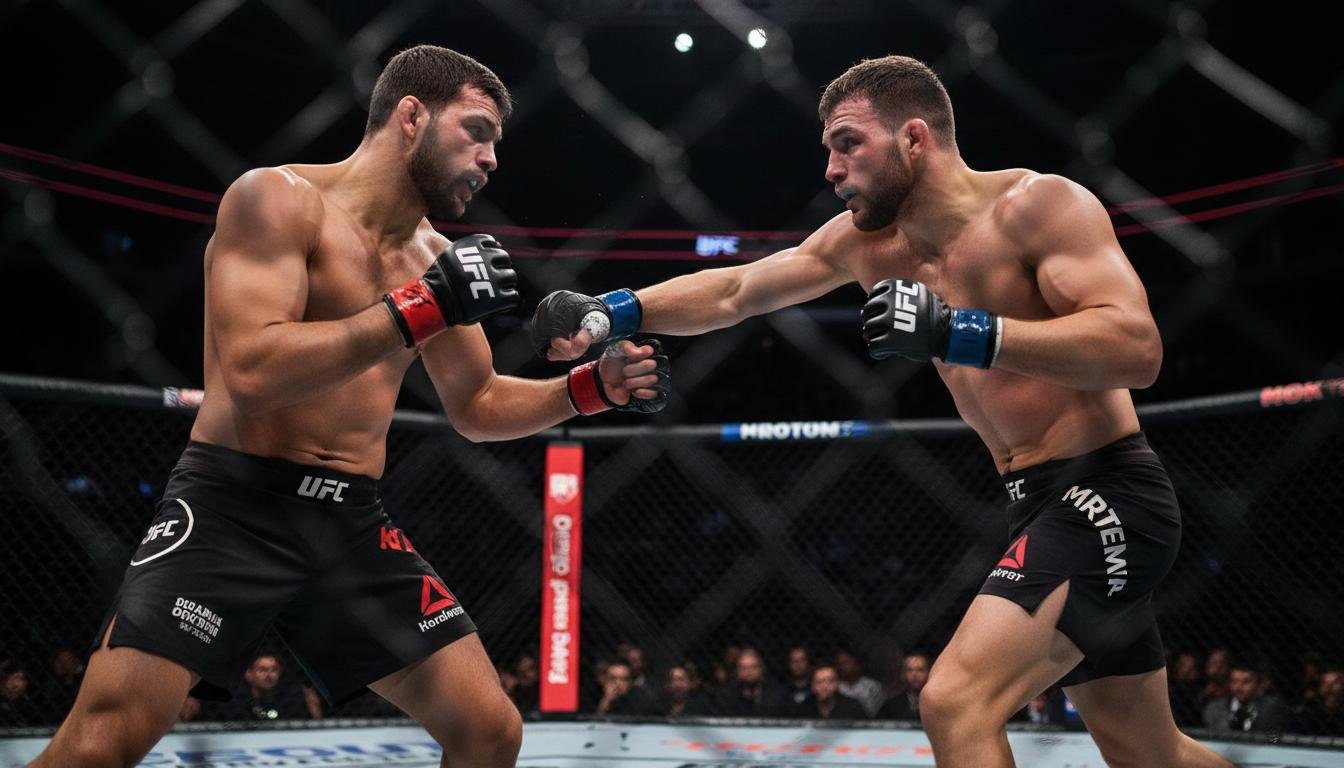
Home advantage in boxing feels intuitive: crowd noise, familiar locker rooms, and the subtle sway of local judges. Yet turning that intuition into a repeatable betting edge takes more than cheering for the favorite; it requires careful data, disciplined staking, and an honest appraisal of when home advantage truly matters. This article walks through the mechanics of the home-fighter edge and offers practical tactics you can apply whether you’re backing a hometown prospect or trading an underdog during live action.
Why the home advantage exists in boxing
Unlike team sports, boxing is a one-on-one contest with subjective scoring and plenty of human judgment. Home advantage arises from several interacting forces: psychological boosts for the host fighter, travel fatigue or time-zone effects for the visitor, and subtle influences on officiating and judging that accumulate over rounds.
These influences don’t act uniformly. In regional cards where officials are local or inexperienced, the crowd’s reactions and the referee’s interpretations can tilt close rounds. In major international fights, neutral officials and tighter operations reduce—but don’t eliminate—those biases.
How bookmakers price the home fighter
Bookmakers set opening lines based on objective variables: records, weight, styles, recent form, and public perception. When a fight is held in a fighter’s hometown, bookmakers often bake a small premium into the line to account for both real performance effects and bettor sentiment favoring local fighters.
That premium varies by market and by the profile of the fight. Lower-tier cards with local fanbases and smaller pools of informed bettors tend to show larger home premiums; big marquee fights on global sportsbooks are more efficient, with smart money quickly adjusting odds.
Quantifying the edge: what data matters
To decide whether a home fighter is worth backing, focus on measurable factors: travel distance and recovery time, judging panel nationality, recent performance in away fights, and objective fight metrics like CompuBox output. Each factor nudges probability; combined they can reveal whether a perceived advantage is real or just hype.
Historical records are useful. BoxRec provides fight records and locations, while CompuBox supplies punch stats that help differentiate hollow numbers from genuine ring control. Checking line movement on exchanges like Betfair or aggregators like OddsPortal can show where sharp money lands and whether the home price is pure public bias.
Pre-fight checklist for betting the home fighter
Before you stake money, run a quick checklist: did the visitor travel far? Are the judges from the host country? Has the home fighter performed better at home historically? Are punching and defense metrics consistent with a clear stylistic advantage?
Also check camp news: weight-cut issues, late changes in corner or trainers, and medical or suspension notices. Small disruptions can nullify a home advantage quickly; conversely, a disciplined camp with clear game plan often converts crowd support into wins.
Checklist items and how to weigh them
Not all checklist items are equal. Travel and recovery can be decisive in championship rounds, whereas judging composition matters most in tightly matched fights expected to go the distance. Punch volume and accuracy are strong indicators of control, while knockout rates help when considering early-finish scenarios.
| Factor | When it matters most | Suggested weight |
|---|---|---|
| Judging panel origin | Close, scheduled 12-round fights | High |
| Travel distance/time zone | Older fighters, short-notice fights | Medium |
| CompuBox punch stats | Style-matchups, technical fights | High |
| Recent away performance | Prospects and journeymen | Medium |
| Crowd size/noise | Undercard and local derbies | Low–Medium |
Betting strategies that exploit home advantage
There are several tactical approaches depending on the market and your time horizon. The simplest is backing the home fighter pre-fight when odds reflect an understated advantage: when you estimate a higher win probability than implied by the bookmakers, stake according to your edge and bankroll plan.
Another approach is to use prop bets and round markets. Home fighters who historically increase aggression in front of local fans may offer value on rounds-over or KO props. Live betting is particularly useful: if the home crowd influences an early referee stoppage or momentum swing, in-play prices can offer favorable entry points.
Hedging, laying off, and line movement
An effective bettor watches for line movement driven by public money rather than sharp action. If a home fighter’s odds shorten significantly on regional books but remain longer on larger exchanges, that divergence can be an opportunity to lay off risk or hedge through arbitrage-like trades.
Hedging makes sense when you’ve taken a pre-fight position and in-fight dynamics change: a knocked-down visitor, an injury, or an unexpectedly passive approach by the home fighter. Plan your hedge thresholds before the bell—emotion is the enemy of disciplined hedging.
Bankroll and risk management
Treat home-fighter bets the same as any strategy: size your stakes by edge and volatility. Because judging bias and crowd effects are noisy and inconsistent, expect a high variance. Use a fixed-percentage staking plan or Kelly-fraction approach if you quantify your edge, and cap exposure to single-card concentration.
A practical rule: never let home-fighter bets exceed a predetermined fraction of your weekly staking in local or regional cards. That limits the damage from systemic biases—such as a referee who consistently stops fights early for the host—without abandoning legitimate edges.
Common mistakes bettors make
First, confusing crowd narrative with measurable advantage. Loud cheering does not change punch accuracy or defense. Second, over-valuing hometown judges in globally governed fights; top-tier commissions often bring neutral officials from multiple jurisdictions.
Lastly, failing to adjust for public money. Local books can be heavily skewed by fans who bet emotionally; chasing those lines without a model invites long-term losses. Discipline in entry price and stake sizing prevents such pitfalls.
Tools, data sources, and simple models
Build your model from the right inputs: fight records (BoxRec), punch statistics (CompuBox), line history (OddsPortal or Betfair), and news flow from reputable outlets. Even a simple logistic regression combining travel distance, judging origin, and punch differential can outperform intuition on home-fighter decisions.
Use spreadsheets to backtest: collect historical fights where the home fighter was favored to varying degrees, then measure realized win rates versus implied probabilities. Backtesting reveals whether your perceived edge survives across multiple fight classes and commissions.
Real-life example from my betting experience
Years ago I tracked a regional prospect who fought six times in his home city and three away. Public sentiment divorced the numbers: at home he looked sharper and judges gave close rounds his way, but his CompuBox numbers showed similar accuracy across venues. By trading smaller stakes and focusing on prop markets in away fights, I preserved capital and exploited outsized lines at home when the market overreacted.
That experience taught me to separate observable performance from venue-driven narratives. I still back home fighters, but only when data and a disciplined staking plan justify the wager.
When to avoid the home-fighter narrative
Don’t back a home fighter simply because the crowd wants it. Avoid long-shot sentimental bets in cards stacked with local heroes; those outcomes are often priced appropriately by bookmakers and amplified on local books. Also steer clear when the visitor has a clear stylistic or skill advantage that negates crowd influence.
If objective metrics—punch differential, reach, age, and recent quality of opposition—point away from the home fighter, walk away. The few false positives will prove costly over time.
Practical next steps for bettors
Create a starter toolkit: a spreadsheet for tracking wagers and outcomes, bookmarks for BoxRec, CompuBox, OddsPortal, and a trusted news feed for late scratches or camp issues. Build simple filters: only consider home-fighter bets when the implied edge exceeds a threshold you set via backtest results.
Finally, cultivate discipline. Edge hunting is part data work, part psychology. Keep stakes consistent, log post-fight analyses, and treat each decision as an experiment that either validates or refines your approach.
Home advantage in boxing is a real phenomenon but one that must be parsed carefully. By combining data, disciplined staking, and attention to context—judging panels, travel, stylistic matchups—you can identify moments where the home-fighter narrative translates into betting value. Keep records, iterate on your model, and let the numbers guide whether the hometown roar deserves your money.
Sources and experts
- BoxRec — fight records and event details
- CompuBox — punch statistics
- ESPN Boxing — reporting and analyst pieces (including Mike Coppinger)
- The Ring — boxing journalism and rankings
- OddsPortal — historical odds and line movement
- Betfair Exchange — market efficiency and exchange liquidity
- BoxingScene — news and expert commentary (Dan Rafael and team)
- Teddy Atlas — trainer and analyst perspective
- FiveThirtyEight boxing coverage and statistical takes
Full analysis of the information in this article was conducted by experts from sports-analytics.pro