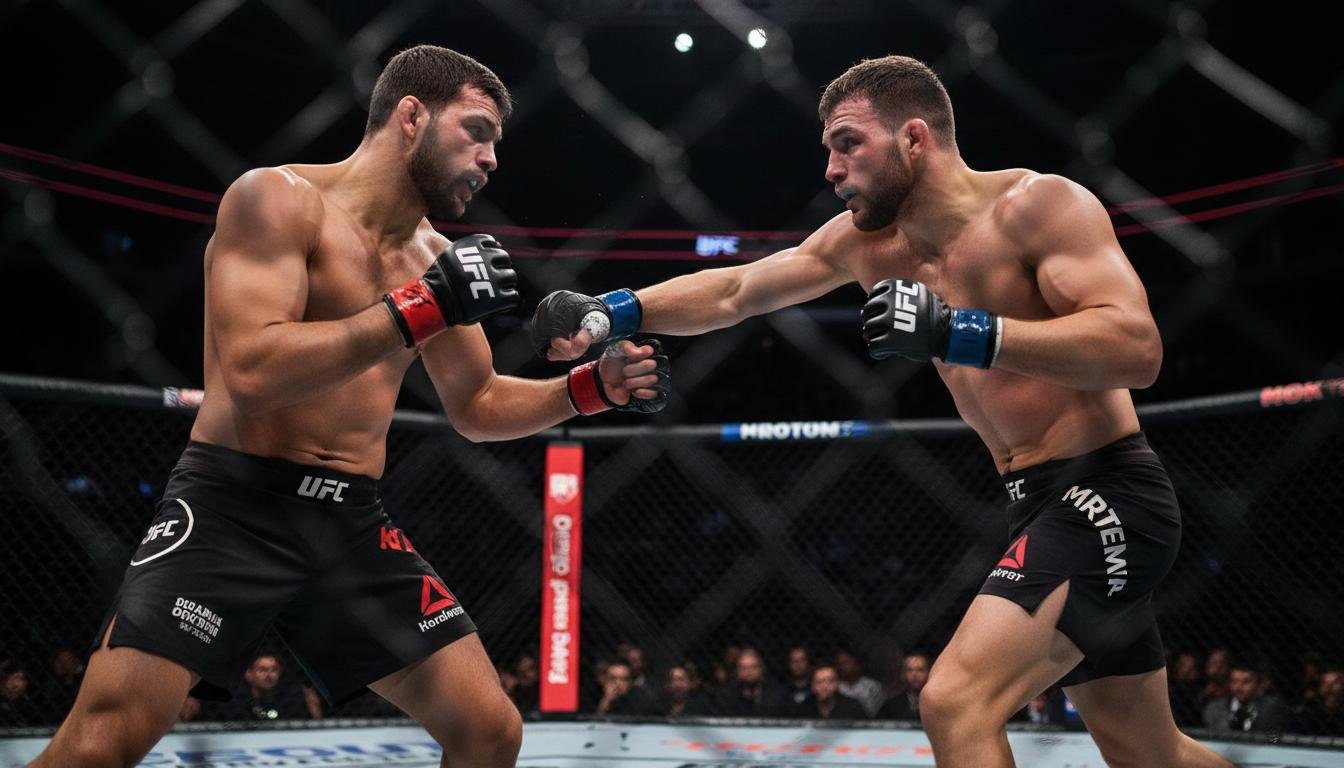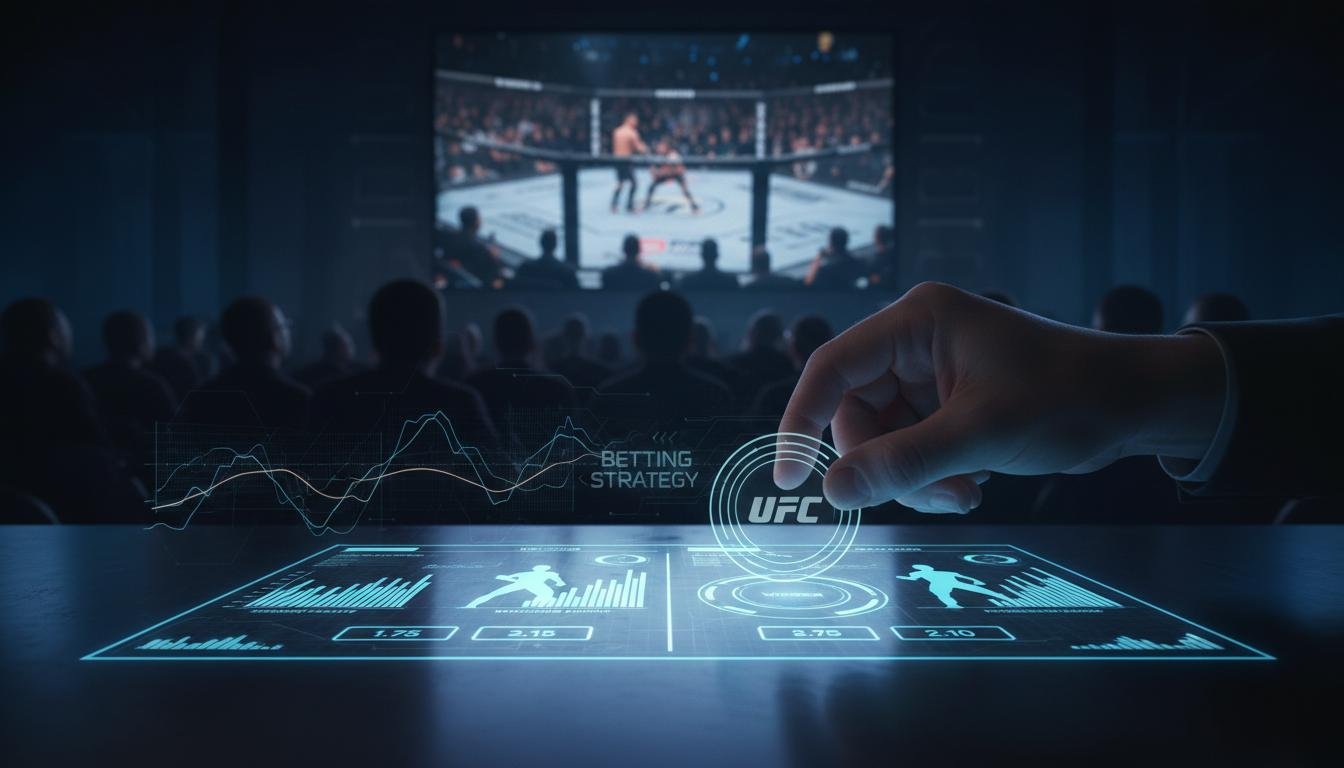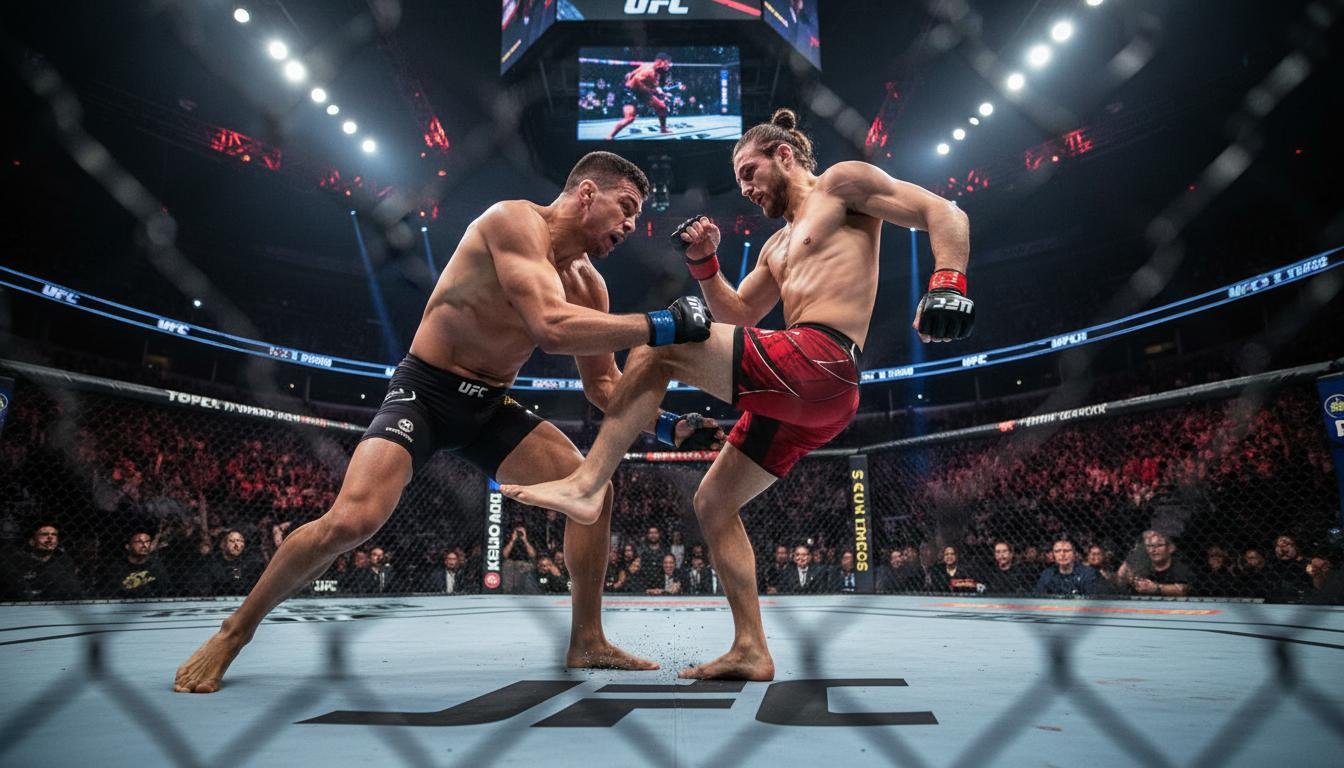
The meeting of a grappler-style fighter and a pure striker is one of mixed-martial-arts’ most reliable narratives — and one of the most bet-on matchups for a reason. Bets placed here hinge on styles more than personalities: will the takedowns come, or will the stand-up finish first? This article walks through how to read those styles, which markets offer the clearest value, how odds reflect (and sometimes misread) stylistic edges, and how to turn that reading into repeatable, disciplined wagers.
Defining the terms: fighter versus striker
When bettors and pundits say “fighter” in this matchup, they usually mean a competitor whose game centers on wrestling, judo, or sambo — takedowns, top control, and submissions. The “striker” is the opposite profile: someone who prefers distance, footwork, combinations, and finishes standing up with punches, kicks, elbows, or knees.
These are simplifications. Many elite athletes blend skills, but the distinction matters because it predicts where the fight will be decided: on the feet where volume and timing dominate, or on the mat where control and positional dominance do. Betting decisions should begin with style maps, not hype.
Why style trumps name in these matchups
Public betting habits often track popularity, Twitter trends, or highlight reels. But in fighter-vs-striker fights, the core determinants are measurable: takedown accuracy, takedown defense, striking differential, clinch success, and top-control minutes. Those numbers tell you how often the fight goes where a fighter is strongest.
I learned this after a string of small stakes losses early in my betting experience. I stopped chasing highlight-reel KOs and started weighting takedown defense and control time. The results improved because I was aligning wagers with what actually happens across three rounds, not what replay packages sell.
Quantitative markers that matter
Not all stats carry equal weight. Prioritize takedown accuracy and takedown defense first, then top control time, then significant strike differential. A striker facing someone with a 55–60% takedown success who averages five takedowns per 15 minutes will rarely be comfortable in a brawl.
Context matters: a fighter’s takedowns might come in late rounds while a striker’s best work occurs early. Split those temporal patterns into your assessment — a striker with excellent early output but poor cardio is a different bet than a consistent pressuring striker.
Interpreting the line: how bookmakers price these fights
Bookmakers set lines to balance books, not to predict outcomes perfectly. For fighter-versus-striker bouts, initial lines often favor the more popular name; the market then adjusts as bettors react to perceived stylistic mismatches. Sharp books will shorten lines on a wrestler with clear control tools if edges show in the data.
Lines also reflect public perception of “finishability.” A striker known for one-punch KOs will attract more money because people prefer decisive outcomes. That skews value away from fighters who grind for decisions, even when the statistics favor them.
How to spot inflated favorites
Look for inflated favorites when a striker’s reputation outpaces measurable defense metrics. If a striker is -400 on the moneyline but shows below-average takedown defense and a history of fading in late rounds, the public is likely overpaying. Conversely, underdogs that are fighters with elite wrestling skills often represent hidden value.
One way to test this is to compare implied probabilities to a model built from objective stats: if the book implies a 75% chance for a striker but your model — weighted heavily on takedown defense and top control — suggests 55%, that line may be exploitable.
Pre-fight checklist: what to research before you wager
Before any stake hits the line, run a concise checklist: takedown success/defense, average fight metrics by round, clinch and cage control, recent camp changes, injury reports, and historical performance against similar styles. Make this a short, repeatable process so you don’t overanalyze to paralysis.
- Confirm takedown attempts and success rate over the last three fights.
- Measure striking differential by distance — are strikes coming from range or close clinches?
- Check cardio signals: late-round decline, recovery time between rounds.
- Review short-notice replacements and travel or quarantine issues that affect preparation.
These items filter out storylines that sound persuasive but don’t shift the probabilities materially. You want information that changes your edge, not just noise.
Best markets for fighter vs. striker fights
Moneyline, props, and live markets each have moments where they’re superior. For a clear wrestler-versus-striker profile, two prop markets usually offer the best edges: method-of-victory and takedown-related props. Moneyline bets can be profitable when odds reflect public bias toward fireworks.
Round props and totals (total rounds) are also useful. If a fighter’s route to victory is grind-and-control, the ‘over’ on rounds often shortens in live markets as takedowns accumulate. Conversely, a striker with subpar takedown defense but explosive offense might offer pre-fight value on early-round KO props.
Live betting tactics
Live markets are where stylistic inference turns into opportunity. If a fighter scores early takedowns and controls the center, live moneyline odds will typically shorten; backing the fighter early can lock favorable prices. Alternatively, if the striker lands effective strikes early but appears to gas, later live lines can overvalue the striker’s chance to finish.
Watching the first 90 seconds is often decisive. If the striker establishes range and leg kicks repeatedly without being taken down, the pre-fight model that favored the fighter needs recalibration. Be ready to act quickly and to size bets conservatively in live conditions.
Real-world example: Khabib Nurmagomedov vs. Conor McGregor
The 2018 showdown provides a clear template. Khabib entered as the archetypal fighter: relentless takedowns, smothering top control, and ground-and-pound. McGregor was the striker: elite distance striking and counters. The result — Khabib dominating grappling exchanges and winning before the final horn — aligned with pre-fight stylistic analytics.
For bettors who prioritized takedown defense and control time over knockout highlights, the value was visible. Lines that moved toward Khabib reflected more than popularity; they reflected objectively measurable advantages that translated into a predictable outcome.
Money management and the psychology of style-based betting
Discipline separates casual wins from a sustainable approach. Size bets according to confidence: small stakes for uncertain stylistic mismatches, larger for clear, data-backed edges. Use fixed-percentage staking or a modest Kelly-type approach if you maintain a reliable model of probabilities.
Emotion is the bettor’s enemy. Avoid narrative-driven overbets post-hype. I’ve seen otherwise sensible bettors double down after media frenzy only to discover they were chasing action, not value. Keep a ledger of your style-based bets and review them quarterly to refine your model.
Common pitfalls and how to avoid them
Sample-size illusions are rampant in MMA. A fighter’s single successful takedown in a three-fight stretch doesn’t establish elite wrestling. Likewise, highlight-reel knockouts can mask ability to take — and accept — damage. Always normalize stats across opponents’ quality.
Another trap: ignoring transition skills. Some strikers are excellent at scrambling and avoiding top control; some fighters have takedowns but no follow-up control. Cross-check transitions (scramble success, submission attempts after takedown) and not just the headline numbers.
Tools, datasets, and expert reads
Primary data sources should include the official fight metrics and reputable journalist analysis. Ufcstats.com provides play-by-play metrics and control time. Tapology and Sherdog offer fight histories and matchup context. For analytical frameworks and bankroll strategy, reputable finance and analytics sites are useful background.
Combine quantitative feeds with expert analysis from journalists who cover training camps and fighter behavior. Those insights help you interpret anomalies in the data — an unexplained drop in takedown attempts could be a tactical change or a nagging injury.
Quick reference: odds conversion table
| American odds | Implied probability |
|---|---|
| -150 | 60.0% |
| -200 | 66.7% |
| +130 | 43.5% |
| +250 | 28.6% |
Use these conversions to translate book lines into probabilities you can compare to your model. If your calculated chance of a fighter winning is significantly higher than the book’s implied probability, you’ve identified a potential value bet.
Putting it all together: a simple decision flow
Begin with the data: takedown patterns and defense, top control, and striking efficiency by distance. Layer in camp news, recent injuries, and time-of-fight trends. Check the market: is the favorite inflated by popularity? Choose your market — moneyline, method, or live — and size the bet relative to confidence.
Repeat this flow for every fight; make it a habit rather than a case-by-case improvisation. Over time, patterns emerge and your intuition aligns more closely with repeatable edges reflected in the numbers.
Where to learn more and stay sharp
Follow fight-night data closely and keep a study routine. Watch full fights, not just highlight reels, and cross-reference what you see with the metrics. Regularly read fight analysts and statisticians who break down tactical trends across weight classes.
Staying humble and curious keeps you profitable. The sport evolves and fighters adapt; what worked last year may be less effective this year. Treat your betting strategy as an ongoing project, not a finished recipe.
Sources and expert reads:
- UFC Stats — official fight metrics and play-by-play data
- ESPN MMA — reporting and analysis (Marc Raimondi, Ariel Helwani, et al.)
- Sherdog — fight histories, expert columns
- Tapology — fight records and odds archive
- Investopedia — Kelly Criterion primer for bankroll sizing
The full analysis of the information was conducted by experts from sports-analytics.pro