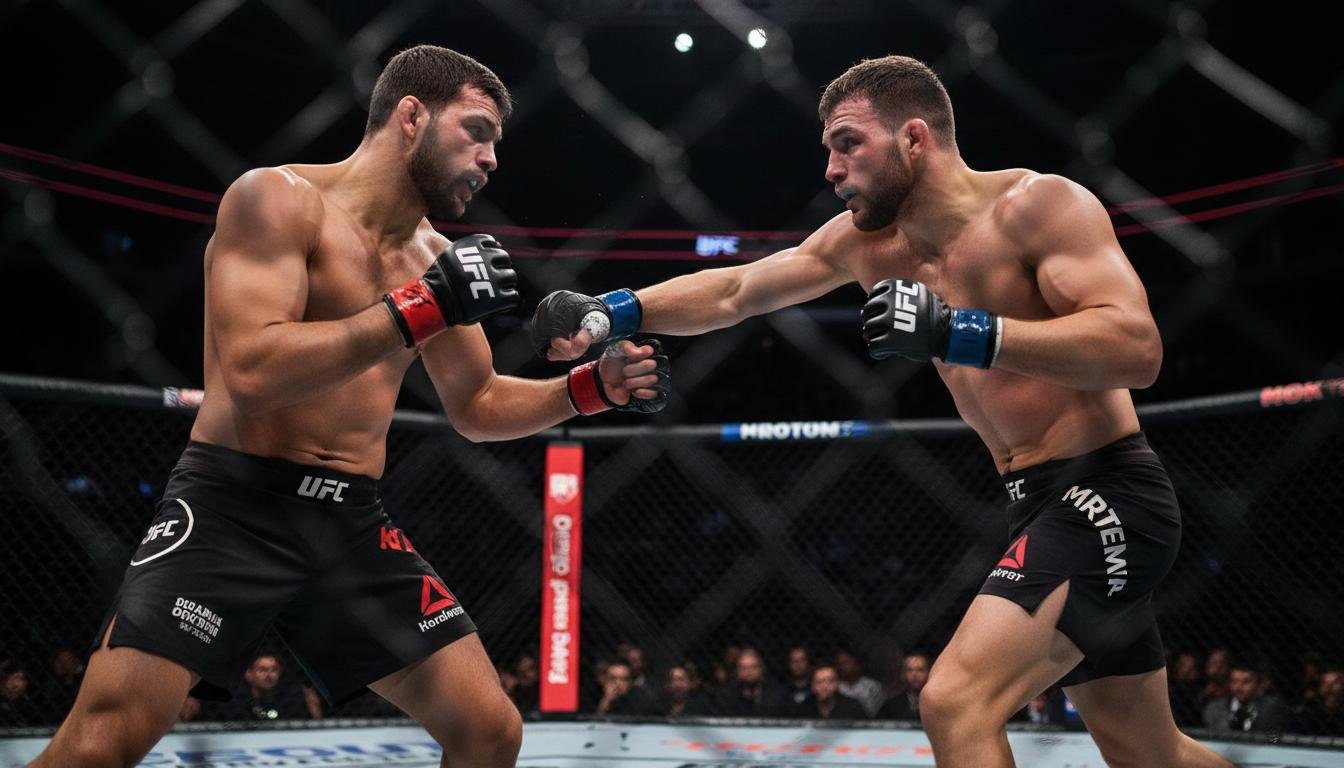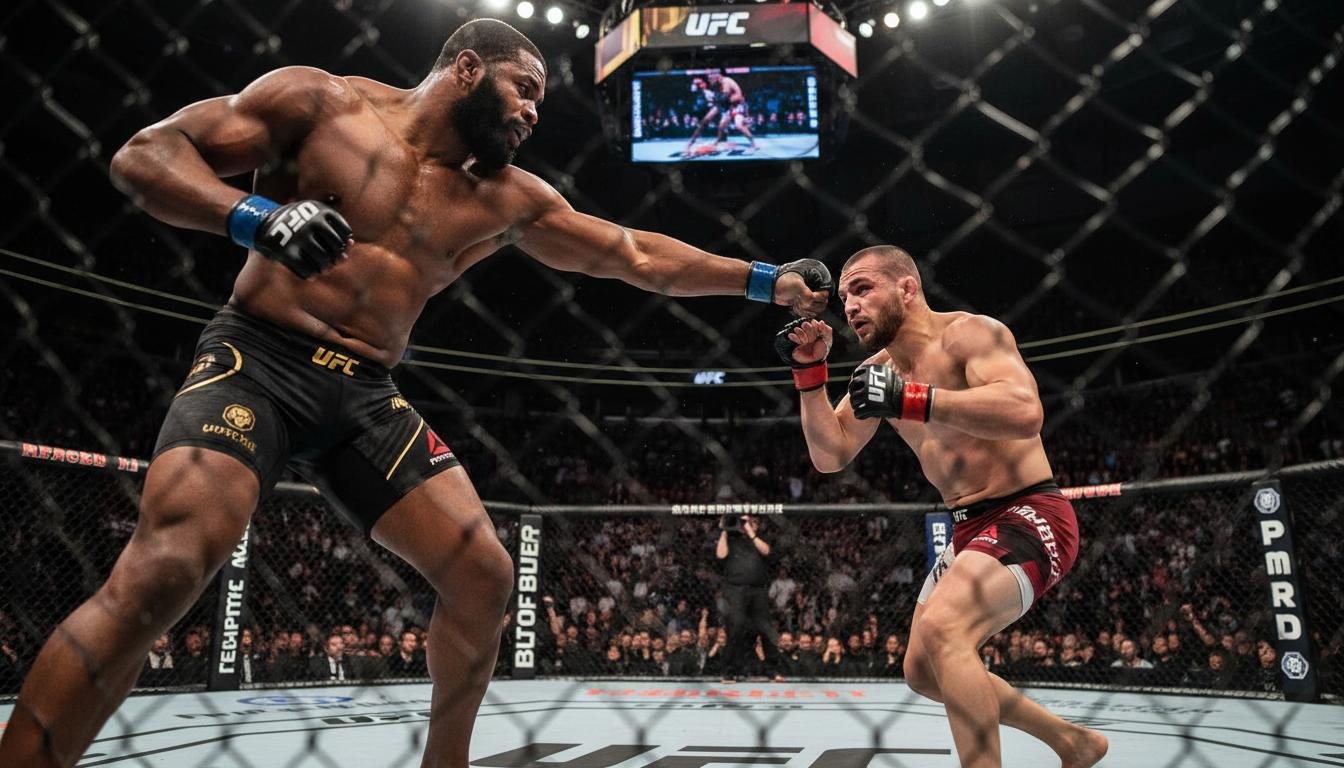
Size in mixed martial arts is one of those things that feels obvious until you try to turn it into money. Bigger fighters punch harder, carry more mass into the clinch, and often eat shots better. But size is only useful when it’s paired with skill, cardio, and context — and if you’re betting, those qualifiers determine whether that size is a market edge or a money trap.
Why size matters in MMA
At a glance, size gives a fighter advantages you can see on the canvas: reach for jabs, weight on top for grappling, and the raw kinetic energy that makes a punch fight-ending. Those physical facts influence early betting lines because oddsmakers and the betting public instinctively reward physical dominance.
Size also interacts with MMA’s unique rule set. A heavier fighter who can pin an opponent on the fence can stifle offense, and a long-reach striker can reset distance repeatedly to land clean shots. These tactical realities matter because they create predictable patterns that bettors can model.
However, size brings trade-offs. Fighters who move up a weight class may lack speed and cardio at that class’s pace, and a large athlete who cuts weight excessively may experience dramatic rehydration swings that impair performance. Effective betting accounts for those trade-offs rather than assuming size equals automatic success.
How to quantify size difference
When evaluating matchups, look beyond the official weight class and consider measurable attributes: reach, height, walking weight, and history of rehydration. Reach and height are straightforward; walking weight and how much a fighter cuts before weigh-ins require digging into interviews, camp reports, and patterns from previous fights.
A simple table helps focus what to check before placing a wager:
| Metric | Why it matters |
|---|---|
| Reach | Determines striking range and the ability to keep an opponent at bay. |
| Height | Influences leverage in clinches and striking angles. |
| Walking weight | Shows how much mass a fighter regains after weigh-ins; large swings can indicate size advantage on fight night. |
| Previous cut history | Offers clues on cardio and post-weigh-in recovery. |
Don’t treat any single metric as definitive. Instead, assemble a profile. A fighter with modest reach but a two-inch height advantage and 15 pounds regained after weigh-ins presents a different picture than a tall fighter who always drains down and rehydrates poorly.
Sources of reliable size data
Official fight week data like weigh-in numbers and UFC Stats profiles are primary sources. Fighter interviews and social media updates during fight week often reveal walking weight and rehydration habits. Historical fight footage and round-by-round stats tell you how a fighter’s size played out in similar matchups.
As an analyst, I catalog these details in a spreadsheet for each prospective bet. That lets me filter by reach differential, regained weight, and whether a fighter historically wins in forward pressure or on the outside — all factors that interact with size.
How size affects betting markets
Oddsmakers price in the public’s intuitive response to size: large fighters, especially newcomers moving up or hometown heavyweights, often attract favorite money. That movement creates value in the underdog when size is misleading or context-dependent.
For example, lines can overvalue a heavyweight’s stopping power while ignoring mobility deficits. Conversely, small fighters with elite technique and cardio can be undervalued because casual bettors see them as outmatched on the scales. Successful bettors identify when the market has misunderstood how size translates to matchup dynamics.
Size also shapes prop markets. Taller fighters with long reach are likelier to win by decision in certain stylistic pairings, while significantly heavier grapplers often create opportunities for takedown or control-time props. Recognizing these patterns lets you diversify bet types beyond the straight moneyline.
When size is overrated by the market
Size is frequently overvalued when the larger fighter lacks technique, movement, or conditioning. A big but stationary striker can be picked apart by a smaller fighter who manages distance, angles, and pace. The betting public often weighs raw mass more heavily than subtleties like footwork, and that’s where value appears.
Another market blind spot is the short notice opponent who steps in and carries less weight but is fresher and better prepared for the specific matchup. Lines move when information about camp length or medicals surfaces; you profit by tracking those non-obvious factors closely.
Styles that amplify or negate size
Styles matter more than a single dimension of size. A smaller fighter with superior wrestling can neutralize a larger opponent by taking the fight to the mat and using technique to control weight. Conversely, a big, long striker exposes a small fighter who cannot close distance or counter effectively.
Consider the classic grappler-versus-striker dynamic: a larger striker with reach advantage needs to keep the fight standing to exploit size. If the smaller fighter forces takedowns, the size advantage shrinks unless the heavier athlete can use strength and weight to dominate on the ground.
Cardio and pace change the calculus. A heavier fighter who gasps after two rounds hands the advantage to a smaller, conditioned opponent. In betting, you must evaluate whether size will be decisive for the full duration or only for limited windows early in the fight.
Practical betting strategy for size differences
Start with a checklist: verify reach and height differential, confirm recent walking weight or rehydration data, analyze style matchup, and assess cardio projections. If multiple boxes tip in the larger fighter’s favor — and the market has yet to price that — there may be value in backing the size advantage. If boxes contradict each other, consider alternative bets.
- Moneyline: Use when size aligns with style and conditioning advantages.
- Prop bets (round, method): Favor when size suggests a particular outcome, like a first-round TKO or prolonged top control.
- Live bets: Exploit real-time evidence that size is or isn’t manifesting, like early clinch dominance.
Bankroll discipline matters more here than in some matchups. Size can cause volatile fights where one clean shot ends things. Accept that variance and size-driven outcomes can swing your unit sizing; keep bets proportional and avoid chasing large favorites in mismatched stylistic contexts.
How to size up value in pre-match markets
Calculate the implied probability of the odds and compare it to your assessment of the fighter after evaluating size and style. If your model gives a larger fighter a 60 percent chance but the market implies 50 percent, that’s a potential edge. Include a margin for uncertainty — typically 5–7 percent — to avoid overconfidence.
Also monitor line movement. Heavy favorite movement tied to late weigh-in or medical news can indicate real adjustments, while movement driven by public parlays often reveals predictable biases to exploit.
Live betting tactics when size mismatch unfolds
Live betting is where size observations come alive. In the first round, watch whether the larger fighter imposes his frame: clinch control, ability to land power shots at range, or effective takedown defense. If the large fighter dominates those areas, in-play odds often lag reality and present value.
Conversely, if the smaller fighter is dictating pace, avoiding the clinch, and scoring from angles, live underdog money or round-prop hedges can be attractive. I’ve taken profitable live positions when a supposedly heavy hitter looked slow and flat in round one; the market was slow to correct and offered generous lines.
Common pitfalls and how to avoid them
One trap is overreacting to physical appearances. A stocky heavyweight doesn’t automatically equal a durable favorite; context like past fight mileage, age, and medical history is crucial. Another is misreading walking-weight claims — fighters and camps sometimes obfuscate actual weight-cut practices for tactical reasons.
To avoid these errors, rely on documented patterns rather than one-off statements. Cross-reference weigh-in photos, weigh-in interviews, and post-fight body language to form a consistent picture. Betting on size without corroborating evidence is speculation, not strategy.
Personal approach and examples
In my own betting, I’ve found success by specializing in a weight class and tracking the same dozen fighters across multiple camps. That depth makes it easier to spot when a late replacement or a pattern of failed weight cuts changes the expected impact of size. One of my early wins came when a late substitute heavyweight with exceptional wrestling neutralized a bigger striker; public money pushed the striker’s price up despite tactical mismatch, and I took the plunge on the grappler.
I also use a small model that weights reach, walking-weight swings, and recent fight pace. That model doesn’t guarantee wins, but it prevents me from over-backing favorites whose only real advantage is headline-grabbing size.
Advanced metrics and recording your edge
If you want to scale this approach, track metrics over time: difference in significant strikes landed, control time, takedown success relative to opponent size, and cardio indicators like late-round strike differential. Those statistics reveal whether size translated into measurable advantages in prior fights.
Keep a betting ledger with not just outcomes but the rationale and key size-related variables for each wager. Over months, patterns in your ledger will highlight which size differentials actually produce profitable edges and which are mostly noise.
Final practical tips
Be patient. Size edges appear more frequently on regional cards and in mismatches where public perception lags the data. Use smaller stakes to test hypotheses about particular types of size mismatches, and scale only when your model shows consistent returns.
Always combine size analysis with style, conditioning, and medical intelligence. Size is a powerful signal, but only one of many. Betting profitably means turning that signal into an indicator you can trust — not a gut reaction you hope will land.