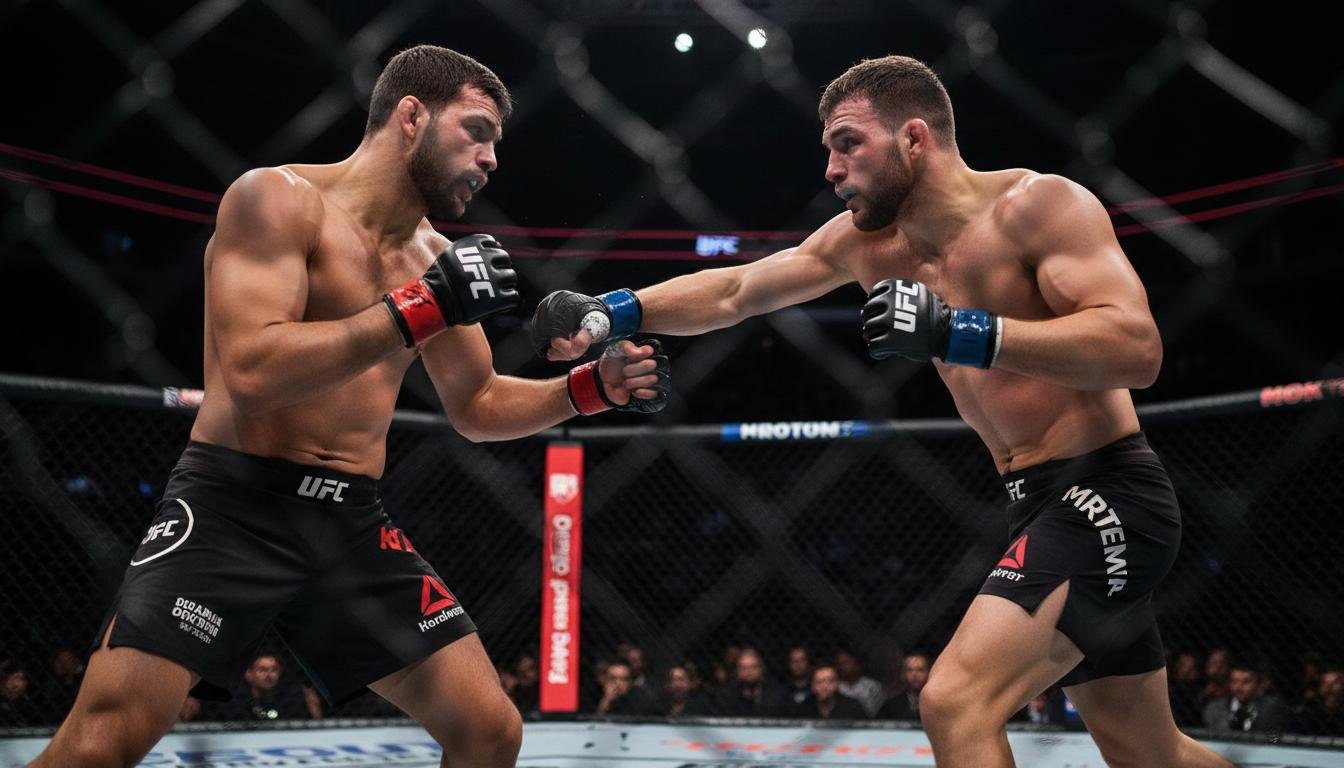
Significant strikes are the language of a fight — they measure who is landing with intent, accuracy, and dominance. In this piece I’ll show a practical, data-driven approach to betting on significant strikes that mixes statistics, fight-context reading, and live adjustments. Whether you want to place a prop on total significant strikes or a fighter’s individual number, the framework below will help you find edges.
Why significant strikes matter more than you think
Significant strikes are the metric sportsbooks and statisticians use because they capture meaningful offensive output: jabs, power punches, kicks, and elbows that actually affect the opponent. Unlike total strikes, which include brief taps and non-damaging contact, significant strikes correlate more closely with fight outcomes and visible dominance in rounds.
For bettors, significant strikes offer two advantages: they’re quantifiable and they behave like a continuous variable you can model. You can estimate a fighter’s likely output using historical rates, then compare that expectation to a posted prop line or in-play market to look for value.
But numbers alone mislead if you ignore context — opponent style, takedowns, clinch frequency, and fight tempo all reshape strike opportunities. Good betting combines the stat line with a clear read of how the match will be fought.
Key metrics to evaluate before placing a bet
Start with the core UFC Stats figures: significant strikes landed per minute (SLpM), significant strike accuracy, significant strikes absorbed per minute (SApM), and opponent control metrics like takedown rate and clinch time. These numbers form the skeleton of any predictive model for strike totals.
Other useful signals include leg kick frequency, distance vs. clinch striking splits, and round-by-round decay patterns — fighters who sprint early then gas out produce predictable curves. Use weighted averages that emphasize recent fights and quality of opponent to avoid being misled by outliers.
| Metric | What it tells you | Suggested use |
|---|---|---|
| SLpM | Primary offensive tempo | Base expectation for strikes landed |
| Significant strike accuracy | Conversion rate of attempts to meaningful strikes | Adjust SLpM upward/downward |
| SApM | How many strikes a fighter usually concedes | Combine with opponent SLpM to estimate totals |
| Takedown rate / TD defense | How often striking opportunities are removed | Reduce expected significant strikes if takedowns likely |
Use the table as a checklist when you size up a prop. Each metric is a lever you can pull to move your expectation of the total number of significant strikes in a fight or round.
Building a pre-fight model step by step
Begin with a baseline expectation: add fighters’ SLpM values and multiply by estimated fight minutes. For example, two fighters averaging 4.0 and 3.0 SLpM over 15 minutes gives a naive baseline of (4.0+3.0)*15 = 105 significant strikes. That raw number needs adjustment.
Apply modifiers for accuracy, takedown probability, and fight pace. If one athlete has elite takedown success and the matchup suggests substantial ground time, reduce the baseline proportionally. Conversely, when both fighters are distance strikers with low takedown rates, increase the baseline slightly to account for sustained exchanges.
Weight recent fights more heavily. A fighter who moved up a division or changed camps may show dramatic shifts in output; older data should receive lower weight. I usually use a 60/30/10 weighting across the last three fights unless there’s an obvious reason to tweak the spread.
Sample adjustment checklist
When I evaluate a prop I run through this quick checklist: recent form, opponent quality, stylistic matchup, cardio signals, and ring rust. Each item translates to a percentage change in expected strikes — for example, a late-notice replacement often reduces expectations by 8–12% due to less conditioning and camp prep.
Turnover and volatility vary by division. Lighter divisions often produce faster-paced fights with higher strike totals; heavyweights tend to be slower and more explosive but deliver fewer cumulative strikes. Adjust your model by division variance before comparing it to the market line.
Pre-fight scouting: reading styles and seeing the script
Stat sheets are valuable, but nothing replaces a fast pass of film. Watch highlights and two-to-three full rounds where possible; look for how often a fighter initiates exchanges, their range control, and how they handle pressure. Film reveals patterns — a fighter who snaps off three quick jabs and backs away will produce a different strike profile than one who walks forward and trades.
Consider the projected fight script. An aggressive boxer vs. a counter-puncher often creates an asymmetry: the aggressor will land more strikes but also absorb more. If the sportsbook sets a fighter-specific prop, align your expectation with who is likely to be initiator vs. reactor.
Factor in late scratches, weight cut stories, and short notice. I once took a sizable unders line on total significant strikes when both fighters missed weight heavily and looked drained in the cage walk — the fight unfolded exactly as my model predicted because the effort differential was visible before the first bell.
Live betting: how to adjust your expectations in-play
Live markets shift quickly; the edge comes from reacting faster than the public and applying the same metrics in real time. At the end of each round, update remaining expected minutes and adjust for observed pace. If Round 1 was a frenetic exchange, you must reduce the remaining expectation because fighters often slow down.
Watch for turnout patterns: if a fighter is repeatedly clinching or engaging in takedowns, significant strike opportunities are shrinking. Conversely, if one fighter knocks the other down or displays visible fatigue, you can expect more unanswered strikes as the referee and corner step in to protect a hurt opponent.
Use live prop lines to exploit slow market adjustments. Bookmakers may delay changing a fighter’s total significant strikes after a sudden tactical change; if your read and model differ from the market, that’s the moment to act.
Bankroll management and line shopping
Never let a single prop exceed a small fraction of your bankroll; I recommend 1–2% on individual prop plays and up to 5% for multi-prop correlated tickets. Significant strikes bets have high variance — even perfect models can be felled by one accidental groin kick or an early stoppage.
Line shopping is crucial. Different books interpret statistics differently, and a modest difference in a fighter’s individual prop can represent meaningful value. Use at least three reputable sportsbooks and maintain lines in a spreadsheet so you can spot systematic biases over time.
- Do: favor bets where your expectation differs from the market by at least 5–8%.
- Do: track your results by prop type and adjust sizing accordingly.
- Don’t: chase lines after a loss or place correlated bets without reducing total exposure.
Records reveal systematic edges. I keep a simple P/L ledger by prop type. Over seasons you’ll see which markets you’re naturally good at — mine tend to be fighter-specific strike props and round totals rather than full-fight totals.
Common pitfalls and how to avoid them
One frequent error is overfitting: using too many variables on a shallow data set. Significant strikes are noisy; adding five minor modifiers for each fight can create a model that looks perfect on paper but fails forward. Simplicity often beats complexity in small-sample sports models.
Another trap is ignoring officiating and referee tendencies. Some refs break clinches more often and allow stand-up exchanges, which inflates striking numbers. Look up historical referee tendencies and add a small modifier when a bedrock ref is assigned to the bout.
Finally, beware confirmation bias. If you expect a fighter to win, you may unintentionally downplay variables that point to fewer strikes (e.g., likely takedowns or injury reports). Keep a disciplined checklist and score each variable numerically to reduce subjective drift.
When to trust the numbers and when to trust your eyes
Trust the numbers when you have stable metrics and a clean matchup: similar fight history, no last-minute changes, and consistent camp reports. My models perform best in mid-card fights where both athletes have multiple recent bouts on record and typical game plans.
Trust your eyes when sample sizes are small or when you observe clear deviations during the fight week: a fighter who suddenly looks sluggish in sparring reports or has visible weight-cut issues. Those human signals may not be reflected yet in the numbers and can flip an expected value calculation quickly.
Blend both approaches and maintain humility. Place smaller wagers when uncertainty is high and scale up when model confidence and visual confirmations align.
Real-life example: a live prop I took and why it worked
At a recent card I bet the under on Fighter A’s significant strikes landed prop. Pre-fight the line was generous because Fighter A historically lands many strikes, but my model accounted for the opponent’s elite takedown chain and above-average clinch control. Film study showed Fighter A struggled in close quarters and his recent accuracy had dropped after a rib injury.
The fight unfolded as expected: multiple takedowns and stifled striking windows. The live market was slow to react to the takedown-heavy script and I increased my stake in Round 2, securing a good payout. The lesson: when the stylistic story is clear and the model supports it, live lines can offer strong value.
Sources
- UFC Stats (official fight metrics and event data)
- ESPN MMA (reporting and statistical analyses)
- Sherdog (historical records and fight reports)
- MMA Junkie (news, injury, and camp reports)
- FiveThirtyEight (sports modeling and betting analyses)
- MMA OddsBreaker (odds tracking and market commentary)
- BettingPros (betting strategy resources and consensus lines)
Full analysis of the information above was conducted by experts from sports-analytics.pro