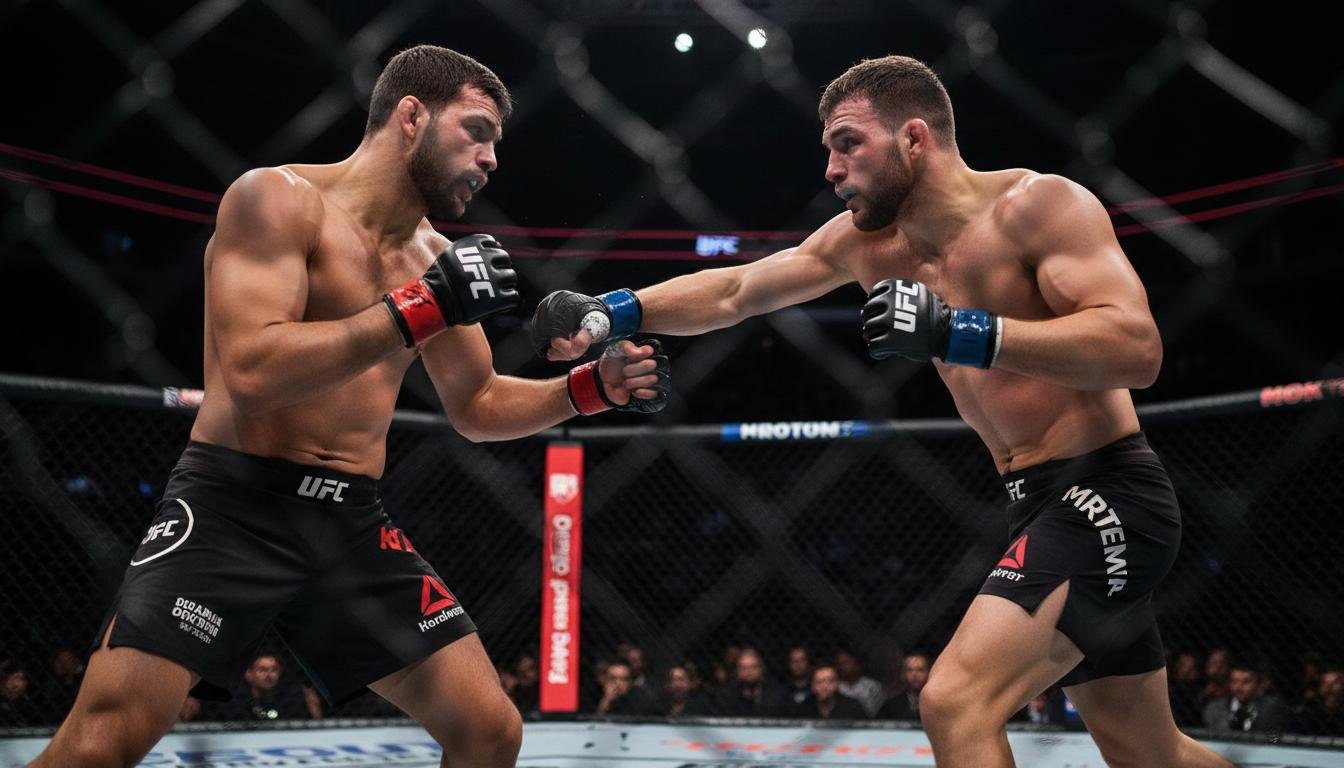
Placing a wager on whether a fight ends early or goes to the judges is one of the most satisfying and analyzable plays in MMA. The market strips a complex bout into a simple binary: will the action stop before the final bell, or will fighters trade rounds until the scorecards decide? This article walks through the data, intuition, and bankroll rules you need to make smarter wagers on early finishes versus decisions.
What bookmakers mean by early or decision
When sportsbooks post “early” (often labeled KO/TKO/Sub) and “decision” markets, they’re offering a bet on the method of resolution rather than on who wins. Early covers all finish outcomes before the final bell, including KOs, TKOs, submissions, and doctor stoppages; decision covers unanimous, split, or majority decisions.
The odds reflect the market’s aggregated expectation of finish probability, adjusted for juice and liabilities. Those implied probabilities are your starting point for value hunting, not the final word on a matchup’s reality.
Key data points to evaluate before you bet
Not all statistics are created equal. Prioritize finish rate (both fighters’ career finish percentages), recent form (last 12–24 months), and context-specific metrics like finishes per 15 minutes and opponent-adjusted finish rate. These metrics show not just whether a fighter finishes fights, but how frequently and under what conditions.
Other vital indicators include significant strike differential, takedown frequency and defense, clinch control, and cardio markers such as late-round output. A fighter who consistently outstrikes opponents early but fades in rounds four and five is a different bet than someone who pressures pace steadily.
Styles that favor an early finish
Pure strikers and submission specialists tend to push matches toward early endings. A high knockdown rate, heavy strike accuracy, and a history of opening-round finishes are red flags that a contest could conclude quickly. Conversely, fighters with heavy ground-and-pound and top control bring steady finishing pressure that can lead to stoppages as one athlete tires.
Power and finishing intent matter. Some competitors land more strikes but lack finishing power; others land fewer strikes with higher damage per shot. Look for the combination of power, accuracy, and topography of damage — where the damage accumulates on the opponent’s body and defense.
Styles that favor the judges’ cards
Elite wrestlers or defensive strikers who prioritize control and point-scoring often drag fights into decisions. Fighters who have low rates of being finished and who consistently push pace without exposing themselves to one-shot knockouts skew toward going the distance. Durability — a fighter’s tendency not to be finished — is as important as offensive output in these matchups.
Late-round conditioning and game-plan adaptability matter too. If both fighters have disciplined camps and proven cardio, oddsmakers will often shorten decision lines because those matches are harder to end early without a mistake or drastic stylistic mismatch.
How to read the numbers: implied probability and value
Convert decimal or American odds into implied probabilities and compare them with your model’s estimate. If the market indicates a 40% chance of an early end and your analysis shows 50%, you’ve identified a potential edge. Treat the sportsbook number as a starting point, not a verdict.
Factor in vig (the bookmaker’s cut) and the depth of the market. A lopsided public opinion can create value on the contrarian side, but beware traps where the public is correct or where sharp money has already moved the line.
Practical model: sample variables and weighting
Build a checklist or a spreadsheet with these columns: fighter finish rate, opponent-adjusted finish rate, significant strike differential, TDs per 15, TD defense, cardio proxy (late-round strike rate), recent knockouts/submissions, and age. Weight each variable based on what you’ve found empirically matters most in your sample set.
Start simple: give heavy weight to finish histories and recent form. Use smaller weights for less predictive metrics. Over time, refine weights by tracking outcomes and calculating how often your model’s early/decision predictions were correct.
Example calculation and Kelly staking
Below is a compact table showing how you might convert odds into probability, estimate your edge, and calculate a Kelly-based stake for one bet. This is illustrative; assume conservative fractional Kelly stakes in practice to manage variance.
| Market odds (American) | Implied probability | Your estimate | Edge | Kelly suggested fraction |
|---|---|---|---|---|
| -120 (early) | 54.5% | 65% | 10.5% | 0.10 (10% of bankroll) |
| +140 (decision) | 41.7% | 35% | -6.7% | 0 |
Use a fractional Kelly (25–50% of full Kelly) to protect against model overfitting and variance. Many bettors find fixed-percentage bankroll plans of 1–3% simpler and more robust for long-term survival.
Market timing and line-shopping
Odds change. Early in the week, lines reflect initial power ratings and public bias. As fight weekend approaches, camps, injuries, and insider news can shift probabilities dramatically. Line shopping across sportsbooks frequently yields meaningful edges on close calls.
Use liquidity and market depth as signals. Sharp movement toward early or decision often reveals professional money; a sudden shift to early late in the week might indicate a camp report suggesting one fighter is heavy-handed or the other is gasping after weight cut.
Live betting: exploiting momentum and damage
Live markets are where early/decision strategies shine if you can read in-fight dynamics quickly. A knockdown in round one can inflate early-outcome prices and sink decision odds; that’s when contrarian bettors who see recovery potential can find value on a decision. Conversely, if one fighter is bleeding badly or appears stunned, early odds often shorten immediately.
Have a pre-planned set of triggers for live plays: significant strike differentials, visible fatigue, or a fighter who frequently recovers after early trouble. Don’t chase emotion; make live wagers based on data and a scripted checklist.
Weight class and rounds: how they change the math
Lower weight classes tend to see fewer knockouts but more submissions, while heavier classes often have higher KO/TKO rates. Lightweight and featherweight fights can end early through submissions and combinations, whereas heavyweight matches sometimes finish quickly through a single punch or go in fits and starts toward a decision.
Fight length matters too. Three-round fights are more susceptible to volatility; the chance of an early finish is higher simply because there are fewer rounds for judges to score. Five-round main events present a bigger sample for conditioning and often move markets toward decisions unless finishing specialists are involved.
Common mistakes bettors make
Emotional betting—backing a favorite merely because you like them—kills value. Over-relying on a single statistic without context, such as raw strike volume without accounting for power or location, leads to poor predictions. Also, ignoring opponent quality masks whether a fighter’s finishes were against game opposition or padded records.
Another common error is not adjusting for short-notice fights and failed camps. Short-notice replacements change matchup dynamics drastically; a replacement with high cardio but lower finishing ability might convert an expected early finish into a decision-heavy contest.
Examples from my experience
I once favored an early finish for a highly aggressive submission striker whose opponent had poor submission defense but excellent takedown defense. The market pushed decision odds because the opponent was a durable wrestler. I bet the early market; the fight ended in Round 2 via rear-naked choke after the striker baited the takedown and finished on the mat. That win came from combining a nuanced read on styles with confidence in the fighter’s finishing record.
On another card I faded early lines on two durable strikers who had recent finishes against light opposition. The matchups turned into five-round wars where pressure and cardio took over, and the decision markets I backed paid off. The takeaway: context and opponent quality are often decisive.
Tracking results and iterating your model
Record every bet and its rationale, including pre-fight metrics and any last-minute news. Analyze performance monthly to see which variables correlate with correct early/decision outcomes. Adjust weights and add new features only when backed by consistent improvement.
Overfitting to small samples is a silent killer. If a variable spikes in importance based on two or three matches, give it time before letting it dramatically shift your staking choices. Robust bettors test across hundreds of fights when possible.
Risk management and emotional discipline
Even a well-calibrated early/decision model will have long losing streaks. Use conservative staking, set clear stop-loss rules, and avoid chasing losses with oversized wagers. Discipline and patience outperform occasional big wins combined with reckless bankroll swings.
Keep a separate ledger for learning. Accept that part of your edge-building involves losing money while you identify which signals truly matter. Controlled experimentation beats random trial-and-error in the long run.
Final thoughts and next steps
Betting on an early finish versus a decision is a blend of statistical analysis, matchup reading, and market timing. Start with clear metrics, test a simple model, and refine it with disciplined record-keeping. Remember that the sportsbook’s implied probabilities and public money create opportunities for disciplined bettors who can spot when markets misprice finish likelihoods.
As you gain experience, add nuance: weight-class adjustments, opponent quality filters, and live-betting scripts. Combine conservative staking with patient model iteration, and the early/decision market can become a consistent part of your MMA betting toolkit.
Sources and experts consulted
- UFC Stats — ufcstats.com
- ESPN MMA — Brett Okamoto — https://www.espn.com/mma/
- MMA Fighting — Mike Bohn — https://www.mmafighting.com/
- Tapology — https://www.tapology.com/
- Sherdog — https://www.sherdog.com/
- Investopedia — Kelly criterion overview — https://www.investopedia.com/
- FiveThirtyEight sports analytics — https://fivethirtyeight.com/
- Ariel Helwani, MMA journalist reporting and interviews — https://www.arielhelwani.com/