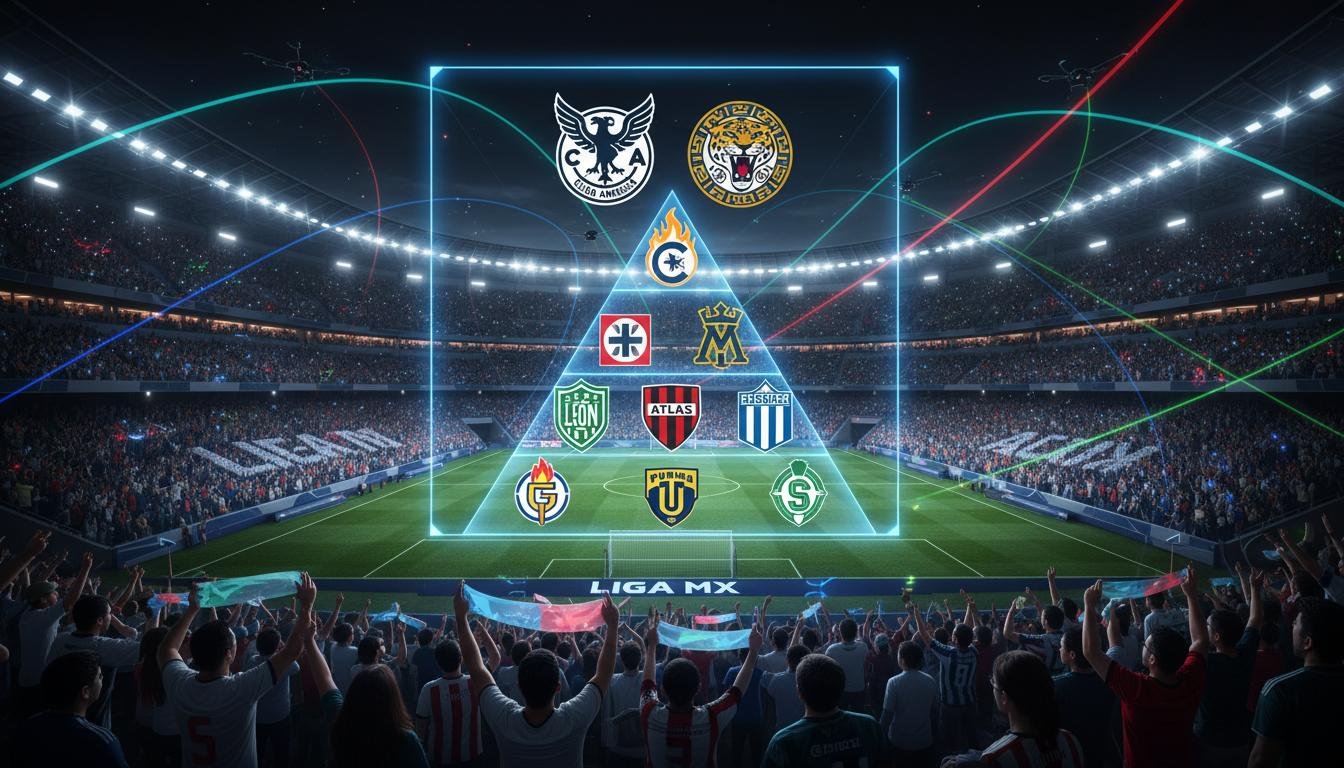
Picking the ten clubs most likely to dominate Mexican soccer in 2026 means balancing history, pocketbook, youth development and coaching. This list blends what teams have achieved recently with measurable indicators — squad value, academy productivity, continental performance, and organizational stability — to project who will be leading the domestic game two years out.
How I approached this ranking
I built the list the way a scout builds a report: look at recent competitive results, squad depth, transfer-market metrics, and the pipeline of young talent. I also weighed softer but crucial factors like coaching continuity, boardroom stability, and fixture-day atmosphere that impacts player performance.
Over several seasons of watching Liga MX, attending matches, and parsing statistical feeds, patterns emerge. Clubs that marry strong youth production to measured transfer activity and a clear tactical identity tend to sustain success — they’re the backbone of this projection.
This isn’t a static leaderboard of past trophies. Think of it as a forward-looking snapshot: who has the resources, structure, and momentum to be near the top of Mexican soccer in 2026.
Quick snapshot of the top 10
Here’s a compact table with the ten clubs and the primary reasons they earned a spot. The table focuses on what matters for 2026 readiness rather than a purely historical résumé.
| Rank | Club | Why they’re here |
|---|---|---|
| 1 | CF Monterrey (Rayados) | Deep squad, strong recruitment, continental experience |
| 2 | Tigres UANL | Financial muscle, elite coach continuity, proven winners |
| 3 | Club América | Institutional strength, big-budget signings, academy output |
| 4 | CF Pachuca | Outstanding youth system, smart scouting, sustainable model |
| 5 | Club León | Stable sporting project, coherent style, recruitment balance |
| 6 | Atlas FC | Recent titles, academy cohort, compact tactical identity |
| 7 | Chivas Guadalajara | Brand power, domestic-only policy that drives youth focus |
| 8 | Pumas UNAM | Youth pipeline, attractive football, big-market draw |
| 9 | Cruz Azul | Return to competitiveness, improved recruitment |
| 10 | Deportivo Toluca | Financial prudence, squad balance, consistent league presence |
1. CF Monterrey (Rayados)
Monterrey sits at the top because they combine relentless investment with a very professional recruitment engine. The club’s scouting reaches South America and Europe, and their ability to sign proven reinforcements keeps squad quality high across positions.
On match days, Monterrey fields a tactical core that can shift between controlled possession and high-press transitions. That tactical flexibility makes them dangerous in both short cup runs and the marathon of league play, which is crucial for 2026 ambitions.
Beyond the pitch, Monterrey’s infrastructure — from training facilities to analytics staff — is among the best in the country. That institutional advantage helps them manage injuries and rotate effectively across congested schedules, including CONCACAF opportunities.
2. Tigres UANL
Tigres’ model is simple and effective: keep a core of proven internationals, add high-impact signings, and maintain coaching continuity. That continuity provides tactical clarity and stabilizes player development, an advantage in tight title races.
The club’s capacity to attract and hold top talent is a competitive edge. For 2026, Tigres’ depth in attack and midfield should keep them competitive on multiple fronts, and their habit of peaking in critical moments makes them perennial contenders.
Having watched matches at Estadio Universitario, the atmosphere and home-field advantage are tangible factors. Home results matter in Liga MX; Tigres knows how to make visiting teams uncomfortable during derby weeks and playoff fixtures.
3. Club América
América’s weight comes from a mix of resources, brand, and relentless ambition. They can outspend many rivals when needed and have one of the biggest scouting networks in Mexico and Central America, which feeds both first-team and academy pipelines.
Expect América to remain near the top because they continually refresh their roster with international talent and keep investing in analytics and performance staff. That institutional hunger for trophies is baked into the club’s DNA.
Off the field, their commercial revenues and global recognition provide room for strategic signings in 2026 that can tilt tight competitions in their favor.
4. CF Pachuca
Pachuca is the textbook example of a club that builds from within. Their academy produces technically gifted players at a regular clip, and the club’s recruitment philosophy prioritizes long-term fits over headline signings.
That continuity — a reliable pipeline feeding the first team — makes Pachuca well positioned for sustained competitiveness in 2026. They often trade immediate glamour for structural health, a strategy that pays dividends in consistency.
When Pachuca buys players it tends to be targeted and value-driven, meaning they rarely disrupt squad chemistry. In an environment where teamwork matters, that cautious strategy is a real asset.
5. Club León
León has made smart choices on and off the field: coaching hires who emphasize collective pressing and signings that suit that system. That coherence translates to better-than-expected results, especially against top-tier opponents.
Financially, León remains prudent while still investing where it counts: sports science, data analysis, and targeted international scouting. The result is a club that can punch above its payroll weight.
León’s stadium presence and local support also help in crucial home fixtures. In 2026, their consistency will hinge on maintaining a core tactical identity while refreshing aging positions selectively.
6. Atlas FC
Atlas made waves by winning back-to-back relevance through a golden generation produced locally and a tactical identity that stresses ball progression. That nucleus of academy graduates gives them continuity and cultural fit.
Keeping that generation together is the challenge; successful academies can be looted by wealthier teams. Atlas’ ability to retain and augment their core will determine whether they remain a top-ten force in 2026.
When Atlas plays well, they do so with a pronounced collective harmony — crisp passing patterns and a willingness to develop young players in high-pressure moments. That philosophy often pays off in league play and cups.
7. Chivas Guadalajara
Chivas’ unique policy — field only Mexican players — is both a restriction and a long-term advantage. It forces investment in domestic youth development and often produces players who understand the club’s identity and expectations.
That policy also amplifies fan connection and sponsorship appeal, two non-football revenues that provide stability. If Chivas continues to modernize their scouting and coaching without abandoning the homegrown creed, they’ll remain a heavyweight in 2026.
Expect Chivas to be competitive if their youth graduates step into impactful roles and the board maintains a patient transfer strategy focused on strategic reinforcements.
8. Pumas UNAM
Pumas’ reputation as a cradle for young talent is well-deserved. Their academy routinely supplies the first team with players who fit the club’s style: technical, brave, and attack-minded, which can be irresistible in a league that rewards creativity.
Pumas’ challenge is converting youth potential into consistent results across a season. When the math works — youth plus a few experienced signings — Pumas can surprise and climb quickly in the table.
Institutional ties to the university system also provide a steady flow of coaching and sports science talent, helping Pumas build foundations that matter over multiple seasons.
9. Cruz Azul
Cruz Azul’s story over recent years has been one of rebuilding and re-assertion. After periods of inconsistency, their front office has shown a willingness to invest in recruitment and coaching stability to return the club to its traditional status.
If Cruz Azul maintains that disciplined approach — focusing on player fit and tactical cohesion — they should be a top-10 team in 2026. Their supporters and stadium create a demanding environment that can lift the squad at key moments.
What to watch is the effectiveness of their transfers: getting the right mix of experience and youthful hunger will be decisive for sustained competitiveness.
10. Deportivo Toluca
Toluca earns the tenth spot for reasons that don’t always show in the headlines: prudent financial management, experienced coaching hires, and a track record of steady league performances. Consistency matters in a league where form swings quickly.
Toluca’s scouting focuses on specialists — players who solve tactical problems rather than glamour signings. That approach often yields balanced squads capable of grinding out results and qualifying for postseason play.
To push further up the table by 2026, Toluca will need to convert promising academy prospects into regular starters and keep turnover low in the coaching staff.
Key trends shaping Mexican club football through 2026
Several macro trends will shape which clubs rise and which fall. First, youth development: clubs with reliable academies will be better insulated from market shocks and transfer fees. That favors Pachuca, Atlas, Pumas and Chivas in particular.
Second, analytics and sports science are no longer optional. Teams that invest in data-driven recruitment and injury prevention can extend player careers and squeeze extra points from tight schedules. Expect Monterrey and América to remain ahead here due to resources.
Third, cross-border competition and player migration — particularly to MLS and Europe — will test squad depth. Clubs that plan for outbound transfers by building replacement pipelines will survive and thrive.
What to watch in the transfer market
Between now and 2026, the clubs with the smartest market activity won’t necessarily spend the most. Look for deals that address tactical fit and age profile rather than headline signings. That’s where Pachuca and León often get value.
Also watch for the re-emergence of veteran international players using Liga MX as a competitive landing spot. Those additions can lift playoff experience and mentoring for younger players, especially at clubs chasing short-term trophies.
Loan strategies will be pivotal: clubs that loan young players to high-quality environments and then reintegrate them when ready will gain a competitive edge in depth and continuity.
The coaching factor
Coaching turnover in Liga MX remains high, but clubs that back a project for two or three seasons usually improve their outcomes. Continuity under a clear tactical vision matters more than frequent headline coaches.
A club like Tigres benefits from long-term coaching because it allows development of a system. Conversely, constant managerial churn can derail clubs with otherwise good resources.
Expect 2026 leaders to be those that balance tactical innovation with patient development, rather than chasing instant fixes with short-term hires.
Why financial health matters more than ever
Financial prudence underpins every projection. Clubs that live beyond their means risk sudden collapse or forced sales of top players. The teams most likely to prosper in 2026 are those who match ambition with sustainable bookkeeping.
Investments in facilities, youth, and data are slow-burning but compound over seasons. Clubs that cut corners on these essentials may win a trophy in the short term, but long-term competitiveness requires structure and restraint.
That’s why Toluca’s steady model and Pachuca’s academy-first approach feature prominently in this list: they reflect balance between ambition and sustainability.
How continental competitions influence domestic strength
Performance in CONCACAF competitions both tests squads and raises club profiles. Regular continental outings give teams exposure to varied styles and force roster depth, which strengthens domestic campaigns.
Monterrey and Tigres, with frequent continental commitments, tend to be battle-hardened. That experience filters into league play, where playoff intensity can mirror continental knockout tension.
Clubs that fail to manage the load — or lack depth — can suffer domestic slumps. The top-10 clubs projected here generally show an ability to juggle multiple competitions without catastrophic drop-offs.
Player development stories to watch
Pachuca and Atlas have pipelines that could produce national-team caliber players by 2026. Watching those graduates break into first teams and adjust to Liga MX’s physical and tactical demands will be revealing.
Chivas and Pumas, due to their emphasis on domestic talent, will remain primary sources of Mexican prospects. If either club converts youth potential into consistent minutes, they can accelerate their positional climbs within this ranking.
Also watch for younger players who go abroad and return more polished. Those reinforcements often bring tactical maturity and a competitive edge, especially if they rejoin clubs with clear developmental pathways.
Fan culture and infrastructure
Matchday atmospheres — and the investments that maintain stadiums and training centers — are part of a club’s competitiveness. Clubs that sell out and create intimidating environments often get the small advantages that translate into points.
Investments in facilities also improve player recovery and attract higher-caliber support staff. Monterrey, Tigres, and América maintain facilities that match their ambitions and help sustain their presence in the top echelon.
Lower-profile clubs that prioritize improving infrastructure — even with smaller budgets — can close gaps if they pair those upgrades with smart coaching and recruitment.
Personal field notes and examples
Having sat in the stands for derby matches, I’ve seen how tactics bend under pressure and how leadership matters. A calm captain can steady a team during the playoff surge; those human elements often decide knockout ties more than raw numbers.
I’ve also watched a Pachuca youth graduate ease into the first team and change a game with a single intelligent pass — an example of how development pathways create sustainable wins. Those moments multiply across seasons.
Finally, the atmospheres at Monterrey and Tigres feel different: they are engineered for results. That professional environment shows up in late-game management and in sensitive match-day decisions that matter for title races.
Potential dark horses for 2026
Beyond the ten listed, clubs like Santos Laguna and Club Tijuana have the capability to surprise if they find a crop of young performers or hire a coach who unlocks a tactical system. Liga MX’s structure allows for relatively rapid rises.
Smaller clubs that prioritize cohesion over star signings can also threaten the established order, particularly if they benefit from sold players returning with higher levels of experience and confidence.
Keep an eye on loan markets and under-the-radar signings; a single smart acquisition can shift a mid-table team into playoff contention in one season.
Final thoughts
Predicting the top teams for 2026 is an exercise in balancing present strength with organizational foresight. The ten clubs listed combine either financial firepower, elite developmental systems, or both — the conditions that produce sustained success.
Expect the ranking to evolve as transfers, coaching decisions, and youth breakthroughs play out. Clubs that can combine stability with selective, intelligent reinforcements will be the ones hoisting trophies and leading Liga MX tables in 2026.
The picture I’ve painted balances observation, on-the-ground experience, and measurable metrics. For fans and analysts alike, the fun part is watching those threads unravel across two seasons and seeing which clubs seize the moment.
- https://www.ligamx.net
- https://www.concacaf.com
- https://www.transfermarkt.com
- https://www.espn.com/soccer
- https://www.optasports.co
Analysis provided and full analysis of the information was conducted by experts from sports-analytics.pro