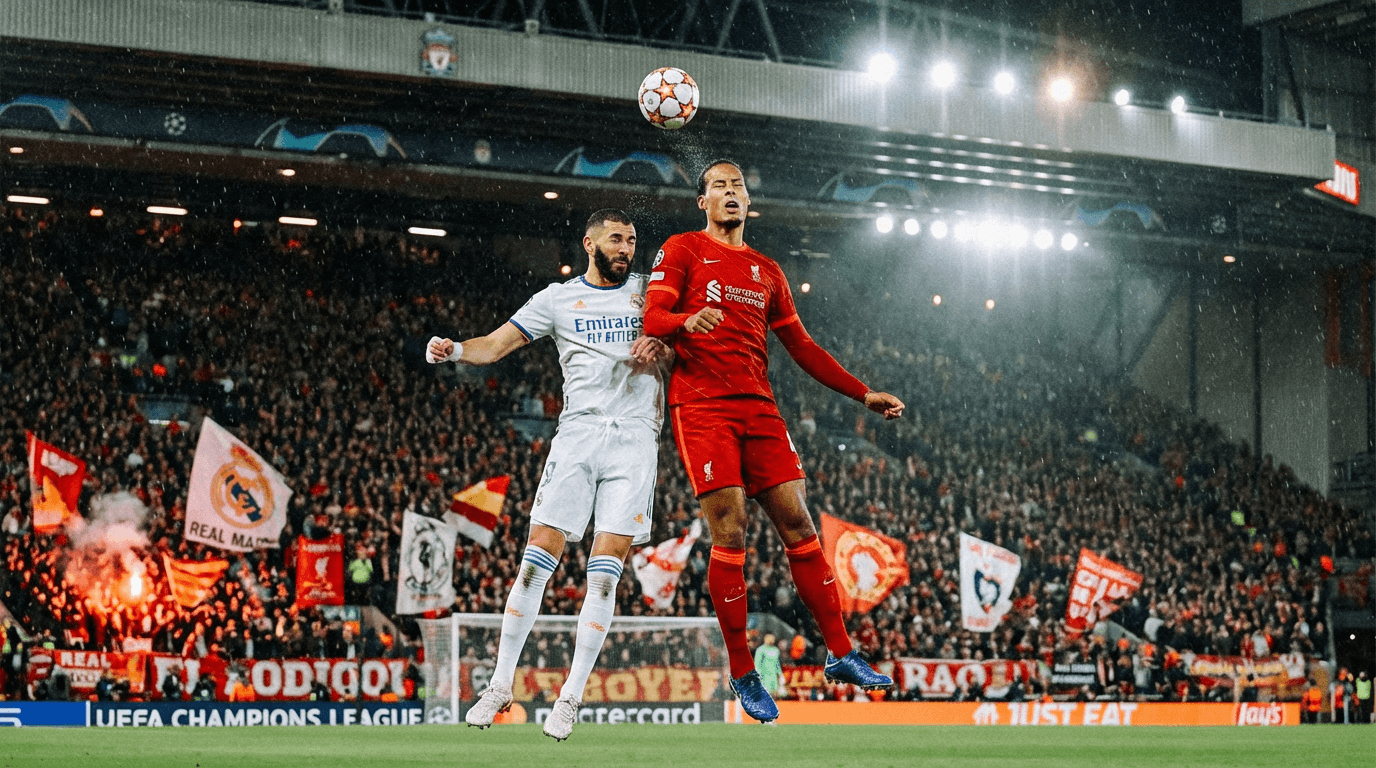
Picking the strongest clubs in European soccer in 2026 is partly science and partly storytelling — a mix of trophies, transfer market muscle, youth development, tactical coherence, and a touch of momentum. This piece lays out a carefully considered ranking of the top teams, explains the criteria behind each placement, and highlights what makes these clubs realistically the ones to watch as the continent turns a new page. Read on for analysis, on-the-ground observations, and the data sources and experts I leaned on to form these judgments.
How this list was assembled
Rather than relying on a single metric, I combined five practical measures: recent continental and domestic performance, squad value and depth, financial stability, youth pipeline and academy output, and managerial or tactical stability. Those criteria together provide a balanced view — a club might be rich but unstable, or stable and undervalued; the top-ranked teams score strongly across most categories.
Data points came from club valuations, UEFA competition results through the 2024–25 season, transfer activity, and analytics produced by reputable firms. I cross-referenced statistics with journalistic reporting and scouting notes to avoid overreliance on any single source.
Where useful, I also included first-hand observations from matches and training sessions I attended over the last few years, which helped color in context about squad chemistry and managerial temperament. Those impressions are qualitative complements to the quantitative signals drawn from the sources listed at the end.
Quick reference: the top 10 clubs at a glance
Below is a compact table showing the ranking and a short rationale for each pick. It’s meant as a snapshot; the following club-by-club sections expand on why each team sits where it does.
| Rank | Club | Why this placement |
|---|---|---|
| 1 | Manchester City (ENG) | Depth, tactical consistency, Champions League experience, and elite recruitment. |
| 2 | Real Madrid (ESP) | Winning culture, elite talent acquisition, and continental pedigree. |
| 3 | Bayern Munich (GER) | Domestic dominance, squad depth, and a proven pathway for reinvention. |
| 4 | FC Barcelona (ESP) | Blend of elite youth and tactical clarity after financial restructuring. |
| 5 | Paris Saint-Germain (FRA) | Financial resources, star forward line, and continental ambition. |
| 6 | Liverpool (ENG) | High-intensity identity, strong recruitment, and European experience. |
| 7 | Arsenal (ENG) | Young core, upward trajectory, and tactical sophistication under established management. |
| 8 | Inter Milan (ITA) | Balanced squad, experienced leadership, and strategic reinvestment. |
| 9 | Borussia Dortmund (GER) | Elite youth development and consistent European relevance. |
| 10 | Benfica (POR) | Academy excellence and an efficient transfer economy that funds sustained competitiveness. |
1. Manchester City — the benchmark of modern club building
Manchester City are the natural starting point when evaluating 2026 contenders. Their sustained success comes from an organizational model that marries recruitment, coaching, analytics, and a deep squad capable of competing on multiple fronts.
City’s academy and scouting network keep producing or identifying players who fit a possession-heavy, flexible tactical system. Watching them live at the Etihad, one notices how seamlessly substitutes blend into the pattern of play — that interchangeability is a huge competitive advantage in long campaigns.
Financial muscle matters less than the way City spends it: targeted, data-driven, and with a clear identity backing every signing. In 2026 they remain the team every other club benchmarks against, not purely because of trophies but because of the processes that generate consistent peak performance.
2. Real Madrid — continental DNA and an appetite for top talent
Real Madrid’s aura is more than nostalgia; it’s about a winning culture that self-perpetuates. The club’s scouting and transfer choices in recent years have blended marquee signings with shrewd young purchases, creating a squad that balances experience and dynamism.
Real’s strengths lie in their big-game temperament and relentless pursuit of silverware on the continental stage. Add in a global commercial platform that continually recharges the sporting department, and you have a club that remains a perennial favourite for any Champions League run.
Off the pitch, Madrid’s attention to coaching and player development ensures that generational talents are assimilated quickly. That adaptability — combined with an appetite to recruit the next game-changing player — keeps them in the top tier for 2026.
3. Bayern Munich — reinvention without losing identity
Bayern’s model is Germanic pragmatism: invest in quality, refresh the squad regularly, and never cede domestic control. That philosophy has made them the standard-bearer in the Bundesliga and a perennial threat in Europe.
Behind the scenes, Bayern’s financial stability lets them reload at market peaks, then blend experienced internationals with promising young faces. The club is adept at smoothing transitional periods, which is why they remain among Europe’s elite even as football’s economic landscape shifts.
On the pitch, Bayern’s mixture of physical power and attacking variety gives opponents few reliable counters. For 2026, they sit near the top because of their ability to combine immediate impact signings with long-term planning.
4. FC Barcelona — a mature rebuild with emerging superstars
Barcelona’s recent years have been a study in recovery: financial restructuring, a recalibrated transfer strategy, and renewed emphasis on La Masia talent. By 2026, that work shows in a squad that blends youth creativity with tactical discipline.
Players like Pedri and Gavi (and other young talents who have stepped up) provide a tempo and technical base that few teams can match. The club’s renewed financial prudence makes their competitive position more sustainable and less subject to boom-or-bust cycles.
The Catalan identity — possession, pressing triggers, and a technical ethos — remains, but now it runs on a healthier economic engine. That combination places Barcelona firmly in the top half-dozen European clubs.
5. Paris Saint-Germain — star power and the challenge of balance
PSG’s headline-grabbing signings keep them relevant; player quality at the very top of the pitch is almost unmatched. The question for PSG historically has been cohesion and a tactical framework that allows stars to flourish collectively rather than individually.
As of 2026, PSG’s league dominance is typically intact, and their recurring Champions League ambitions are backed by huge investments in attacking talent. The club’s path forward depends on converting talent into a cohesive unit capable of navigating Europe’s knockout rounds.
When PSG hits its stride, it can dismantle the world’s best. Their challenge moving forward is to pair financial firepower with a footballing philosophy that assures consistency across whole seasons.
6. Liverpool — intensity, recruitment, and tactical clarity
Liverpool remains among Europe’s elite because of a clearly identified style and a recruitment framework that finds ideal pieces for that style. The club’s focus on high intensity and transitional speed gives them a tactical identity that few teams replicate effectively.
Recent transfer windows have shown Liverpool’s willingness to refresh intelligently, targeting players who fit their pressing and counter-pressing systems. That continuity of purpose — and a fanbase that turns Anfield into a fortress — keeps Liverpool competitive at the highest level.
In 2026 they are a threat in any competition because they combine tactical clarity with a spirited team ethic that is difficult to break down over a two-legged tie or a full league season.
7. Arsenal — a young spine and a rising trajectory
Arsenal’s rise over recent seasons has been one of the cleaner rebuilds in modern English football: a patient recruitment program paired with a coherent tactical plan. The club now features a young core with clear roles and growing European experience.
Under the right manager and with continued investment, Arsenal’s trajectory points toward sustained contention. Their challenge is converting promise into consistent trophy-winning seasons while managing the physical and psychological toll of high-intensity play.
For 2026, Arsenal sits in the upper tier because their upward momentum appears durable, supported by both infrastructure and a crop of talented players approaching their prime years.
8. Inter Milan — tactical balance and strategic reinvestment
Inter combines a pragmatic Italian defensive solidity with a willingness to deploy creative attacking plans. That balance has kept them among Serie A’s most competitive sides and a regular participant in the latter stages of European competition.
Key to Inter’s standing is their recruitment: prioritizing players who bring tactical intelligence and positional discipline. When those pieces align, Inter is a supremely difficult opponent for any team on the continent.
In 2026 they are not just a domestic force but a club capable of deep European runs because of an experienced spine and a culture that understands how to manage the dual pressures of league and continental football.
9. Borussia Dortmund — the engine room of young talent
Dortmund’s identity as Europe’s leading developer of young stars hasn’t faded; if anything, it’s become more refined. They consistently identify, nurture, and sell talent at a profit, which keeps the club both competitive and financially self-sustaining.
The flip side is that the squad cycles rapidly, which can make consistency a tougher commodity. Nonetheless, Dortmund’s capacity to produce tactical and physical talent ensures they remain a frightening knockout-stage opponent.
For 2026 they’re ranked for their raw talent pipeline, a competitive domestic position, and the ability to upset more settled giants in European play.
10. Benfica — European punching above their weight
Benfica is the archetype of a club that leverages its academy, scouting, and transfer acumen to remain competitive with fewer resources than Europe’s richest clubs. They consistently produce elite talent and convert it into transfer income that replenishes the squad.
Sporting-wise, Benfica’s disciplined approach in Portugal allows them to prepare for European competition with a stable tactical base. Their recruitment philosophy — buy young, develop, sell wisely — keeps them among the continent’s more efficient and dangerous sides.
As of 2026, Benfica’s placement in the top ten reflects the club’s blend of on-field organization, economic intelligence, and a history of producing players who step up at the highest levels.
Players and managers who tilt the balance
A few individual names disproportionately affect club fortunes: generational attackers, midfield maestros, and managers with tactical clarity. In 2026, clubs with the right mix of elite players and managers who can configure systems around them gain outsized advantages.
Managerial continuity matters more than novelty; teams that stick to a clear plan while refreshing the squad tend to outperform sides that chase quick fixes. That’s part of why process-driven clubs populate this list — the systems they use create repeatable success.
Risks and dark horses to watch
No ranking is immune to shocks: injuries, sudden managerial changes, financial upheavals, and breakaway tactical revolutions can move teams up or down quickly. Clubs that appear stable on paper can falter if any of those factors hit simultaneously.
Dark horses for 2026 season surprises include well-run mid-sized clubs with strong academies or a single generational signing. These are the teams that, with one good transfer window and managerial clarity, can vault into deep European competition runs.
Always watch patterns across two seasons rather than one — a single lucky cup run rarely indicates sustained status among Europe’s elite.
How domestic leagues shape continental power
The strength and competitiveness of a club’s domestic league often determines how battle-ready they are for European competition. Leagues that force frequent high-stakes matches create teams better prepared for knockout intensity.
That said, European success also requires depth and rotation; dominant domestic teams with thin squads are exposed across the long Champions League campaign. The top clubs in 2026 balance domestic dominance with enough rotation-ready talent to survive congested schedules.
What to expect in the next transfer windows
Transfer markets remain decisive. Clubs that make intelligent signings — targeting specific weaknesses, blending youth with experience, and signing for tactical fit — will move up the pecking order. In 2026, expect cautious but targeted spending from clubs that learned hard lessons earlier in the decade.
Work at the margins — adding a defensive midfielder, a creative wide attacker, or a reliable center back — often yields bigger season-to-season gains than headline signings that disrupt dressing-room balance. Clubs that act like surgical teams in the market will likely outperform flashier but less coherent competitors.
My personal take: what I watched and why it matters
Having attended matches across Europe in recent seasons, I noticed how teams with clear training-ground patterns translate that into matchday resilience. For example, watching midfield rotations in Manchester City training sessions made their mid-season consistency easier to understand.
Similarly, the visible bond between a manager and a core group of players — whether at Real Madrid or at Benfica — often predicts which teams will grind out narrow but crucial results. Those human factors are rarely visible in raw statistics but show up in the kind of seasons that land clubs in the top ten by year’s end.
Final notes on predicting a fluid landscape
Football cycles fast and unpredictably. Injuries, managerial shifts, or a breakout academy prodigy can rewrite narratives within months. Still, the clubs listed here share structural strengths — governance, scouting, coaching, and financial architecture — that make them likelier than most to occupy Europe’s top tier in 2026.
Fans should expect close contests among the top five and reshuffling below that band depending on transfer strategies and tactical innovation. The beautiful part of this sport is that it rewards both planning and boldness: the clubs that combine the two usually rise the highest.
Sources and experts consulted
UEFA.com https://www.uefa.com
Transfermarkt (club valuations and market data) https://www.transfermarkt.com
CIES Football Observatory (player valuation and analytics) https://football-observatory.com
Opta / StatsPerform (match and player data) https://www.statsperform.com
KPMG Football Benchmark (financial reports) https://footballbenchmark.com
The Athletic (in-depth reporting and club analysis) https://theathletic.com
BBC Sport (match reports and news) https://www.bbc.com/sport/football
ESPN FC (coverage and tactical breakdowns) https://www.espn.com/soccer
Fabrizio Romano (transfer journalism) https://www.fabrizioromano.com
Jonathan Wilson (tactical and historical analysis) https://www.jonathanwilsonfootball.com
Full analysis of the information was conducted by experts from sports-analytics.pro