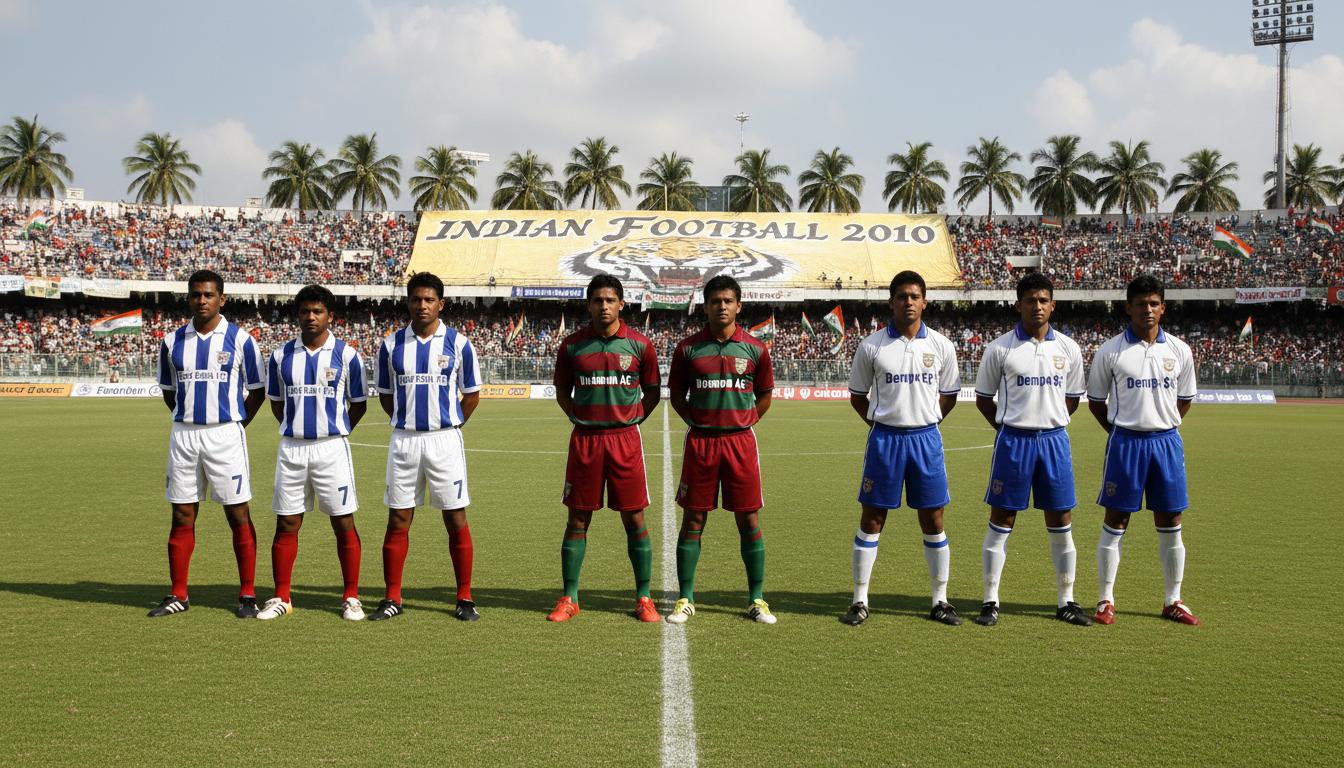
Projecting club strength two years out is as much art as arithmetic, but patterns repeat: investment, youth production, continental pedigree and coaching stability tend to separate the contenders from the also-rans. This piece lays out a reasoned, evidence-based projection of the top 10 soccer teams in South America in 2026, weighing recent form, transfer strategy, infrastructure and the kind of momentum that survives coaching changes and player sales.
How this list was put together
I combined observable indicators—recent domestic and continental performances, squad depth, transfer balance, youth development pipelines and the quality of coaching appointments—to rank clubs. Where possible I leaned on publicly available data sources and expert commentary to avoid wishful thinking; the goal is not to crown a champion for 2026 but to identify the clubs most likely to be operating at the highest level that year.
Short-term luck and single transfer windows can alter trajectories, so consider this a measured forecast rather than a definitive list. Each club entry below explains the reasoning: what gives the team staying power, where risks lie, and what to watch between now and 2026.
Summary table: top 10 at a glance
The table below gives a compact snapshot: club, country and the main reason they make the top 10 projection.
| Rank | Club | Country | Why they’re here |
|---|---|---|---|
| 1 | Palmeiras | Brazil | Consistent continental performance, deep squad, strong recruitment |
| 2 | Flamengo | Brazil | Financial muscle, elite attacking core, huge fanbase |
| 3 | River Plate | Argentina | Youth pipeline, tactical identity, continental pedigree |
| 4 | Boca Juniors | Argentina | Institutional weight, competitive squad building, clutch experience |
| 5 | Fluminense | Brazil | Organized recruitment, academy graduates, growing consistency |
| 6 | Atlético Mineiro | Brazil | Targeted investment and attacking talent |
| 7 | Internacional | Brazil | Balanced squad and continental ambition |
| 8 | Corinthians | Brazil | Massive support base, improving structure and youth integration |
| 9 | Racing Club | Argentina | Smart recruitment and managerial stability |
| 10 | Atlético Nacional | Colombia | Consistent producer of talent and continental experience |
1. Palmeiras (Brazil)
Palmeiras sit at or near the top of every serious South American projection because they have married a clear sporting model to solid finances. Their recruitment pipeline—mixing domestic prospects with targeted signings from abroad—gives them depth in both attack and defense, something continental competition brutally exposes.
The club’s infrastructure and investment in analytics and scouting help reduce the kind of downturns caused by big sales. If Palmeiras maintain managerial continuity and continue to reinvest transfer income wisely, they look like the most durable bet to be elite in 2026.
2. Flamengo (Brazil)
Flamengo’s strength isn’t only the squad on paper; it’s a cultural machine. Their revenue base, global brand and ability to attract household-name attackers create recurring competitive advantages—home attendances, marketing income and the muscle to keep competitive wages.
Risks are real: a heavy reliance on star forwards and the temptation to sell when big European bids arrive. Still, with smart succession planning and a talented youth crop steadily breaking through, Flamengo should remain one of South America’s powerhouses by 2026.
3. River Plate (Argentina)
River Plate’s identity—pressure, tactical coherence and homegrown talent—is not something easily dismantled by a transfer window or two. The club operates an excellent academy and has shown it can replace stars without collapsing, thanks to clear playing philosophy and proven managerial appointments.
Economic constraints in Argentina complicate long-term planning, but River’s continental pedigree and scouting reach keep them competitive. Expect River to remain a Libertadores threat in 2026, especially if they keep exporting intelligently rather than panic-selling their best young prospects.
4. Boca Juniors (Argentina)
Boca continues to be one of the continent’s heavyweights because of institutional muscle and a relentless appetite for trophies. Their recruitment often blends experienced winners with local talent who understand the club’s unique pressure-cooker environment.
Boca’s challenge is financial parity: the Argentinian market pushes clubs into regular sales. How Boca manages that churn—by reinvesting and fostering internal promotion—will determine whether they’re still in the top echelon by 2026. The infrastructure and fan intensity give them a good shot.
5. Fluminense (Brazil)
Fluminense’s rise over recent seasons shows what disciplined recruitment and a productive academy can do. They’ve been consistent in locking down domestic stability and converting that into stronger continental performances, even when selling key players.
The club’s management appears committed to sustainable growth rather than boom-or-bust spending, which is the right play for long-term top-tier status. If their youth conveyor belt keeps producing first-team-ready talent, 2026 should find Fluminense among the elite.
6. Atlético Mineiro (Brazil)
Atlético Mineiro have combined ambitious investment with high-impact signings, aiming to cement themselves as a perennial title contender rather than a one-season wonder. Recent years of spending have given them a core that can sustain good league and continental runs.
The main vulnerability is continuity: clubs that grow fast often face managerial turnover or financial re-evaluation. If Atlético Mineiro continues to stabilize its sporting project and prioritizes squad balance, it’s easy to see them among the continent’s top ten in 2026.
7. Internacional (Brazil)
Internacional’s case rests on a balanced roster and clear continental intent. They blend experienced professionals with promising youngsters, and their scouting network taps into Brazil’s deep talent pool effectively.
Stability in the coaching department and a focus on smart sales—keeping the team competitive while funding reinforcements—will dictate whether Internacional climbs further by 2026. The foundation is strong; execution will determine the ceiling.
8. Corinthians (Brazil)
Corinthians’ immense fanbase and revenue opportunities—matchday, sponsorship and merchandising—give them a structural advantage over many regional rivals. The recent emphasis on rebuilding their academy and modernizing recruitment is starting to show in results and squad depth.
They must avoid short-term fixes and instead lean into long-term squad construction. If Corinthians keep aligning the board, coaching staff and academy pathway, their 2026 project should see them firmly in the upper tier of South American clubs.
9. Racing Club (Argentina)
Racing Club is an example of how careful management and strong coaching can elevate a club within a congested domestic market. They’ve made smart signings and benefited from managerial continuity, turning potential into consistent results.
Racing is smaller in financial terms than the Brazilian giants, but they compensate with a focused sporting model and a track record of punching above their weight. Continued savvy player development and the ability to retain core performers will be their ticket into 2026’s top ranks.
10. Atlético Nacional (Colombia)
Atlético Nacional rounds out the list as the representative of Colombia’s sustained ability to produce elite talent and compete in continental competitions. Their academy is among South America’s most productive, and that supply line keeps the senior team refreshed.
Colombian clubs face structural financial challenges compared with Brazil and Argentina, yet Nacional’s institutional commitment to scouting and exports makes them a perennial dark horse. In 2026 they’re a plausible top-10 side if stability and smart sales continue.
Teams that just missed the cut and why
Several historic clubs—Peñarol, Nacional (Uruguay), Universidad Católica (Chile) and some Argentine mid-majors—remain dangerous and could easily displace teams above if they enjoy strong transfer windows or managerial coups. The differentiator is often budget depth and the ability to keep a competitive spine through turbulent markets.
In particular, Uruguayan clubs’ constant production of young talent means a single generation can lift a team into contention. The challenge is converting one-off surges into long-term positioning among the continent’s elite.
Key variables to watch between now and 2026
Player sales to Europe will shape trajectories more than domestic results. Clubs that convert sales into shrewd reinvestments (or that build first-team-ready replacements in-house) will rise; those that sell and don’t plan will fall away. Watching the transfer flows out of South America is therefore crucial to understanding who will be competitive in 2026.
Managerial stability and the adoption of modern scouting and analytics are other decisive variables. Teams that embrace coherent playing philosophies, align their youth systems and use data to reduce recruitment misses tend to maintain higher floors and ceilings, season after season.
What I observed in the stands
As a writer who has attended Libertadores nights, the difference between a top-10 club and an aspirant is visible in small things: how a club handles fixture congestion, the depth of the bench, and the way young players are integrated. I’ve seen clubs that look brilliant one night collapse the next because the bench lacks experience or the medical team is overstretched.
That real-world perspective matters. Stadium atmospheres and fan pressure create unique home advantages in South America, and the clubs best able to channel that into sustainable sporting operations tend to be the ones that pop up year after year in continental knockout stages.
Practical takeaways for followers and bettors
If you follow South American football, watch transfer windows closely and monitor coaching appointments; those are often leading indicators of a club’s trajectory. Betting or forecasting based purely on last season’s table ignores structural realities like income, academy pipelines and recruitment quality.
For bettors, diversification helps: backing clubs with stable long-term models rather than one-season stars reduces volatility. For casual followers, focus on the stories—youth graduates, smart directors, bold tactical hires—that signal sustainable growth rather than headline-grabbing one-off signings.
Final thoughts
Predicting the top 10 soccer teams in South America in 2026 is a forecast built on patterns, not prophecy. Clubs that combine sensible finances, a clear footballing identity, productive academies and competent recruitment are best placed to be where this list places them.
Expect surprises—football always provides them—but the names above represent realistic, evidence-based expectations for the continental hierarchy in 2026. Watch the transfer markets and managerial moves; those will write the opening chapters of the next two years.
Sources and experts consulted
- CONMEBOL – https://www.conmebol.com
- ESPN FC (South America coverage) – https://www.espn.com/soccer/
- BBC Sport / Tim Vickery – https://www.bbc.com/sport/football
- Transfermarkt – https://www.transfermarkt.com
- IFFHS (International Federation of Football History & Statistics) – https://www.iffhs.com
- StatsPerform / Opta – https://www.statsperform.com
- The Guardian / Jonathan Wilson (tactical analysis) – https://www.theguardian.com/football
- Goal.com (South America bureau) – https://www.goal.com
- sports-analytics.pro – expert analytical briefs and long-form reports
The full analysis of the information was conducted by experts from sports-analytics.pro