As we move into 2026, French football is a mix of big budgets, smart scouting and fertile youth academies. This piece looks beyond headlines to identify which clubs are genuinely positioned to lead the domestic scene and make an impact in Europe. I’ll weigh recent trajectories, financial health, youth production and European performances to sketch a practical picture of the teams to watch.
How I judge the contenders
“Best” can mean different things: domestic trophies, consistent qualification for European competitions, sustainable finances, or a youth system that produces first-team talent. For these reasons I evaluate clubs on four pillars — sporting results, transfer strategy and market value, academy output, and stability of ownership or management — rather than on a single season’s form.
Those pillars matter because French clubs often raise or fall quickly: a smart recruitment cycle can lift a mid-table club into Europe, while short-term spending without structure can cause crashes. That volatility is partly what makes forecasting exciting, and why a balanced assessment gives a clearer sense of who will still be strong by the end of 2026.
Top contenders to watch
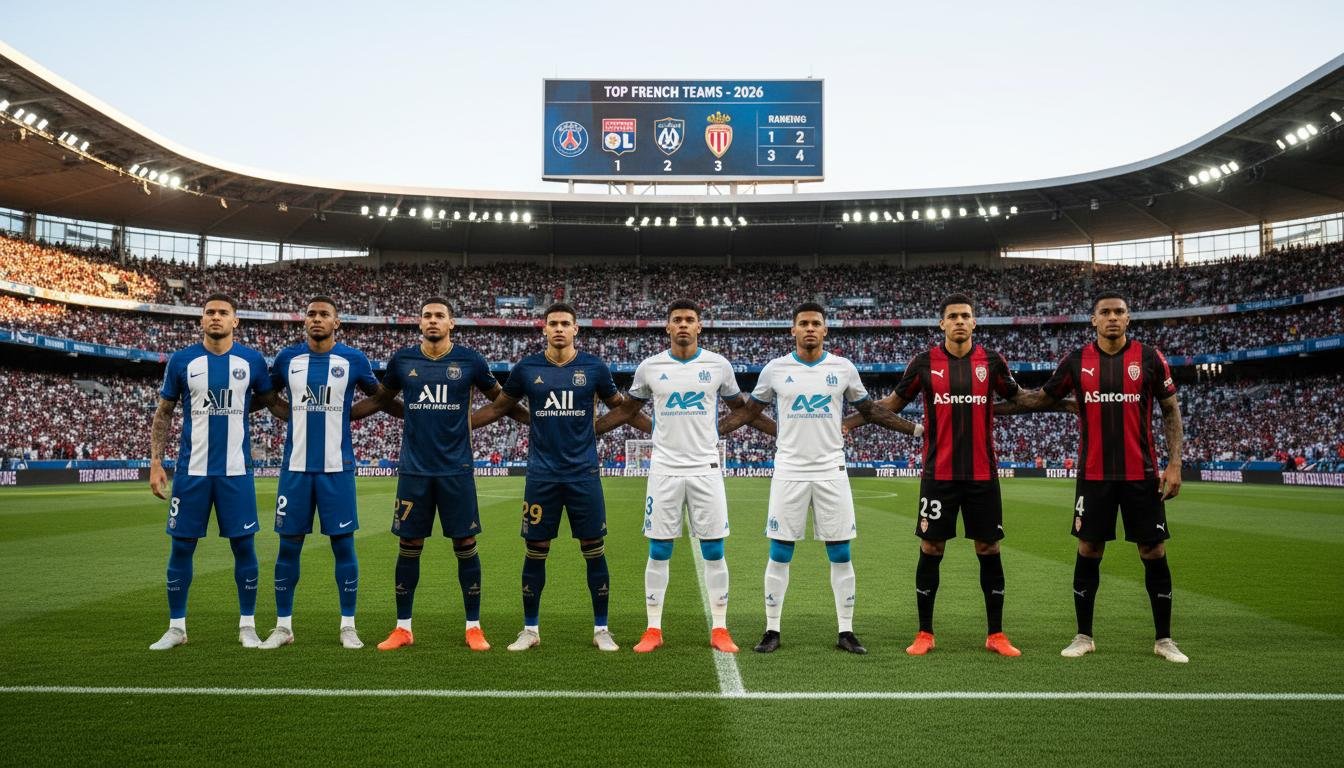
Several clubs stand out when blending present strength with future promise. Below I profile the teams that, in my view, are most likely to define the top tier of French football through 2026. Each profile focuses on what makes the club competitive and what risks they face.
Paris Saint-Germain (PSG)
PSG remains France’s headline act because of its financial muscle, global brand, and regular appearances deep into European tournaments. Their ability to attract and retain high-profile talent gives them a consistent advantage in the domestic league, though that edge is not absolute — smart opponents and financial regulation are real constraints.
The primary challenge for PSG is translating star-studded squads into sustained, tactical coherence and European silverware. If their recruitment balances marquee signings with fit-for-system players and youth integration, they’ll likely stay one of the very best clubs in France by 2026.
Olympique de Marseille
Marseille’s passionate fanbase and strong matchday income make them perennial contenders. Over recent years, they’ve combined shrewd transfers with a renewed emphasis on tactical identity, and that combination has closed the gap on the biggest clubs more than once.
The club’s future depends on maintaining financial discipline while deepening the squad’s tactical resilience. If the leadership keeps investing in the academy and supporting a stable coaching project, Marseille can challenge for titles and push deeper in European cups.
AS Monaco
Monaco’s model — buying young talent, developing it, and selling at a profit — keeps them competitive and well-funded. Their recruitment network and willingness to give minutes to promising players frequently produces breakthrough seasons and valuable transfer windfalls.
The danger is always the player turnover: huge sales can weaken a title push unless replacements arrive quickly and fit the coach’s system. Still, Monaco’s scouting and academy make them a likely fixture near the top of the table through 2026.
Olympique Lyonnais
Lyon’s academy is one of Europe’s most productive, and the club’s commitment to youth-first development gives it long-term resilience. When that pipeline feeds into a coherent first-team strategy, Lyon becomes hard to dislodge at the top of the domestic table.
Financial prudence and a clearer identity under the coaching staff will determine how far Lyon can go. If they avoid the common trap of selling the best youngsters too quickly, they can reassert themselves as championship contenders while remaining profitable.
RC Lens
Lens has emerged in recent seasons as a model of smart community-backed football: solid scouting, passionate supporters and a clear tactical approach. They’ve shown they can punch above their weight domestically and in Europe when the squad is healthy and motivation runs high.
Sustaining that level requires depth; injuries or a string of departures can expose smaller squads. Still, Lens’s club culture and recruitment have put them among the teams most likely to remain competitive into 2026.
OGC Nice
Nice blends an ambitious ownership group with a growing recruitment network and an improving academy. They’ve invested to raise the club’s profile and build a squad capable of regular European involvement, which bodes well for their near-term prospects.
Consistency is Nice’s main test: turning flashes of quality into season-long performance. With steady managerial planning and continued investment in youth, they could be a dark horse for major domestic honors.
LOSC Lille
Lille’s title win a few years back illustrated how disciplined economics and tactical organization can overcome richer rivals. The club’s scouting and coaching structure often produce pragmatic, high-performing teams despite a smaller budget.
Their future depends on holding onto core players or finding cost-effective replacements. If Lille manages that balance, they’ll remain a reliable contender and can surprise top opponents in cup competitions.
Dark horses and rising academies
Beyond the established top seven, France has clubs with excellent youth systems and project-driven owners that could break through. Clubs like FC Nantes, Montpellier and Toulouse have produced talent and mounted periodic challenges that signal potential for sudden ascents.
Investments in scouting and facilities matter more than immediate spending. A club that develops a coherent coaching pathway from academy to first team can climb quickly — and that pathway is the best indicator of a true dark horse in the current French landscape.
How European competition reshapes the pecking order
Domestic success and European runs feed each other: deep runs in the Europa League or Champions League raise revenue and attract players, while early exits can stall momentum. French clubs that balance squad depth with a clear tactical plan tend to convert European exposure into long-term gains.
For clubs outside the very top, strategic European campaigns — prioritizing certain fixtures and rotating smartly — are more valuable than one-off heroics. By 2026, teams that manage continental demands without sacrificing domestic consistency will sit highest in the pecking order.
Snapshot table: strengths at a glance
| Club | Core strength | Why to watch |
|---|---|---|
| Paris Saint-Germain | Financial resources; global recruitment | Aim to convert talent into European trophies |
| Olympique de Marseille | Fanbase and matchday power | Strong domestic challenge with tactical growth |
| AS Monaco | Scouting and academy sales model | Consistent top-table presence if replacements arrive |
| Olympique Lyonnais | Elite youth production | Long-term competitiveness through academy |
| RC Lens | Club culture and tactical unity | High ceiling for sustained challenge |
| OGC Nice | Ambitious recruitment and ownership | Potential dark-horse European contender |
| LOSC Lille | Discipline and scouting | Smart model that overachieves on budget |
Practical advice for fans and followers
If you’re following French football through 2026, watch the transfer windows as closely as match results. The clubs that strengthen sensibly and keep core tactical ideas intact are likeliest to improve; rash spending or frequent managerial changes usually precede dips in form.
Attend matches when you can. I’ve been to Parc des Princes and Stade Vélodrome and seen how a crowd can lift a team; live atmosphere often converts close matches into wins. For remote followers, tracking youth-team reports and academy graduates gives early clues about which clubs will be the next challengers.
Sources and experts
To analyze club trends and projections I relied on authoritative data and reporting from league and continental organizations, market-value aggregators, and established journalists who specialize in French football. These sources provide the statistics and context needed to separate hype from sustainable performance.
Below are links to the key references and expert outlets that informed this assessment. For deeper dives, those sites are reliable starting points for match reports, financial summaries, and scouting data.