Weather turns a routine match into a chess game where the board keeps shifting. Whether it’s a downpour that turns the pitch into a skating rink, a furnace of heat that drains legs, or gusts that bend the ball, weather affects tactics, outcomes, and — if you bet — the margins between profit and loss.
Why weather matters to bettors
Football is a physical contest played in a chaotic environment, and weather amplifies that chaos. Teams that rely on short passing, high pressing, or accurate set-pieces will feel the impact differently than sides built on direct play or long throws.
Bookmakers set lines assuming “normal” conditions. When the forecast shifts, so do the real probabilities on the field, but odds can lag, especially in live markets. That gap creates opportunities for bettors who translate meteorology into match-level expectations.
Rain: think traction, mistakes, and fewer high-quality chances
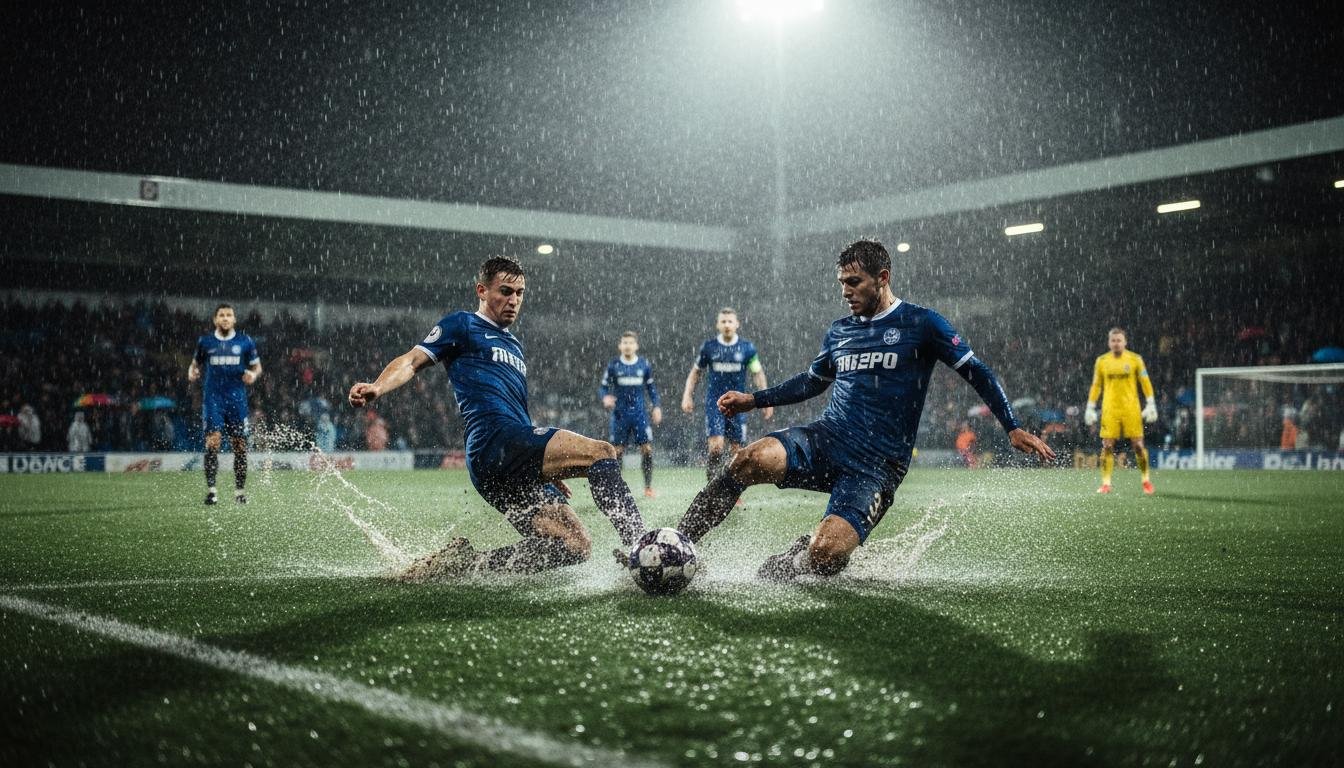
Heavy rain frequently reduces clean build-up play and increases turnover frequency. Wet surfaces favor counter-attacking and long balls because control becomes harder and defenders can slip under pressure.
For bettors this typically means two practical shifts: expect fewer shots on target and a higher variance in goals — often fewer total goals but occasional chaos leading to rebounds and scrappy finishes. Markets to consider include under on total goals, small stakes on late corners, and backs on teams who defend deep well.
Rain quick-reference table
| Weather | Typical in-game effects | Markets to consider |
|---|---|---|
| Heavy rain | Slower passing, more turnovers, slick pitches | Under total goals, draw/no-score value, live corner markets |
| Heat | Lower intensity later in match, more substitutions | Second-half under, fitness-based player props, favor deeper benches |
| Wind | Erratic long balls, affected set-piece accuracy | Fewer accurate shots, adjust expected assists, bet on home side when wind assists |
Heat: pacing, substitutions, and late-game drop-off
High temperatures change how coaches manage a match. Teams commonly slow tempo, increase rotations, and use more conservative tactics to preserve energy. That often depresses goal rates after the 60th minute when fatigue accumulates.
From a betting standpoint, over/under markets and player props tied to distance covered or high-intensity sprints are worth examining. Also look for teams with superior sports science — clubs with deeper benches or proven cooling strategies cope better, which can swing handicaps in their favor.
Wind: trajectory, set-pieces, and home advantage swings
Wind is subtle but impactful. A strong crosswind or headwind alters long passes, crosses, and shots from distance. Teams that use aerial dominance or long diagonal passes will see their strengths blunted in gusty conditions.
Wind can create match-specific edges: if wind favors the home stand and one end has a pronounced advantage for set-piece delivery, expect more goals in periods when teams attack with the wind. Asian handicaps and correct-score markets can be adjusted to reflect those pockets of increased scoring probability.
Match-level factors you must weigh
Weather is one variable among many. Pitch surface (natural grass vs. 3G/4G), recent rainfall, altitude, and even kick-off time all interact with temperature and wind. A drought-hardened pitch behaves differently under a light shower than a saturated municipal field.
Team style matters too. A possession-heavy side with technically gifted midfielders is more vulnerable to rain than a counter-attacking team that thrives on quick transitions. Squad depth, fitness records, and recent travel also change how a team copes with adverse conditions.
Practical betting strategies
First, narrow your markets. When weather is decisive, focus on markets most sensitive to it: total goals, second-half totals, Asian handicaps, corners, and specific player props like shots and crosses. Avoid complex multi-leg parlays that magnify weather-induced variance.
Second, value live markets. Weather-driven momentum swings are visible in play and often mispriced in-running. If rain starts mid-match and both teams struggle to pass out from the back, live under goals or under corners can be profitable if you act quickly.
Suggested tactical checklist before placing a bet
- Confirm the latest official pitch inspection and any announcements from competition organisers.
- Compare starting lineups for thinning of pacey players or late withdrawals due to heat concerns.
- Review teams’ historical performance in similar weather conditions and on similar surfaces.
- Check how quickly bookmakers adjust odds after weather updates — and whether any value appears.
Live-betting tactics and timing
Live markets are where weather betting shines. A sudden downpour, a gusty turn, or a visible drop in tempo usually shifts the in-play book faster than prematch markets. Being ready to act — or using small, frequent stakes — wins the day.
But timing is crucial. Early in the match, teams may run on adrenaline and the effects won’t show. The sweet spot for many weather-driven bets is after 25–35 minutes or after halftime, when trends and physical fatigue reveal themselves.
Managing risk and bankroll
Weather introduces extra variance. Reduce stake sizes or use fraction-of-bankroll sizing when betting solely on weather-driven edges. Consider limiting exposure to single-game bets with high variance, and avoid chasing narrative-based losses.
Also, implement strict stop-loss rules for live sequences. A sudden change (rain stopping, a wind shift) can flip the edge in minutes. Preserve capital to stay flexible across multiple matches with similar conditions.
Putting it together: a sample thought process
Imagine a noon kick-off in a league where forecasts predict heavy rain and strong gusts. You see Home uses short possession, Away plays direct. Home has two key fullbacks who push high and tire easily.
Decision steps: downgrade Home’s expected control; favor under total goals prematch at a small stake; wait until minute 30 to assess how both teams cope. If turnovers increase and chances dry up, add a live under half line or small stake on draw no-bet for the away side if odds justify it.
Real-life example from my own experience
I once followed a lower-league match prone to flooding where the visiting side relied on one-touch passing. When heavy rain began, the game reverted to long clearances and second-ball battles. Prematch over/under lines looked generous at first, so I took a modest under bet and later hedged with a live corner market as play became more chaotic.
The key lesson: weather can validate a simple hypothesis (less clean buildup = fewer quality chances) and provide modest, realistic edges — but only if you accept reduced frequency and increased randomness.
Sources and experts
- International Football Association Board (Laws of the Game): https://theifab.com/laws/
- National Oceanic and Atmospheric Administration (NOAA) — weather science and forecasts: https://www.noaa.gov/
- American College of Sports Medicine — guidance on heat and athletic performance: https://www.acsm.org/
- StatsPerform / Opta — sports data and analytics for football: https://www.statsperform.com/
- FiveThirtyEight — sports modeling and weather-related analyses: https://fivethirtyeight.com/