First-half card markets are a niche many bettors overlook until they see a live game turn edgy in the opening 45 minutes. This article walks through practical patterns, pre-match signals, live-match adjustments, and sensible bankroll tactics so you can approach first-half yellow and red card markets with a clear edge. I draw on public data, industry analysis, and my own experience tracking dozens of matches to show what matters and what is noise.
Why first-half card markets behave differently
Bookmakers price first-half card markets to reflect a compressed time window and a higher variance outcome than full-match cards. Teams often start aggressively, defenders probe limits early, and referees sometimes use early cards to set control; as a result, probability spikes or dips in the first 15–25 minutes are common and influence odds more sharply than the same event later in a match.
Understanding that variance helps you avoid overtrading. A single reckless tackle or an early tactical foul can wipe out value, but consistent patterns — for example, teams with poor disciplinary records or referees prone to early fouls — compound across matches and can be exploited with modest stakes.
Key indicators to watch before kickoff
- Referee profile (average cards per first half)
- Team discipline (yellow/red trends in recent matches)
- Match context (derbies, relegation fights, cup ties)
- Lineups and tactical setups (full-backs who commit fouls, aggressive midfield pairings)
- Weather and pitch conditions (slippery surfaces, heavy wind)
Start with the referee. Referees differ dramatically in how they manage the opening phases; some use early cards to stamp authority, others prefer verbal warnings. Look at the referee’s card-per-first-half metrics over a reasonable sample (20+ matches) rather than one-off games.
Next, combine team discipline with tactical intent. A side that presses high and concedes territorial advantage will likely commit more tactical fouls; conversely, a low-block team that sits deep might pick up fewer cards early but more later on counters. Lineup changes matter too: a replacement full-back known for late tackles elevates risk compared with a cautious alternative.
Live-match signals and how to adapt
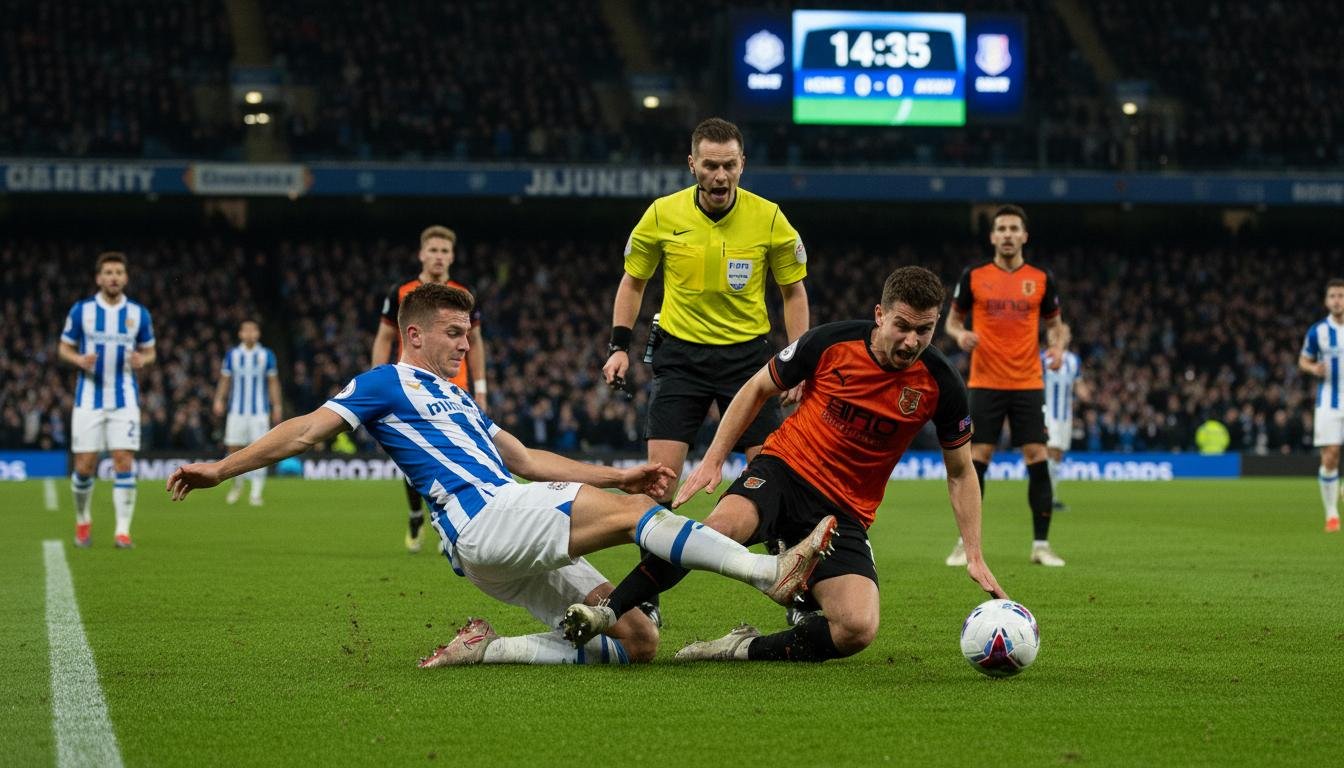
Once the whistle blows, the live market moves fast. Early events — a harsh tackle, a flashpoint between players, repeated stoppages — materially change the probability of additional cards. I watch the first ten minutes to see whether the referee is issuing stern warnings or showing cards; that informs whether to consider buying or selling first-half card lines.
Momentum matters. If a team receives an early card, their approach often becomes more restrained and the likelihood of a second card for the same player drops, while other players might take more responsibility and risk. Conversely, a heated elbow or off-ball incident that goes unpunished usually increases the chance of later bookings as the referee compensates.
Quantifying risk: simple models and stake sizing
You don’t need a full machine-learning model to trade first-half card markets profitably; a transparent, rule-based model often works better for live in-play decisions. Combine three inputs — referee first-half card rate, team first-half card rate, and pre-match context weighting — to produce a rough probability. If your computed probability differs meaningfully from the market price, you have a potential edge.
Stake sizing should be conservative. First-half card markets are high variance, so flat stakes of 1–2% of bankroll on clear edges are prudent. If you use a fractional Kelly approach, cap aggressive fractions to avoid ruin in streaks.
| Confidence | Suggested stake (% bankroll) |
|---|---|
| Low (small market discrepancy) | 0.5–1% |
| Medium (clear edge, multiple signals) | 1–2% |
| High (very strong edge, corroborated by ref & context) | 2–3% (rare) |
The table above is only a guideline; your personal tolerance and bankroll goals should dictate exact percentages. I personally use a 1% flat stake for most first-half card bets and reserve fractional Kelly only for exceptional situations where my model and live signals align strongly.
Common mistakes bettors make and how to avoid them
Overreacting to the first event is the most frequent error. One early foul does not necessarily signal a card-heavy half; bettors often chase quick losses by escalating stakes, which compounds variance. Instead, treat early noise as data and adjust only if a consistent pattern emerges across the initial 10–20 minutes.
Another mistake is ignoring referee tendencies or relying on headline disciplinary stats without breaking them into first-half and second-half splits. A referee who averages many cards per game but issues them primarily in the second half is not a true first-half target. Break stats down by time intervals and use that granularity to make smarter choices.
Practical checklist before placing a bet
- Confirm referee first-half card average (20+ match sample).
- Compare both teams’ first-half card rates over the last 8–12 matches.
- Assess match context: rivalry, table pressure, or cup risk.
- Check starting lineups for aggressive full-backs or midfield enforcers.
- Watch the first 10 minutes live; update your probability model accordingly.
Use the checklist as a pre-bet ritual. It takes five minutes to scan the key indicators and saves you from emotional decisions that cost money over time. I keep a short template on my phone to run through these items quickly before committing a stake.
Make it a habit to log each bet with the data points that prompted it: referee, team trends, pre-match odds, stake size, and final outcome. Over time, this log reveals which signals truly produce value and which are lucky guesses.
When to pass: reading subtle red flags
Sometimes the best play is no play. Avoid first-half card bets when data is thin or conflicting: for example, a referee with limited recent matches in the league, late team news that changes tactical shape, or unstable weather that makes attacking and defending unpredictable. These uncertain environments inflate variance without adding expected value.
Also be cautious on early lines pushed by sharp money; if prices move dramatically without public reasoning, the market may be reacting to information you don’t have access to. In those moments, patience and discipline will protect your bankroll more effectively than chasing a presumed advantage.
Sources and experts
- Pinnacle (betting articles and market analysis)
- StatsBomb (data-driven football analysis)
- Stats Perform / Opta (official event and referee metrics)
- Kelly criterion (stake-sizing theory)
- IFAB (Laws of the Game — card definitions and interpretations)
- Premier League stats (discipline & match reports)
First-half card trading rewards patience and disciplined data collection more than bravado. If you treat each bet as an experiment, protect your bankroll tightly, and iterate on a simple model, you’ll start to separate noise from reliable signals and find consistent opportunities in a market many bettors leave untouched.