Matches that follow midweek European ties produce some of the sharpest pricing mistakes in the markets — and some of the most frustrating results for bettors who ignore context. Teams arriving from Champions League or Europa League fixtures often show subtle but predictable shifts in lineup, intensity, and tactical approach. This article lays out how to read those shifts, which variables matter most, and how to shape a practical staking plan that respects risk while taking advantage of market inefficiencies.
Why fixtures after European nights are different
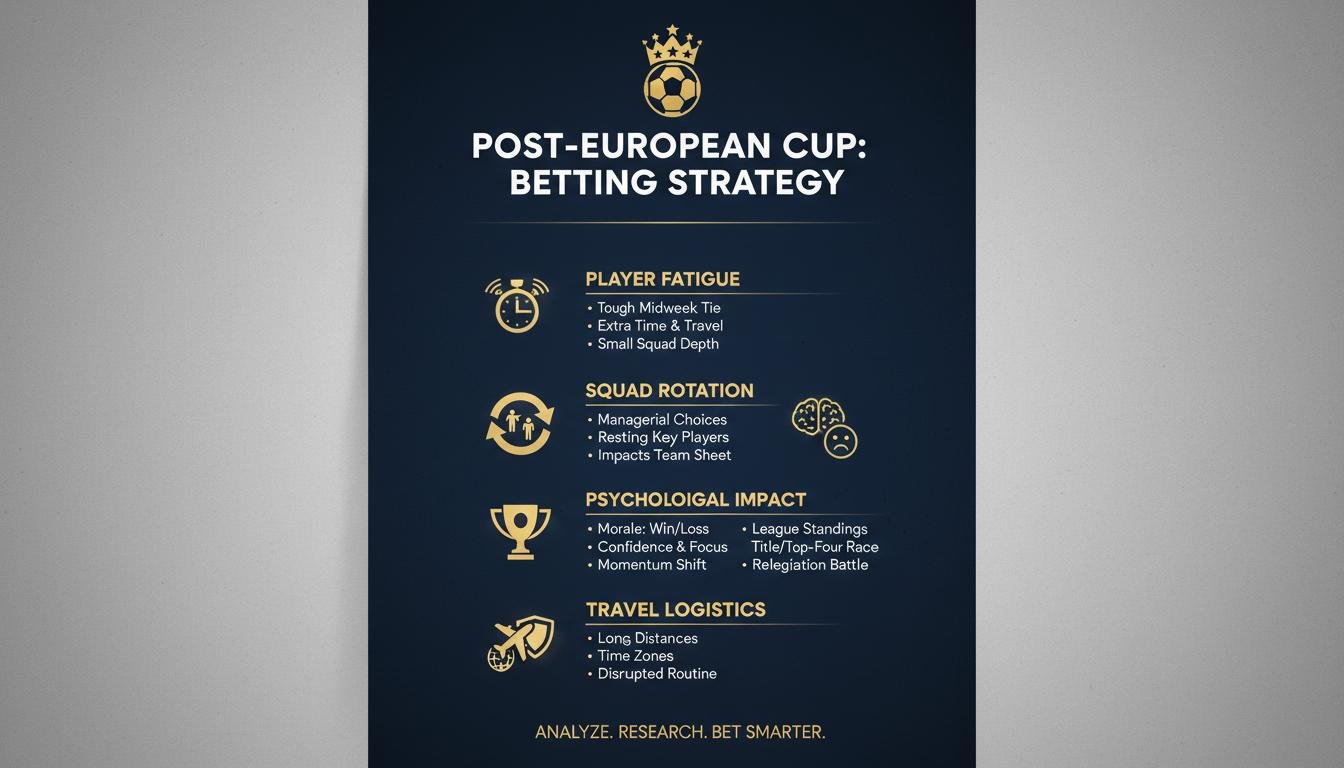
European fixtures create an overlay of fatigue, travel, and rotation that domestic scheduling doesn’t have to contend with. Coaches manage minutes across competitions, and what looks like a small change on a team sheet — one rested starter replaced by a youth player — can alter expected goals, pressing patterns, and defensive organization.
Beyond personnel, psychological factors matter. A team eliminated from Europe might play with a different motivation than one that celebrated a big win. Conversely, a club that reached late stages may prioritize recovery, or rotate heavily to protect players for the next continental clash. Understanding those human decisions is the first step toward smart betting.
Key variables to evaluate before placing a bet
Start with lineup verification. Bookmakers move quickly once official lineups are confirmed, so the sweet spot is the window between the probable XI you expect from the coach’s rotation patterns and the published teams. If a favorite is heavy on rotation, traditional handicaps become less reliable.
Also weigh rest days, travel, and minutes played in the previous 72–96 hours. A long-haul trip or a physically draining match increases injury risk and reduces high-intensity outputs like sprints and presses. Finally, consider motivation and squad depth: a team with bench quality can absorb rotation without large performance drops; one without it typically suffers.
Simple rest-days guide
| Rest days (since last full match) | Suggested caution level |
|---|---|
| 6+ days | Low — normal pricing usually reliable |
| 3–5 days | Medium — check lineups and minutes |
| 0–2 days | High — expect rotation and lower high-intensity metrics |
Reading market signals and timing your bets
Odds move for reasons: news, bettors, or liability. Post-European weeks often see sharp early markets that assume rotation will be minimal. That’s your opportunity. If you have a justified expectation of heavy rotation, early lines might overprice a favorite’s reliability.
Watch expert lineup leaks, press conference hints, and coach rotation history. If a manager is known for resting starters after Europe, the market will often lag, especially in smaller leagues or on lower-profile matches. Live markets after official lineups are out are useful for betting totals or player props when starters are unexpectedly absent.
Bet types that tend to perform well
Avoid putting large stakes on outright wins in post-European fixtures unless you’ve confirmed the XI. Instead, consider these options: Asian handicaps with reduced liability, draw no bet markets, total goals under/over with conservative thresholds, and player props limited to confirmed starters.
Live betting also shines here. If you expect a favorite to start slowly due to tired legs or rotation, a live bet after the first 15 minutes when tempo is clear can be profitable. Conversely, if a team looks exhausted, second-half over/under markets can offer value if the under is mispriced.
Bankroll and staking strategies
Adjust stake size based on information quality. When your edge rests on a hunch about rotation without an official team sheet, reduce your stake by 25–50 percent. If you have confirmation of weakened starting XI, you can approach normal stake sizing, reflecting greater confidence.
Use a flat-percentage model for the long run: risk 1–2 percent of your bankroll on standard selections, scaling down when information is uncertain. This disciplined approach prevents a string of European-week variance from doing disproportionate damage to your funds.
Practical checklist before hitting “place bet”
Run through this quick checklist within an hour of kickoff: 1) Are official lineups released and do they match your rotation expectation? 2) How many minutes did key players log midweek? 3) Was there significant travel or time-zone change? 4) Is the opponent highly motivated (relegation fight, derby, cup place)? 5) What’s the bookmaker’s liability on the market?
- Confirm lineups — if unconfirmed, lower stakes.
- Prioritize bets where rotation hurts favorites more than underdogs.
- Prefer markets where small personnel changes don’t swing outcomes drastically, like Asian goals lines.
Real-life example and author insight
I once tracked a Bundesliga side that had a Champions League game on Tuesday and a Sunday league fixture against a mid-table rival. The early markets made them -0.75 favorites, despite clear rotation tendencies from the manager. I waited for the official XIs, saw two key starters rested, and took the draw no bet on the opponent at value. The favorite started slowly and conceded late; my stake returned with a small profit.
That trade wasn’t rocket science — it was timing, patience, and respecting the coach’s behavior patterns. Over seasons, these small edges compound. My personal rule: never fight the coach. If you can predict substitutions or rest patterns, you control much of the uncertainty other bettors are ignoring.
Common mistakes and how to avoid them
Avoid these frequent errors: 1) Betting large before official lineups, 2) Ignoring opponent motivation, 3) Overlooking travel fatigue or altitude, 4) Chasing losses after a surprise result. Each mistake often stems from emotional betting rather than process-driven decisions.
Stick to a documented process. Keep short notes on manager rotation history, and build a small database of how teams perform on three days’ rest versus seven. Over time, that simple quantitative underpinning will turn anecdotes into repeatable edges.
Sources and expert reading
- UEFA — official news and scheduling
- FIFA — player workload and international scheduling
- FiveThirtyEight Soccer — statistical models and club performance
- ESPN — match reports and rotation coverage
- BBC Sport — postmatch analysis and team news
Applying a disciplined, context-aware approach to matches after European cups won’t make you invincible, but it will tilt the odds in your favor. The markets respect hard facts — lineups, rest, and travel — so make those facts your foundation and let patience, timing, and modest staking be the rest.