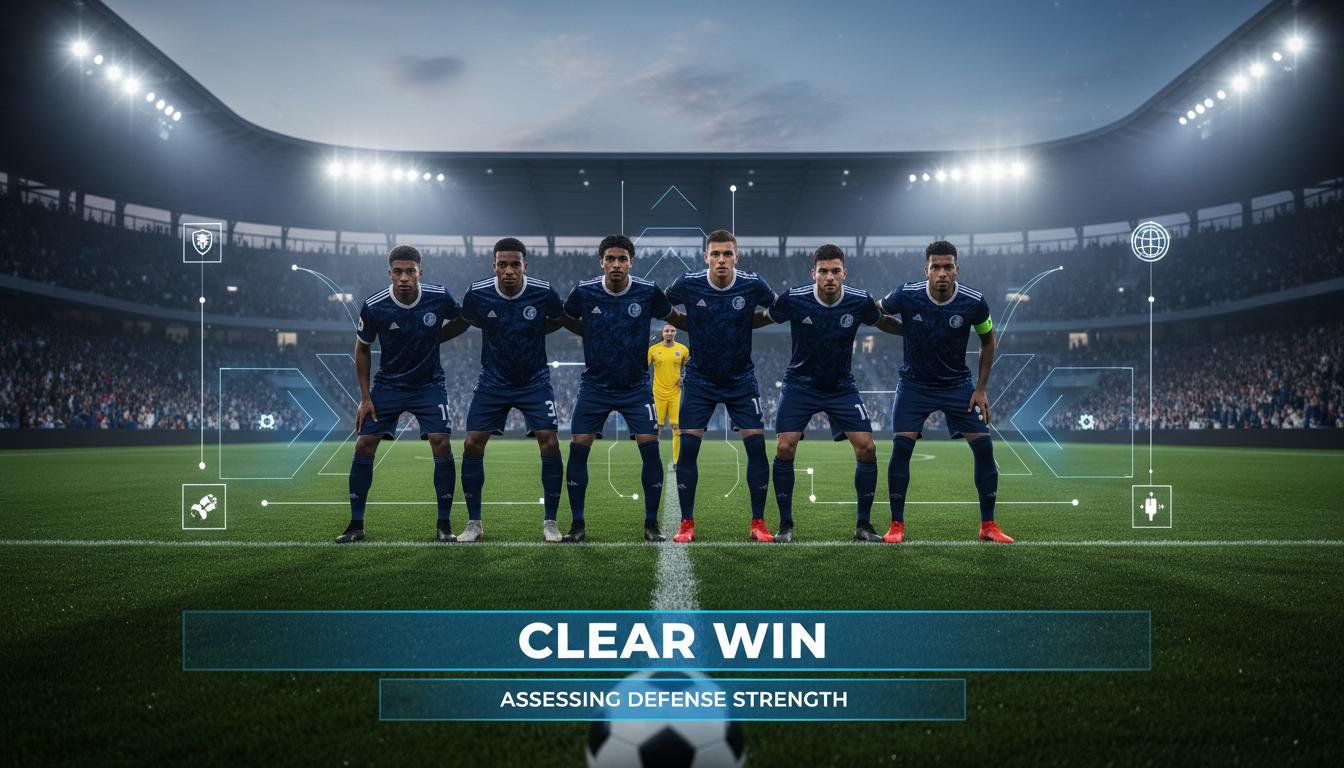
Betting on games where you expect a clear outcome feels satisfying until a suspect defense turns a sure thing into a surprise. This guide breaks down how to evaluate a unit’s real ability to stop opponents, so you can judge whether a favorite will dominate or merely tread water. Read on for practical metrics, film clues, and a betting checklist you can use the next time a line tempts you to lean heavy.
Why defense matters more than the box score suggests
Box-score statistics—points allowed and sacks—give you an outline, but they miss the nuance. Defensive performance is context-dependent: a bend-but-don’t-break unit that makes timely stops can be more valuable than one that racks up yards allowed but gives up touchdowns at critical moments.
For bettors, that means looking beyond raw totals. You want to know how a defense performs by down and distance, in the red zone, and late in games. Those situational strengths and weaknesses decide whether a favorite covers a spread or collapses when the line moves against them.
Key defensive metrics to prioritize
Start with a handful of high-signal stats that translate well to betting decisions. Expected points added per play (EPA/play) and defensive DVOA measure how a unit affects scoring opportunities beyond simple yards. They capture efficiency: fewer garbage-time yards and more meaningful stops.
Complement those with pass-rush and coverage indicators. Pressure rate and pass-rush win rate show how often a defense disrupts the quarterback before plays develop, while completion percentage allowed and yards after catch against reveal whether a secondary is tight or routinely ceded chunk plays.
| Metric | What it reveals | How to use it |
|---|---|---|
| Defensive DVOA | Efficiency compared to league average | Use to rank units and model expected points allowed |
| EPA per play (defense) | Plays’ impact on scoring | Prioritize units with low EPA/play for favorites |
| Pressure rate / pass-rush win | Ability to force quick throws and mistakes | Key against poor offensive line or mobile QB |
| Red zone TD rate | Finishing ability in tight spaces | Crucial for late-game scoring predictions |
Each metric has limitations, so crosscheck. A defense ranked well in DVOA but poor in red zone TD rate may look better than it actually is when the opponent starts drives inside the 20. Always layer metrics for a fuller picture.
Situational stats that change the story
Third-down conversion rate allowed and opponent success rate on early downs tell you whether the defense can end drives or simply force long fields. A unit that struggles on third down gives an offense more scoring chances and time of possession—two things bettors should hate when backing a favorite.
Turnover rate balances luck and skill, so treat it conservatively. A sudden spike in interceptions for a struggling secondary may regress, but consistent takeaway creation by a front seven can swing close games repeatedly. Look for patterns over several weeks rather than one-off flukes.
Matchups, play styles, and the opponent factor
Defense strength is relative. A top-ranked defense against the pass might look ordinary when facing a run-heavy team that controls the clock. Conversely, a mediocre unit that excels at pressuring the quarterback can shut down a struggling offensive line quickly.
Adjust your evaluation by the opponent’s strengths and tendencies. If a favorite relies on short passes and yards after catch, scrutinize a defense’s tackling and YAC allowed. If the foe uses play-action and tempo, examine how well the defense handles delayed pressures and situational substitutions.
Film cues and what to watch for on game tape
Numbers point you where to look; film tells you why. On tape, note how often a defense’s front seven wins with fundamentals—gap integrity, tackling angles, and pursuit—rather than exotic blitzes. Consistent technique beats occasional highlight plays when the game tightens.
Watch the secondary for communication breakdowns, route recognition, and recovery speed. Coverage schemes that rely on aggressive man-to-man look great on paper but can be exposed by quarterbacks who buy time or receivers who break off routes. Those are red flags for favorites expected to roll.
When I began studying film for bets, I learned to trust a few clear visual signals: consistent two-high safeties that prevent big plays, linebackers who close on screens and draws, and a defensive line that wins without relying solely on stunts. Those traits tend to hold up across weeks, unlike occasional statistical quirks.
Putting the data into a betting checklist
Turn analysis into action with a reproducible checklist. Start with macro metrics: defensive DVOA and EPA/play. If both are strong, proceed to situational checks like third-down defense, red zone TD rate, and turnover margin. If those are weak, downgrade the confidence in a “clear win” bet.
- Confirm overall defensive ranking (DVOA/EPA/play).
- Check pass rush effectiveness vs. opponent QB pressure susceptibility.
- Verify third-down and red zone performance over the last 6–8 weeks.
- Assess matchup specifics: opponent run/pass balance and injury reports.
- Watch recent game tape for consistent technique and communication.
Apply the checklist strictly. If two or more boxes fail, treat the favorite as vulnerable and consider alternative bets: reduced stake, teaser, or taking the under on margins instead of the straight spread. Predefined rules prevent emotion from overwhelming good analysis.
Common traps and how to avoid them
Don’t be seduced by a single spectacular stat. A team leading in sacks might have faced weak offensive lines or benefited from reckless QB play; that doesn’t guarantee sustainable pressure. Similarly, a low points-allowed figure can be a product of short fields given up by an offense.
Avoid overreacting to small-sample streaks. Early-season numbers and a sudden hot streak in takeaways can skew perceived strength. Favor trends visible across multiple contexts—home/away splits, performance against top offenses, and play-by-play consistency.
Market timing, injuries, and bankroll rules
Market prices shift as injury news and weather arrive. Defensive injuries—especially to pass rushers, key linebackers, or the middle safety—should force a reassessment of your “clear win” expectation. Place bets after you process that information, not before it spreads and alters odds.
Finally, manage risk. No analysis is perfect, so size bets relative to confidence and edge. When defense metrics line up and film confirms technique, increase your stake incrementally. When the picture is muddled, reduce exposure or sidestep the wager.